
Chapter 1: Public Transportation
How to Ride Trains and Buses
with Confidence and Consideration
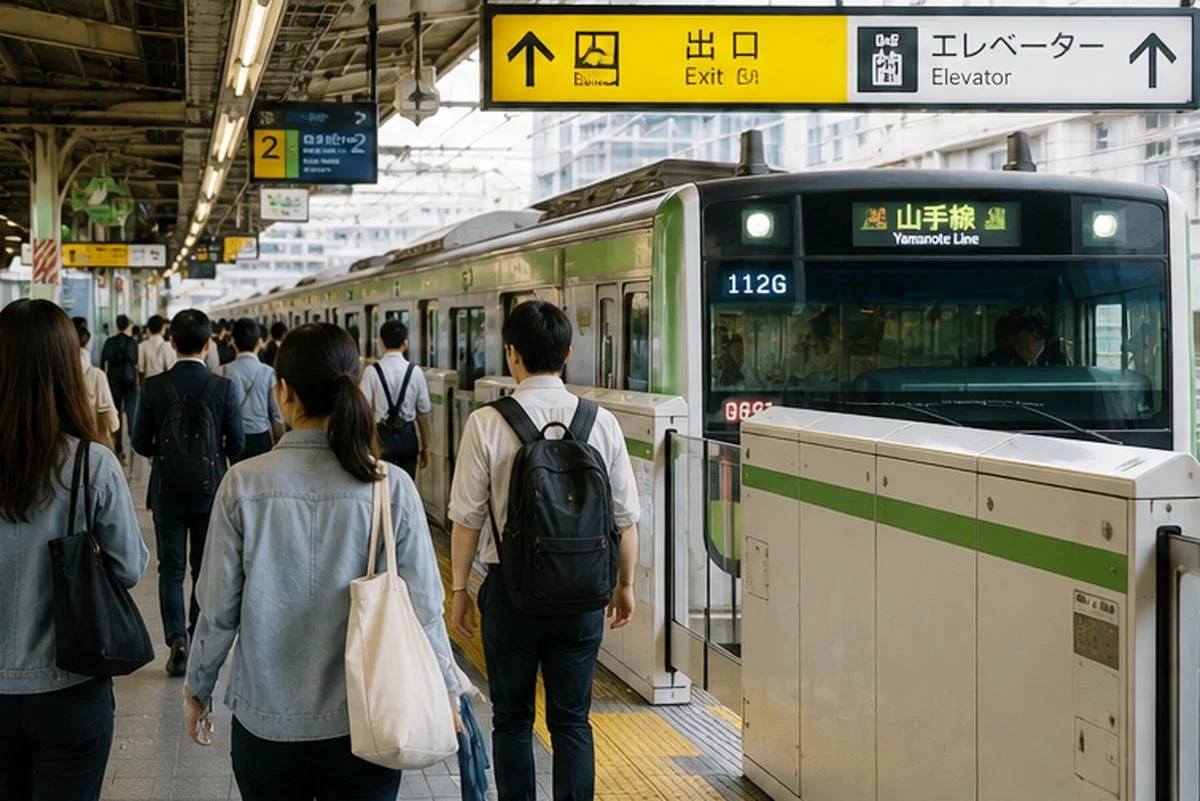
Japan’s public transportation system is famous for being clean, safe, punctual, and remarkably efficient. From the Shinkansen connecting major cities to small local trains winding through the countryside of Nara, public transportation makes it possible to explore the country with surprising ease.
But for many first-time visitors, one feature stands out almost immediately.
It is quiet.
Even when a train is crowded, passengers usually speak softly, avoid phone calls, and try not to disturb the people around them. This calm atmosphere may feel unusual at first, especially if public transportation in your home country is more social or lively.
The important thing to understand is that Japanese train etiquette is not about creating a strict or unfriendly environment. It is about making a shared space comfortable for everyone.
Once you understand that idea, many of the customs you see on Japanese trains and buses begin to make sense.
Why Public Transportation Etiquette Matters in Japan
In Japan, trains and buses are generally treated as shared public spaces rather than extensions of one’s private life.
Hundreds of people may use the same carriage throughout the day. Some are commuting to work, some are going to school, some are traveling with children, and others may simply be tired after a long day.
Because so many different people share a relatively small space, passengers are expected to be aware of how their actions may affect others.
One of the most important cultural ideas behind this behavior is the desire to avoid causing inconvenience.
In Japanese, this idea is often expressed as meiwaku o kakenai, meaning not to cause trouble, discomfort, or inconvenience to other people.
This does not mean that everyone must remain completely silent or behave nervously. It simply means being aware of your surroundings and adjusting your behavior when necessary.
For travelers, even a small effort is usually appreciated.
What You Will Notice on Japanese Trains and Buses
When you begin using public transportation in Japan, you may notice that passengers behave in ways that feel very deliberate.
People usually wait in orderly lines before boarding. They allow passengers to exit first. They keep conversations brief and quiet. They make space for others when the train becomes crowded.
You may also notice that many passengers spend the journey reading, looking at their phones, listening to music, sleeping, or simply sitting quietly.
This does not mean that Japanese passengers are unfriendly.
Public transportation is simply viewed as a place where people should avoid drawing unnecessary attention to themselves.
The quiet, orderly atmosphere is one of the reasons Japan’s trains can carry enormous numbers of passengers each day without feeling as chaotic as they otherwise might.
Practical Etiquette for Trains and Buses
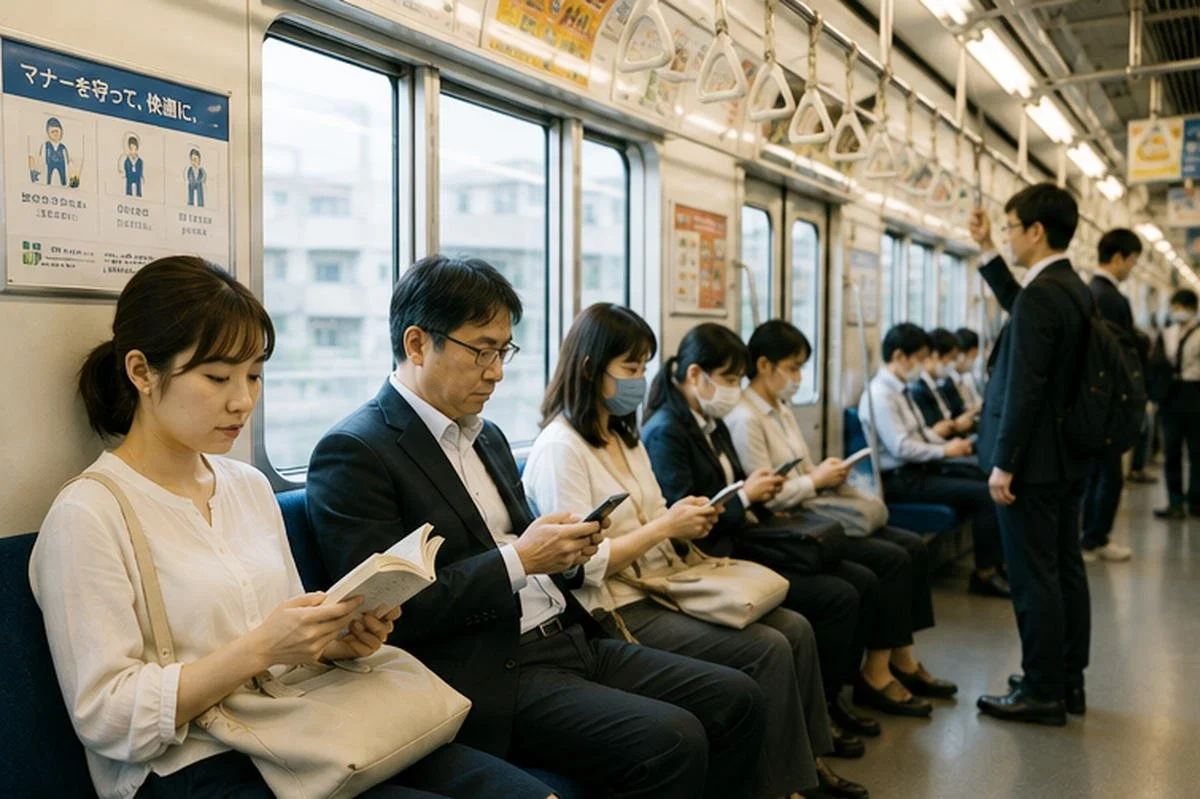
You do not need to memorize a long list of complicated rules. Most public transportation etiquette in Japan comes down to consideration, awareness, and common sense.
The following habits will help you travel more comfortably and confidently.
Wait in Line Before Boarding
At many train stations, you will see lines or markings on the platform showing where passengers should wait.
Stand behind the people already waiting and follow the marked queue.
When the train arrives, allow passengers to get off before you begin boarding. Even if you are eager to find a seat, stepping aside first helps everyone move more smoothly.
On busy platforms, people may form very precise lines. Joining the correct line rather than standing directly in front of the doors is an easy way to show consideration.
Keep Conversations Quiet
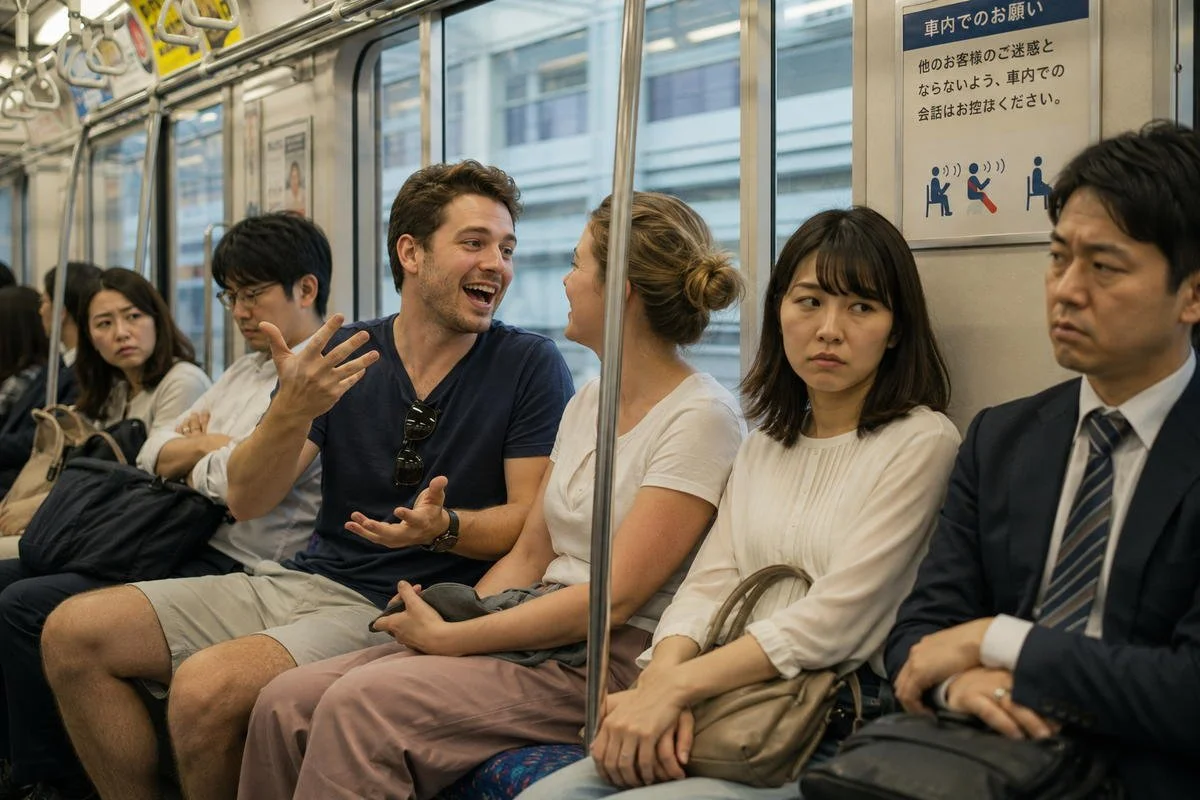
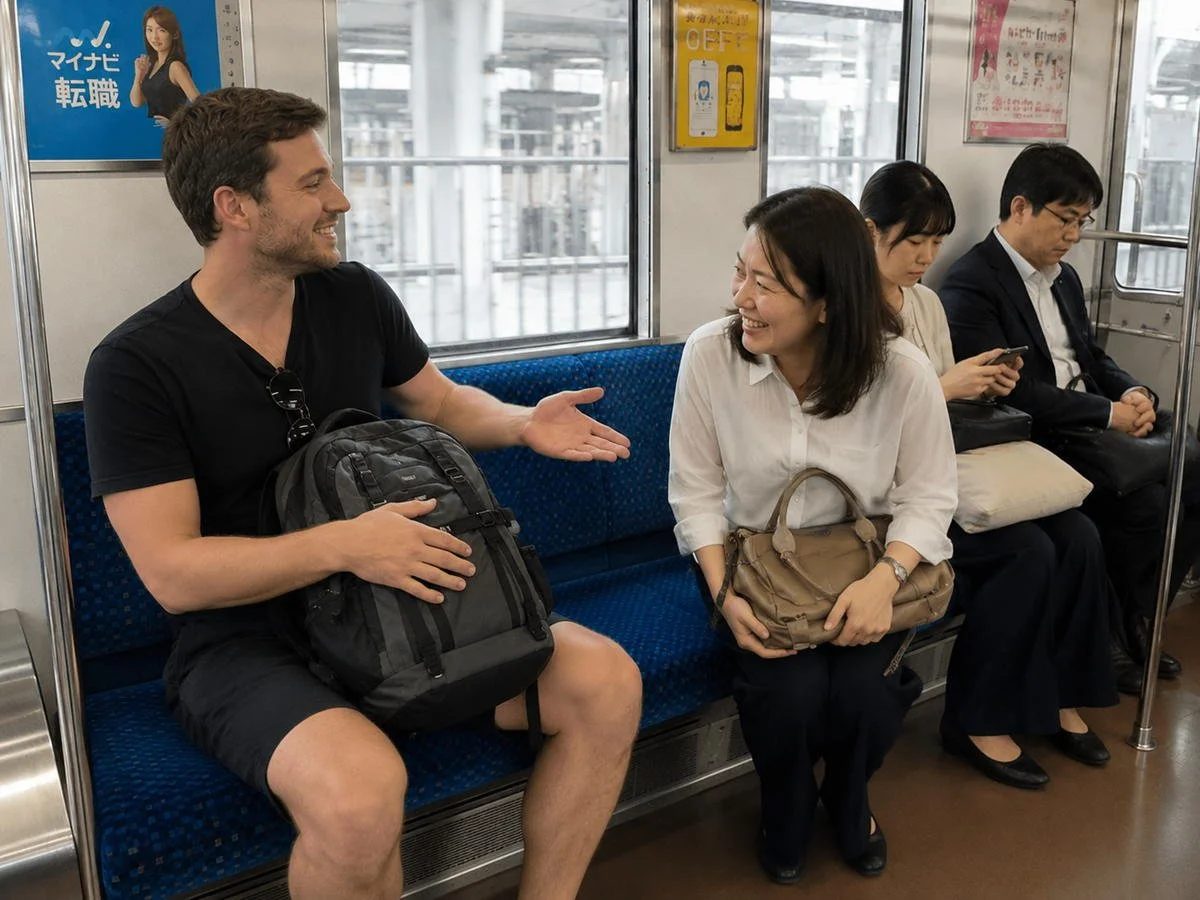
Talking on trains and buses is allowed, but voices are usually kept low.
A normal speaking volume in another country may sound surprisingly loud inside a quiet Japanese train, especially when several people are traveling together.
If you are with friends, family, or a tour group, try to speak softly and avoid calling across the carriage.
There is no need to whisper. Simply match the general volume around you.
Avoid Talking on the Phone
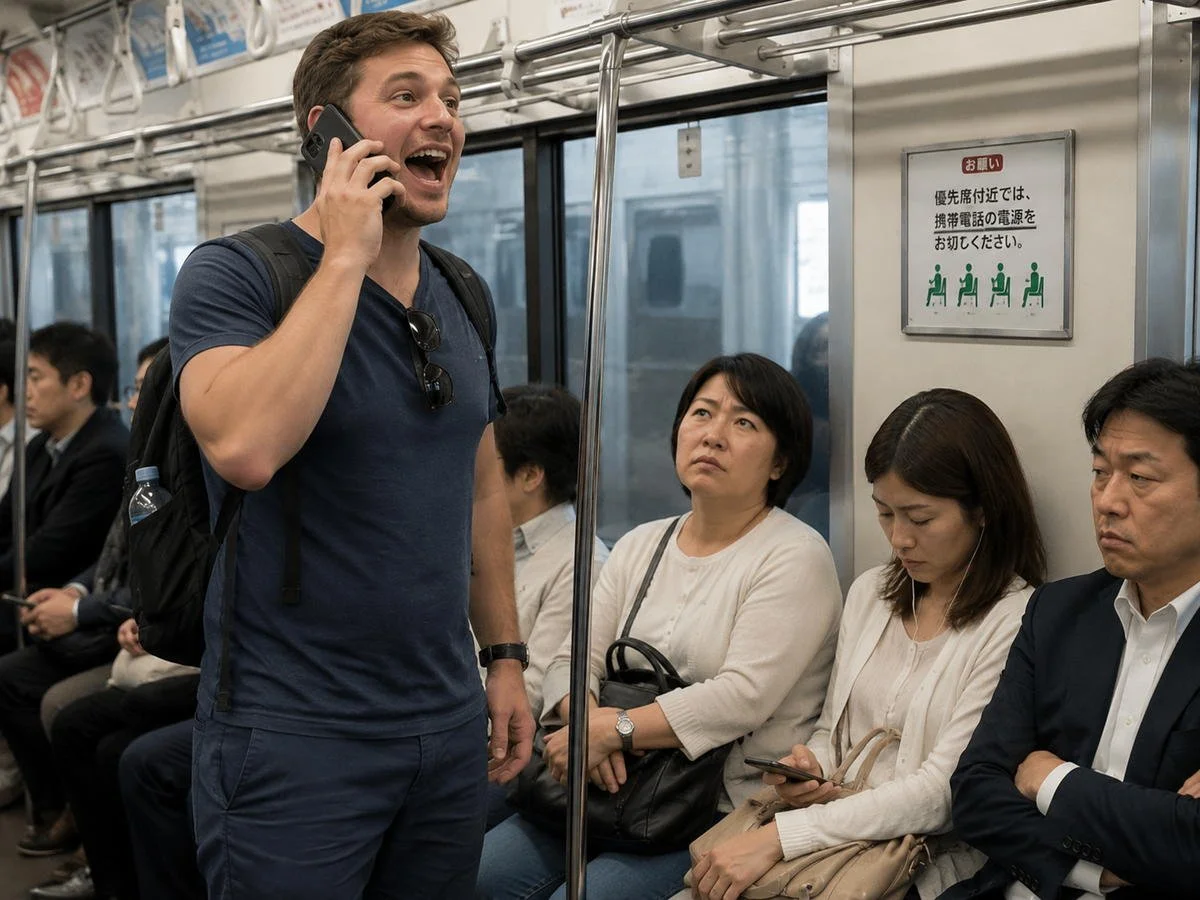
Making phone calls on local trains and buses is generally discouraged.
Most passengers keep their phones on silent or vibrate mode and use them for texting, reading, browsing, or watching videos with headphones.
If you receive an important call, it is usually best to decline it and call back after leaving the train.
On some long-distance trains, phone calls may be permitted in designated areas between passenger cars. However, speaking on the phone from your seat is still best avoided unless the train specifically allows it.
Use Headphones at a Low Volume
Listening to music, podcasts, or videos is perfectly acceptable with headphones.
However, make sure the sound is not loud enough for nearby passengers to hear.
Even a small amount of sound leakage can be noticeable in a quiet train carriage.
It is also best to avoid playing videos, games, or voice messages through your phone’s speaker.
Be Considerate with Backpacks and Bags
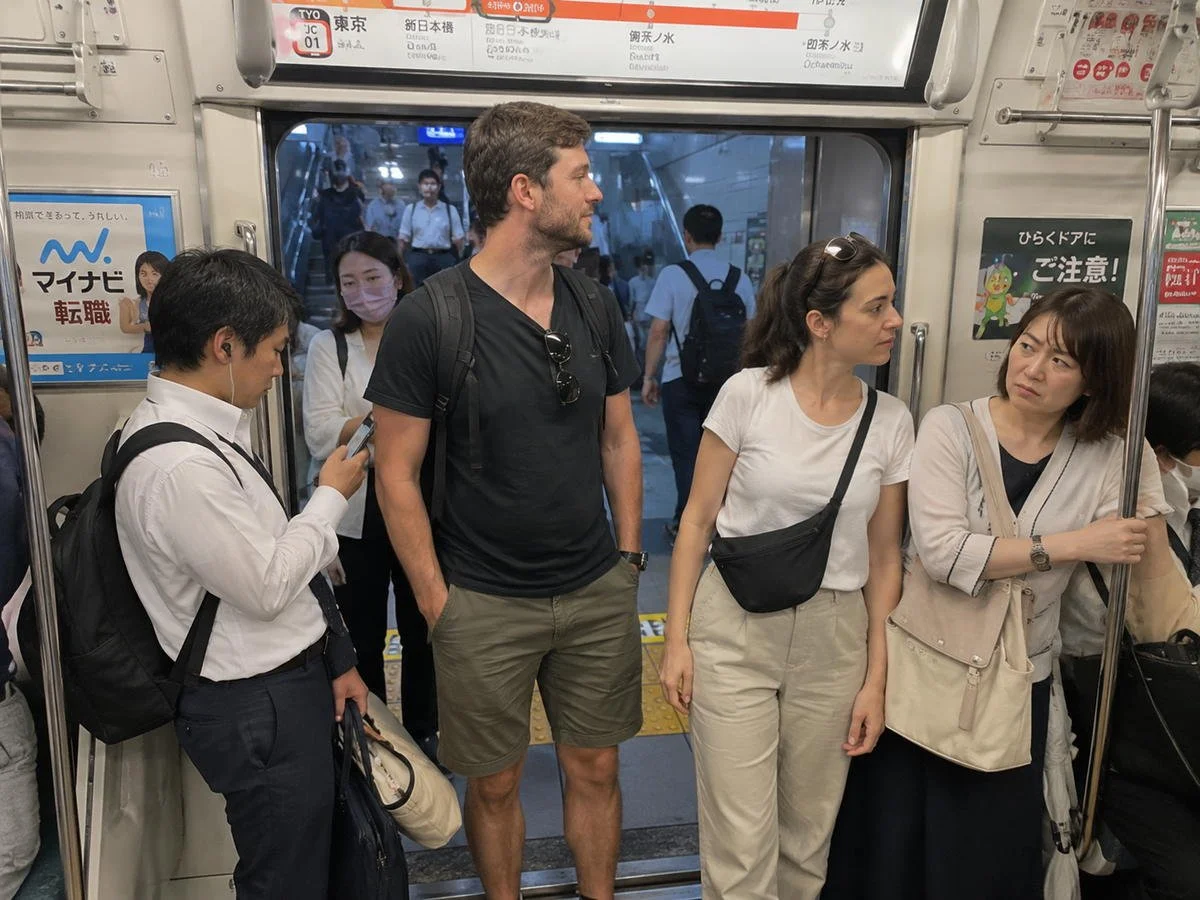
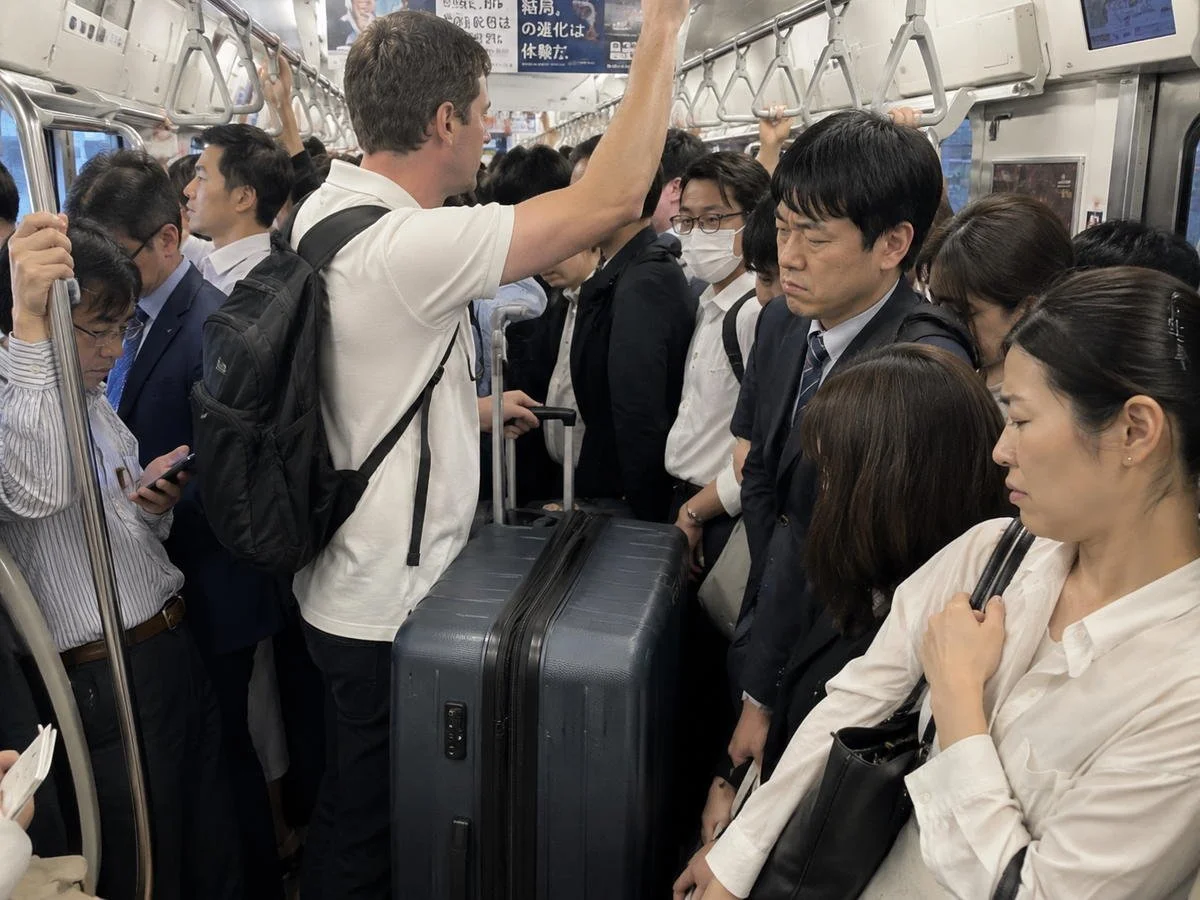
Large backpacks can take up more space than travelers realize, especially on crowded trains.
When the train is busy, carry your backpack by hand, place it on the luggage rack, or wear it on the front of your body.
This prevents it from bumping into other passengers and creates more room behind you.
Avoid placing bags on an empty seat when other passengers are standing. Seats are intended for people, not luggage.
If you have several shopping bags or a suitcase, keep them as close to your body as possible.
Do Not Block the Doors
Train doors can become crowded, particularly during rush hour.
If you are standing near the doors but are not getting off at the next station, move aside when possible so other passengers can exit.
Sometimes it may be necessary to step temporarily onto the platform and then re-enter after people have left the train.
Do not worry. This is normal, especially on crowded commuter lines.
Standing directly in front of the doors with large luggage can slow down boarding and make it difficult for others to pass.
Give Priority Seats to Those Who Need Them
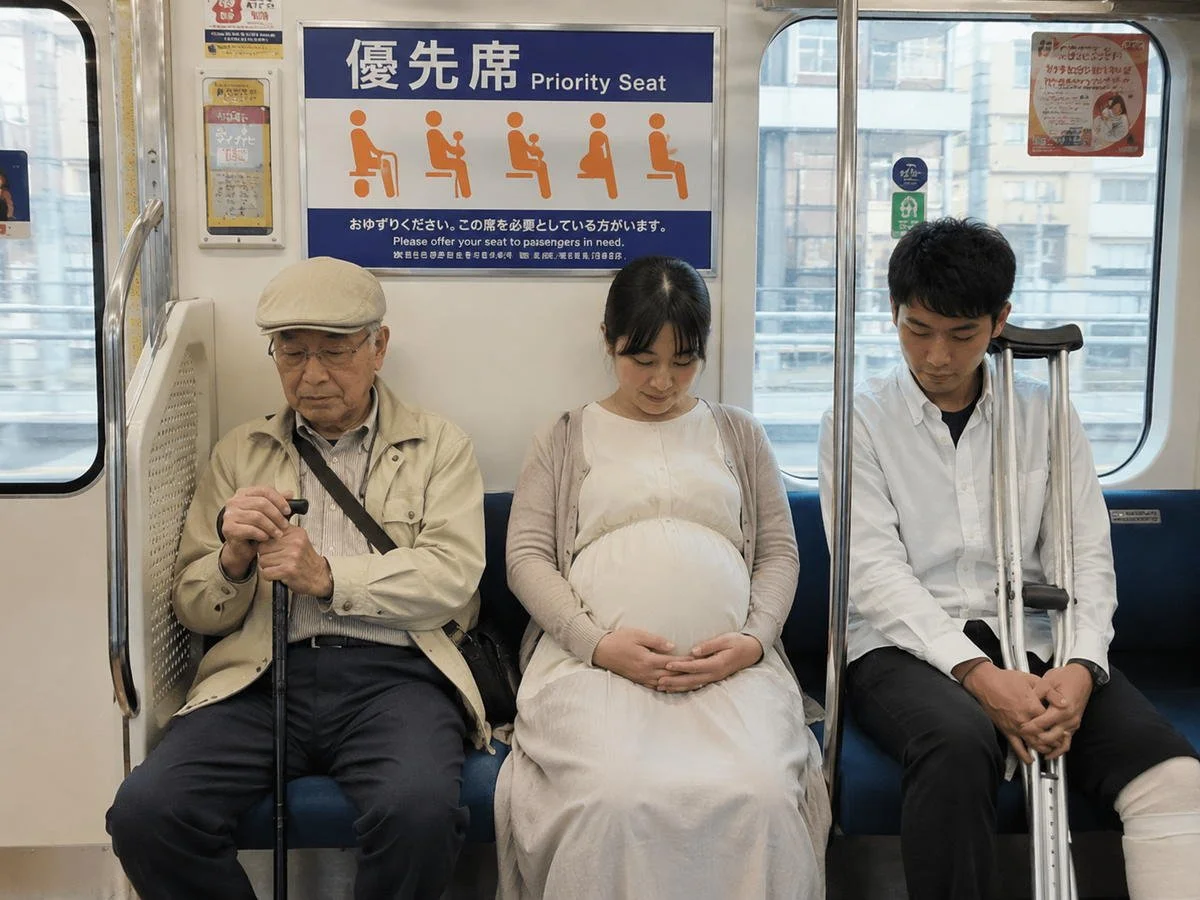
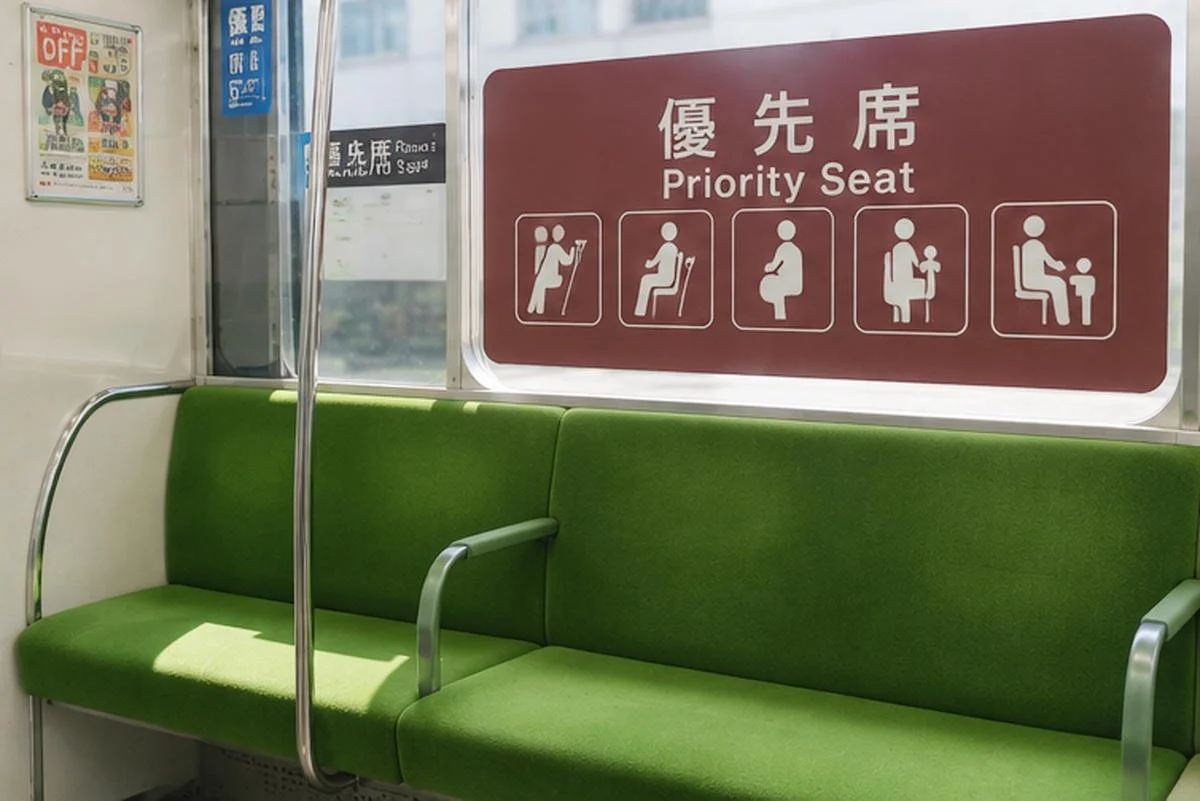
Most trains and buses have priority seats for elderly passengers, pregnant women, people with disabilities, injured passengers, and adults traveling with small children.
These seats are usually marked with clear signs or pictograms.
You may sit there when the seats are empty, but you should be prepared to give up the seat immediately if someone appears to need it more.
Many healthy passengers choose not to sit in priority seats at all, even when they are available.
It is also worth remembering that not every disability or medical condition is visible. If someone asks for the seat or displays a support badge, respond politely and make space.
Let Passengers Exit First
When a train or bus arrives, wait for passengers to get off before entering.
This may sound obvious, but at crowded stations it can be tempting to move forward too quickly.
Standing to the side of the doors creates a clear path and allows boarding to happen faster.
On buses, especially in smaller cities and rural areas, boarding and exiting procedures can vary. Watch what local passengers do and follow their lead.
Avoid Taking Up Extra Space
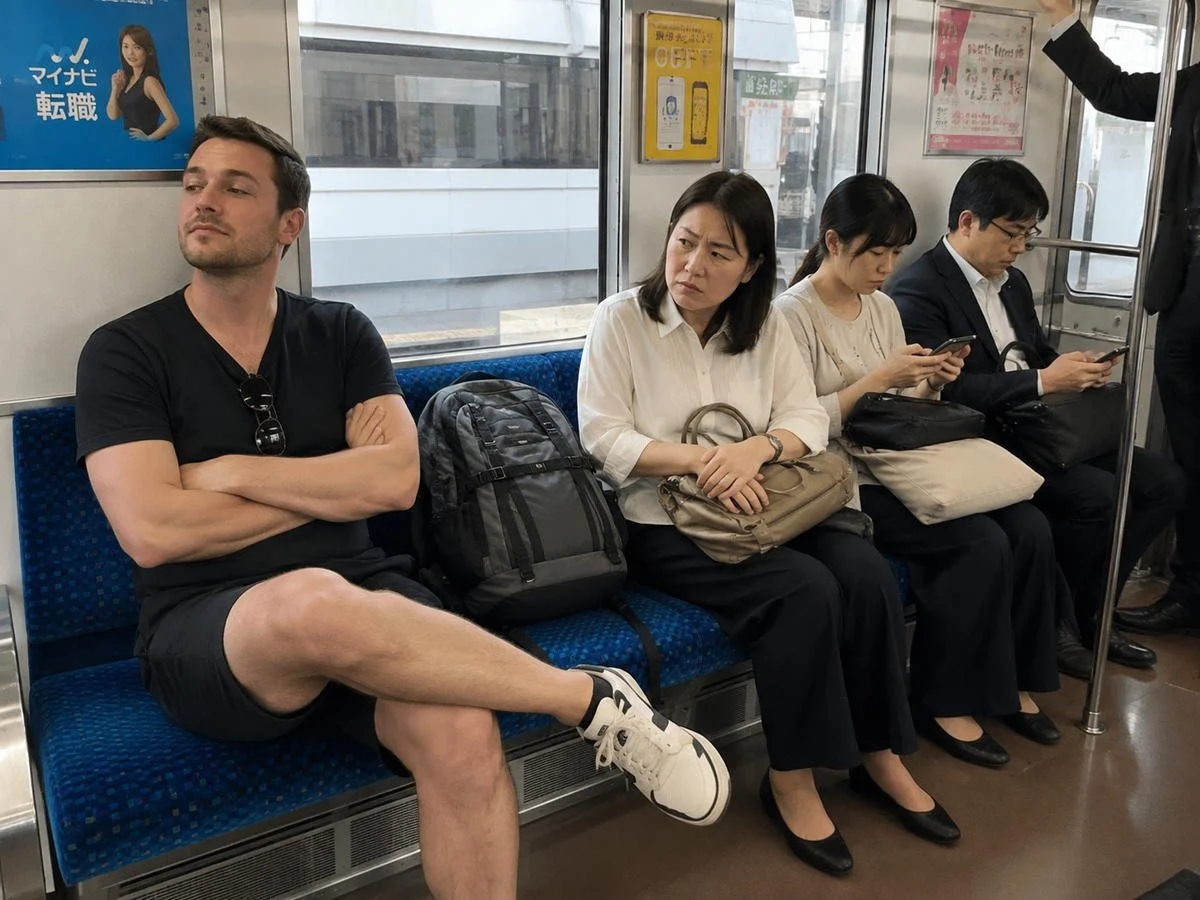
Try not to stretch your legs into the aisle or sit with your knees and belongings spread widely.
Keep coats, umbrellas, shopping bags, and suitcases within your own space whenever possible.
On less crowded rural trains, there may be plenty of room, but it is still polite to make space if other passengers board.
Be Careful with Wet Umbrellas
During rainy weather, umbrellas are common on trains and buses.
Try to close and secure your umbrella before boarding. Keep the wet end pointed downward and avoid letting it touch other passengers.
Some stations, shops, and public facilities provide umbrella covers to prevent dripping indoors.
On crowded trains, holding a wet umbrella carelessly can easily inconvenience the person standing beside you.
Eating and Drinking
on Public Transportation
Whether eating is acceptable depends largely on the type of train.
Local and Commuter Trains
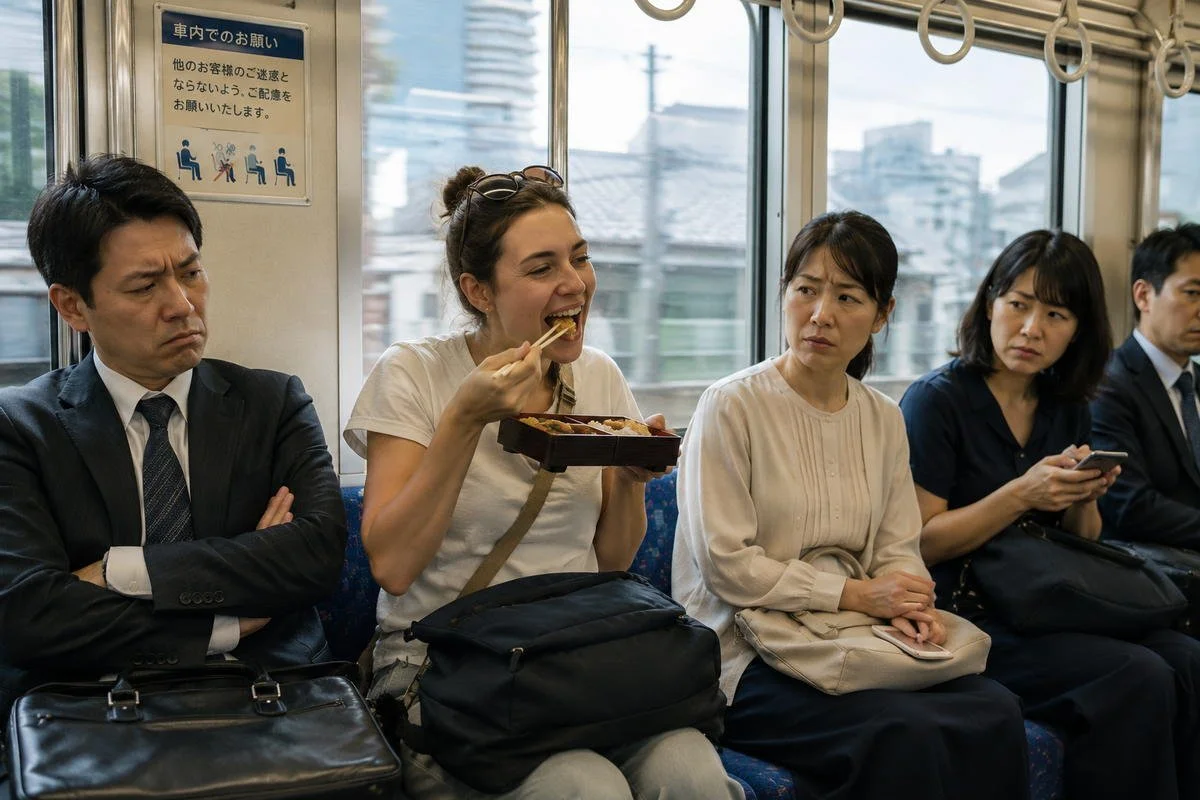
Eating meals on local commuter trains is generally uncommon.
A small drink, candy, or quick snack may not cause concern, especially on a quiet rural train, but full meals and strong-smelling food are usually best avoided.
This is particularly important on crowded city trains, where passengers are standing close together.
Food that may spill, create noise, or have a noticeable smell can make others uncomfortable.
Shinkansen and Limited Express Trains
Eating is usually acceptable on the Shinkansen and many limited express trains.
In fact, enjoying an ekiben, or station boxed lunch, is one of the pleasures of traveling by long-distance train in Japan.
Many major stations sell beautifully prepared boxed meals featuring regional ingredients and local specialties.
Passengers generally eat neatly, keep the area clean, and take their trash with them when leaving.
Alcohol is also commonly consumed on some long-distance trains, but moderation is important. Loud behavior caused by drinking is still considered inappropriate.
Buses
Eating on local buses is usually avoided.
Long-distance highway buses may allow drinks and light snacks, but rules vary by operator.
When in doubt, check signs or simply observe what other passengers are doing.
Rush Hour in Japan
Rush hour in major cities such as Tokyo, Osaka, and Yokohama can be extremely crowded.
Weekday mornings are often busiest between approximately 7:30 a.m. and 9:30 a.m., while evening crowds typically increase after the working day ends.
During these times, passengers may be packed closely together, and boarding can feel intense for visitors who are unfamiliar with the experience.
If your sightseeing schedule is flexible, traveling after the morning rush hour can make your journey much more comfortable.
Mid-morning and early afternoon trains are often quieter.
In rural parts of Japan, including much of Nara Prefecture, trains are generally less crowded. However, they may still become busy during school commuting hours, festivals, public holidays, or seasonal tourism periods.
Local Tip
If you are traveling with large suitcases, avoid rush hour whenever possible. You will have more space, boarding will be easier, and your journey will be much less stressful.
In Nara, some rural train stations have stairs and limited elevator access, so traveling with lighter luggage can make a significant difference.
Traveling with Large Luggage
Japan’s transportation system is efficient, but it was not always designed with oversized suitcases in mind.
Large luggage can be difficult to manage on crowded commuter trains, station staircases, and narrow local buses.
Whenever possible, use elevators, luggage delivery services, coin lockers, or hotel baggage storage.
Japan’s luggage forwarding services, often called takkyubin, are widely used and extremely convenient. They allow travelers to send suitcases from one hotel to another, reducing the need to carry them on trains.
On the Shinkansen, very large luggage may require advance seat reservations in designated areas, depending on the route and luggage size.
Always check current railway rules before traveling with oversized baggage.
Women-Only Cars
Some commuter trains in major cities have women-only cars during specific times of day, usually during the morning rush hour.
These cars are marked with signs on the platform and train windows.
The restrictions may apply only on weekdays, during certain hours, or on specific sections of a route.
Children, passengers with disabilities, and caregivers may also be permitted, depending on the railway company.
If you accidentally board one outside the designated time, it may not be a problem. However, during restricted hours, check the signs carefully before entering.
Accessible Travel
Major train stations in Japan often have elevators, escalators, accessible restrooms, tactile paving, and staff assistance.
However, accessibility can vary significantly at smaller, older, or rural stations.
Some local stations may have stairs, narrow platforms, or limited staff.
Travelers who use wheelchairs, mobility aids, or large strollers should research the route in advance and allow extra time for transfers.
Railway staff are usually helpful and may provide boarding ramps or guide passengers through accessible routes.
Because assistance may need to be arranged before the train arrives, arriving early is recommended.
Common Mistakes Visitors Make
Most etiquette mistakes happen simply because travelers are unfamiliar with local customs.
Japanese people generally understand this, and small mistakes are rarely treated as serious problems.
Still, knowing the most common issues can help you avoid uncomfortable situations.
Speaking Too Loudly
Visitors may not realize how far their voices carry inside a quiet train.
This is especially common when traveling in groups.
The easiest solution is to notice the general atmosphere and lower your voice accordingly.
Making Phone Calls from the Seat
Phone calls are one of the most noticeable disruptions on local trains.
Even a brief conversation can attract attention.
Send a message or wait until you leave the train whenever possible.
Wearing a Large Backpack on the Back
On a crowded train, a backpack can press against other passengers or block the aisle.
Carry it in front of you or place it on the luggage rack.
Blocking the Doors with Luggage
Standing near the doors with a large suitcase can make it difficult for passengers to exit.
Move deeper into the carriage when possible, or position your luggage so it does not block the path.
Eating Strong-Smelling Food
Food may be acceptable on some trains, but smell matters.
Avoid eating meals on commuter trains, particularly in busy urban areas.
Sitting in Priority Seats Without Paying Attention
Using a priority seat is not always forbidden, but ignoring someone who needs it is considered inconsiderate.
Stay alert and be ready to offer the seat.
Boarding Before Others Have Exited
Waiting just a few seconds makes the entire boarding process smoother.
Stand to the side and let passengers leave first.
What Happens If You Make a Mistake?
Do not worry too much about making a small mistake.
Japanese passengers generally understand that international visitors may not know every custom.
You are unlikely to be confronted unless your behavior is seriously disruptive.
More often, someone may glance in your direction, move away, or quietly indicate the problem.
If you notice that you are speaking too loudly, blocking the aisle, or disturbing someone, simply adjust your behavior.
A small nod, a smile, or a quiet sumimasen—meaning “excuse me” or “I’m sorry”—is usually enough.
No one expects visitors to behave perfectly.
The effort to be considerate matters much more than knowing every rule.
Did You Know?
Many Japanese commuters are remarkably skilled at waking up just before their station.
Someone may appear to be deeply asleep, yet suddenly open their eyes moments before the train arrives.
For regular commuters, the sounds, announcements, turns, and rhythm of the journey become surprisingly familiar.
You may also notice that sleeping on public transportation is relatively common in Japan.
Because trains are generally considered safe and orderly, passengers often feel comfortable resting during the journey.
A Note About Trains in Rural Japan
Public transportation in rural Japan can feel very different from transportation in Tokyo or Osaka.
Trains may arrive only once or twice an hour. Some stations may be unmanned. Local buses may require passengers to take a numbered ticket when boarding and pay when getting off.
In areas such as Asuka and southern Nara, transportation may be peaceful and scenic, but planning is important.
Missing one train may mean a long wait for the next one.
Check timetables carefully, allow extra time, and do not assume that every station will have English-speaking staff.
At the same time, rural train travel offers a wonderful view of everyday Japan.
You may pass rice fields, mountains, old neighborhoods, shrines, and small communities that are easy to miss when traveling only between major cities.
Local Tip
In rural Nara, keep your train ticket or transit card ready until you have completely exited the station. Some stations have simple gates, staff-operated exits, or different procedures from large urban stations.
When you are unsure, show your ticket to the station staff. They are accustomed to helping travelers.
The Meaning Behind the Quiet
At first, the quiet atmosphere of Japanese public transportation may feel formal or even slightly distant.
But the silence is not meant to exclude people.
It reflects an unspoken agreement among passengers.
Everyone gives up a small amount of personal freedom—speaking loudly, making calls, taking extra space—so that the shared journey becomes more comfortable for everyone.
This is one of the clearest examples of Japanese etiquette in everyday life.
There is no need to imitate every local habit perfectly.
Simply observe, stay aware of the people around you, and make small adjustments when necessary.
By doing so, you are not only following transportation etiquette.
You are participating in one of the quiet forms of mutual respect that helps daily life in Japan run so smoothly.