
Chapter 2: Convenience Stores 3
Practical Etiquette at the Register
Shopping at a Japanese convenience store is simple, but checkout often moves quickly.
A little preparation helps keep the line moving smoothly and makes the experience more comfortable for both you and the people around you.
Wait in the Marked Line
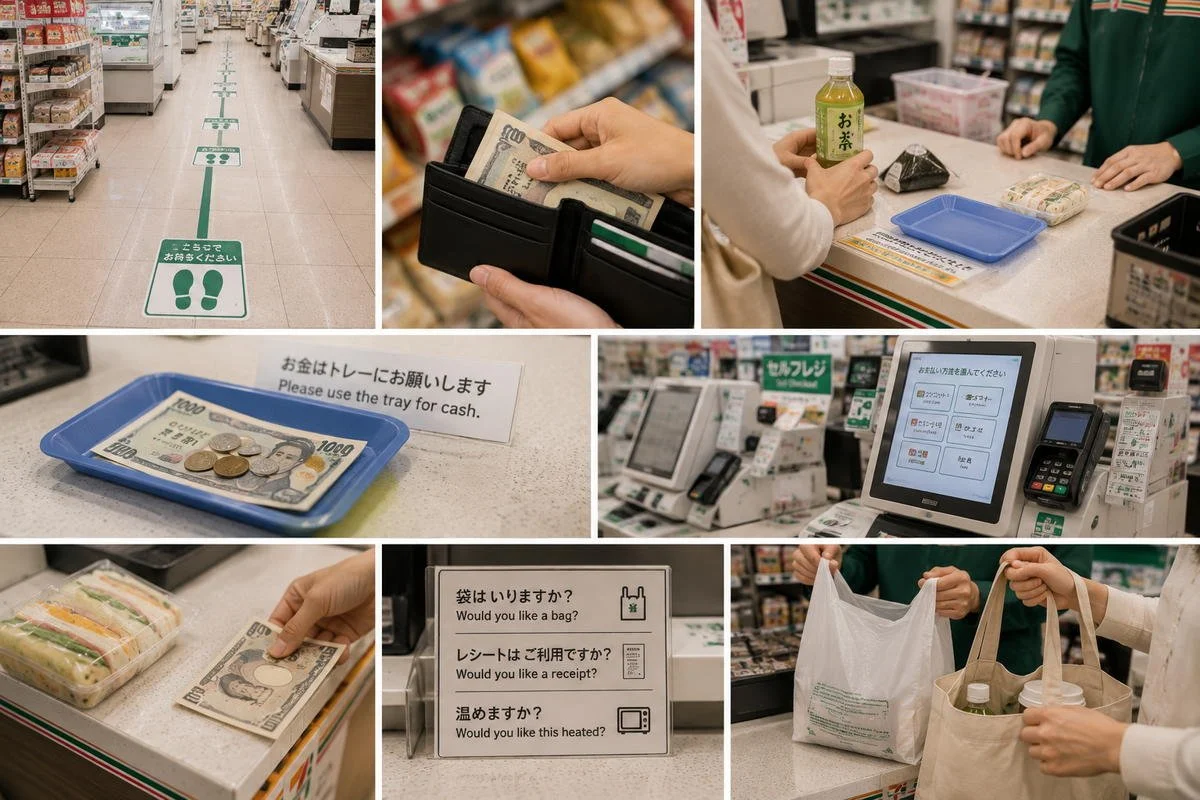
Many convenience stores have floor markings that show where customers should line up.
Even when several registers are open, customers often wait in a single queue and move to the next available cashier when called.
Avoid standing directly in front of a register unless the markings indicate that you should. Following the queue system keeps the checkout area organized, especially during busy periods.
Have Your Payment Ready
Before it's your turn, try to have your cash, credit card, or smartphone payment ready.
Searching through a large bag after the cashier announces the total isn't considered rude, but it can slow down the line. Being prepared reflects the efficient pace that Japanese convenience stores are known for.
Use the Payment Tray
When paying with cash, you'll often notice a small tray beside the register.
Rather than handing money directly to the cashier, place it on the tray. Your change will usually be returned there as well, making it easier for both you and the cashier to count the money accurately.
Many newer stores now use self-service payment machines. In these cases, the cashier scans your items, and you complete the payment yourself using the machine at the counter. Simply follow the on-screen instructions and choose your preferred payment method.
Do Not Place Money on Top of Your Purchases
If you're paying with cash, avoid placing bills or coins on the counter, on top of your food, or directly into the cashier's hand.
Using the payment tray is a small custom, but it's one that's easy to follow and helps keep the transaction neat and organized.
Listen for Common Questions
During checkout, the cashier may ask a few short questions.
The most common are:
Fukuro wa irimasu ka?
"Would you like a bag?"
Reshito wa yoroshii desu ka?
"Would you like the receipt?"
Atatamemasu ka?
"Would you like this heated?"
Don't worry if you don't understand every word.
A smile, a nod, a shake of the head, or simple responses such as hai (yes) or daijobu desu (no, thank you / I'm fine) are usually all you need.
If you've brought your own reusable bag, you can say:
Fukuro wa daijobu desu.
"I don't need a bag."
Plastic Bags and Reusable Bags
Plastic shopping bags are generally not free in Japan. The fee is usually small, but the cashier will often ask whether you'd like one.
Many local residents carry reusable bags, especially for larger purchases. Travelers may also find it useful to keep a lightweight foldable bag in a backpack or daypack for snacks, souvenirs, or extra clothing.
If you buy hot food, cold drinks, or delicate items together, the staff may separate them into different bags to prevent spills, melting, or damage.
If one bag is enough, you can simply let the cashier know.