
Chapter 14: Helpful Japanese Expressions 3
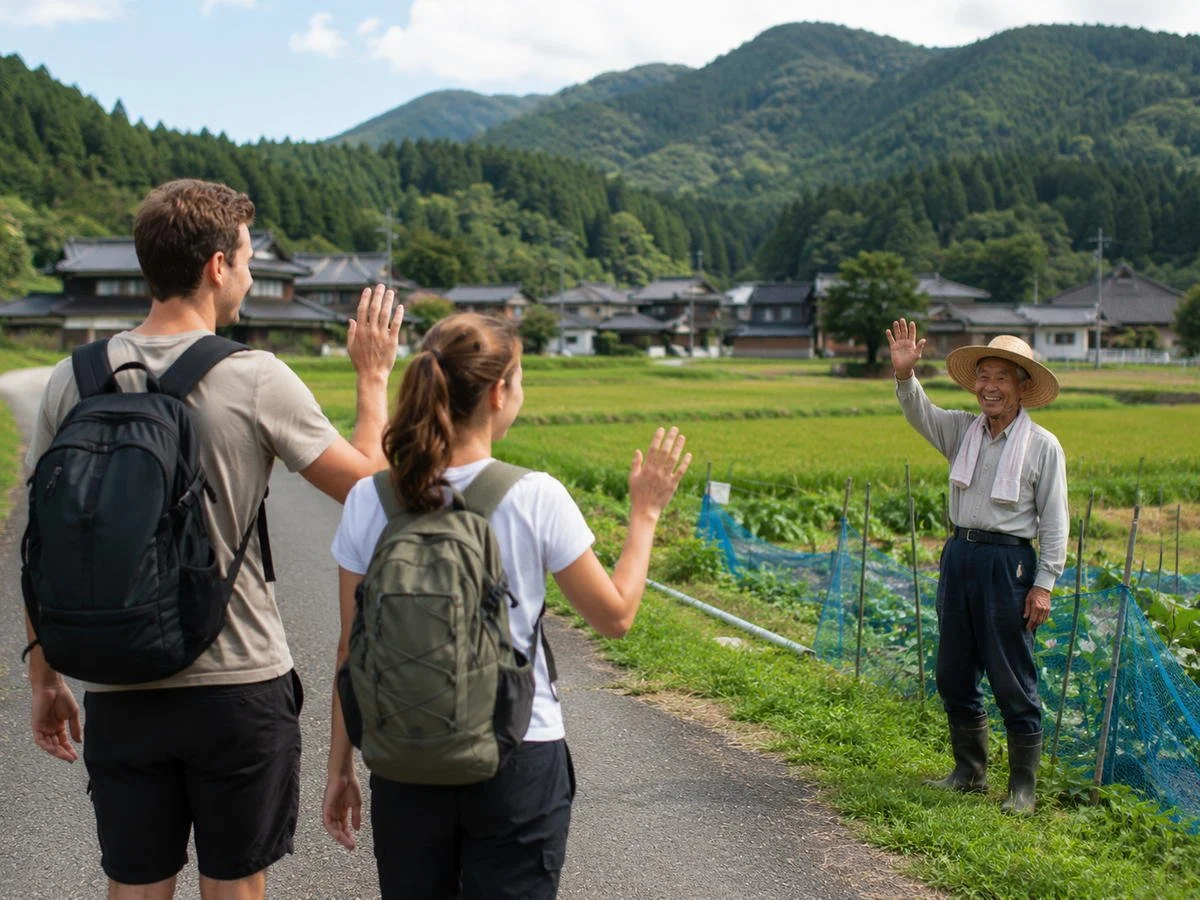
Beyond Words: Communicating with Respect
As we've seen throughout this chapter, learning a few Japanese expressions can make traveling more enjoyable.
But the most meaningful communication often goes beyond vocabulary.
Kindness.
Patience.
Curiosity.
Respect.
These qualities are understood in every language.
Even when two people don't share many words, they can still share a positive experience.
Listening Is Part of Communication
When people think about communication, they often focus on speaking.
Listening is just as important.
In Japan, conversations are often calm and measured, with people taking turns and allowing moments of silence.
Rather than rushing to fill every pause, simply listening attentively can be a sign of respect.
Sometimes a smile, a nod, or a thoughtful pause communicates more than another sentence.
Reading the Situation
Earlier in this guide, we introduced the importance of paying attention to your surroundings.
That same awareness also applies to communication.
Notice whether a shop is busy before asking a long question.
Observe whether people are speaking quietly on a train.
Recognize when someone is trying to help, even if you don't completely understand every word.
Good communication often begins with careful observation.
Don't Be Afraid of Mistakes
One of the biggest concerns many visitors have is making language mistakes.
The good news is that mistakes are a natural part of travel.
You may pronounce a word incorrectly.
You may use the wrong phrase.
You may accidentally mix Japanese with English.
That's perfectly okay.
Most people appreciate genuine effort far more than perfect grammar.
Travel isn't about speaking flawlessly—it's about connecting with others.
Smiles Speak Every Language
A warm smile can often communicate more than an extensive vocabulary.
Combined with a simple greeting or a heartfelt "Arigatō gozaimasu," it helps create positive interactions wherever you go.
Likewise, patience and understanding become especially valuable when conversations take a little longer than expected.
Good communication is something both people create together.
Common Misunderstandings
Visitors sometimes believe they need to memorize dozens of Japanese phrases before arriving.
Fortunately, that's not the case.
A few useful expressions, combined with a respectful attitude, are usually enough.
Others worry that speaking imperfect Japanese might offend someone.
In reality, most people are simply happy to see visitors making the effort.
The goal isn't perfection.
It's connection.
Every Conversation Is Part of the Journey
Some of your favorite travel memories may come from conversations you never expected.
A station attendant helping you find the correct platform
A shop owner recommending a local specialty
A farmer waving as you pass through the countryside
A fellow passenger pointing you toward the right train
These brief exchanges often last only a minute or two.
Yet they remind us that travel is ultimately about people as much as places.
Did You Know?
Many visitors are surprised by how much communication happens through gestures, facial expressions, and shared understanding.
In Japan, a polite nod, a patient attitude, and a sincere smile often communicate just as much as words.
Local Tip
Don't worry if you forget a phrase or need to rely on a translation app.
People rarely remember exactly what you said.
They'll remember how you made them feel.
Approach every conversation with kindness, and you'll already be communicating in one of the most important languages of all.
The Meaning Behind Learning Japanese Expressions
You don't need to speak fluent Japanese to enjoy an unforgettable journey.
You don't need perfect pronunciation or an extensive vocabulary.
What matters most is your willingness to connect with the people you meet along the way.
A greeting.
A thank-you.
A smile.
A moment of patience.
These simple gestures have the power to turn ordinary interactions into lasting memories.
As your journey continues, remember that every conversation—whether spoken through words, gestures, or shared smiles—is another opportunity to better understand Japan and the people who call it home.
In the end, the most important language you bring with you isn't Japanese.
It's kindness.
And that's a language understood everywhere.