
Chapter 14: Helpful Japanese Expressions 2

Everyday Words That Build Connections
Learning a few Japanese expressions isn't about speaking perfect Japanese.
It's about making everyday interactions a little warmer and more enjoyable.
The phrases below are among the most useful you'll encounter during your travels.
More importantly, each reflects the spirit of consideration and respect we've explored throughout this guide.
Onegaishimasu (お願いします)
One of the most versatile expressions in Japanese is onegaishimasu.
Depending on the situation, it can mean:
"Please."
"I'd like this, please."
"Thank you in advance."
"I appreciate your help."
You might use it when ordering food, asking for assistance, handing over a ticket, or beginning an activity with a guide or instructor.
Rather than sounding demanding, onegaishimasu expresses a polite request with appreciation.
Hai (はい)
Many visitors quickly notice that people in Japan say hai frequently.
While it does mean "yes," it can also mean:
"I understand."
"I'm listening."
"Certainly."
For example, a shop employee may say hai simply to acknowledge what you've said—not necessarily to express agreement.
Understanding this subtle difference can help avoid confusion during conversations.
Daijōbu (大丈夫)
Another word you'll hear often is daijōbu.
Its meaning depends on the situation.
It may mean:
"I'm okay."
"That's alright."
"No, thank you."
"No problem."
For example, if a cashier asks whether you need a shopping bag and you reply, "Daijōbu desu," you're politely saying you don't need one.
Like many Japanese expressions, context is everything.
Ordering Food and Shopping
You don't need long sentences to communicate politely.
Simple expressions often work perfectly.
For example:
Kore o onegaishimasu.
"This one, please."
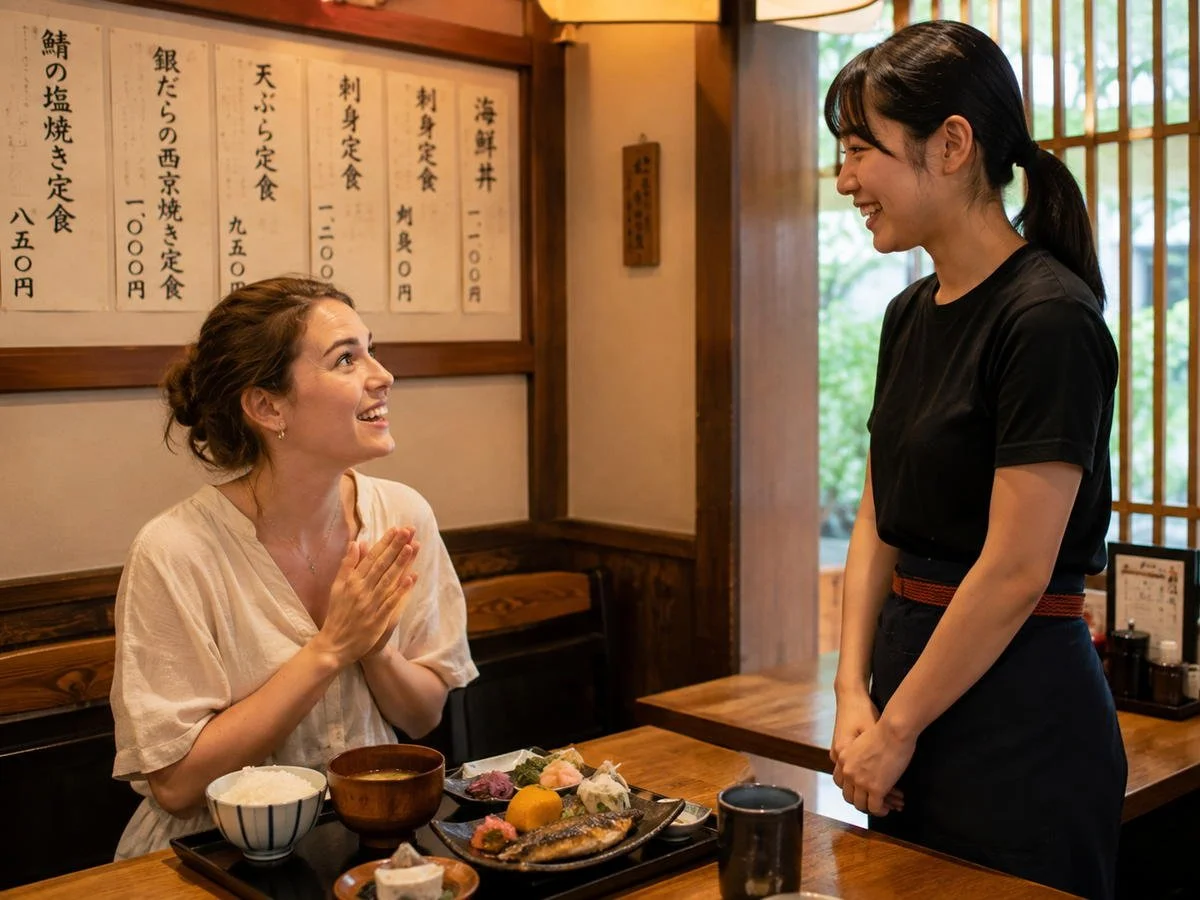
Pointing politely while saying this phrase is completely natural in restaurants, bakeries, cafés, and shops.
If you enjoy your meal, saying:
Oishii!
"Delicious!"
is always appreciated.
It's a simple compliment that often brings a smile
Before and After Meals
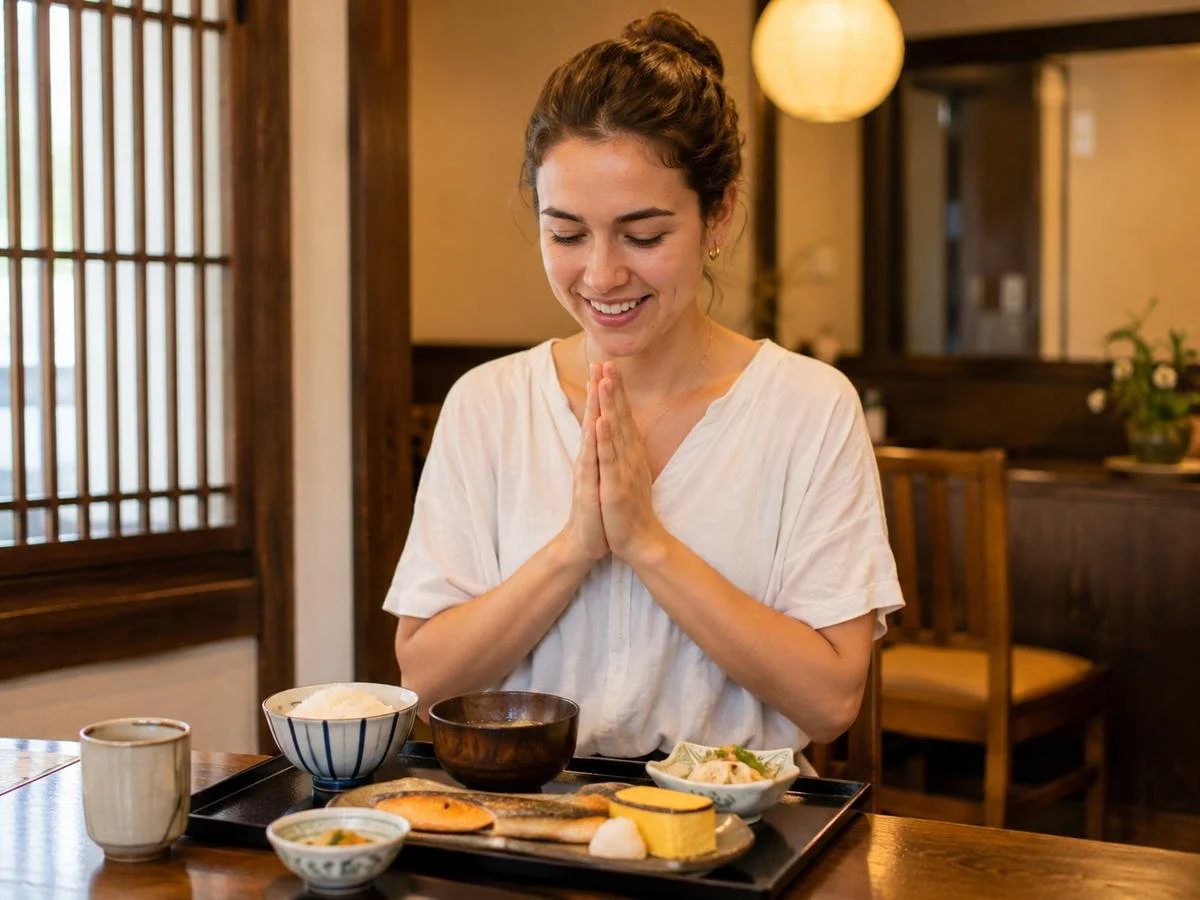
If you're invited to share a meal with Japanese friends or experience a traditional dining setting, you may hear two expressions:
Itadakimasu (いただきます) before eating
Gochisōsama deshita (ごちそうさまでした) after finishing
These aren't direct equivalents of "Bon appétit" or "Thank you for the meal."
Instead, they express appreciation for everyone involved in bringing the meal to the table—from those who prepared it to the ingredients themselves.
As a visitor, you aren't expected to use these expressions perfectly.
However, understanding their meaning offers a glimpse into the Japanese appreciation for food and the people behind it.
When You Hear Irasshaimase
As you enter shops, restaurants, or department stores, you'll almost certainly hear:
Irasshaimase! (いらっしゃいませ!)
This lively greeting means something like:
"Welcome!"
It's directed toward customers and doesn't require a response.
Many first-time visitors instinctively answer with "Hello," but there's no need.
A smile or a small nod is perfectly appropriate.
Asking About English
If you need help, one useful phrase is:
Eigo o hanasemasu ka? (英語を話せますか?)
"Do you speak English?"
Asking politely before beginning a conversation allows the other person to respond comfortably.
If they don't speak English, don't worry.
Translation apps, gestures, maps, and a little patience often work surprisingly well.

Communication Goes Both Ways
One of the nicest things about traveling in Japan is discovering that communication doesn't always depend on language.
Smiles
Polite gestures
Patience
Kindness
These often matter just as much as vocabulary.
Many memorable conversations begin with only a few shared words—and plenty of goodwill.
Did You Know?
Many Japanese conversations include short acknowledgements such as hai, nodding, or brief responses that show the speaker is listening attentively.
These small verbal cues help conversations flow naturally and reflect active engagement rather than interruption.
Local Tip
Don't try to memorize dozens of phrases before your trip.
Learning just a handful—and using them sincerely—is often far more valuable than carrying a long list you'll never feel confident using.
A few kind words spoken with respect can leave a lasting impression.