
Chapter 12: Visiting Rural Japan 2
Connecting with Local Communities
One of the greatest rewards of visiting rural Japan isn't simply seeing beautiful scenery.
It's experiencing everyday life in places where traditions, communities, and nature remain closely connected.
Unlike major tourist destinations, many small towns and villages offer opportunities for quiet, genuine encounters with local people.
Approaching these moments with curiosity and respect often leads to the most meaningful travel memories.
Meeting Local Residents
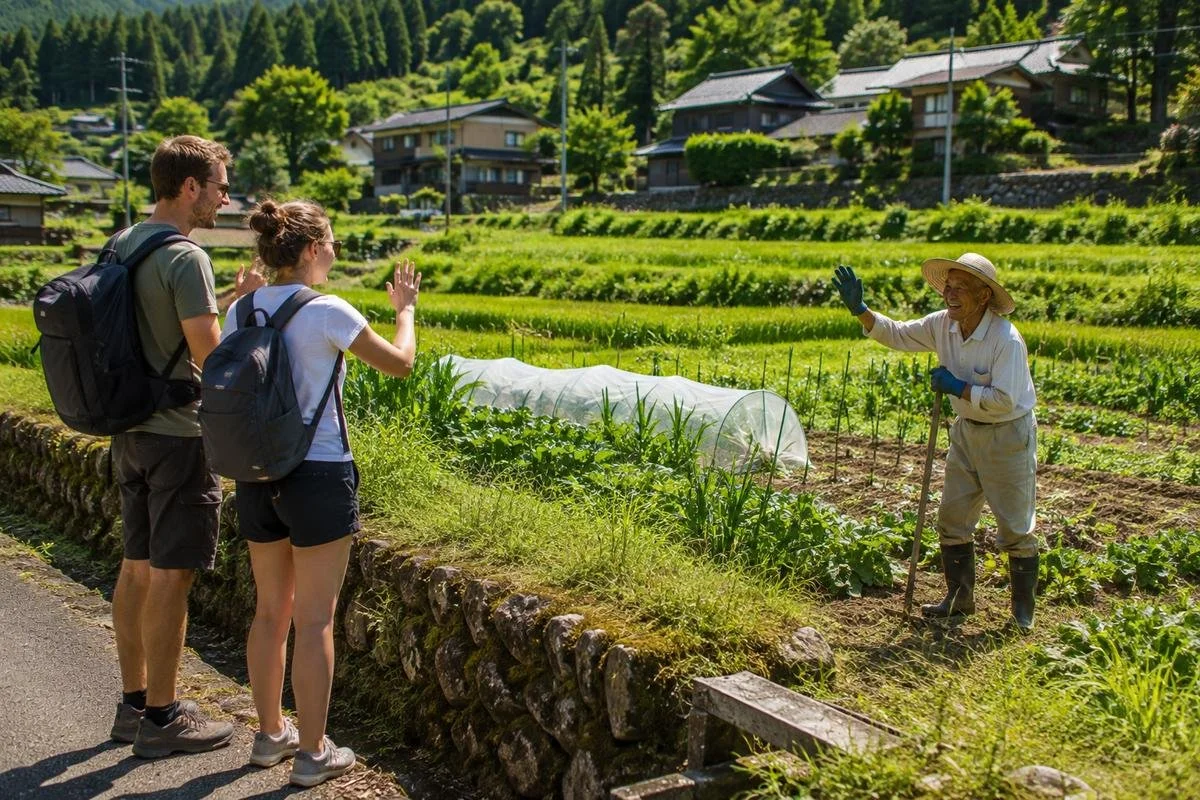
People in rural Japan are often warm and welcoming, though they may seem reserved at first.
In smaller communities, it's common for residents to notice unfamiliar faces.
Rather than feeling uncomfortable, think of it as a reflection of how closely connected these communities are.
A smile, a friendly nod, or a simple "Konnichiwa" ("Hello") is often enough to create a pleasant interaction.
Even if conversation is limited, these small gestures are always appreciated.
Respecting Everyday Life
As you explore, remember that you're walking through places where people live their daily lives.
You may pass children walking home from school, farmers working in the fields, or neighbors chatting outside their homes.
These ordinary scenes are part of what makes rural Japan so special.
Enjoy observing them, but avoid interrupting or treating everyday life as a tourist attraction.
Sometimes the most respectful approach is simply to appreciate the moment quietly.
Farms and Agricultural Land
Japan's countryside has been shaped by generations of careful farming.
Rice paddies, vegetable fields, orchards, and tea plantations are not only beautiful landscapes—they're someone's workplace and livelihood.
Even if there are no fences, avoid entering farmland without permission.
Likewise, resist the temptation to step into fields for photographs or shortcuts.
Protecting these spaces shows respect for the people who care for them throughout the year.
Driving on Quiet Roads
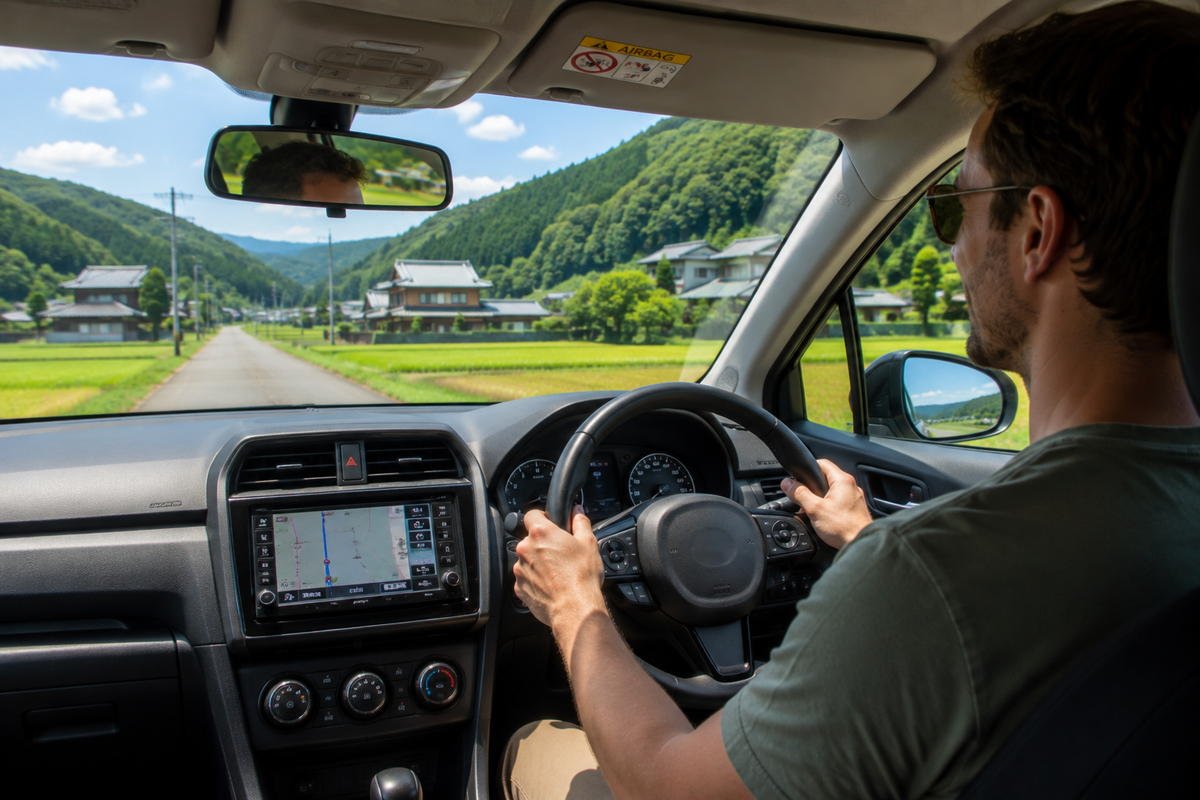
If you're exploring rural Japan by rental car, you'll notice that roads are often narrower than those in larger cities.
Many village roads are shared by local residents, delivery vehicles, cyclists, pedestrians, and farm equipment.
Driving slowly and patiently helps everyone travel safely.
You may occasionally need to pull over briefly to allow another vehicle to pass on particularly narrow roads.
Rather than viewing this as an inconvenience, think of it as part of the relaxed rhythm of countryside travel.
Local Trains and Buses
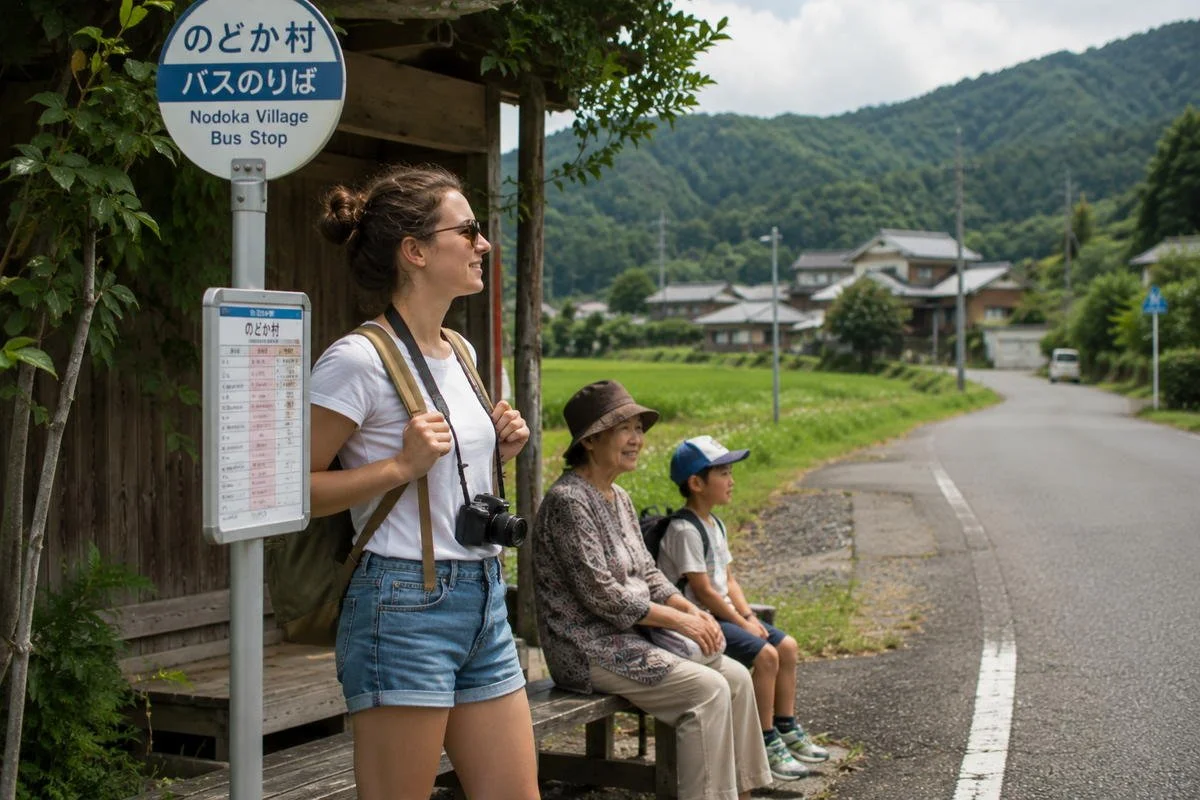
Public transportation in rural areas may operate less frequently than in major cities.
Missing one train or bus could mean waiting quite a while for the next service.
Arriving at the station or bus stop a little early is usually a good idea.
You'll also notice that local transportation often serves residents going about their daily routines—not just tourists.
Being mindful of those around you helps create a comfortable experience for everyone.
Small Shrines and Community Temples
Beyond Japan's famous landmarks are countless neighborhood shrines and local temples.
Some may have no admission fee, no souvenir shop, and very few visitors.
These places often remain active centers of community life.
Even if no one else is present, treat them with the same respect you would show at a well-known historic site.
A quiet visit can be just as meaningful as one to a famous destination.
Shopping Local
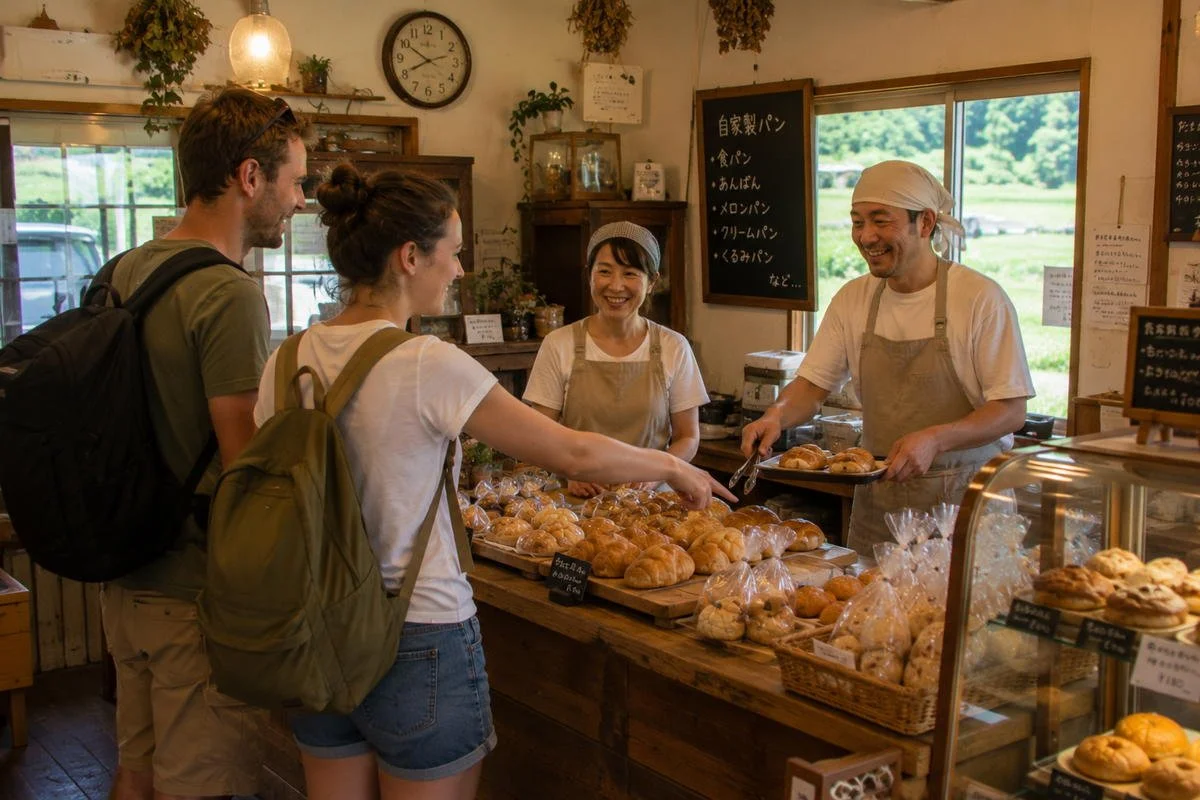
Small independent shops are an important part of many rural communities.
Whether you stop at a family-run bakery, a local produce stand, or a traditional craft shop, your visit helps support the people who keep these communities vibrant.
You may discover products that aren't available anywhere else.
Sometimes the story behind an item becomes just as memorable as the item itself.
Choosing to shop locally is one simple way to give something back to the places you visit.
Be Flexible
Travel in rural Japan sometimes requires a little more flexibility than travel in large cities.
A café may close earlier than expected.
A museum might have seasonal opening hours.
A restaurant may be closed on weekdays.
Rather than seeing these moments as inconveniences, many travelers come to appreciate the slower, less predictable pace.
Leaving room in your schedule for unexpected discoveries often leads to the most rewarding experiences.
Every Community Is Different
No two places in Japan are exactly alike.
A mountain village in Nagano feels different from a fishing town in Hokkaido.
A historic district in Nara has its own character, while a farming community in Kyushu offers another.
The customs, local specialties, and pace of life vary from place to place.
Approaching each destination with curiosity rather than expectations allows you to appreciate what makes it unique.
Did You Know?
Many of Japan's local festivals, traditional crafts, and regional foods have been preserved for generations thanks to the dedication of small communities.
Visiting these places helps support not only local businesses but also the cultural traditions that continue to thrive there.
Local Tip
If you have time, spend an extra hour simply wandering without a fixed destination.
Some of the most memorable discoveries—a tiny café, a roadside shrine, a scenic overlook, or a friendly conversation—are often the ones you never planned.
Rural Japan has a wonderful way of rewarding travelers who leave room for the unexpected.