
Chapter 2: Convenience Stores 5
Common Mistakes Visitors Make
Japanese convenience stores are easy to use, but a few misunderstandings are common among first-time visitors.
Knowing what to expect will help you shop more confidently and avoid small inconveniences.
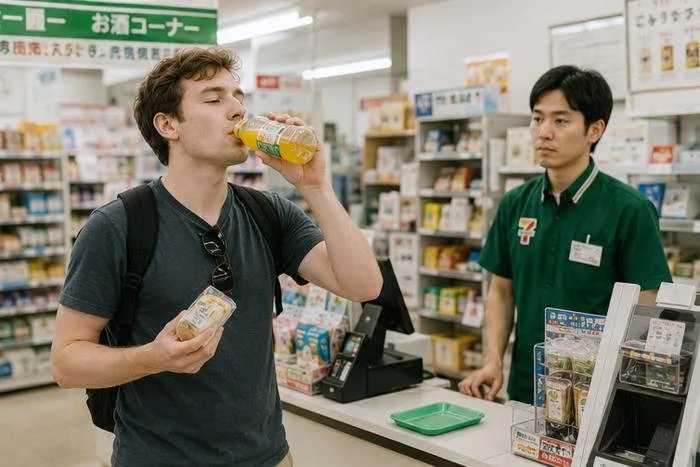
Opening Food Before Paying
Always wait until you've paid before opening a drink, snack, or any other product.
Even if you fully intend to pay, consuming an item before checkout can cause confusion. Complete your purchase first, then enjoy it.
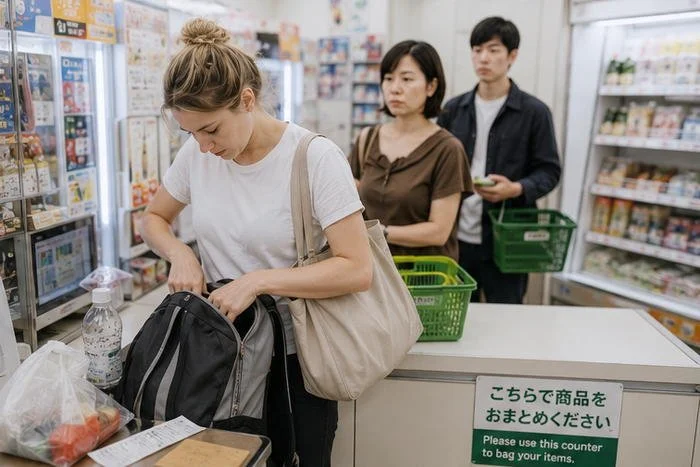
Blocking the Register While Organizing Your Belongings
After paying, step aside before putting away your wallet, packing your bag, or checking your receipt.
Many stores have a small counter specifically for packing purchases, allowing the next customer to reach the register without delay.
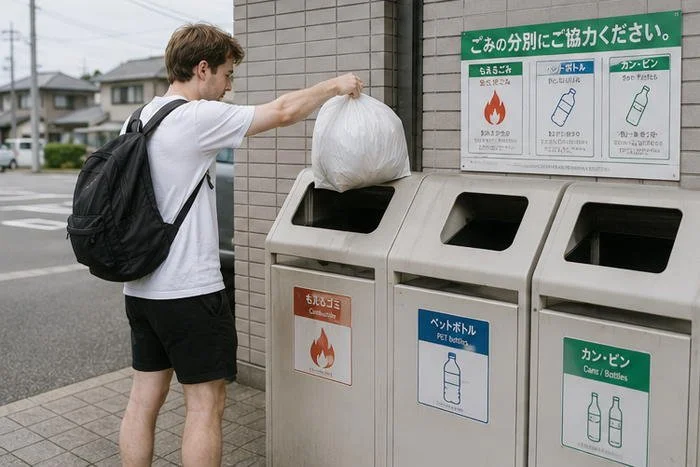
Using Store Trash Bins for Unrelated Waste
Convenience-store trash bins are intended primarily for waste generated from purchases made at that store.
Avoid disposing of large amounts of trash from your hotel room, rental car, or sightseeing activities.
Assuming Every Store Has a Restroom
Not every convenience store provides public restrooms.
This is especially true in busy city centers and around major train stations, so it's a good idea to plan ahead whenever possible.
Eating Near the Entrance
Avoid standing directly outside the entrance while eating.
It can block customers, create litter, and make the entrance feel crowded. If there is no designated seating area, find a more appropriate place to enjoy your meal.
Taking Photos Without Permission
Store employees are there to assist customers—not to be photographed.
If your photo includes staff members or other customers, ask for permission first and always respect their privacy.
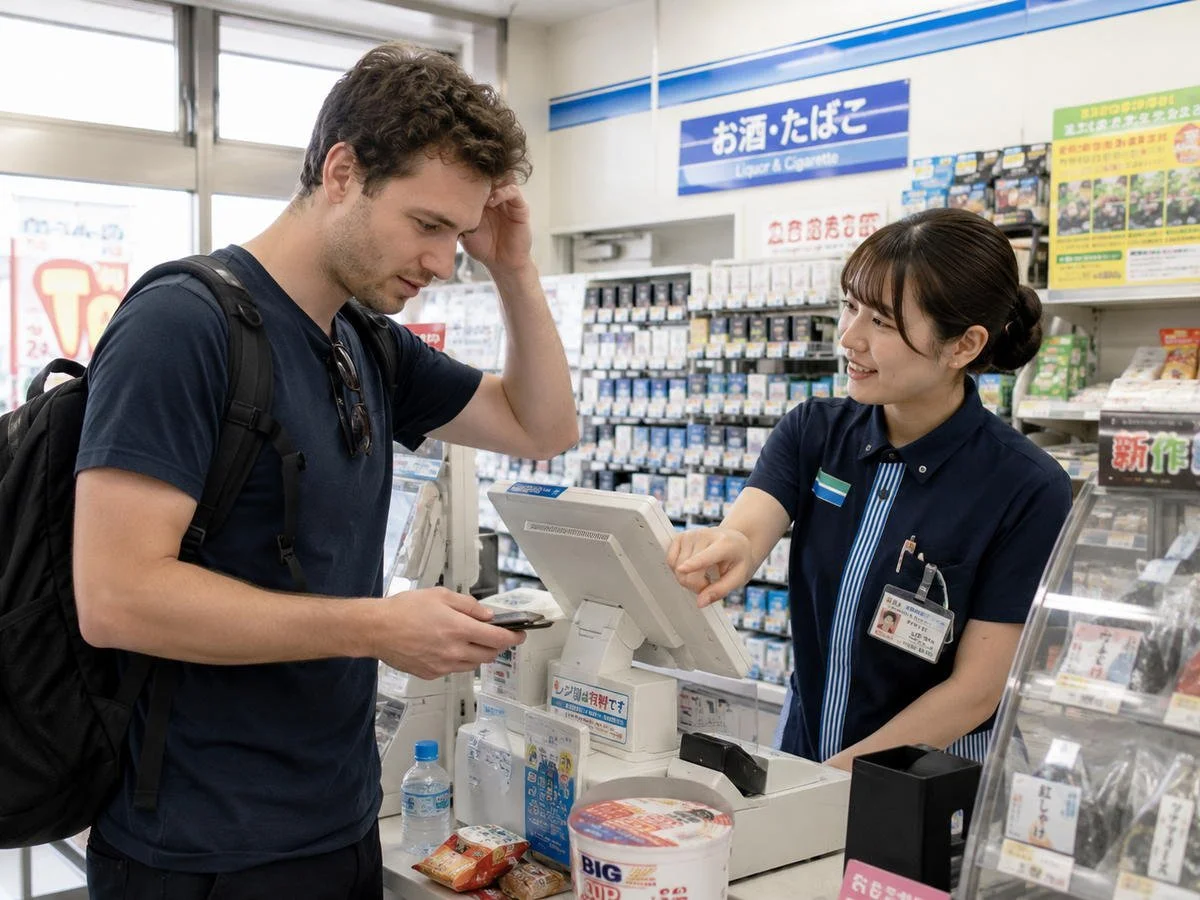
Expecting Staff to Speak English
Some convenience-store employees speak English, but many do not.
Fortunately, most transactions require very little conversation. Simple gestures, payment screens, translation apps, and a few basic Japanese phrases are usually enough.
If communication takes a little longer than expected, remain patient and courteous.
Taking Too Long at the Register
Before reaching the cashier, decide whether you need a shopping bag, want your food heated, or plan to order hot snacks.
If you're using a more complicated service—such as printing documents or paying a bill—consider letting customers with simple purchases go ahead of you during busy times.
What If You Don't Understand the Cashier?
Don't worry.
Convenience-store staff help customers from around the world every day, and most transactions can be completed with only a few words.
Pay attention to what the cashier is holding or pointing at.
If they hold up a shopping bag, they're probably asking whether you'd like one.
If they point to a microwave, they're likely asking whether you'd like your meal heated.
If they gesture toward a payment screen, simply read the available options and make your selection.
A few simple phrases can also be helpful:
Hai — Yes
Daijobu desu — No, thank you. / I'm fine.
Onegaishimasu — Please.
Arigato gozaimasu — Thank you.
Wakarimasen — I don't understand.
A smile, a calm attitude, and a little patience will usually take care of the rest.
Did You Know?
Many products sold at Japanese convenience stores are created exclusively for a specific chain.
That means the rice balls, desserts, coffee, fried chicken, and seasonal specialties at one brand may be completely different from those at another.
Because of this, many Japanese people have surprisingly strong opinions about their favorite convenience store.
One person may swear by the desserts at one chain, another may insist the best fried chicken comes from a different one, while someone else won't buy coffee anywhere else.
Convenience stores also regularly collaborate with famous restaurants, popular anime series, regional food producers, and seasonal events.
Even a quick stop can offer a glimpse into Japan's latest food trends and limited-time flavors.
Convenience Stores in Rural Japan
In rural communities, convenience stores play an even more important role.
Small towns may have limited restaurant hours, few late-night businesses, and infrequent public transportation. The local konbini often becomes a one-stop resource where travelers can buy breakfast, withdraw cash, use the restroom, take a short break, or wait comfortably before the next bus.
At the same time, stores are much farther apart than they are in large cities.
When visiting places such as Asuka or the countryside of southern Nara, don't expect to find a convenience store near every historical site.
Before setting out, it's wise to stock up on water, snacks, sunscreen, and any other essentials you'll need for the day.
This is especially important during the summer, when the heat and humidity can be intense.
Local Tip
Before exploring rural Nara, stop by a convenience store near a major train station.
Buying water, a light snack, tissues, sunscreen, a compact rain poncho, and a small trash bag in advance can make your day much more comfortable.
Once you're walking between ancient temples, burial mounds, and quiet country roads, these items can be surprisingly difficult to find.
The Meaning Behind the Convenience
At first glance, a Japanese convenience store may seem like nothing more than a place to grab a quick meal or drink.
But its true value goes far beyond convenience.
The konbini is built on reliability.
Customers trust that the shelves will be stocked, the food will be fresh, the store will be clean, and the service will be efficient and consistent.
It also reflects a broader aspect of Japanese daily life, where countless small details are carefully organized to make everyday tasks smoother for everyone.
Products arrive on time. Meals are thoughtfully packaged. Payments are efficient. A wide range of services is brought together in one dependable place.
For travelers, a konbini can provide breakfast before an early train, cash when another ATM won't accept your card, an umbrella during an unexpected rain shower, or a quick solution to countless small travel problems.
Using one well is simple:
Be prepared, be considerate, and leave the store as clean and orderly as you found it.
By doing so, you'll experience not only one of Japan's most useful modern services, but also another example of how convenience and consideration quietly shape everyday life in Japan.