Chapter 3: Restaurants & Dining 1
How to Enjoy Dining in Japan Like a Local
For many travelers, food becomes one of the most memorable parts of visiting Japan.
Whether you're enjoying fresh sushi in Tokyo, ramen in Fukuoka, grilled seafood along the coast, or a beautifully prepared kaiseki meal in Nara, every meal offers a chance to experience Japanese culture on a deeper level.
Dining in Japan is about far more than satisfying your appetite.
Restaurants reflect many of the values that shape everyday Japanese life—respect for seasonal ingredients, careful attention to detail, cleanliness, hospitality, and consideration for others.
The good news is that you don't need to master complicated etiquette to enjoy dining in Japan.
By understanding a few simple customs, you'll feel more confident, communicate more easily, and appreciate each meal in a way that goes beyond the food itself.
Why Dining Etiquette Matters in Japan
Japanese dining etiquette isn't built around strict rules or formal ceremonies.
Instead, it's based on a simple idea:
Everyone should be able to enjoy their meal comfortably.
Restaurant staff work hard to provide attentive service without interrupting guests. Chefs spend years perfecting their recipes and presentation. In return, customers help create a pleasant atmosphere by respecting the space, speaking considerately, and appreciating the meal.
Unlike in some countries where restaurants are lively and noisy, many restaurants in Japan have a calmer atmosphere.
People certainly laugh and enjoy meals with friends and family, but they're also mindful of those around them.
This quiet sense of mutual consideration allows everyone to relax and enjoy the experience.
What You'll Notice
If it's your first time dining in Japan, a few things may catch your attention.
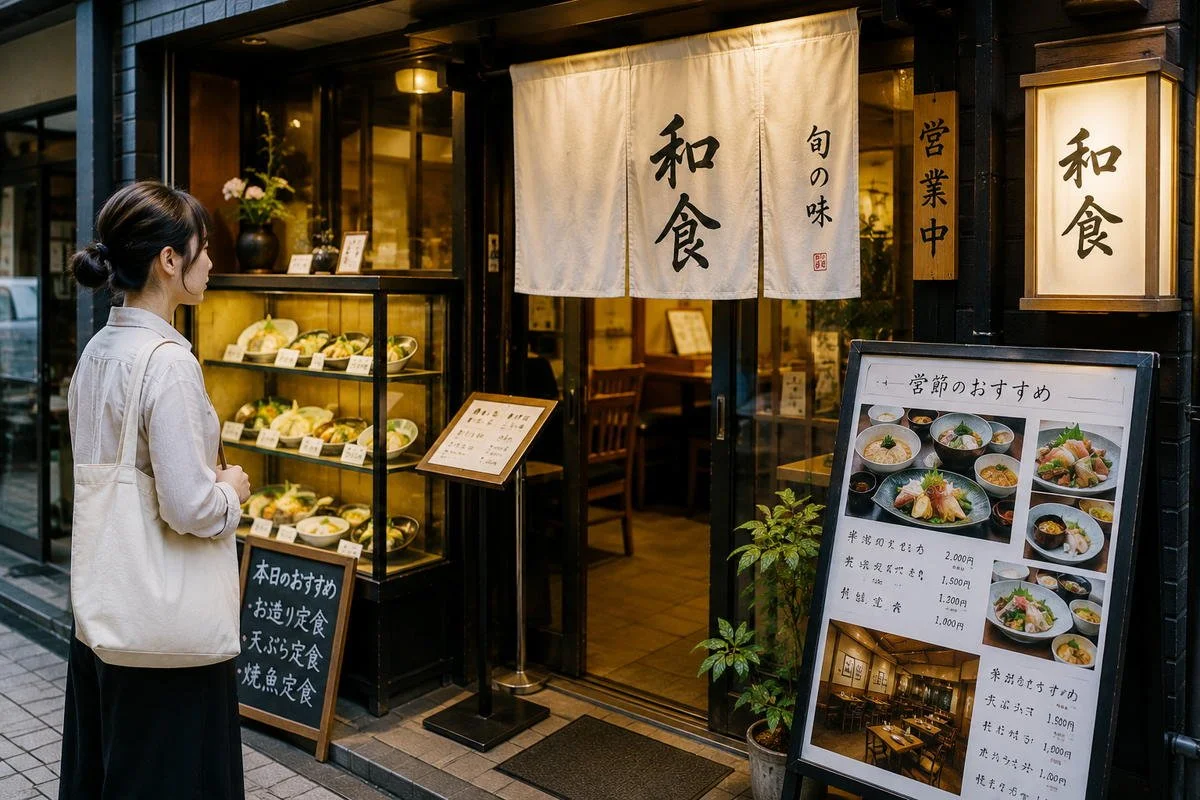
Many restaurants display realistic plastic food models or beautifully photographed menus outside the entrance, making it easy to see what's available before you step inside.
You'll also notice that many restaurants specialize in just one type of cuisine.
One restaurant may serve only ramen, while another focuses entirely on tempura, soba, eel, or curry rice.
Rather than offering an extensive menu, many chefs prefer to perfect a smaller selection of dishes.
Restaurants themselves are often smaller than visitors expect, especially in major cities where space is limited.
Tables may be close together, counter seating is common, and excellent restaurants are sometimes tucked away on the upper floors of buildings with only a modest sign outside.
Don't let a simple entrance fool you.
Some of Japan's finest meals are served in surprisingly small spaces.
Entering a Restaurant
One of the questions visitors ask most often is:
"Can I just walk in?"
For most casual restaurants, the answer is yes.
Simply enter and wait near the entrance.
A staff member will usually greet you within a few moments.
You may hear:
Irasshaimase!
This enthusiastic greeting simply means:
"Welcome!"
Unlike greetings in many other countries, it doesn't require a verbal response.
A smile or slight nod is perfectly appropriate.
If the restaurant uses a waiting list or electronic check-in system, it is usually located near the entrance.
If you're unsure what to do, simply wait. The staff will gladly guide you.
Should You Seat Yourself?
Usually not.
Unless you see a sign that says "Please Seat Yourself," wait until a staff member shows you to your table.
This helps the restaurant manage seating efficiently and avoid confusion.
Even if several tables appear empty, they may already be reserved or set aside for larger parties.
Waiting to be seated is a small courtesy that restaurant staff genuinely appreciate.
Reservations
Many casual restaurants welcome walk-in customers.
However, popular restaurants, fine-dining establishments, and traditional kaiseki restaurants often require reservations.
Some accept reservations only by telephone and may not have English-speaking staff, while others use online booking systems.
If you're staying at a hotel, the concierge or front desk can often help make reservations, particularly at restaurants that primarily serve Japanese customers.
When you arrive, simply tell the staff your name or show the reservation confirmation on your phone.
Waiting in Line
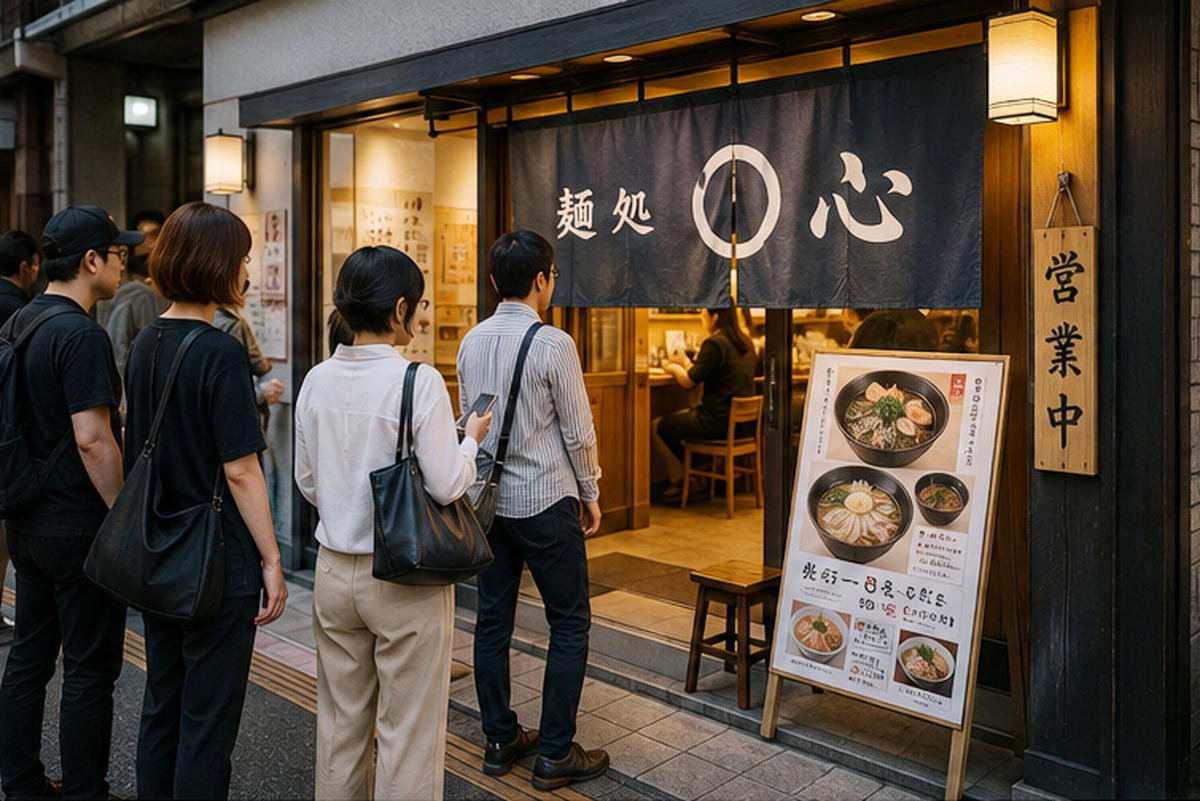
Japan is well known for its orderly queues, and restaurants are no exception.
If people are waiting outside, simply join the end of the line.
There's no need to ask whether the restaurant is good because people are waiting.
In Japan, the queue itself is often the answer.
At popular ramen shops, waiting 30 to 60 minutes is quite common, while famous restaurants may have even longer lines.
Fortunately, queues usually move efficiently.
Ordering Food
Ordering food in Japan is much easier today than it was just a decade ago.
Many restaurants now offer English menus, photo menus, multilingual tablets, QR-code ordering systems, or touchscreen kiosks.
Even without English, ordering is usually straightforward.
Simply pointing to the item you'd like is perfectly acceptable.
Restaurant staff assist international visitors every day, so don't worry about perfect pronunciation.
A smile and a polite gesture are often all you need.
Ticket Machines
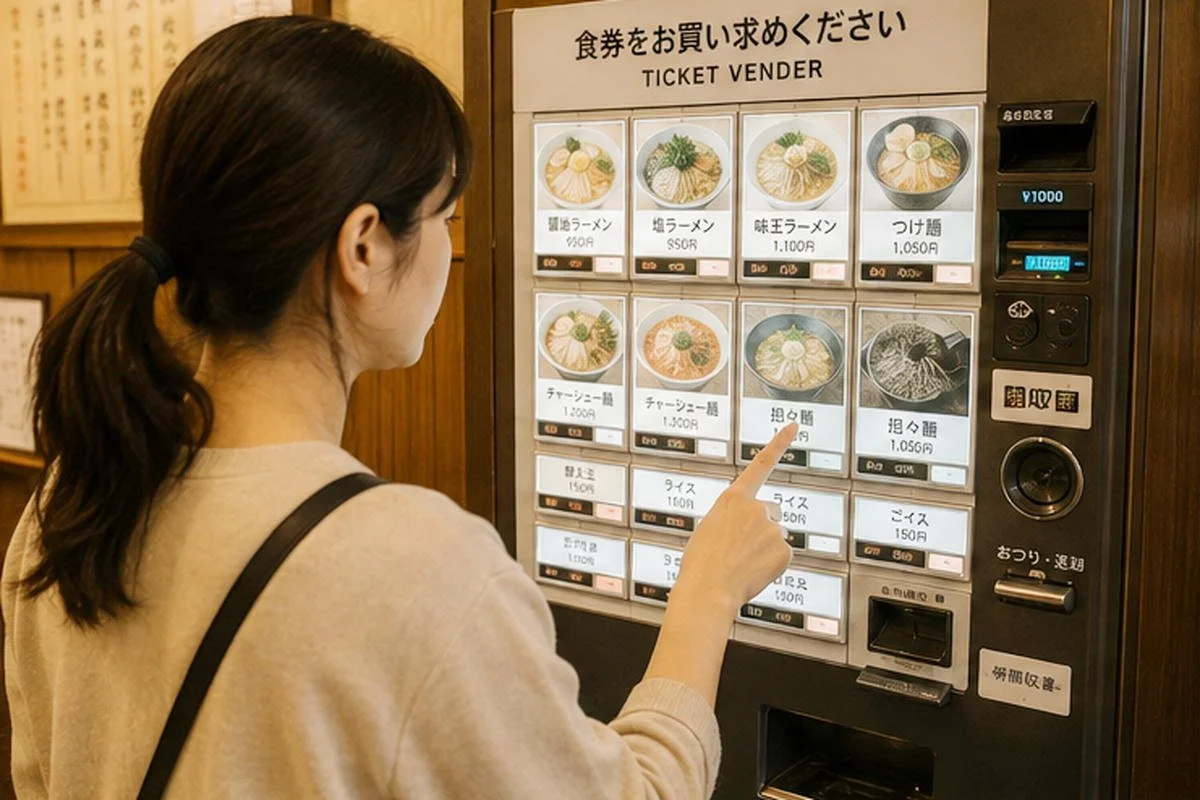
One feature that surprises many visitors is the meal-ticket vending machine found at the entrance of some restaurants, particularly ramen shops.
Instead of ordering from the staff, you purchase a ticket before taking your seat.
The process is simple:
Choose your meal.
Pay.
Collect the ticket.
Hand it to the staff after you're seated.
Many newer machines offer English, while older ones may only display Japanese.
Fortunately, pictures usually make the process easy to follow.
If you're unsure, don't hesitate to ask for help. Staff members are generally happy to point you to the correct button.
Asking for Recommendations
If you're unsure what to order, asking for the house recommendation is always a good idea.
Simply ask:
Osusume wa nan desu ka?
"What do you recommend?"
Many chefs take pride in their signature dishes, and the restaurant's specialty is often the best place to start.
Seasonal recommendations are also common, particularly at restaurants that feature fresh local ingredients.
In Nara, for example, you might find seasonal mountain vegetables, persimmons, locally brewed sake, or other regional specialties depending on the time of year.
Trying these dishes is one of the best ways to experience the local culture.
Food Allergies and Dietary Restrictions
If you have food allergies, let the staff know before ordering.
Although awareness of food allergies continues to grow in Japan, not every restaurant can accommodate special dietary requests.
Broths, sauces, and seasonings sometimes contain ingredients that aren't immediately obvious from the menu.
Vegetarian and vegan options are becoming more common, particularly in larger cities, but availability still varies considerably.
Traditional shōjin ryōri (Buddhist temple cuisine) is an excellent option for travelers looking for authentic vegetarian meals.
If your dietary restrictions are important, carrying a Japanese allergy card or using a translation app can make communication much easier.
Restaurant staff generally appreciate receiving clear information before preparing your meal.
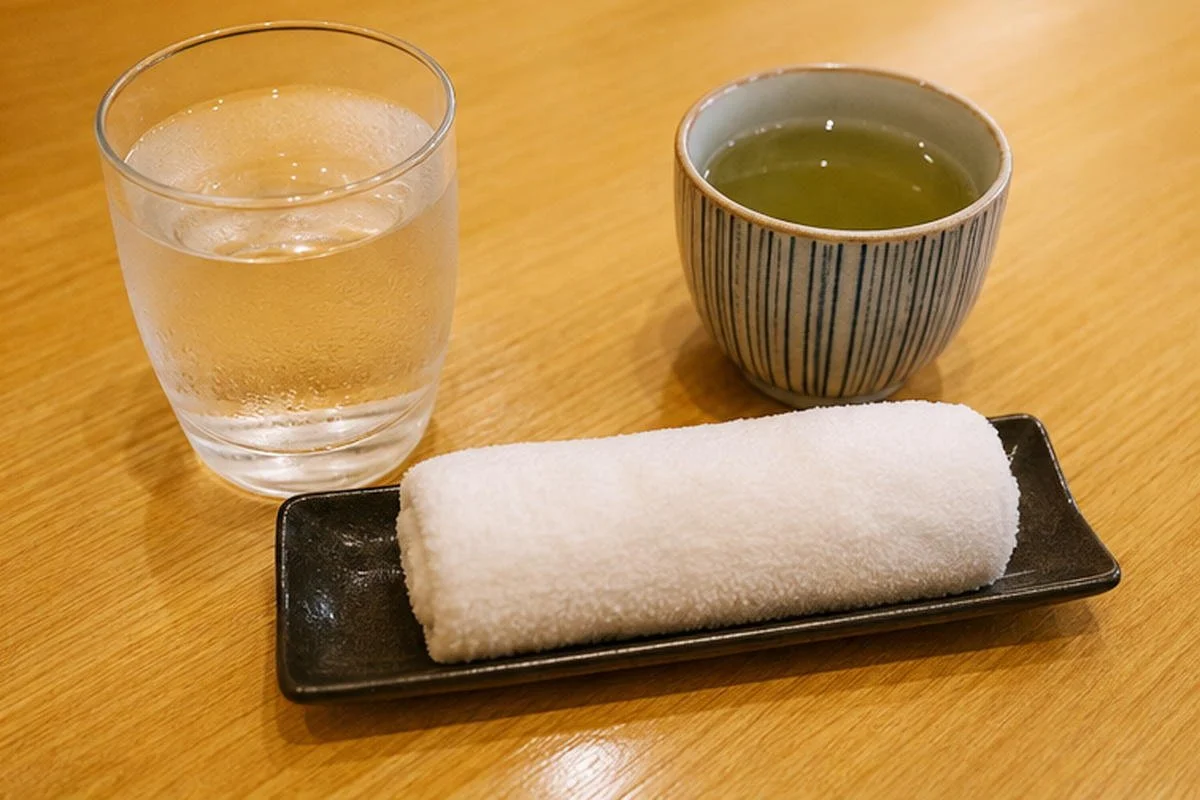
Water, Tea, and Oshibori
One pleasant surprise for many visitors is that drinking water is almost always provided free of charge.
Depending on the season and the restaurant, you may receive cold water or complimentary hot tea without asking.
Many restaurants also provide an oshibori, a small wet towel served before the meal.
It's intended for cleaning your hands—not for wiping your face, neck, or the table.
After using it, simply fold it lightly and place it beside your plate.
It's a small gesture that reflects Japan's emphasis on cleanliness and thoughtful hospitality.
Dining at the Counter
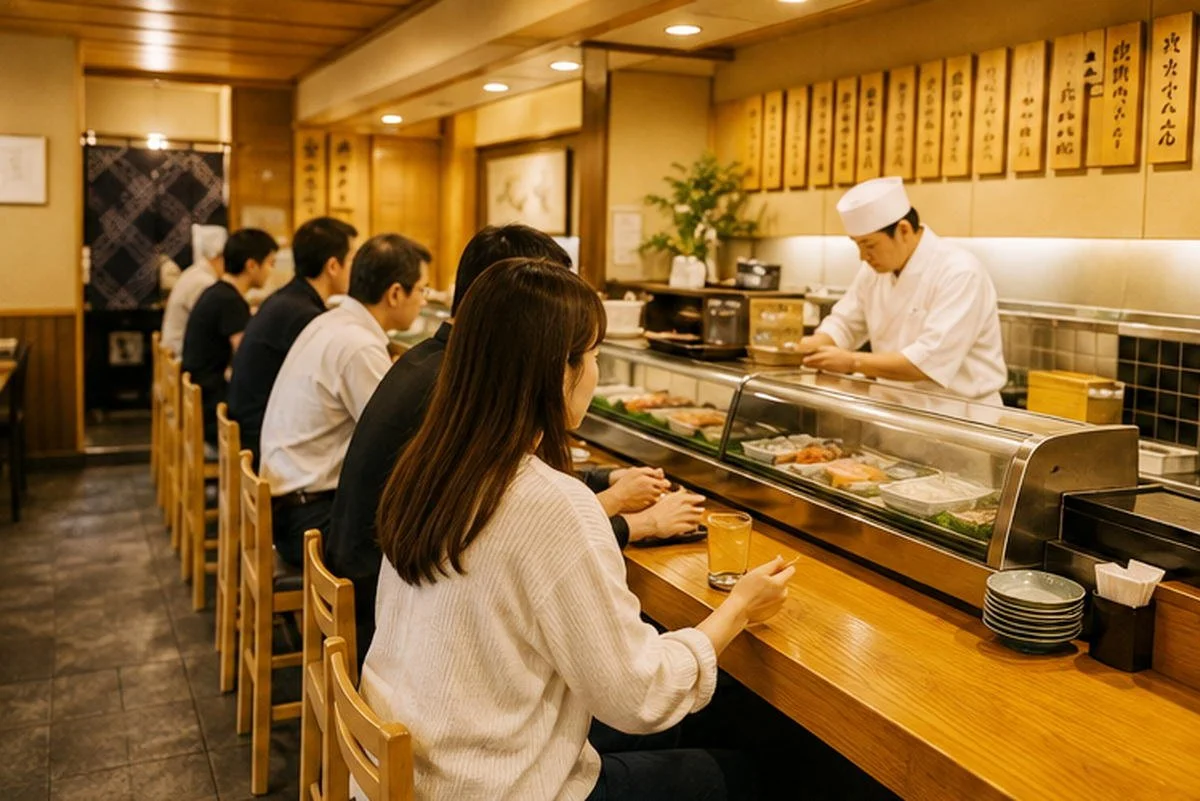
Counter seating is common in many of Japan's best restaurants, especially sushi bars, ramen shops, yakitori restaurants, and small family-run establishments.
Sitting at the counter isn't awkward—in fact, it often provides one of the most memorable dining experiences.
You'll have a front-row seat as the chef prepares each dish with remarkable precision, using techniques refined over many years.
If the restaurant isn't busy, you may even enjoy a brief conversation with the chef.
However, when service becomes busy, it's considerate to avoid lengthy conversations.
A smile, a sincere "Arigatō gozaimasu," or a compliment after the meal is always appreciated.
Local Tip
If you visit a small family-run restaurant in rural Japan, don't be surprised if the owner personally welcomes you or chats with you after your meal.
Outside the major cities, restaurants often feel more like neighborhood gathering places than businesses.
Even if you don't share a common language, a warm smile and a heartfelt "Arigatō gozaimasu" can create one of the most memorable moments of your trip.