Chapter 3: Restaurants & Dining 2
Beginning the Meal: Saying Itadakimasu
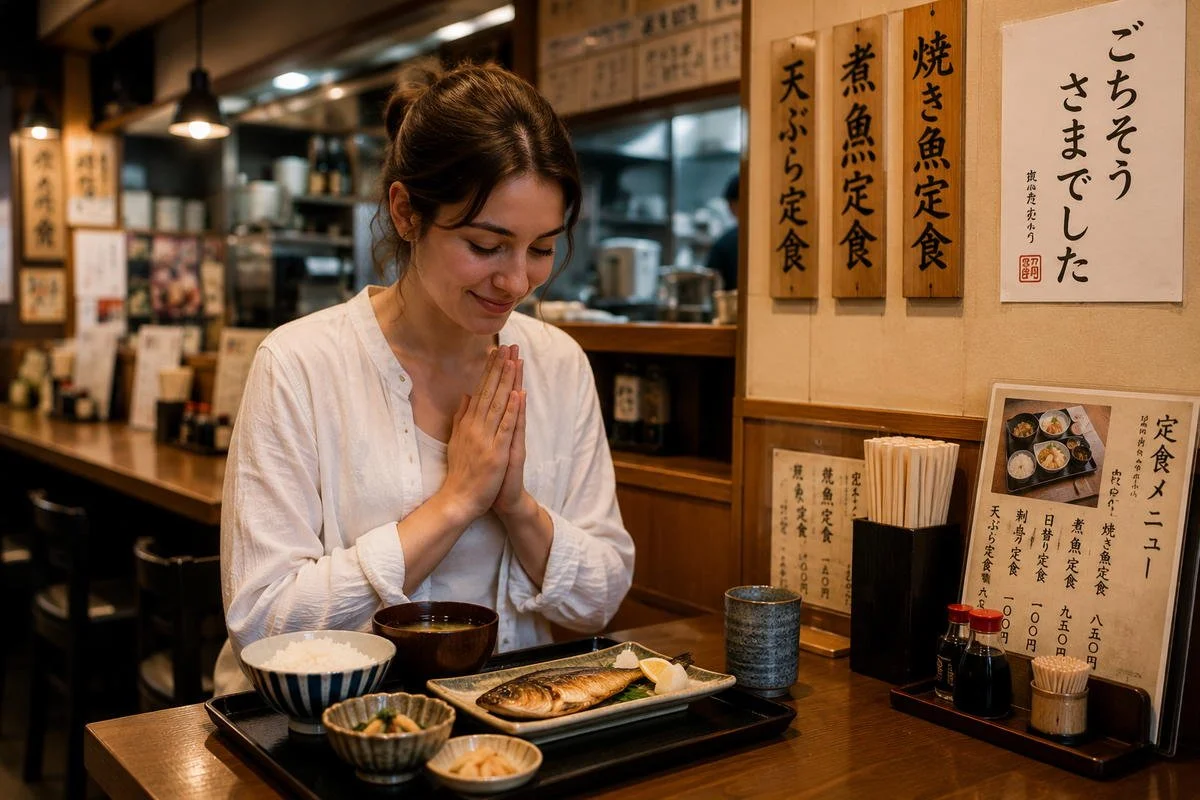
Just before eating, you may notice Japanese people quietly bring their hands together and say:
Itadakimasu.
Although it is often translated as "Let's eat," its meaning is much deeper.
Rather than thanking only the person who prepared the meal, itadakimasu expresses gratitude to everyone and everything that made the meal possible—the farmers, fishermen, cooks, nature, and ultimately the plants and animals that became the food.
Many Japanese people say it almost automatically, whether eating at home, having lunch at school, or dining in a restaurant.
Visitors are never expected to say itadakimasu, but doing so is a thoughtful way to show appreciation for Japanese culture.
Finishing the Meal: Saying Gochisōsama Deshita
After finishing a meal, many people say:
Gochisōsama deshita.
This is another expression of gratitude.
Historically, the word gochisō referred to the effort involved in gathering ingredients and preparing a meal. Today, it simply expresses thanks to everyone who contributed to it.
If you're leaving a restaurant, saying gochisōsama deshita as you walk out is a warm gesture that staff members always appreciate.
Like itadakimasu, it is never required—but it's a wonderful phrase to know.
Chopstick Etiquette
For many travelers, learning to use chopsticks is one of the most enjoyable parts of eating in Japan.
Don't worry if you're inexperienced.
Restaurant staff understand that many international visitors are still learning, and many restaurants can provide a fork or spoon if needed.
More important than perfect technique is avoiding a few customs that have special cultural significance.
Do Not Stick Chopsticks Upright in Rice
This is probably the best-known rule.
Never leave chopsticks standing vertically in a bowl of rice.
The reason is simple.
During Japanese funeral rituals, a bowl of rice is offered to the deceased with chopsticks placed upright.
Because of this association, doing the same during an ordinary meal is considered inappropriate.
If you need to set your chopsticks down, place them on the chopstick rest (hashioki) if one is provided, or neatly across your bowl or chopstick wrapper.
Never Pass Food from Chopsticks to Chopsticks
Avoid passing food directly from your chopsticks to someone else's.
This custom also originates from Japanese funeral traditions, where family members pass the deceased's bones from chopsticks to chopsticks after cremation.
Instead, place the food on the other person's plate.
Do Not Point with Chopsticks
Using chopsticks to point at people, dishes, or objects is considered impolite.
If you need to indicate something, use your hand instead.
Likewise, avoid waving your chopsticks while talking.
Do Not Spear Food
Stabbing food with chopsticks may seem easier, but it is generally discouraged.
If something is difficult to pick up, take your time or ask for a fork.
No one expects visitors to use chopsticks perfectly.
Avoid Searching Through Food
When sharing dishes, avoid stirring food around or digging through it in search of your favorite piece.
Instead, choose an item naturally without disturbing the rest of the dish.
Use Serving Chopsticks
Many shared dishes come with serving chopsticks or serving utensils.
Use these whenever they're available.
If they aren't provided, you'll often see Japanese diners use the clean, opposite ends of their own chopsticks when serving others.
If you're unsure, simply observe what the people around you are doing.
Where Should You Place Your Chopsticks?
When taking a break, place your chopsticks neatly on the chopstick rest.
If there isn't one, laying them together across your bowl or on the paper wrapper is perfectly acceptable.
Avoid leaving them crossed on the table, as it looks untidy.
Is It Okay to Lift Your Bowl?
Yes—small bowls are often lifted while eating.
Rice bowls and small soup bowls are commonly held in one hand while eating with chopsticks. This makes eating easier and helps prevent food from falling onto the table.
Large serving plates, platters, and heavy bowls, however, generally remain on the table.
As a simple rule, the smaller the bowl, the more likely it is meant to be lifted.
Slurping Noodles
Perhaps nothing surprises visitors more than hearing people slurp ramen, soba, or udon.
Is it rude?
Quite the opposite.
When eating noodle dishes, slurping is completely normal.
Many people believe it enhances the aroma by drawing air into the noodles, while also helping cool them before they reach your mouth.
This custom is largely limited to noodles.
Rice, curry, soup, and most other dishes are generally eaten quietly.
And don't worry—you're never expected to slurp.
If you prefer eating quietly, that's perfectly acceptable.
Soy Sauce Etiquette
Soy sauce is meant to complement food, not overwhelm it.
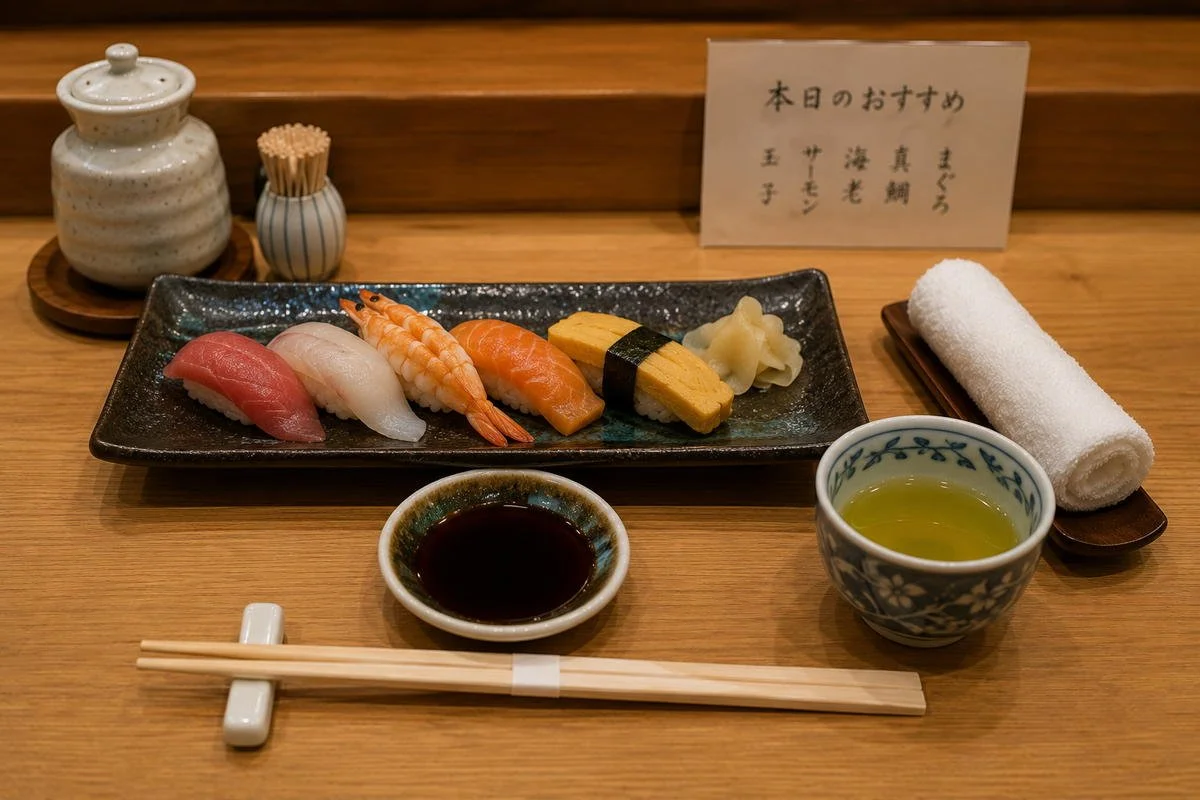
When eating sushi, avoid soaking the rice in soy sauce.
Too much soy sauce can cause the rice to fall apart and mask the flavors carefully prepared by the chef.
Instead, lightly dip the fish side whenever possible.
Likewise, avoid filling the soy sauce dish "just in case."
You can always add more later.
Usually, a little goes a long way.
Sharing Food
Some meals are served individually, while others are meant to be shared.
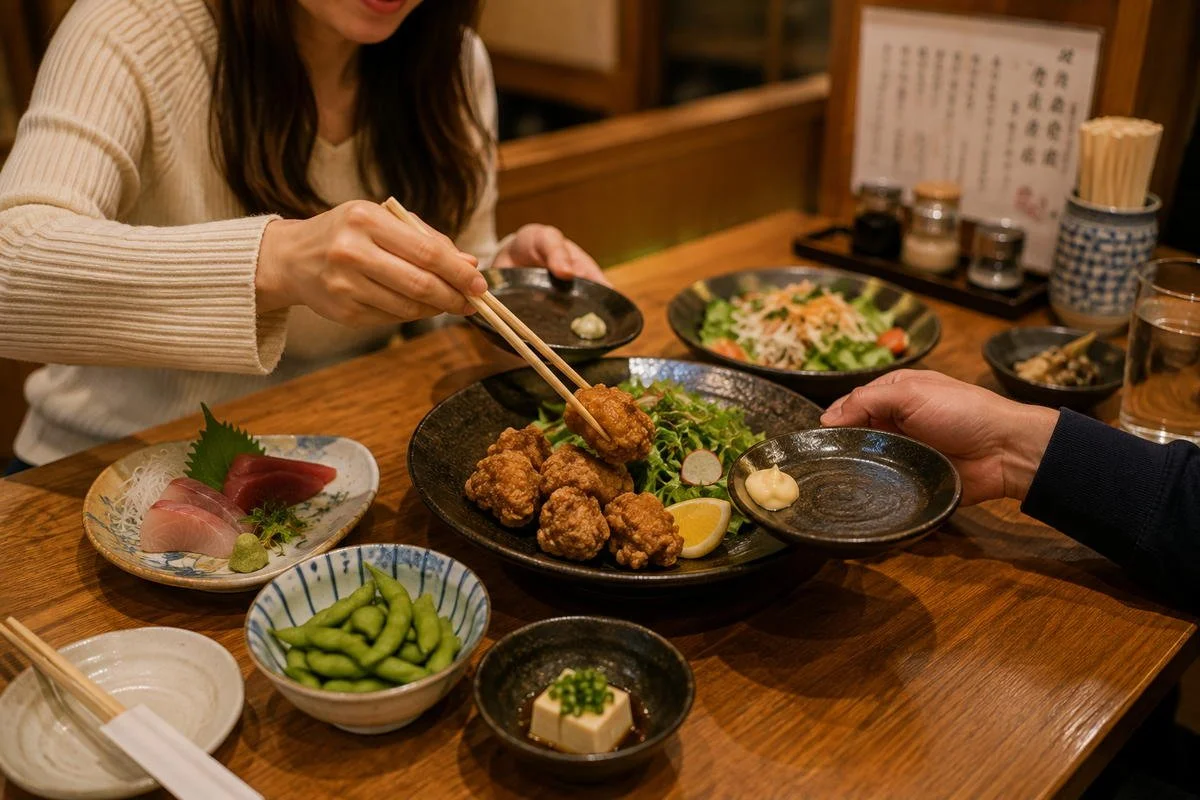
When sharing dishes, transfer the food to your own plate before eating it.
If serving utensils are provided, always use them.
Many restaurants also provide small personal plates specifically for shared dishes, making it easier to keep the table clean and organized.
Drinking Etiquette
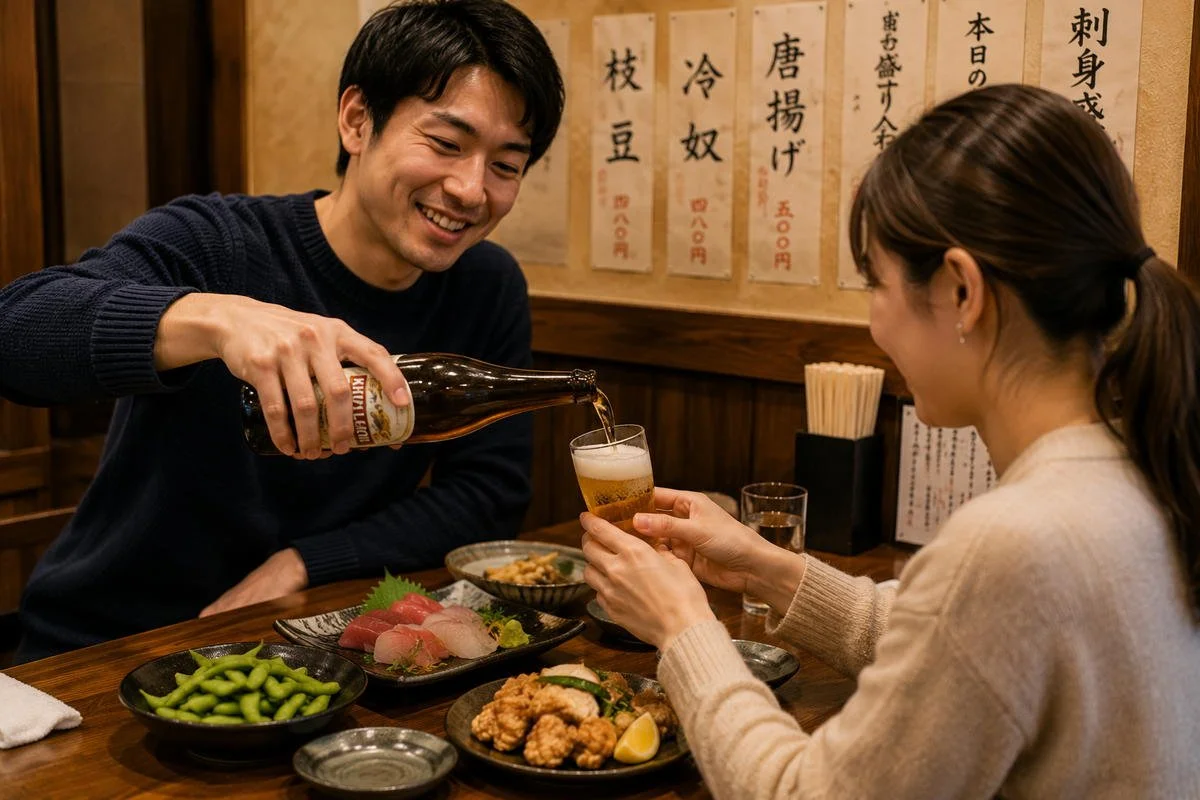
When dining with friends or colleagues, you'll often notice people pouring drinks for one another rather than filling their own glasses first.
This custom reflects hospitality and attentiveness.
As a visitor, you're not expected to follow every tradition, but if someone pours your drink, offering to refill theirs later is a thoughtful gesture.
Before drinking together, many groups say:
Kanpai!
Japan's version of "Cheers!"
Unlike in some countries, glasses are usually raised gently rather than clinked together forcefully.
Conversation During Meals
Conversation is certainly part of dining in Japan.
However, people generally remain aware of their surroundings and keep their voices at a moderate volume.
In smaller restaurants, where tables may be close together, speaking quietly helps everyone enjoy their meal.
Phone calls are generally avoided.
If you need to answer an urgent call, step outside before speaking.
Dining Alone
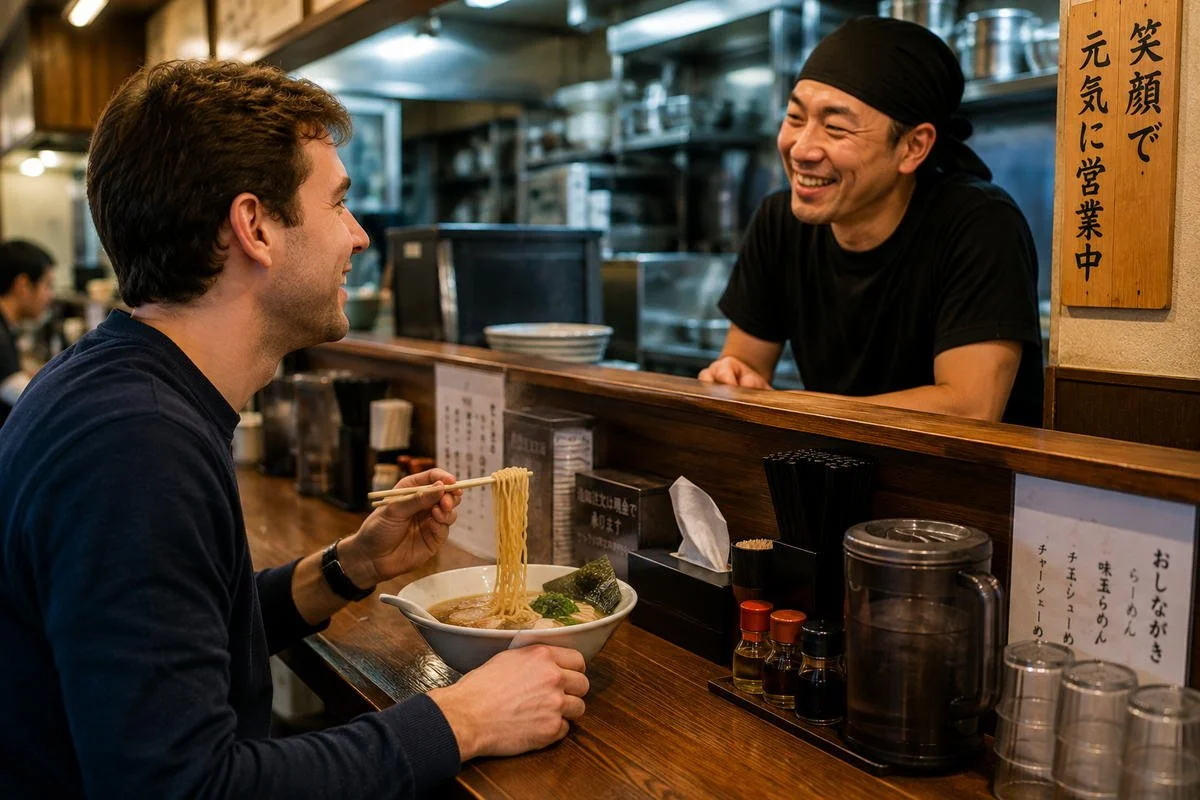
Many visitors are surprised by how common solo dining is in Japan.
Eating alone carries almost no social stigma.
In fact, many restaurants are designed specifically for individual diners, with counter seating, compact tables, and efficient service.
Whether you're enjoying ramen, sushi, curry, or lunch at a café, dining alone feels completely natural.
For solo travelers, Japan is one of the easiest and most comfortable countries in the world to enjoy a meal by yourself.
Local Tip
If you find yourself in a restaurant filled almost entirely with Japanese customers, don't feel intimidated.
Some of Japan's best local restaurants receive very few international visitors.
A smile, a polite attitude, and a willingness to point at the menu are often all you need.
Some of your most memorable meals may come from restaurants that never appear in guidebooks.