
Chapter 14: Helpful Japanese Expressions 1
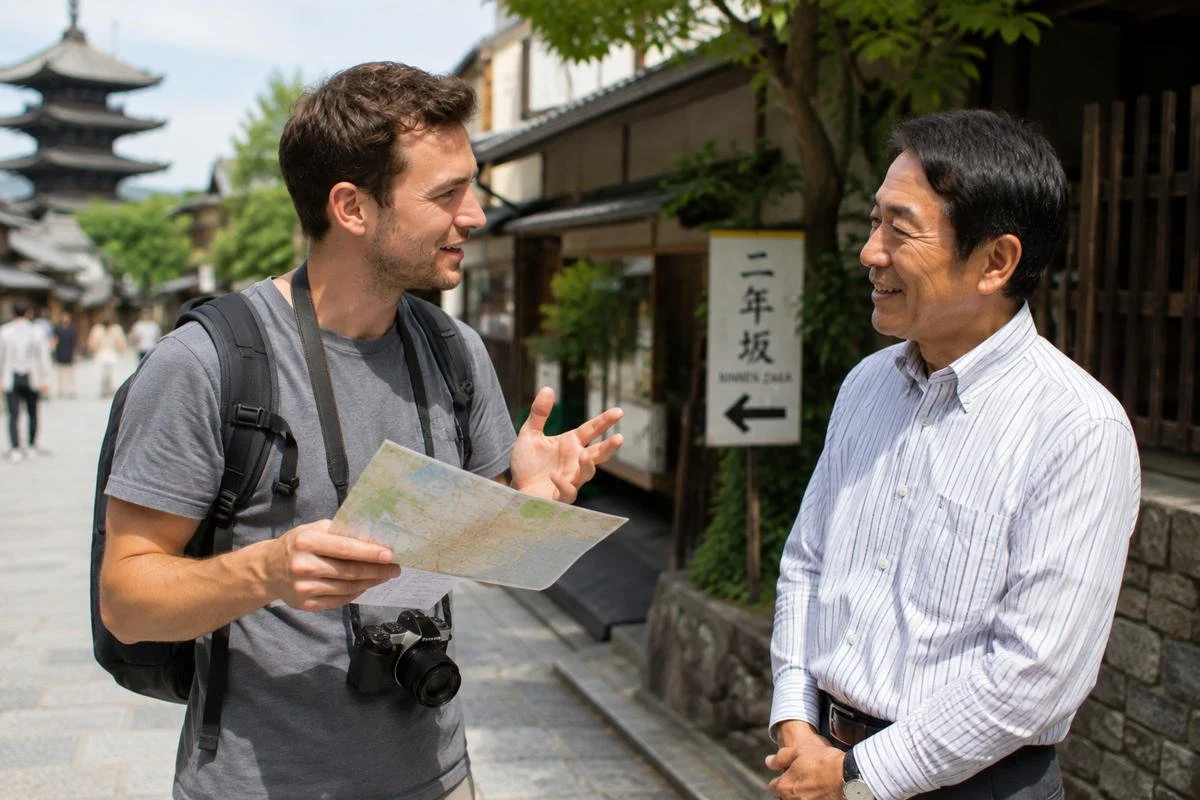
Speaking with Kindness in Everyday Japan
One of the most common questions travelers ask before visiting Japan is:
"Do I need to speak Japanese?"
The simple answer is no.
You can travel comfortably throughout much of Japan using English, translation apps, and a little patience.
However, learning just a few Japanese expressions can make your experience feel very different.
Not because perfect pronunciation is expected.
But because making the effort often communicates respect, curiosity, and appreciation for the country you're visiting.
Why a Few Words Matter
Many Japanese people don't expect international visitors to speak fluent Japanese.
In fact, even saying a simple greeting often brings a smile.
The words themselves matter, but the willingness to use them is often appreciated even more.
Trying a little Japanese shows that you recognize you're visiting someone else's home and culture.
That small effort can help create warm, memorable interactions.
You Don't Have to Be Perfect
Some visitors hesitate because they're afraid of making mistakes.
Fortunately, most people are remarkably understanding.
Whether your pronunciation is perfect or not, sincere effort is usually appreciated.
Don't worry about speaking flawlessly.
Speak naturally.
Smile.
And don't be embarrassed if you need to repeat yourself.
Communication is about connecting with people, not passing a language test.
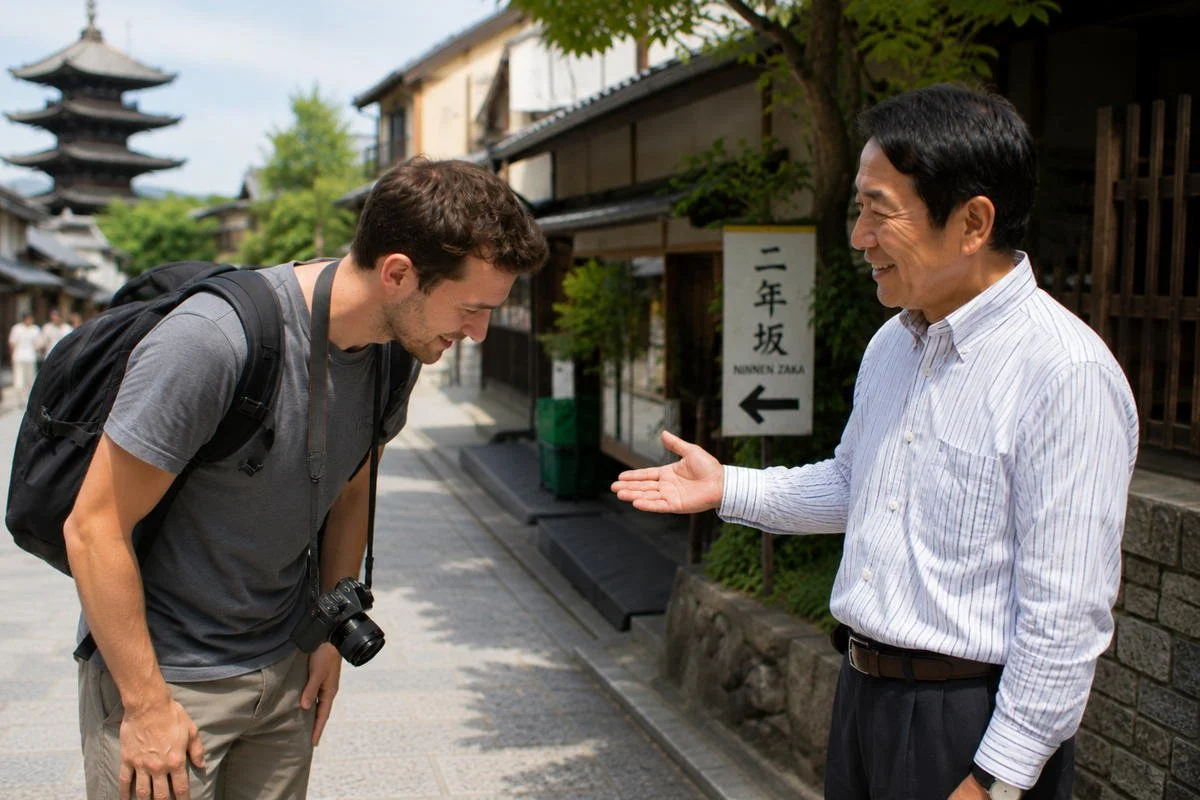
The Power of Arigatō
If you learn only one Japanese word, let it be "Arigatō" (ありがとう).
Better yet, learn "Arigatō gozaimasu" (ありがとうございます) for a more polite expression of thanks.
You'll probably use it dozens of times each day.
After buying something at a shop
Leaving a restaurant
Receiving directions
Checking into a hotel
Boarding a taxi
Thanking someone is one of the simplest ways to show appreciation wherever you travel.
Sumimasen — Japan's Most Useful Word
Many visitors quickly discover another incredibly useful expression:
"Sumimasen" (すみません)
It can mean:
Excuse me
Sorry
Thank you (for a favor)
May I get your attention?
Because it has so many uses, you'll hear it constantly throughout Japan.
If you're unsure which Japanese phrase to use, sumimasen is often a safe and polite choice.
Greetings Open Doors
Simple greetings help create friendly first impressions.
Some of the most useful include:
Konnichiwa (こんにちは) — Hello
Ohayō gozaimasu (おはようございます) — Good morning
Konbanwa (こんばんは) — Good evening
You don't need to greet everyone you pass on a busy Tokyo sidewalk.
But in smaller towns, family-run shops, guesthouses, or rural communities, a friendly greeting is often warmly received.
Small Words, Big Connections
Language is about more than exchanging information.
It's also about showing respect.
Even if the conversation quickly switches to English—or ends with smiles and gestures—your willingness to speak a few words of Japanese often helps create a more relaxed and welcoming atmosphere.
Sometimes a single word is enough to remind people that kindness can be understood in any language.
Did You Know?
Many Japanese schools teach English, so some people may understand more than they feel comfortable speaking.
If someone seems hesitant, patience and a friendly attitude usually help far more than speaking louder.
Local Tip
Don't worry too much about your accent.
Most people will remember your smile and your willingness to try long after they've forgotten whether your pronunciation was perfect.