
Chapter 7: Trash & Recycling 2
Recycling and Throwing Away Trash While Traveling
Once you understand why public trash bins are limited in Japan, the next question is usually a practical one:
"So where should I throw my trash away?"
The answer depends on the type of waste you have and where you are.
Fortunately, disposing of trash while traveling is usually much easier than it first appears.
Understanding Japan's Recycling System
Japan places a strong emphasis on recycling.
Rather than throwing everything into a single container, waste is often sorted into different categories before disposal.
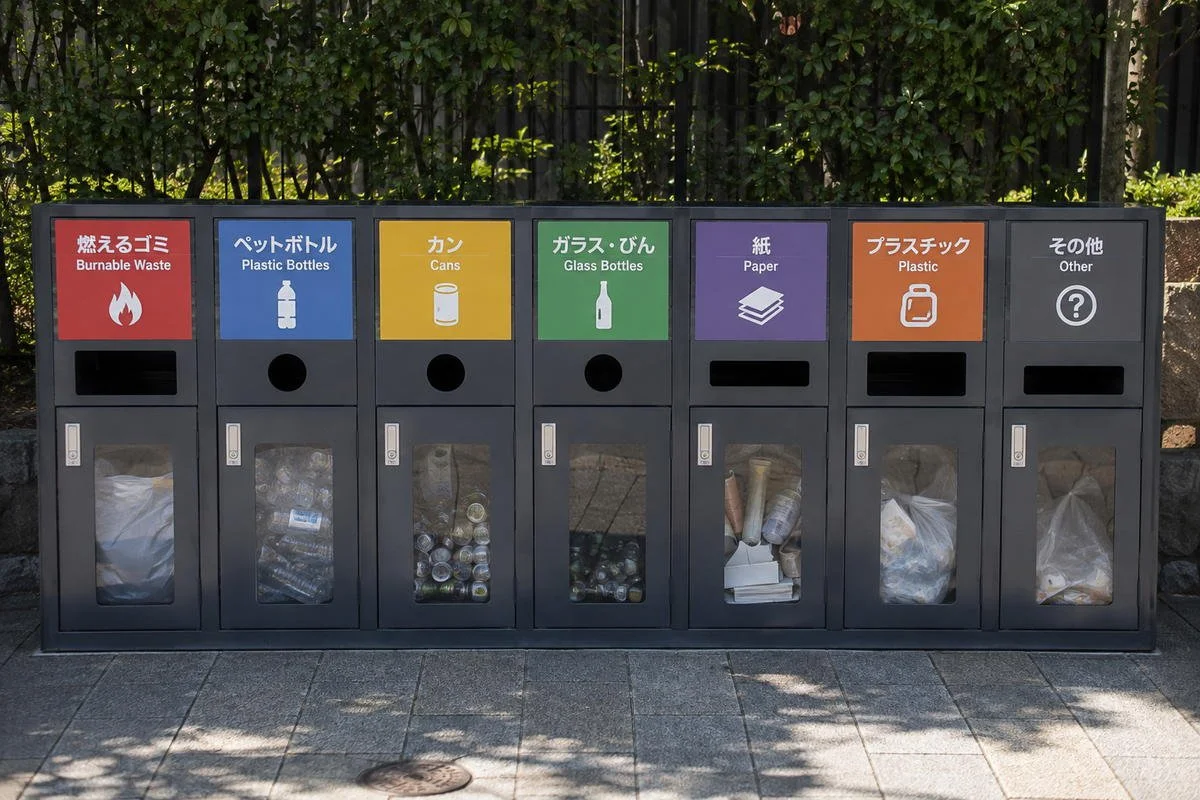
The exact system varies from city to city, but travelers will commonly see bins labeled for:
Burnable waste
PET bottles
Aluminum cans
Steel cans
Glass bottles
Paper
Plastic packaging
At first, the number of categories may seem overwhelming.
Don't worry.
As a visitor, you're not expected to memorize every local recycling rule.
Simply read the labels carefully and do your best to place each item in the correct bin.
A little care goes a long way.
Convenience Stores Can Help
Convenience stores, or konbini, are among the easiest places for travelers to dispose of small amounts of trash.
Many have recycling bins near the entrance or just inside the store.
These are intended primarily for items purchased there, such as:
Drink bottles
Coffee cups
Snack wrappers
Sandwich packaging
If you've just finished something you bought from that store, it's generally acceptable to use its bins.
However, avoid bringing bags of household waste or trash you've collected throughout the day.
The bins are provided as a convenience for customers—not as public garbage collection points.
Recycling Bins at Train Stations
Some larger train stations provide recycling and trash bins, especially near ticket gates, platforms, or vending machines.
Smaller stations, however, may have very few bins—or none at all.
If you don't find one right away, don't assume you've overlooked it.
Simply keep your trash with you until another opportunity comes along.
Many experienced travelers carry a small reusable bag specifically for this purpose.
Hotels and Ryokan
Your accommodation is often the easiest place to dispose of everyday trash.
Guest rooms usually include at least one wastebasket, and many hotels separate recyclable items from general waste.
Some accommodations also have larger recycling stations near the lobby or entrance.
If you're unsure how to dispose of something unusual—such as batteries or a broken umbrella—simply ask the front desk.
The staff will be happy to help.
Food Courts and Tourist Attractions
Shopping malls, department stores, museums, zoos, aquariums, and food courts almost always provide trash bins for their visitors.
These bins are intended for waste generated while using those facilities.
As elsewhere, try not to use them for trash you've been carrying from unrelated places.
Using the appropriate bins helps staff manage waste efficiently while keeping public spaces pleasant for everyone.
A Good Habit: Finish Your Food Where You Bought It
You'll notice that many Japanese people finish eating or drinking near the place where they purchased it.
For example:
Eating beside a bakery before continuing their walk
Finishing an ice cream near the shop
Using the trash bin provided at a festival food stall
Drinking a canned coffee beside the vending machine before recycling the empty can
This simple habit naturally reduces the amount of trash people need to carry throughout the day.
If a trash bin is available where you bought your food or drink, that's usually the best place to use it.
Don't Leave Trash Behind
Whether you're visiting a temple, hiking in the countryside, relaxing in a park, or riding a train, avoid leaving even small items behind.
This includes:
Drink bottles
Cigarette butts
Food wrappers
Used tissues
Disposable face masks
Shopping receipts
Even something as small as a candy wrapper can spoil the atmosphere of a beautiful place.
When everyone takes responsibility for their own waste, everyone benefits.
If You're Not Sure, Keep It With You
One of the easiest rules to remember is this:
If you don't know where something belongs, don't throw it away yet.
Instead, keep it with you until you find clearly labeled bins or return to your hotel.
It's always better to wait than to place waste in the wrong container.
Most travelers are surprised by how quickly this becomes second nature.
Did You Know?
Some Japanese cities separate household waste into more than ten different categories, with collection taking place on specific days of the week.
Fortunately, visitors don't need to learn every local rule.
For everyday travel, simply following the labels on public recycling bins is usually enough.
Local Tip
Keep a small reusable bag or zippered pouch inside your backpack for temporary trash storage.
Use it for snack wrappers, tissues, or other small items during the day, then empty it whenever you find the appropriate recycling or trash bins.
It's a simple habit that makes traveling around Japan more comfortable while helping you respect local customs.