
Chapter 7: Trash & Recycling 1
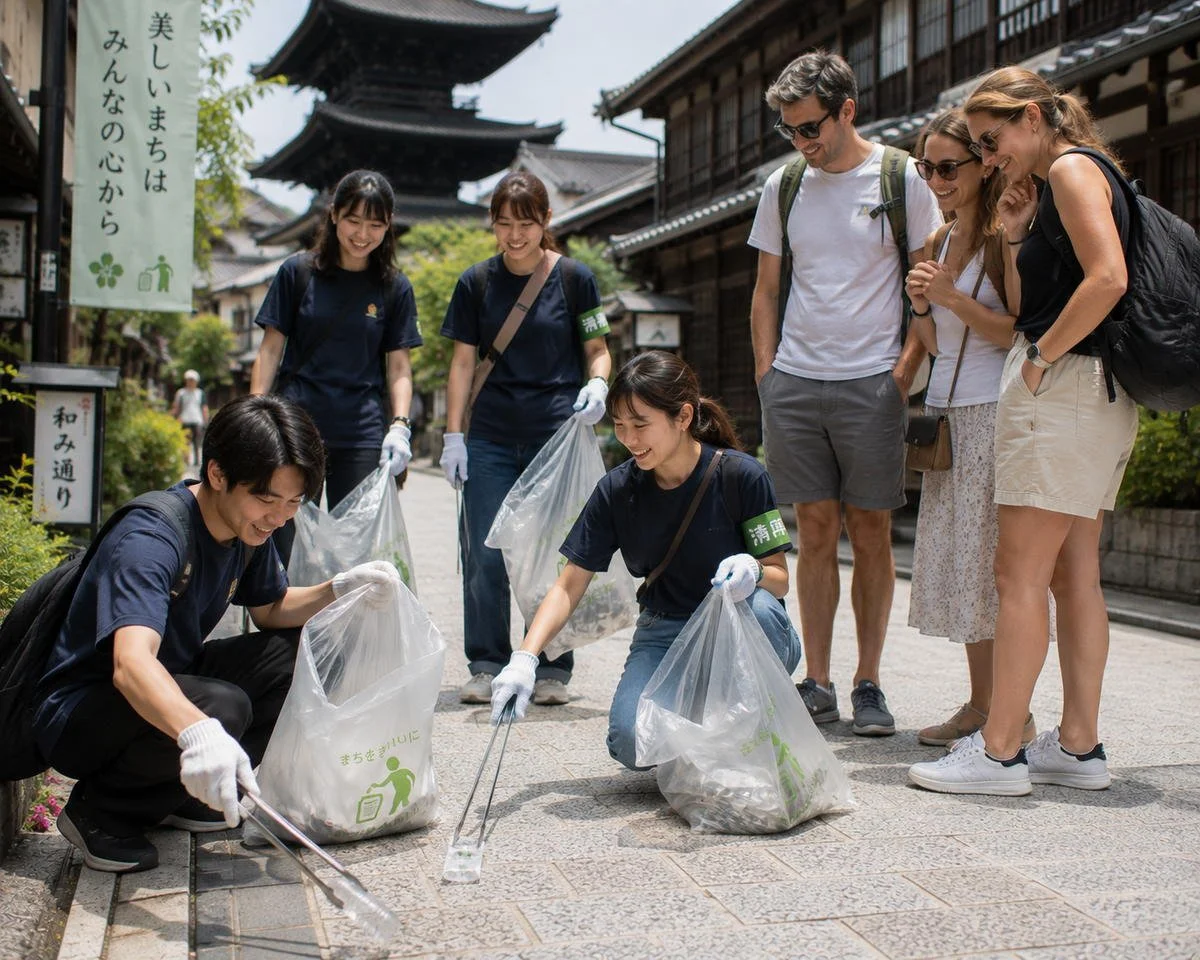
Keeping Japan Beautiful Together
One of the first things many visitors notice in Japan is something that seems almost unbelievable.
The streets are remarkably clean.
Parks are tidy.
Train stations are well maintained.
Historic districts are free of litter.
Then, after finishing a drink or a snack, many travelers discover another surprise:
There are very few public trash bins.
For first-time visitors, this naturally raises an important question.
"Where is everyone putting their garbage?"
The answer isn't the number of trash cans.
It's a way of thinking that has become part of everyday life in Japan.
Why Are There So Few Trash Bins?
If you've traveled in other countries, you're probably used to seeing public trash bins every few steps.
Japan is different.
Although public trash bins do exist, they're far less common than many visitors expect.
One reason is security.
Following a series of incidents several decades ago, many trash bins were removed from train stations and other busy public spaces.
Another reason is cultural.
In Japan, people generally take responsibility for the things they bring with them.
Rather than expecting someone else to dispose of their waste right away, many simply carry it until they find an appropriate place to throw it away.
For Japanese people, this isn't considered inconvenient.
It's simply part of everyday life.
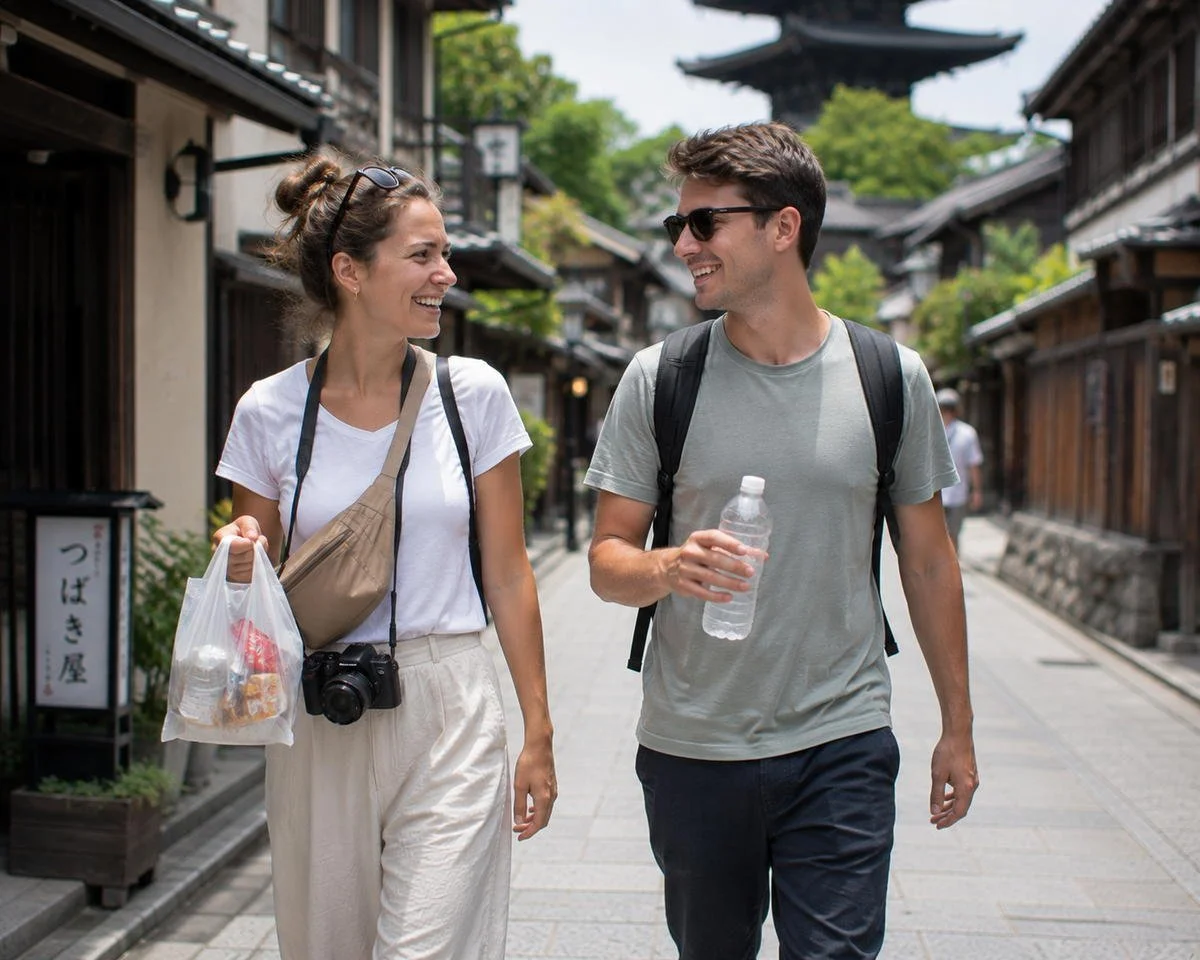
Carrying Your Trash Is Completely Normal
Don't be surprised if you see someone finish a bottled drink, place the empty bottle back into their bag, and continue on with their day.
This happens all the time.
Many Japanese people routinely carry items such as:
Empty drink bottles
Snack wrappers
Used tissues
Small pieces of packaging
until they return home or find a suitable recycling station.
Some visitors worry that carrying trash might seem unusual.
In Japan, it doesn't.
In fact, it's considered perfectly normal.
Why Is Japan So Clean?
People often wonder whether Japan is so clean because of strict laws or a large number of street cleaners.
While those factors certainly help, the biggest reason is much simpler.
Many people believe that keeping shared spaces clean is everyone's responsibility.
This way of thinking often begins in childhood.
At many Japanese schools, for example, students help clean their own classrooms and school grounds together.
The goal isn't simply to save money or reduce maintenance costs.
It's to develop a sense of responsibility for shared spaces.
That mindset naturally continues into adulthood.
Whether it's a neighborhood park, a train platform, or a quiet temple path, many people avoid leaving behind anything that might inconvenience others.
"Leave No Trace"
A helpful way to understand Japanese etiquette is this:
Leave every place as clean—or even cleaner—than you found it.
You'll often see people quietly pick up something they've dropped, wipe down a table after eating, or carry their trash home instead of leaving it behind.
Each of these actions may seem small.
Together, they help create the clean, comfortable environment that so many visitors admire.
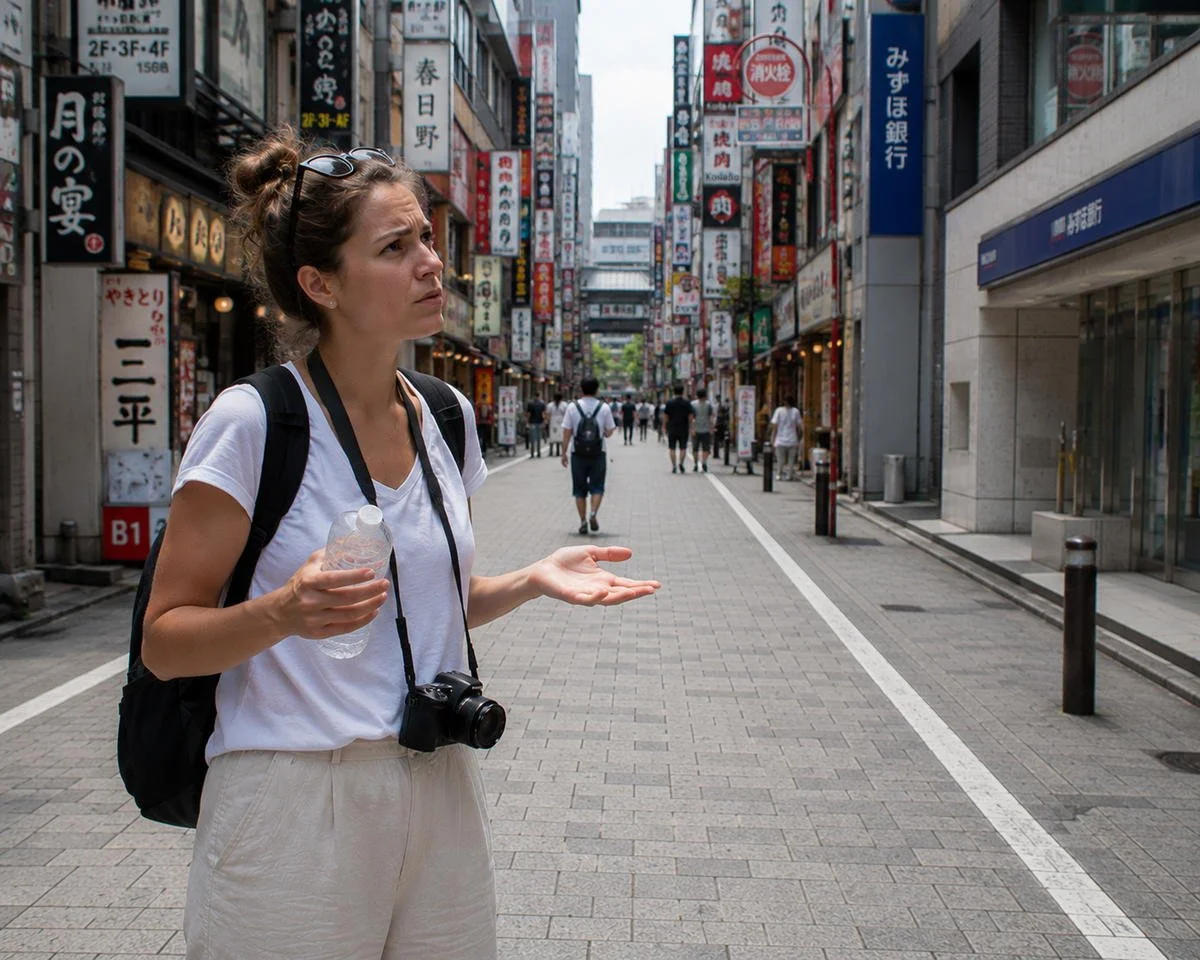
Where Can You Throw Away Trash?
Although public trash bins are limited, you can still find places to dispose of garbage responsibly.
Common locations include:
Convenience stores
Some train stations
Recycling bins beside vending machines (for eligible bottles and cans)
Shopping malls
Food courts
Theme parks
Tourist information centers (at some locations)
Always check the signs before using a bin, as many are intended for specific types of waste only.
If you can't find an appropriate bin right away, simply keep your trash with you until you do.
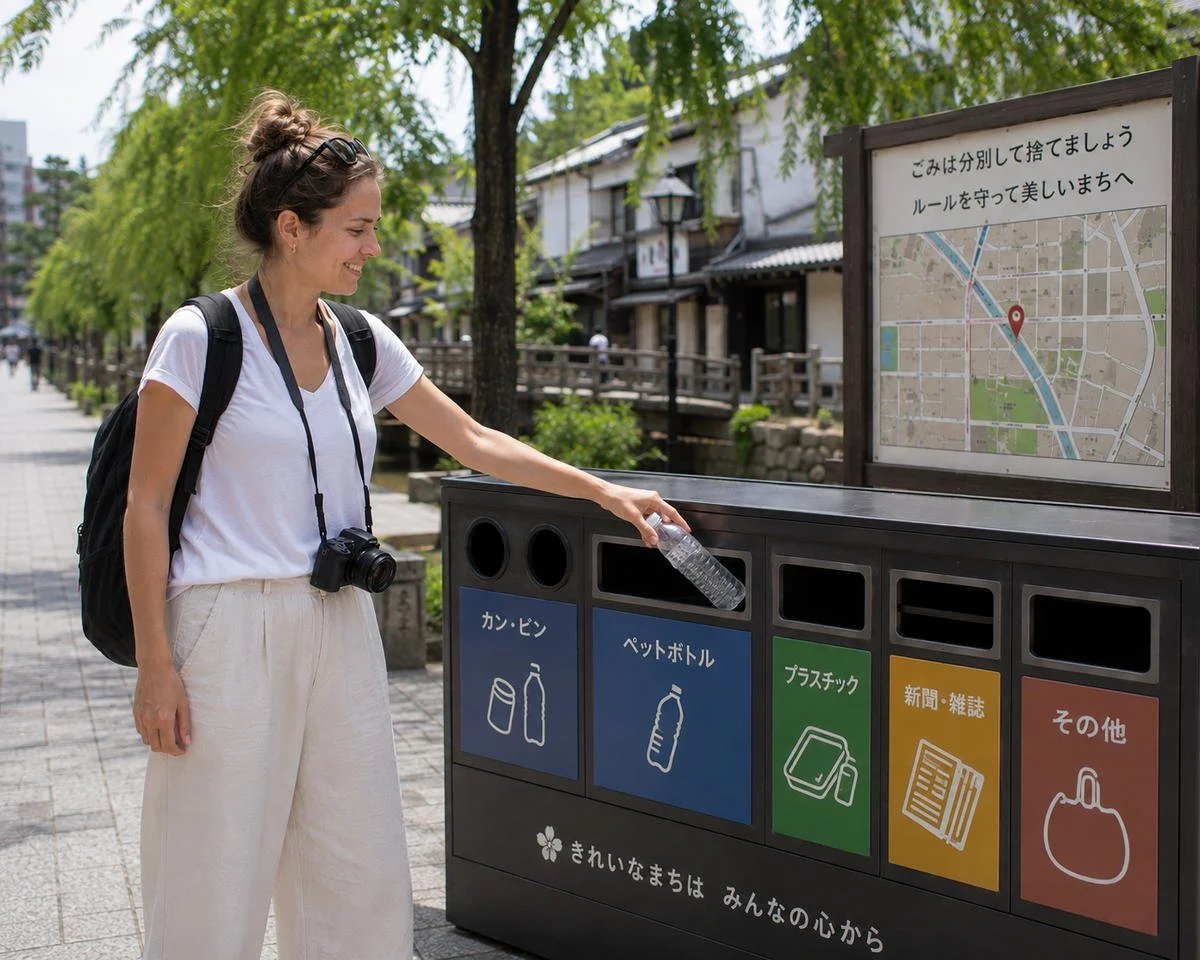
Don't Use Recycling Bins as General Trash Cans
Near vending machines, you'll often see bins intended specifically for empty bottles and cans.
These are recycling bins—not general trash cans.
Please don't place food wrappers, coffee cups, tissues, or other household waste inside them.
Doing so makes recycling more difficult and creates extra work for the people who sort the materials.
If you have mixed waste, wait until you find an appropriate trash bin instead.
Did You Know?
Japan has one of the highest densities of vending machines in the world, with millions located across the country.
That's why you'll often find recycling bins beside them—even when there aren't any general trash cans nearby.
They're designed to collect recyclable drink containers, not everyday garbage.
Local Tip
Many experienced travelers in Japan carry a small reusable bag or zippered pouch for temporary trash storage.
It takes up very little space and makes it easy to keep wrappers, tissues, or empty bottles with you until you find the proper place to dispose of them.
After a day or two, carrying your own trash will probably feel surprisingly natural.