
Chapter 6: Temple and Shrine 2
How to Worship at Shrines and Temples
After entering the grounds respectfully, you may wonder what to do next.
Should you ring the bell?
Do you clap your hands?
Should you bow before or after making an offering?
The answer depends on whether you're visiting a Shinto shrine or a Buddhist temple.
Don't worry if you can't remember every step.
Japanese people understand that visitors are learning, and making a sincere effort is always appreciated.
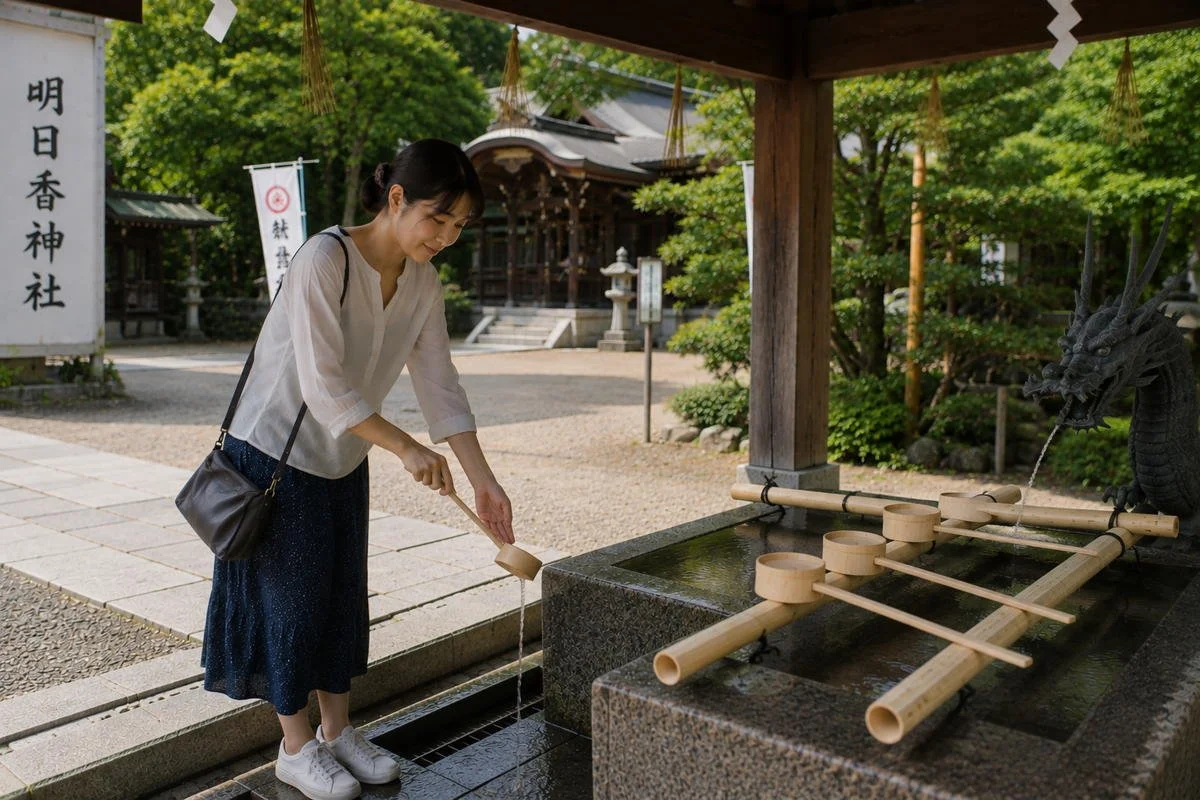
Purifying Your Hands at the Chōzuya
Near the entrance of many shrines—and occasionally at some temples—you'll find a water pavilion called a chōzuya or temizuya.
This is where visitors symbolically purify themselves before approaching the main worship area.
The ritual isn't about washing away physical dirt.
Instead, it represents preparing both your mind and body before entering a sacred space.
A typical procedure is:
Take the ladle with your right hand and rinse your left hand.
Switch hands and rinse your right hand.
Pour a little water into your left hand and use it to rinse your mouth gently. Never drink directly from the ladle.
Rinse your left hand once more.
Hold the ladle upright so the remaining water runs down the handle before returning it.
Only a small amount of water is needed.
The purpose is symbolic rather than thorough washing.
Some shrines now use touch-free purification systems or temporarily suspend shared ladles.
Simply follow the instructions at each site.
How to purifying your hands
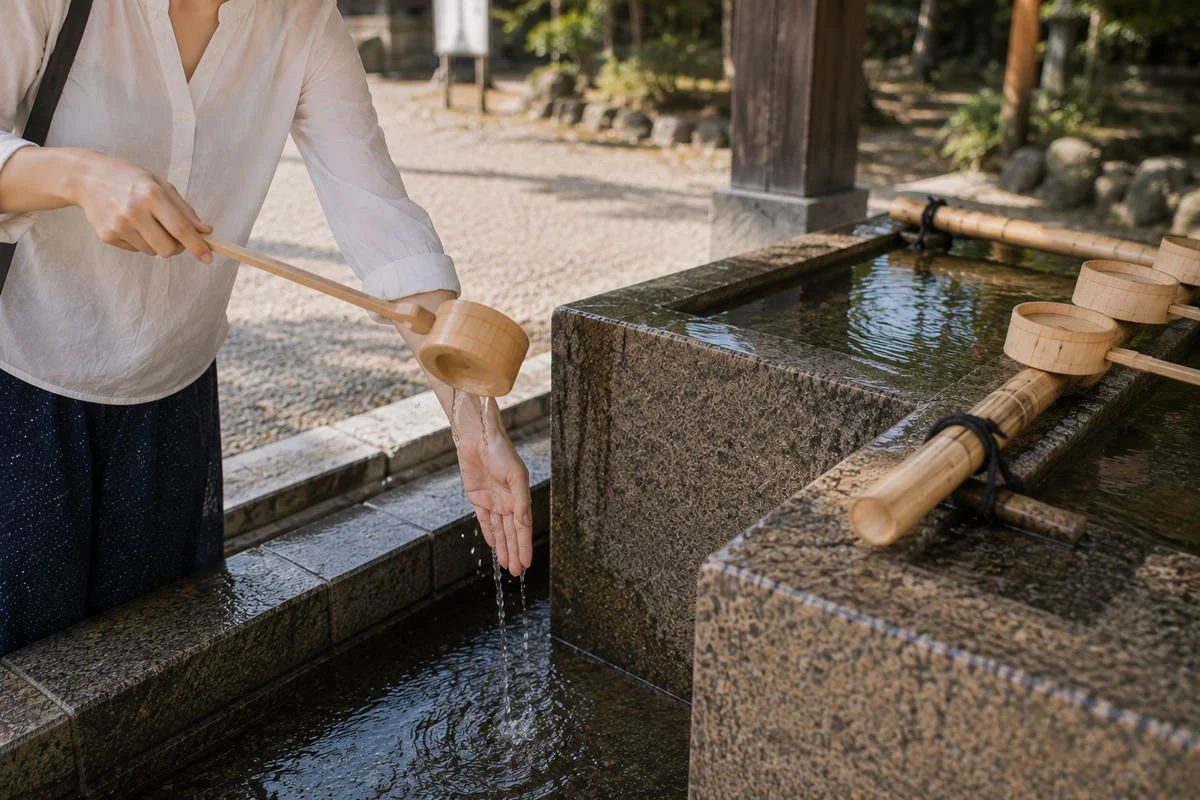
1. Take the ladle with your right hand and rinse your left hand.
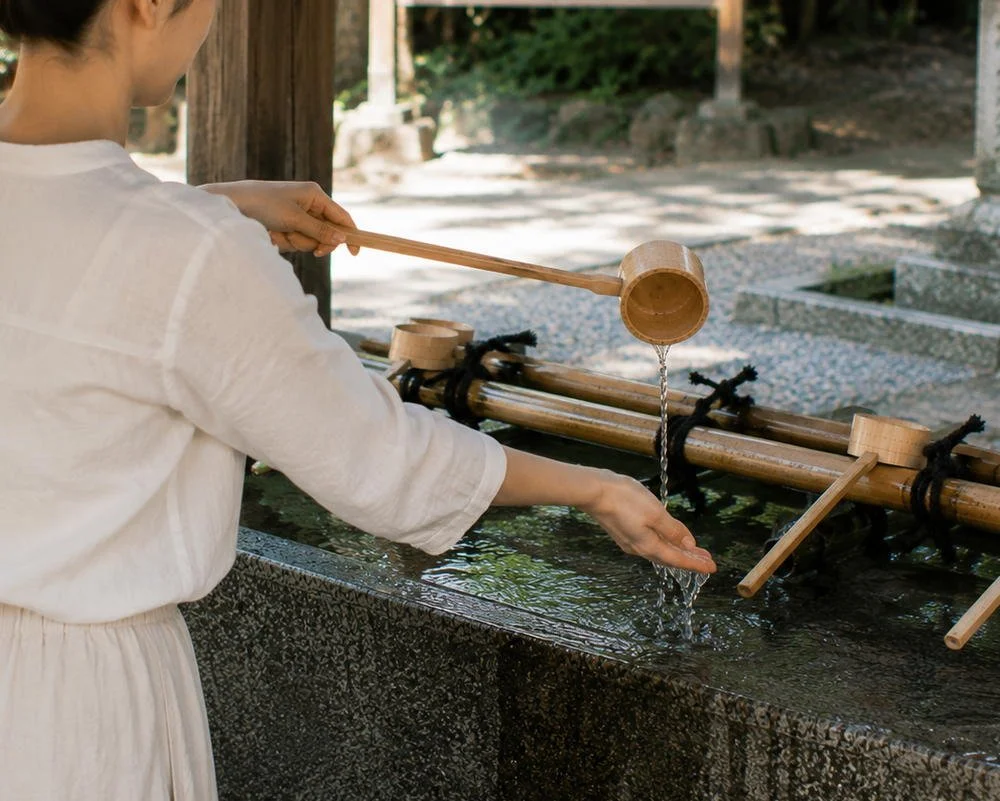
2. Switch hands and rinse your right hand.
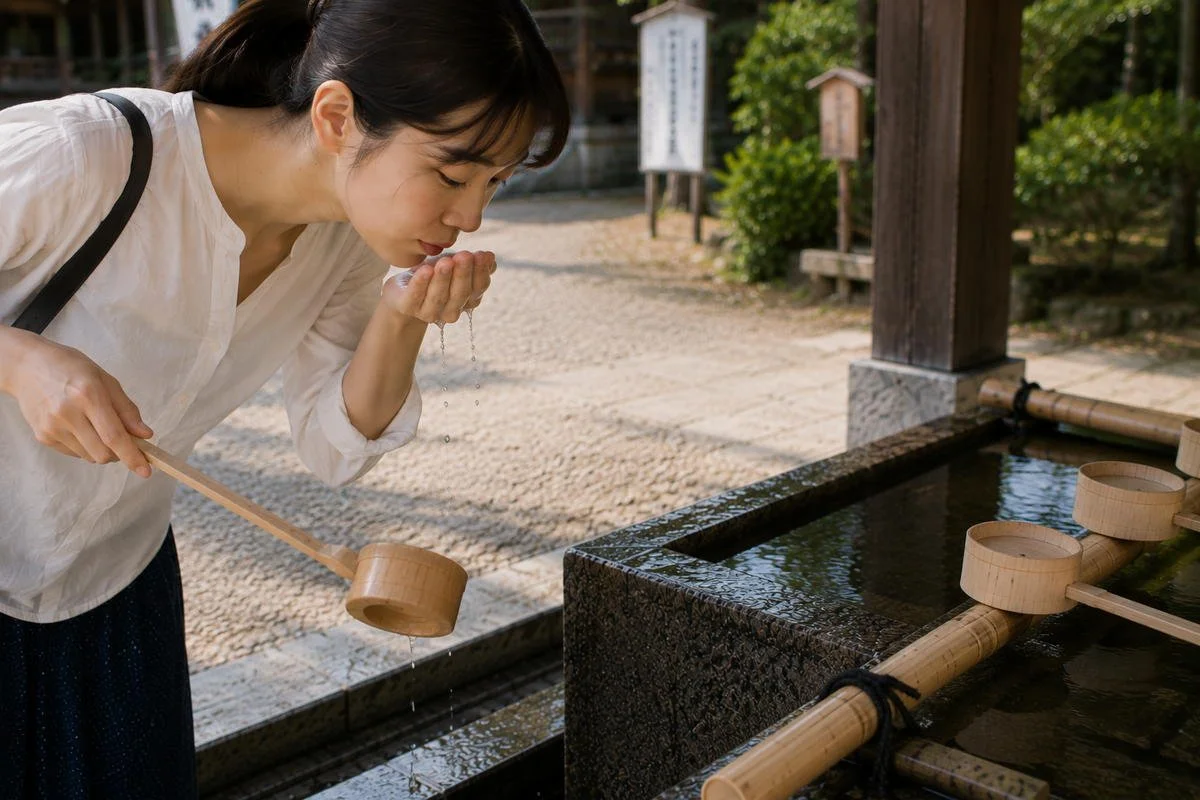
3. Pour a little water into your left hand and use it to rinse your mouth gently.
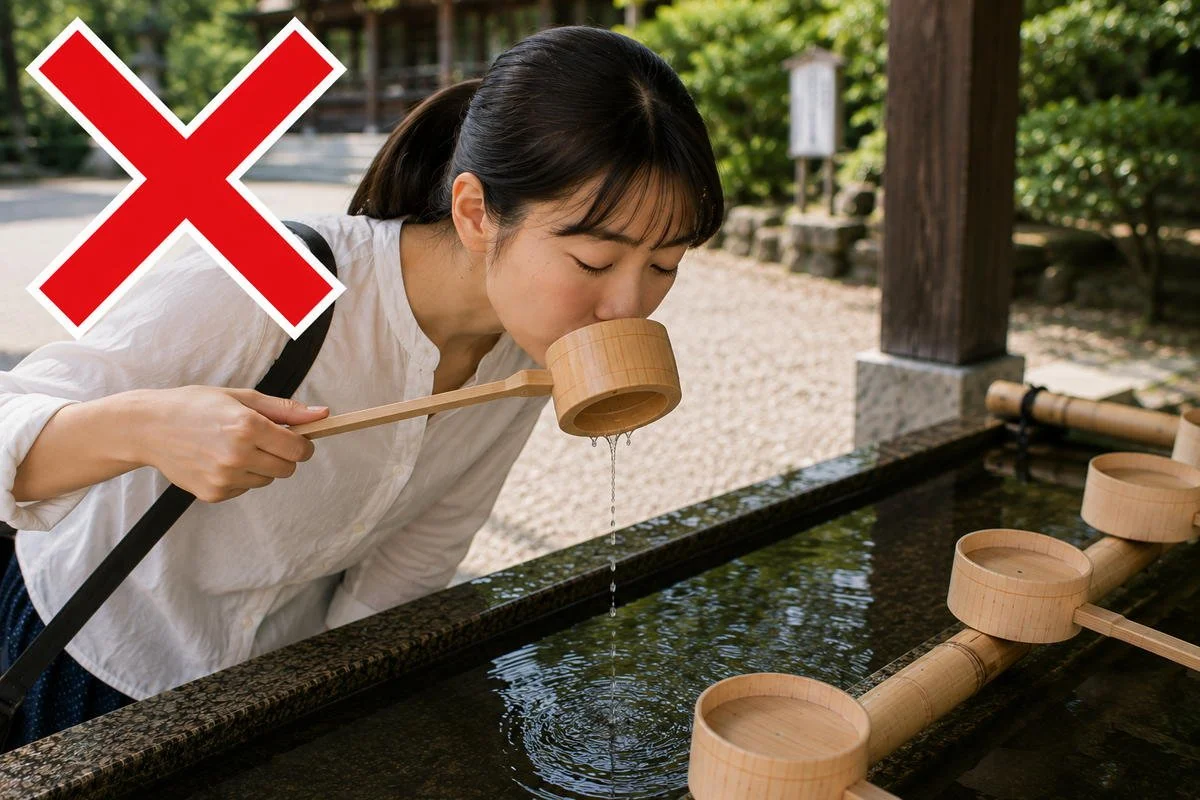
3. Never drink directly from the ladle.
4. Rinse your left hand once more.
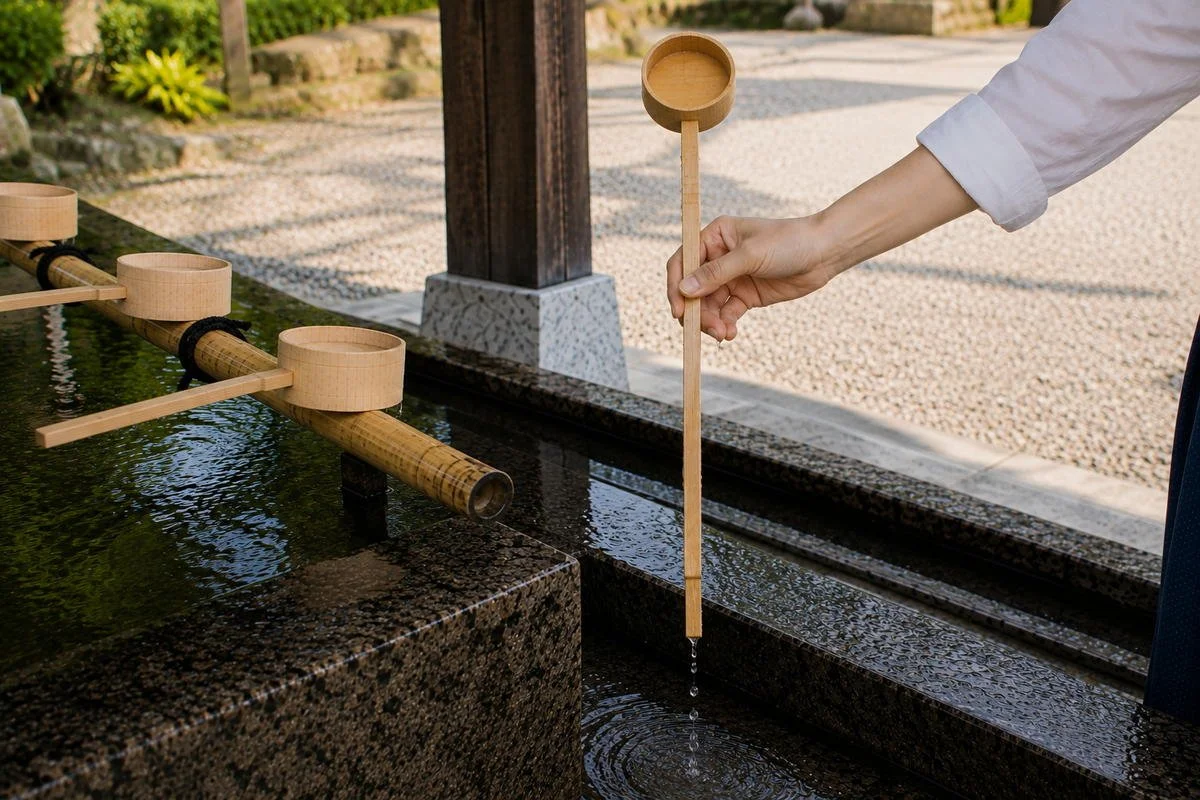
5. Hold the ladle upright so the remaining water runs down the handle before returning it.
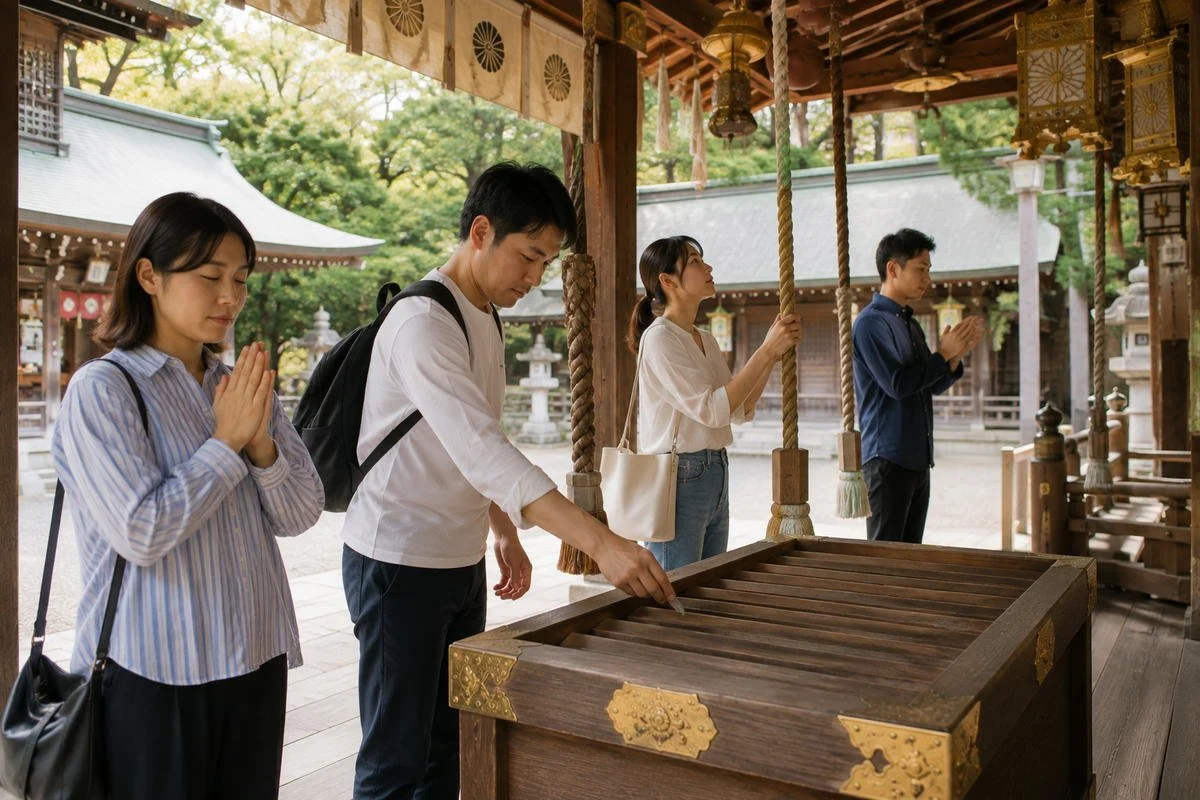
How to Pray at a Shinto Shrine
When you reach the main worship hall, you'll usually see an offering box.
Many visitors choose to make a small monetary offering before praying.
There is no required amount.
Even a single coin is perfectly acceptable.
The offering is a gesture of gratitude and respect—not a payment for good fortune.
At many shrines, the traditional sequence is:
Place your offering quietly into the offering box.
Ring the bell gently, if one is provided.
Bow deeply twice.
Clap your hands twice.
Offer a silent prayer or words of gratitude.
Finish with one final deep bow.
This is commonly known as "two bows, two claps, one bow."
Not every shrine follows exactly the same custom, however.
Some famous shrines have their own unique traditions, so always pay attention to any posted guidance.
A Prayer Doesn't Have to Be a Wish
Many first-time visitors assume people visit shrines only to ask for good luck or success.
In reality, many Japanese people simply express gratitude.
They may give thanks for good health, their family, safe travels, or the everyday blessings of life.
Others quietly reflect without asking for anything at all.
There is no "correct" prayer.
If you choose to pray, sincerity matters far more than the specific words.
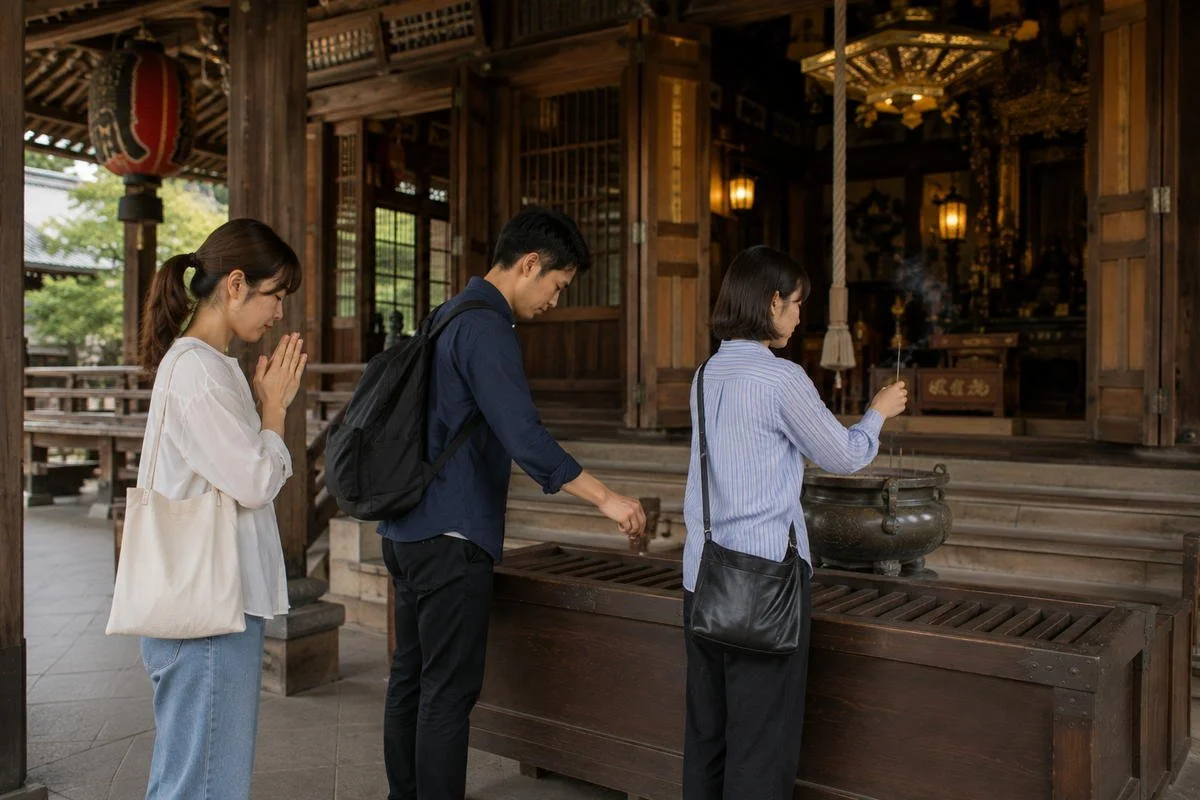
How to Pray at a Buddhist Temple
Prayer at a Buddhist temple is usually quieter and more straightforward.
After making a small offering, if you wish, many visitors simply:
Place their hands together in front of their chest
Bow gently
Offer a silent prayer or moment of reflection
Unlike at most Shinto shrines, clapping is generally not part of Buddhist practice.
Some temples also have large bells within the grounds.
Unless signs indicate that visitors may ring them, assume they are reserved for ceremonies or temple staff.
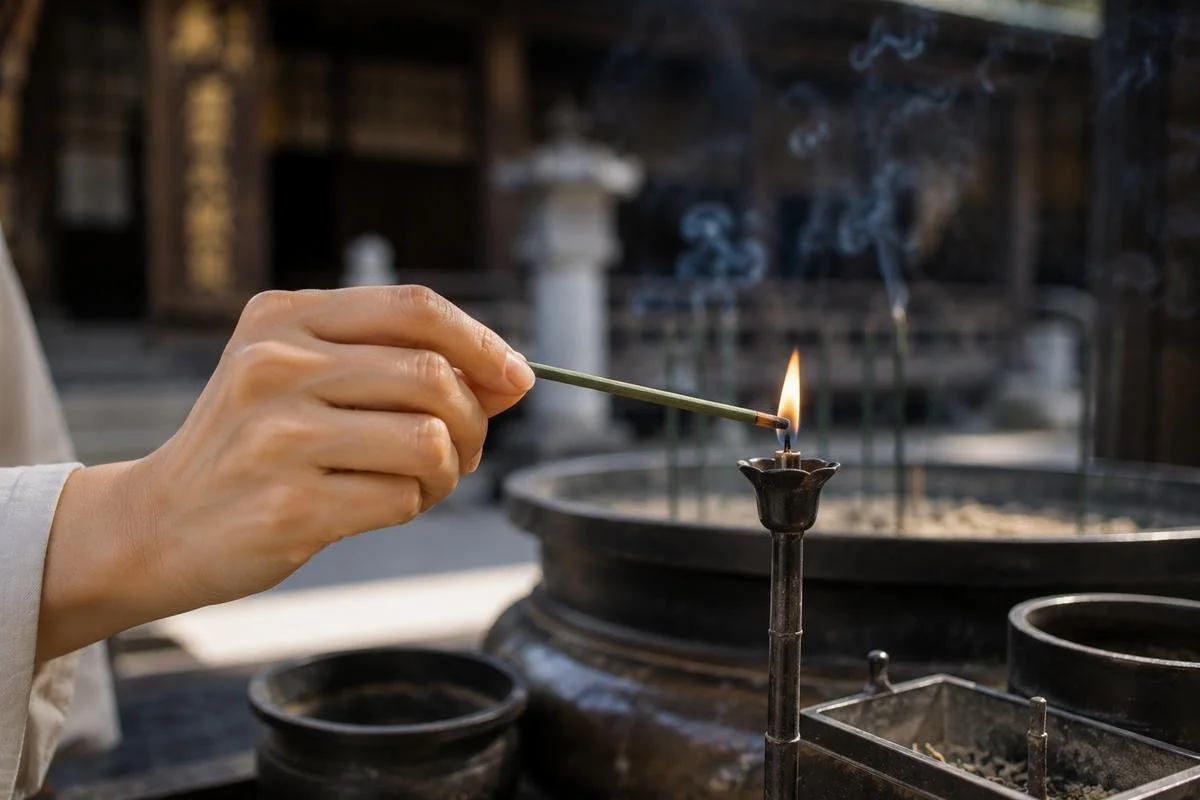
Lighting Incense
Many Buddhist temples have large incense burners near the main hall.
Visitors often light a stick of incense as an offering.
If incense is available:
Light it from an existing flame whenever possible.
Gently wave out the flame rather than blowing on it.
Place the incense into the burner.
Some people gently draw the rising smoke toward themselves, believing it symbolizes blessings or purification.
Whether you choose to do this or simply observe is entirely up to you.
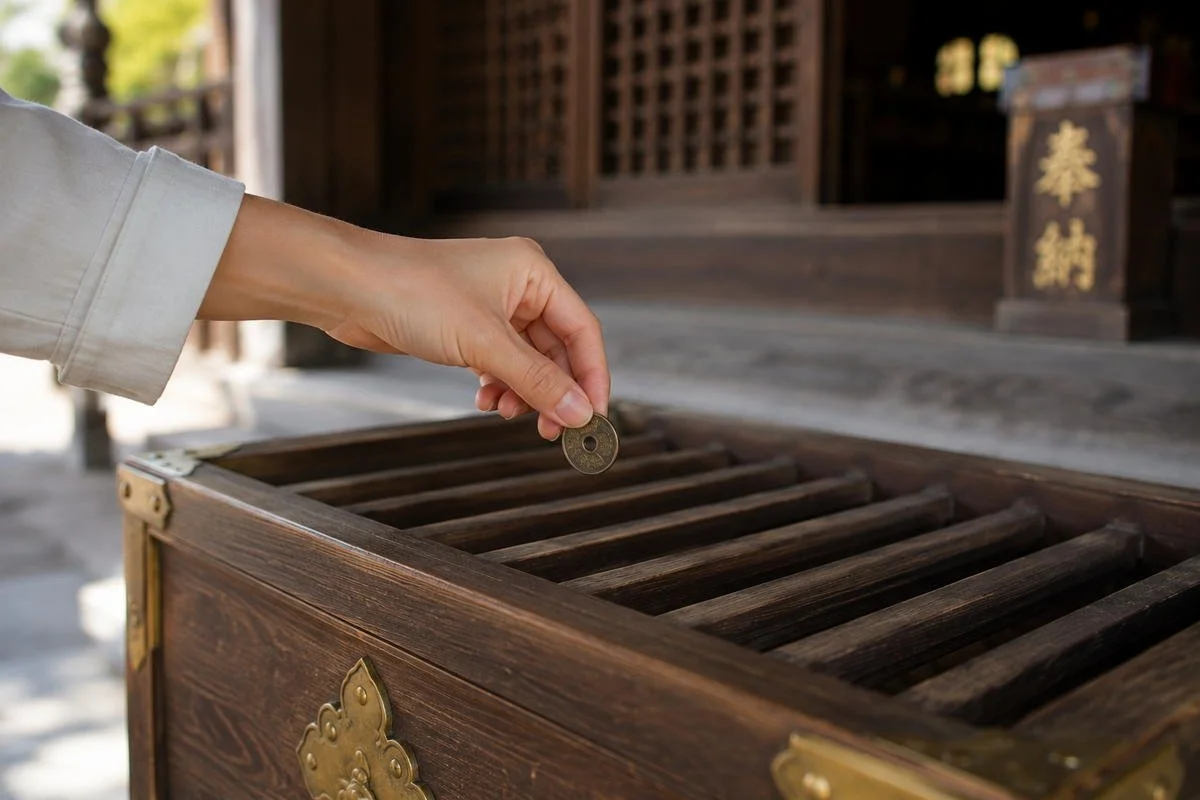
Making an Offering
Offering boxes can be found at both shrines and temples.
There is no expected amount of money.
Most visitors contribute only a few coins, and the amount matters far less than the intention behind the offering.
Rather than tossing coins from a distance, place them gently into the offering box whenever possible.
This simple gesture reflects the calm and respectful atmosphere of the sacred space.
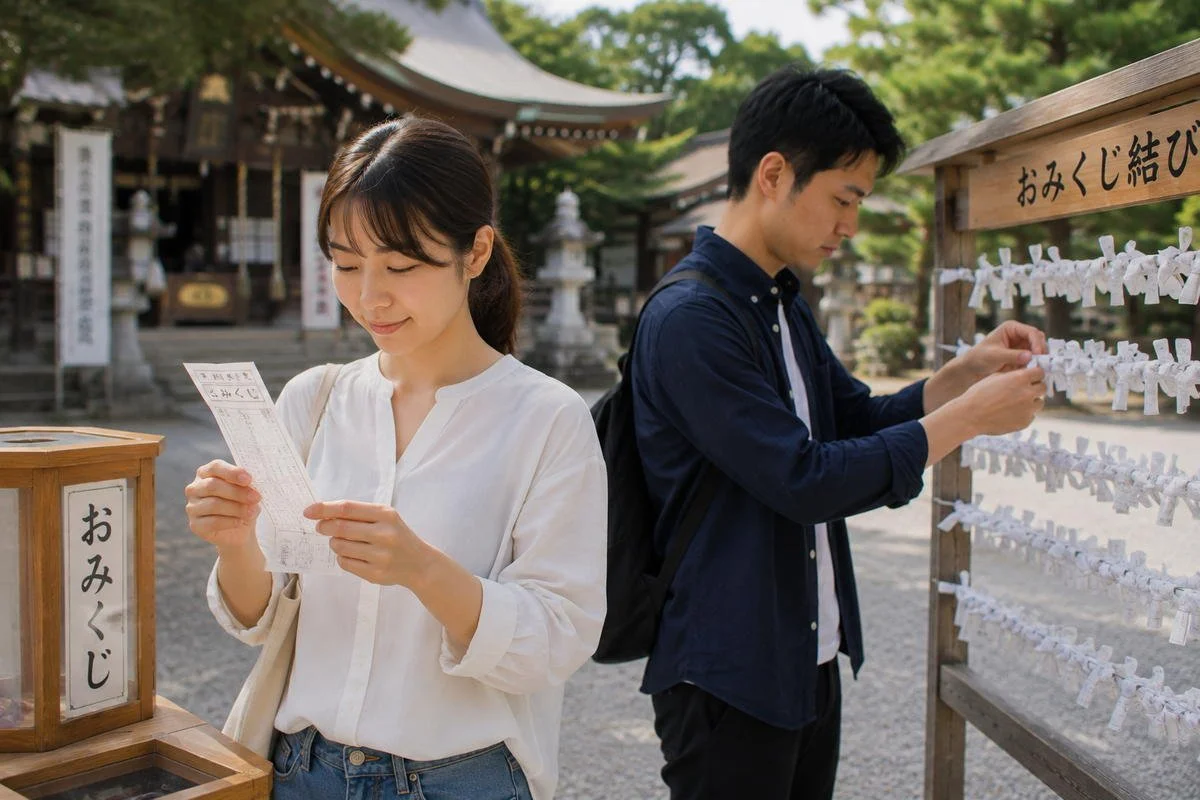
Omikuji: Fortune Slips
Many temples and shrines offer omikuji, small paper fortunes.
After making a small donation, you draw one at random.
Your fortune may include guidance on:
Overall luck
Health
Travel
Business
Studies
Relationships
If you receive a favorable fortune, many people take it home as a keepsake.
If it's less favorable, it's common to tie it to a designated rack or tree branch at the site, symbolically leaving the bad luck behind.
Because customs vary slightly from place to place, simply follow the posted instructions.
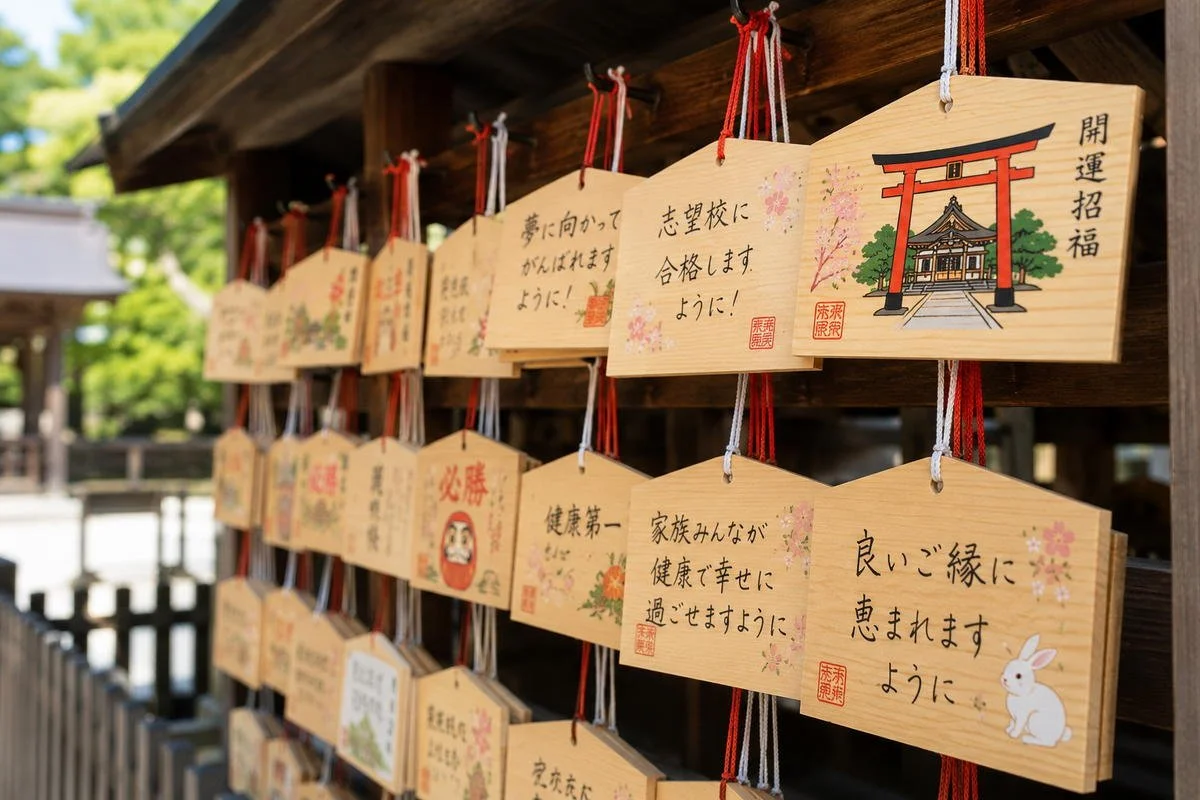
Ema: Wooden Prayer Plaques
You may also notice small wooden plaques hanging near the worship hall.
These are called ema.
Visitors write their hopes, wishes, or messages of gratitude on the plaques before hanging them at the shrine or temple.
Common wishes include:
Good health
Success in school
Safe travel
Happy relationships
Business prosperity
Reading the ema—while respecting people's privacy—offers a fascinating glimpse into the hopes and dreams of visitors from Japan and around the world.
Be Patient During Busy Times
Popular temples and shrines can become especially crowded during:
New Year's holidays
Cherry blossom season
Autumn foliage season
National holidays
Local festivals
If there's a line to pray, simply wait your turn.
Avoid pushing ahead or trying to squeeze past others.
Everyone will have an opportunity to approach the worship hall.
Patience is one more way to show respect for both the sacred place and the people around you.
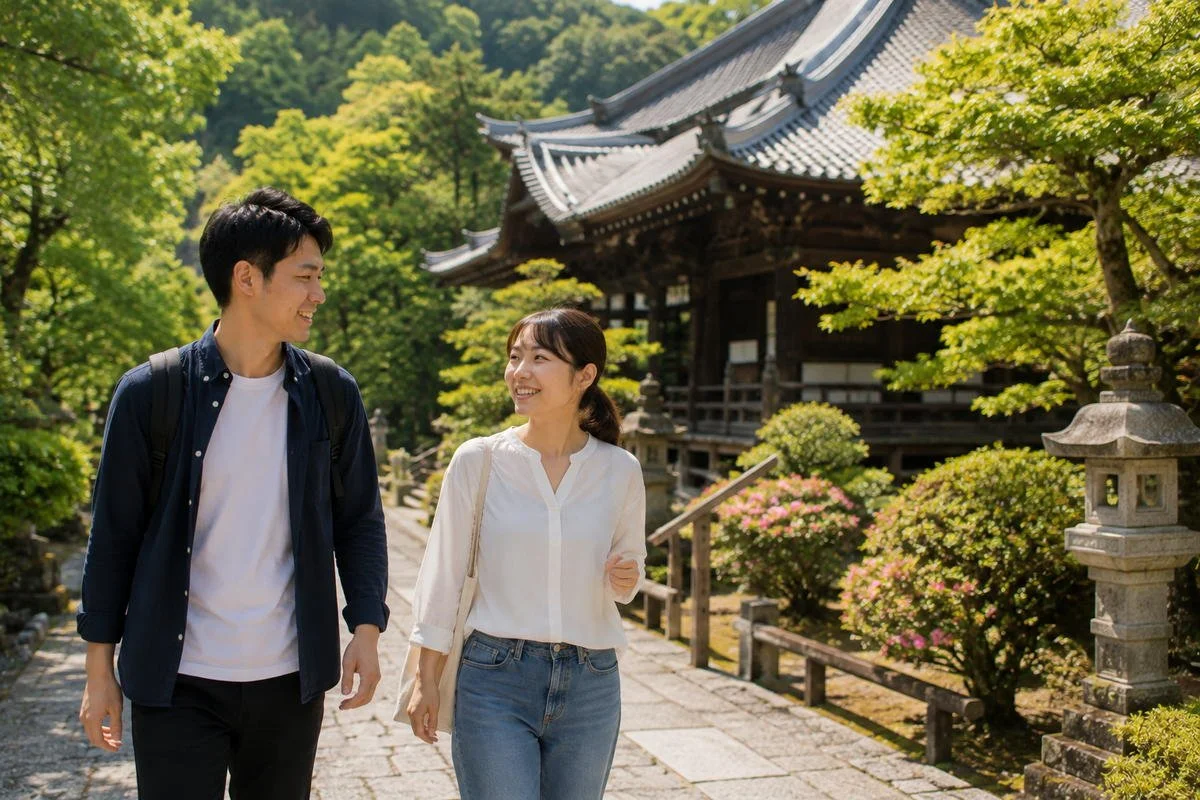
When You're Finished
After praying, many visitors spend a few extra minutes exploring the grounds.
You might admire the architecture, stroll through the gardens, browse a small gift shop, or simply enjoy the peaceful surroundings.
There's no need to leave immediately.
In fact, slowing down and appreciating the atmosphere is one of the best ways to experience a temple or shrine.
Did You Know?
Many Japanese people visit both shrines and temples at different stages of life.
A family might celebrate the birth of a child at a Shinto shrine, pray for success before school entrance exams, and later hold a Buddhist memorial service for loved ones.
Rather than choosing one tradition over the other, many people naturally incorporate both into different moments of life.
Local Tip
Don't worry if you forget the exact order of bows or claps.
Simply step aside for a moment and observe how local worshippers perform the ritual.
Most people appreciate visitors who take the time to learn, and quiet observation is often the easiest—and most respectful—way to participate.