
Chapter 6: Temple and Shrine 3
Photography, Goshuin & Respecting Sacred Traditions
By now, you've learned how to enter sacred spaces respectfully and how to participate in basic worship at both shrines and temples.
Before continuing your journey, it's helpful to understand a few more customs that will make your visits even more rewarding—and help you avoid some of the most common mistakes first-time visitors make.
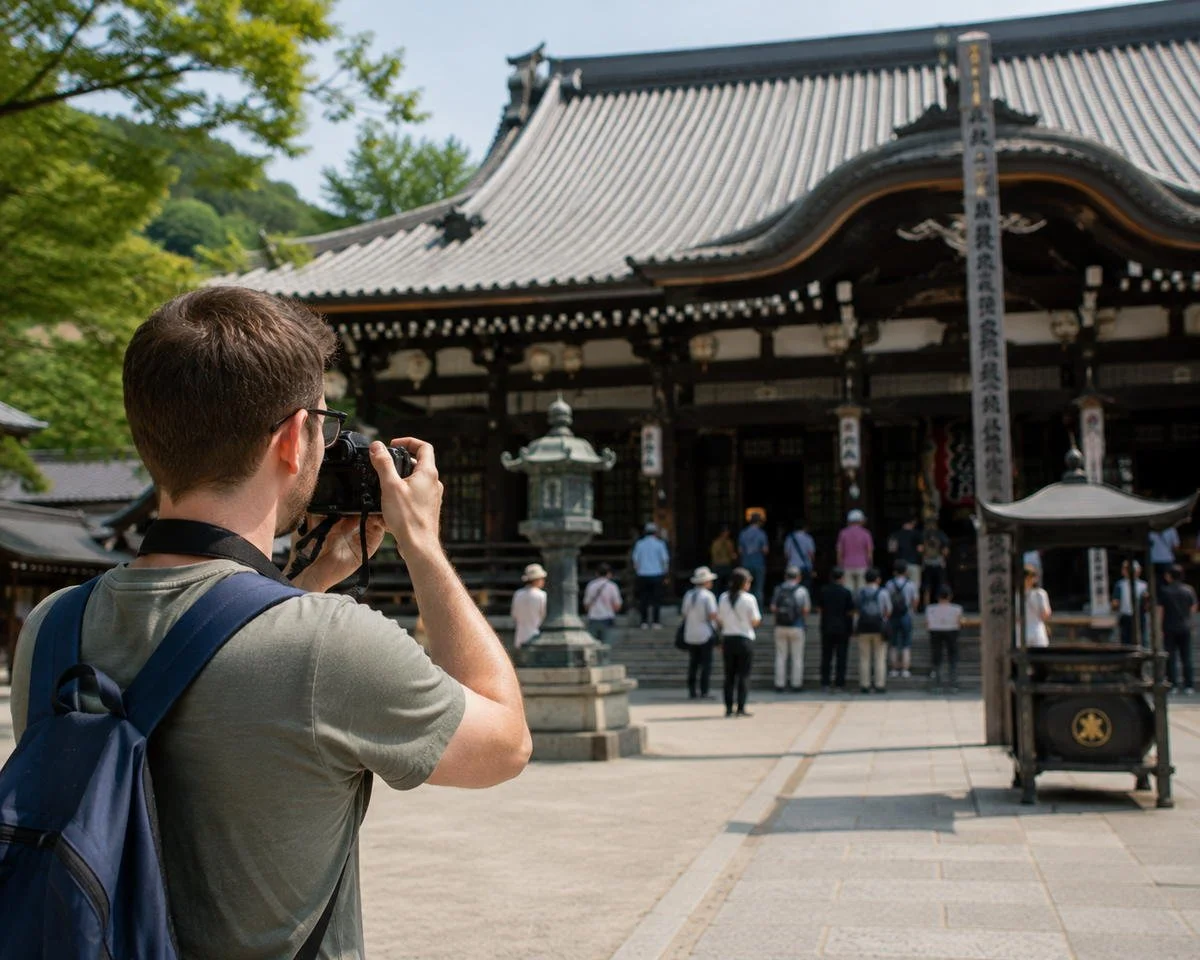
Photography: Know When to Put the Camera Away
Japan's temples and shrines are among the country's most photogenic places.
From brilliant vermilion torii gates and elegant pagodas to peaceful gardens and ancient forests, it's easy to see why so many visitors want to capture every moment.
Fortunately, photography is allowed at many sites.
However, not every area is open to cameras.
Many temples prohibit photography inside their main halls because they contain sacred statues, priceless artwork, or spaces intended for prayer and meditation.
Some shrines also restrict photography during ceremonies or within certain worship areas.
Always check for posted signs before taking pictures.
If photography isn't permitted, simply enjoy the moment without your camera—even if no staff members are nearby.
Be Mindful of Other Visitors
Even where photography is allowed, good manners make a difference.
Try to avoid:
Blocking pathways while taking photos
Standing directly in front of people who are praying
Using flash inside historic buildings
Speaking loudly while recording videos
Flying drones without official permission
If you're photographing friends or family, step aside after taking a few pictures so others can enjoy the view as well.
Remember that many visitors have come not only to sightsee, but also to pray or spend a few quiet moments in reflection.
What Is a Goshuin?
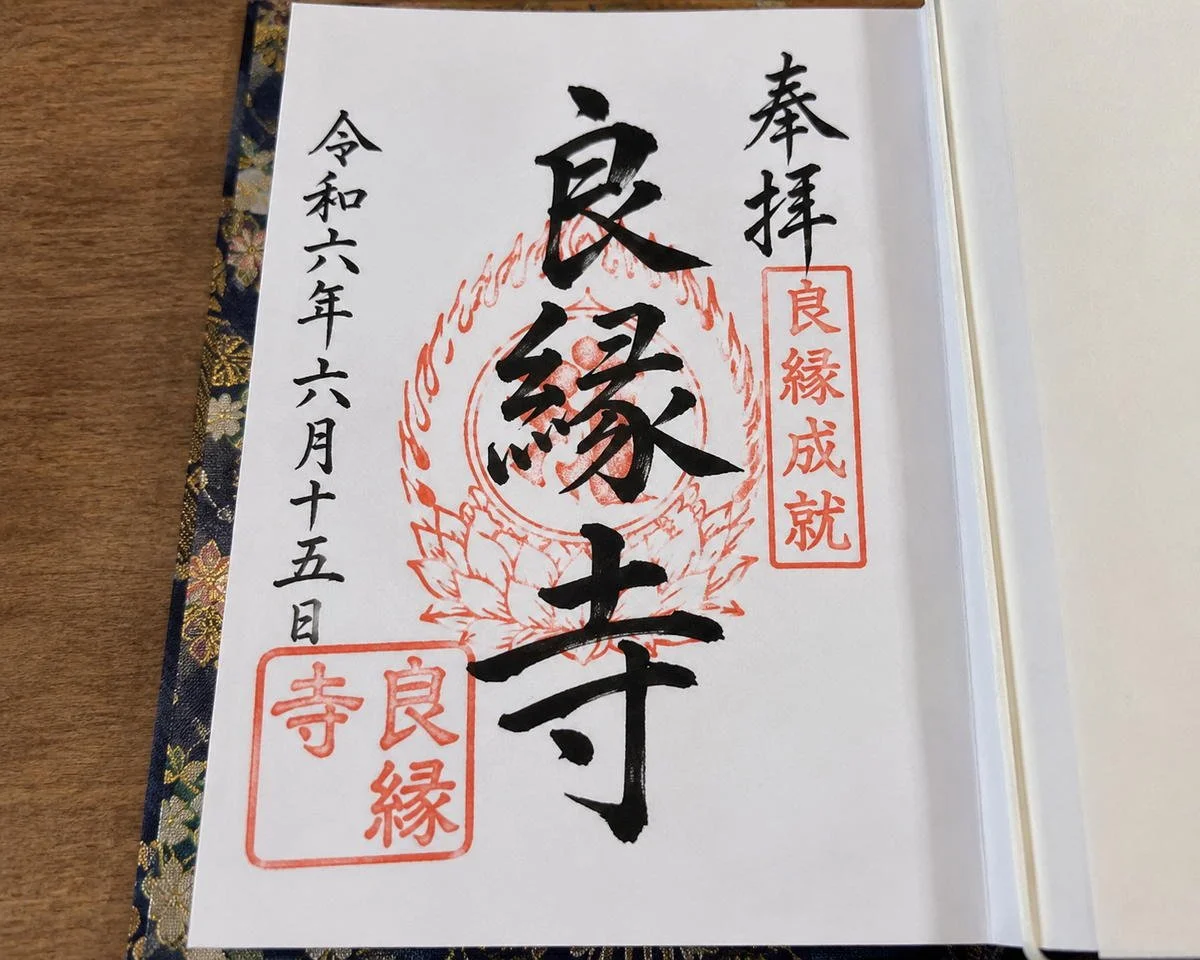
One of the most meaningful keepsakes you can bring home from Japan is a goshuin.
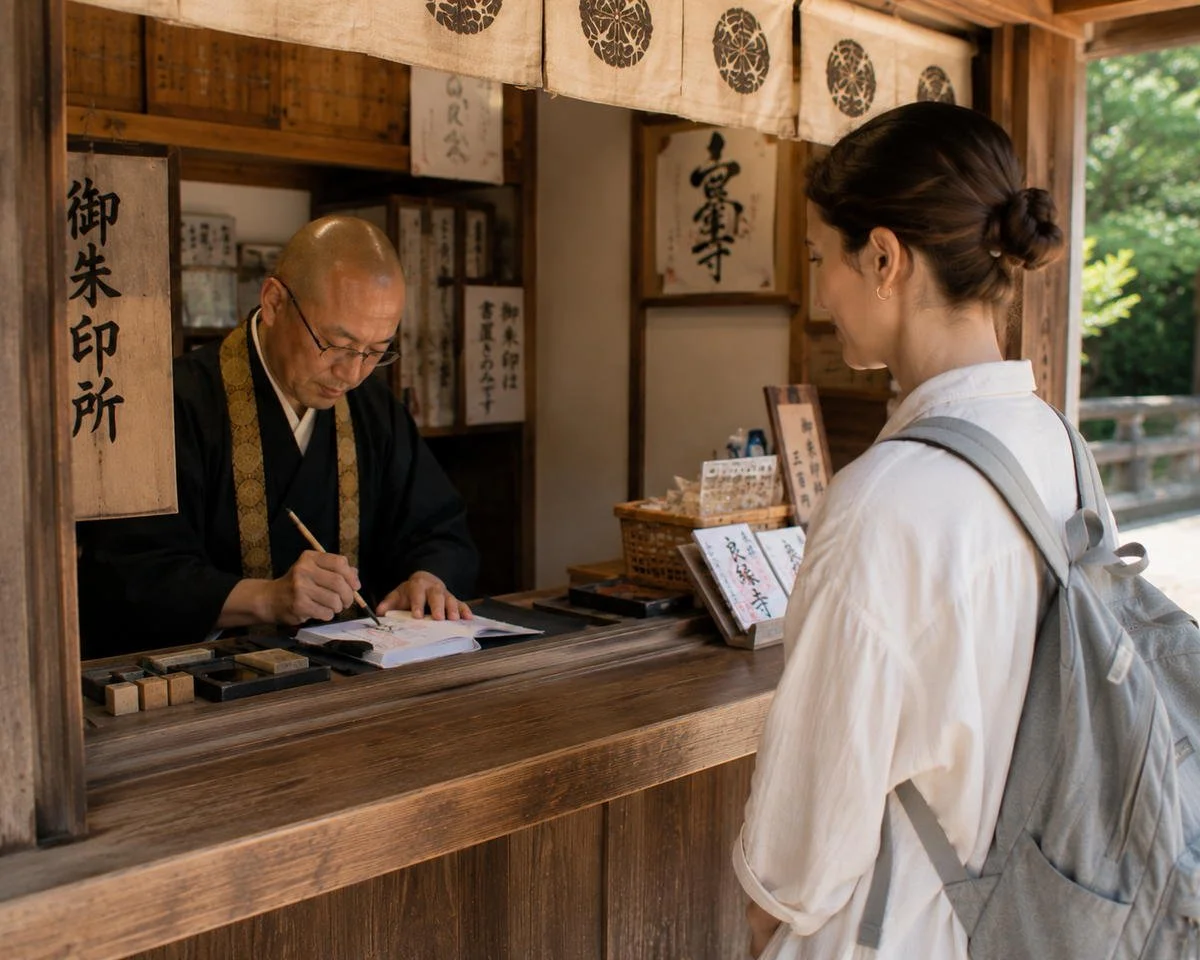
A goshuin is a handwritten temple or shrine seal created by priests or staff using elegant calligraphy, black ink, and a distinctive red stamp.
Although many travelers think of them as souvenirs, they have a much deeper significance.
Traditionally, a goshuin serves as a record of your respectful visit and worship.
For that reason, it's considered good etiquette to visit the main worship hall before requesting one.
Collecting Goshuin
Most people collect their goshuin in a special notebook called a goshuinchō.
These notebooks are often sold at temples and shrines and come in a wide variety of beautiful designs.
When requesting a goshuin:
Present your goshuinchō politely.
Wait patiently while it is written.
Pay the requested offering, usually a small fixed amount.
Receive it respectfully, preferably with both hands.
Creating each goshuin takes time, care, and skill, so a little patience is always appreciated.
For many travelers, collecting goshuin becomes one of the most memorable parts of exploring Japan.
Omamori: Japanese Good Luck Charms
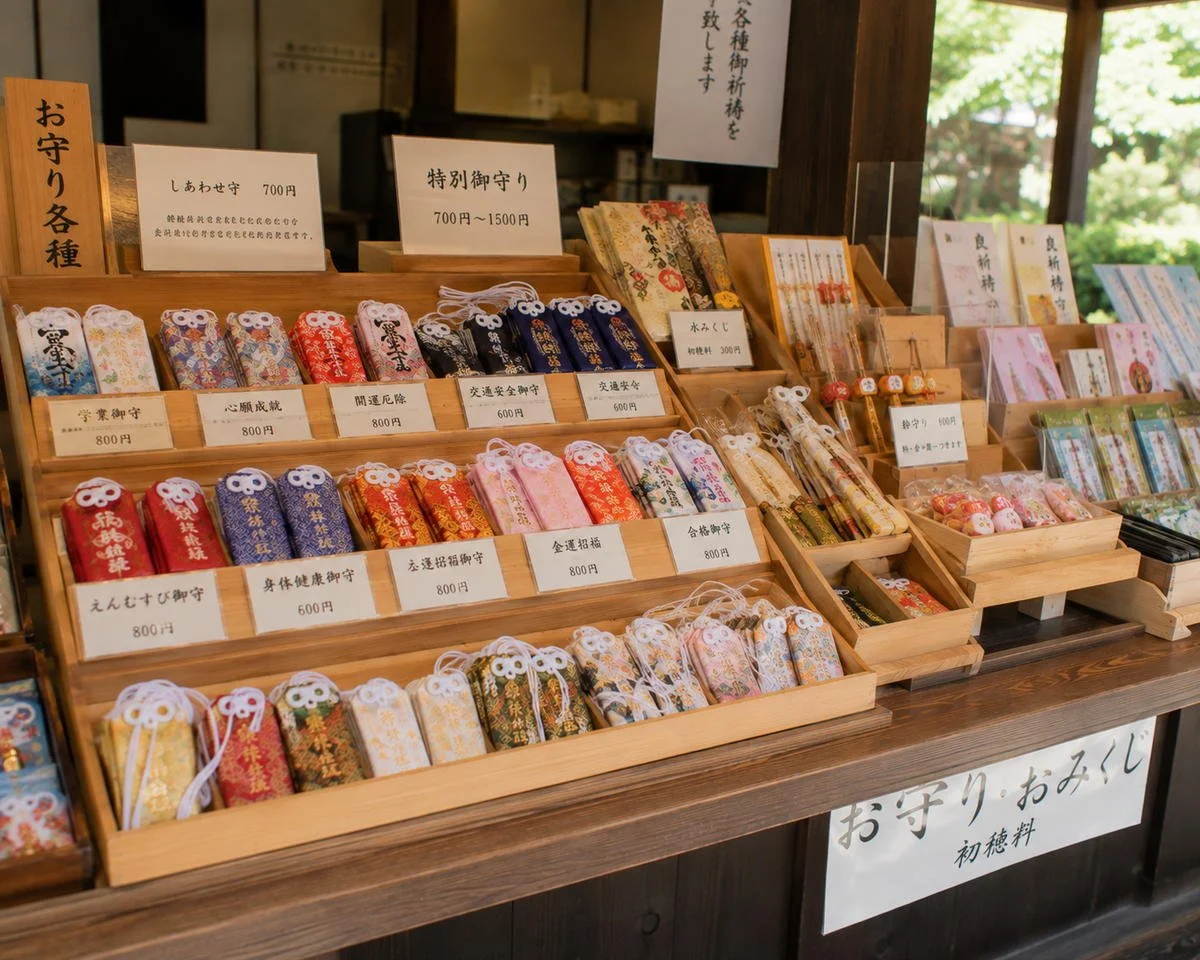
Near the shrine office or temple shop, you'll often find colorful fabric pouches called omamori.
These protective amulets are associated with different hopes and wishes.
Common types include charms for:
Safe travel
Good health
Academic success
Business prosperity
Traffic safety
Easy childbirth
Finding love
Many Japanese people carry an omamori in a bag, wallet, or car throughout the year.
Unlike ordinary souvenirs, they're treated with respect because they're regarded as sacred objects.
What Should You Do with an Old Omamori?
If an omamori has fulfilled its purpose—or you've had it for about a year—many Japanese people return it to a temple or shrine, where it can be respectfully disposed of during a ceremonial burning.
As a visitor, however, there's no need to worry if returning it isn't practical.
Keeping it as a meaningful reminder of your journey is perfectly acceptable.
If you decide to keep it, simply treat it with the same care you would give any treasured keepsake.
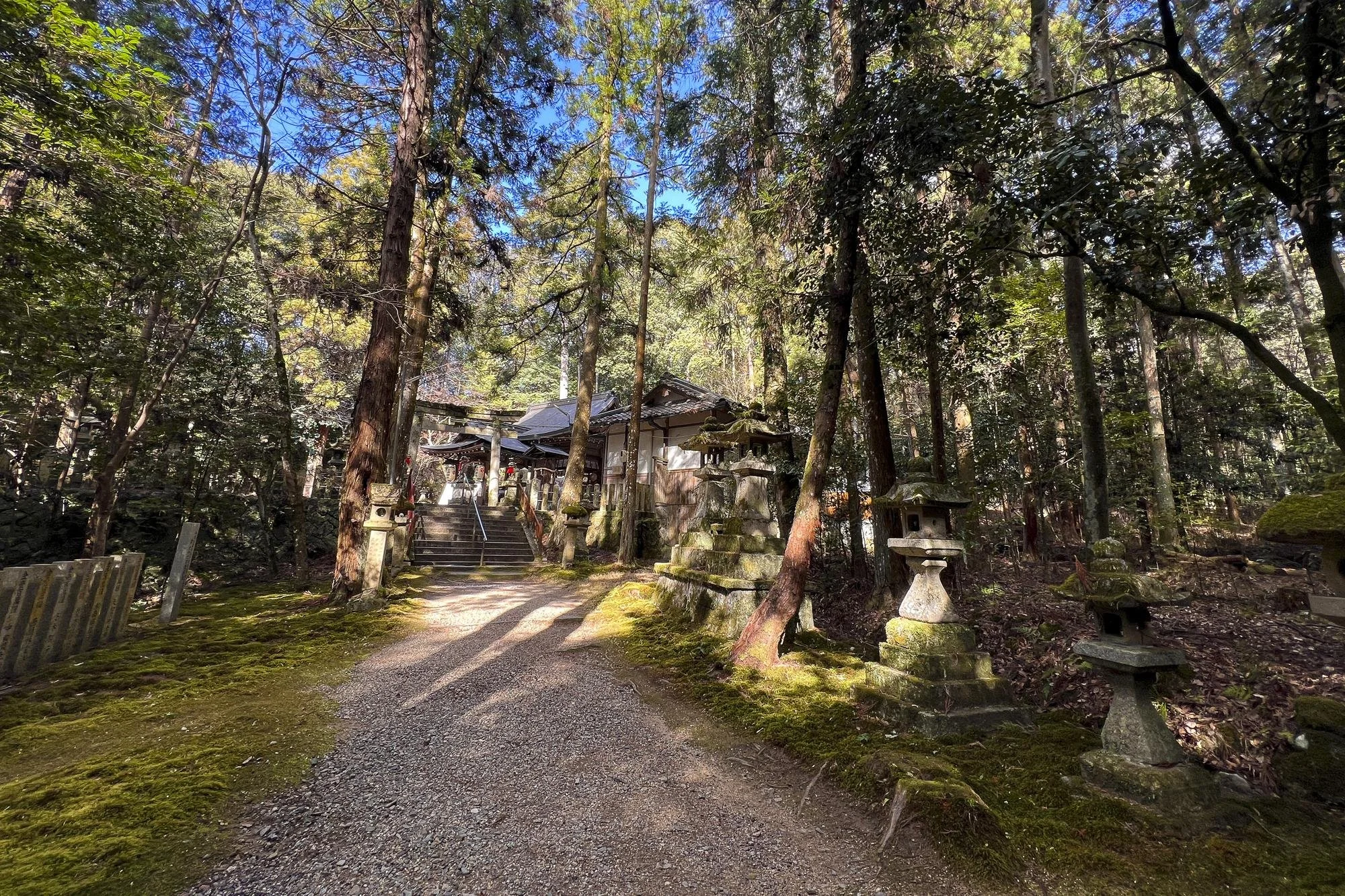
Respect Nature, Too
Many sacred sites are surrounded by centuries-old trees, tranquil ponds, carefully maintained gardens, and stone pathways.
In Shinto, nature itself is often regarded as sacred.
A towering cedar tree, a quiet spring, or an ancient rock may hold spiritual significance.
Avoid climbing on rocks, entering restricted gardens, picking plants, or carving names into trees.
Respecting the natural surroundings is just as important as respecting the buildings themselves.
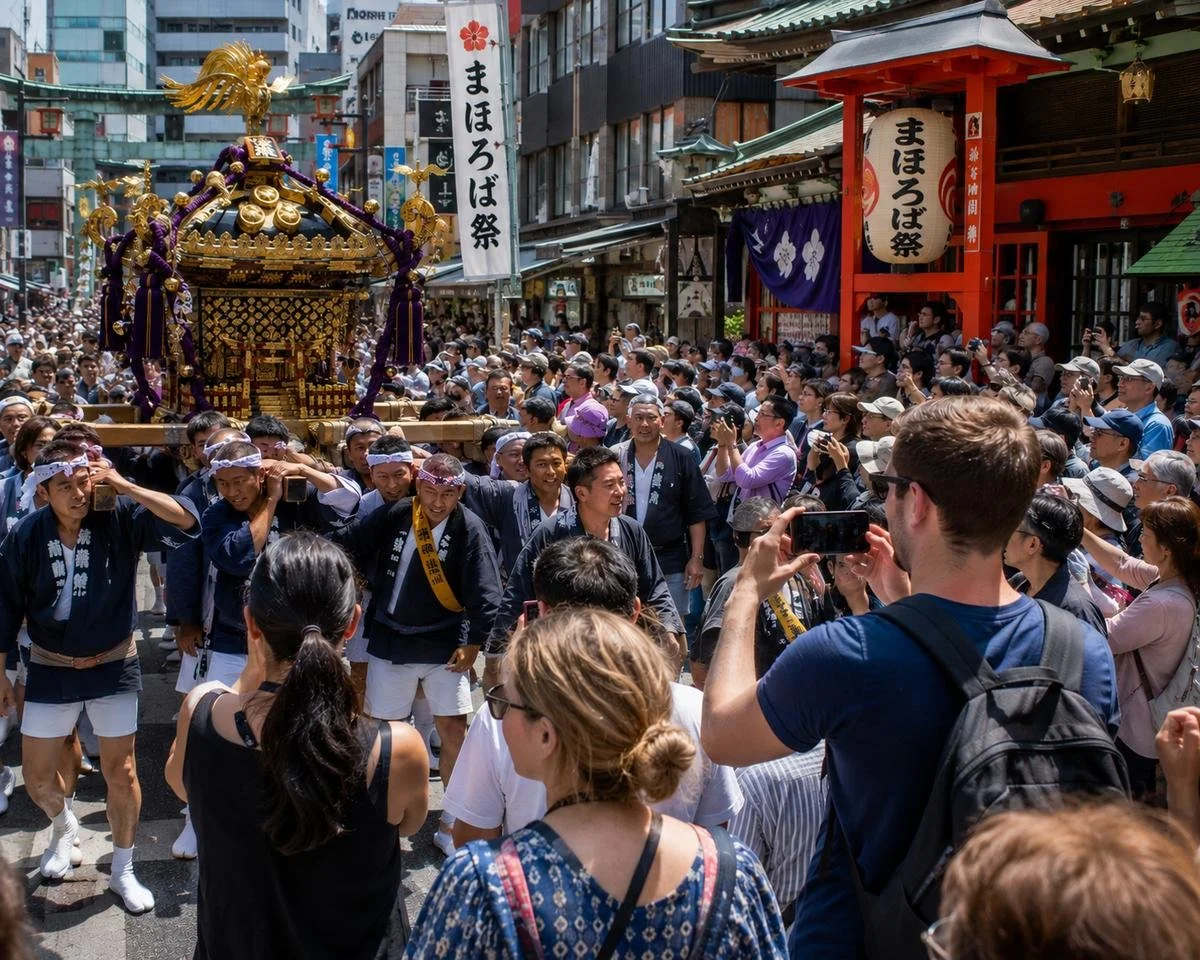
Seasonal Festivals
If you're fortunate, your visit may coincide with a traditional festival, known as a matsuri.
These lively celebrations often include:
Processions
Traditional music
Dance performances
Food stalls
Portable shrines carried through the streets
Although festivals are colorful and energetic, they're still religious events at their heart.
Follow instructions from organizers, avoid blocking processions, and remember that local residents are taking part in important community traditions—not performing for tourists.
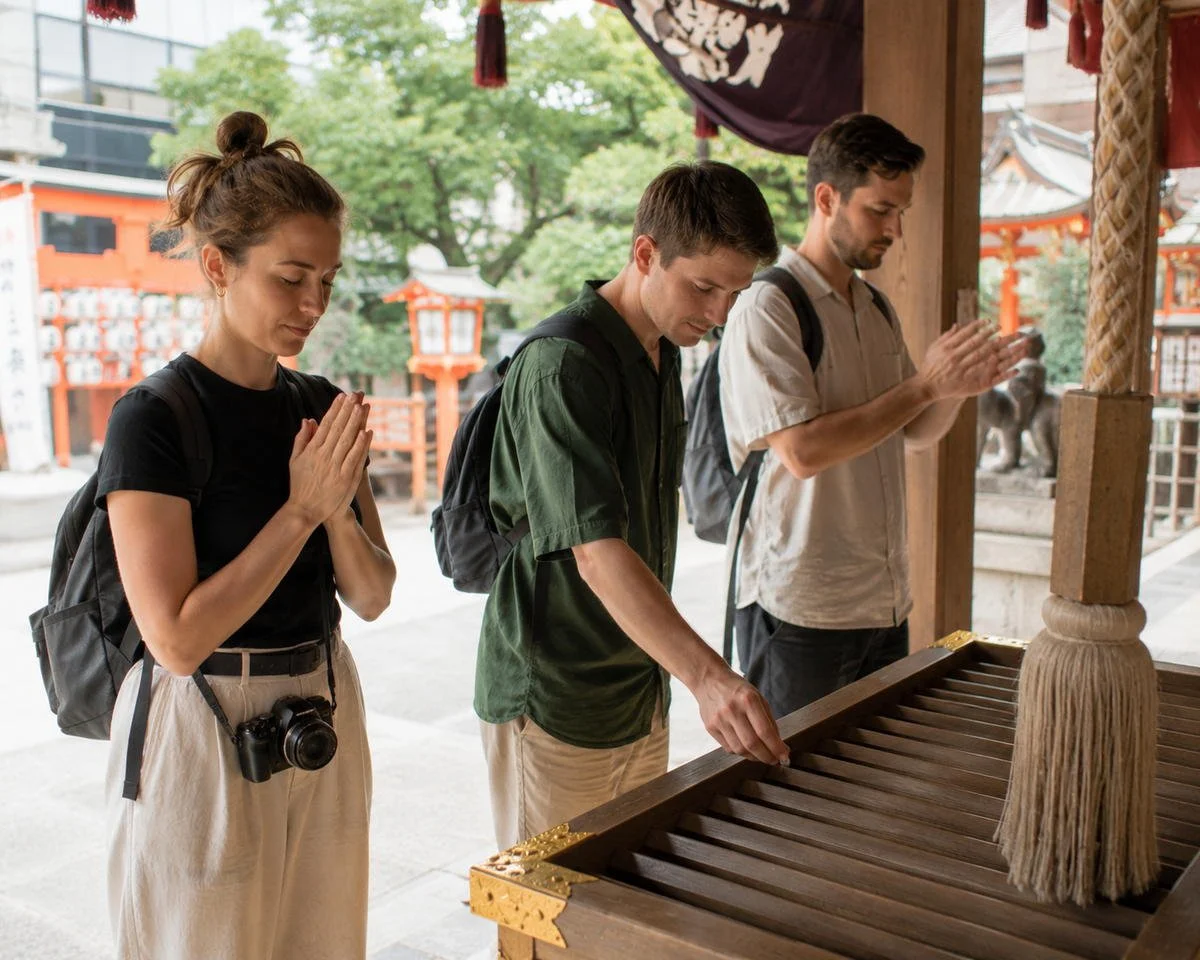
Common Mistakes Visitors Make
Most mistakes happen simply because visitors are unfamiliar with local customs.
Fortunately, they're easy to avoid.
Walking down the center of a shrine approach when space allows you to walk to one side
Entering buildings where shoes should be removed
Taking photographs in prohibited areas
Speaking loudly near people who are praying
Touching statues, bells, or other sacred objects without permission
Treating goshuin as ordinary souvenirs instead of records of worship
Crossing ropes or barriers to take a better photograph
Respect Is More Important Than Perfection
Many visitors worry about getting every detail exactly right.
Should you bow a little deeper?
Did you clap correctly?
Did you stand in the right place?
The truth is that perfection isn't expected.
Japanese people understand that international visitors are experiencing these traditions for the first time.
A respectful attitude, quiet behavior, and a willingness to learn leave a far stronger impression than performing every ritual flawlessly.
More Than Historic Landmarks
Temples and shrines preserve some of Japan's greatest architectural and cultural treasures.
But their true value lies in something less visible.
For centuries, they've been places where people have expressed gratitude, sought guidance, celebrated life's happiest moments, and found comfort during its most difficult ones.
When you visit with that understanding, you're doing more than checking another attraction off your itinerary.
You're stepping into a living tradition that continues to shape everyday life in Japan.
Did You Know?
Japan is home to tens of thousands of shrines and temples, ranging from world-famous landmarks to tiny neighborhood sanctuaries visited by only a handful of people each day.
Many local residents return to the same shrine or temple throughout their lives—for New Year's prayers, seasonal festivals, important milestones, or simply a quiet moment of reflection.
Local Tip
Some of the most memorable temples and shrines aren't the famous ones filled with tour groups.
If you have the time, visit a small neighborhood shrine or a quiet temple tucked away from the main sightseeing routes.
You may find yourself listening only to birdsong, rustling leaves, and the distant sound of a temple bell.
Those peaceful moments often become the memories travelers treasure most.
The Meaning Behind Visiting Sacred Places
At first glance, the etiquette surrounding temples and shrines may seem like a long list of customs.
Bow at the gate.
Walk quietly.
Avoid certain areas.
Follow the local rituals.
But these customs all reflect the same idea.
A temple or shrine isn't simply a place to see—it's a place to experience.
By slowing down, observing your surroundings, and showing consideration for the people around you, you become part of the peaceful atmosphere that these sacred places have protected for centuries.
You don't need to be an expert in Japanese religion to appreciate a temple or shrine.
Come with curiosity.
Observe quietly.
Follow the local customs as best you can.
If you do, you'll leave with more than beautiful photographs.
You'll gain a deeper understanding of the values, traditions, and quiet beauty that continue to shape everyday life in Japan.