
Chapter 5: Onsen 2
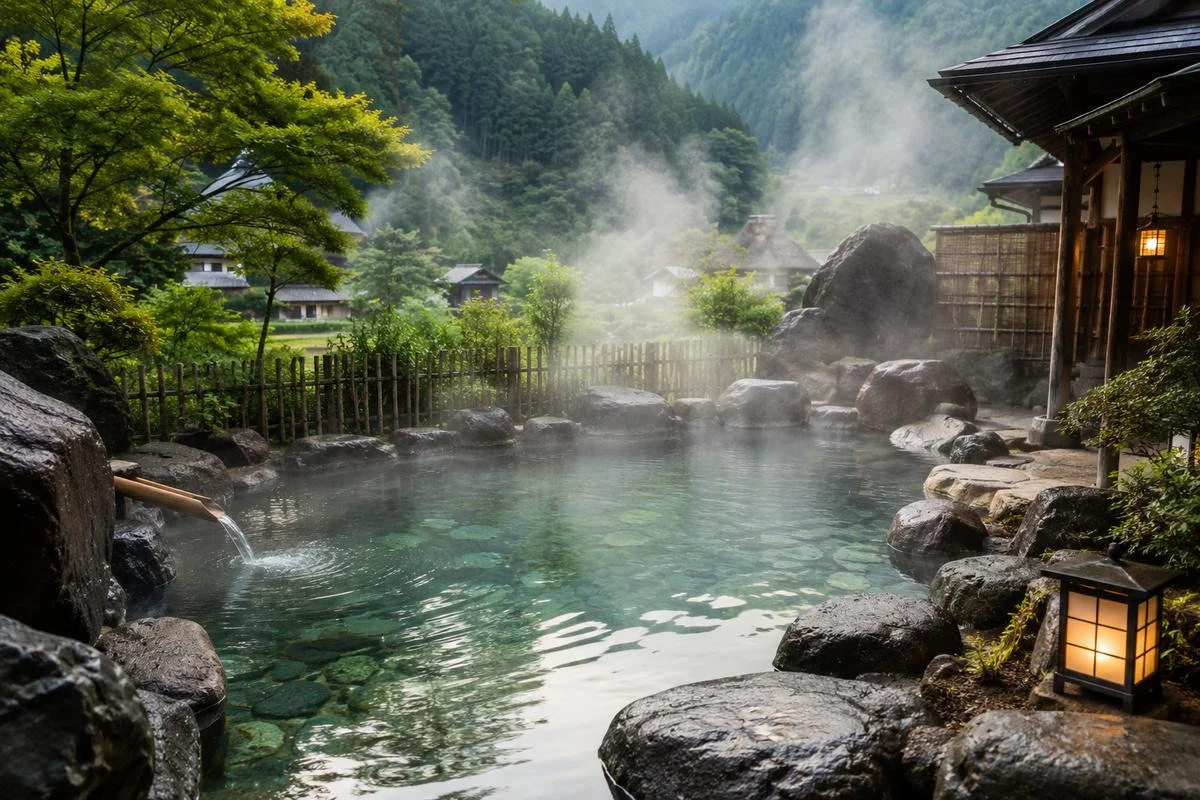
How to Use an Onsen Step by Step
Now that you understand the culture behind Japanese hot springs, let's walk through the experience from start to finish.
If you've never visited an onsen before, don't worry.
The process is much simpler than many first-time visitors expect.
Follow these steps, and you'll feel confident from the moment you arrive.
Step 1: Enter the Changing Room
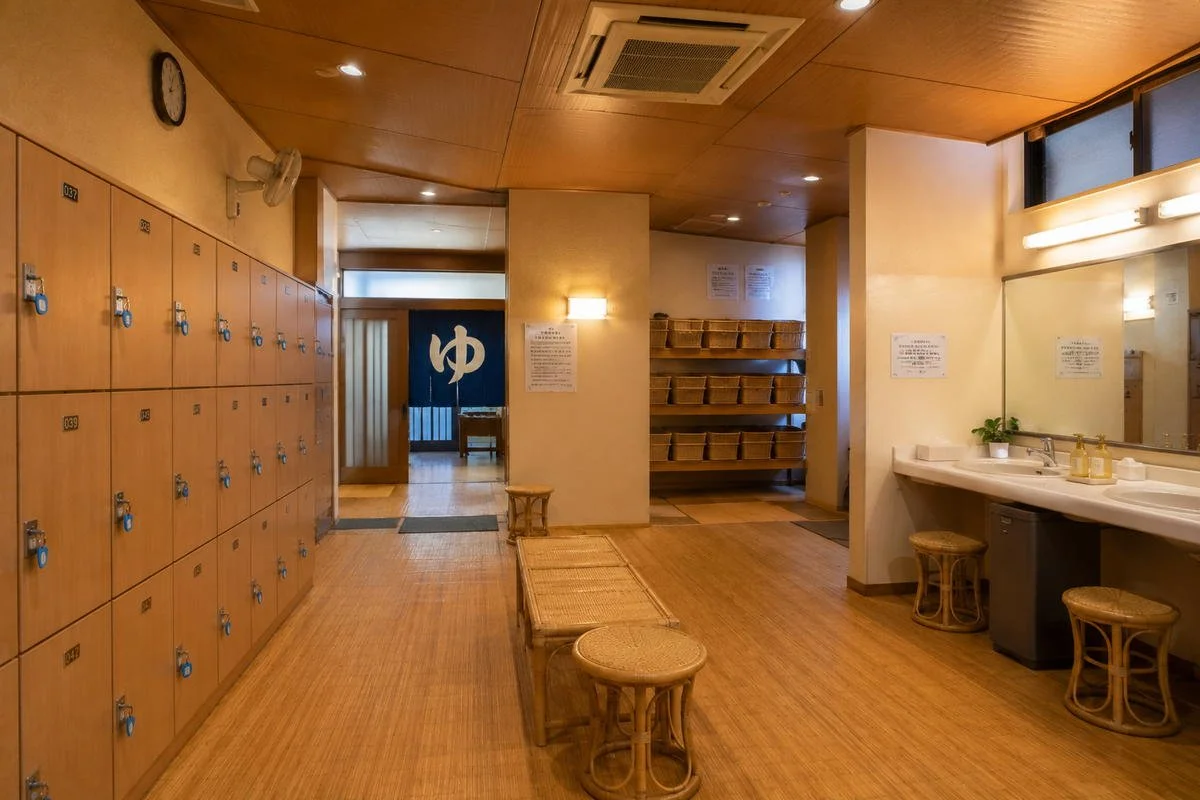
After passing through the entrance curtain, you'll arrive at the changing room.
Most onsen provide lockers or baskets where you can leave your clothes, shoes, and personal belongings.
Everything except your small towel should stay here.
Many facilities also provide complimentary amenities such as:
Shampoo
Conditioner
Body soap
Hair dryers
Cotton swabs
Skin care products (at some locations)
If you're unsure whether an item is complimentary, look for signs or ask a staff member.
Step 2: Bring Only a Small Towel
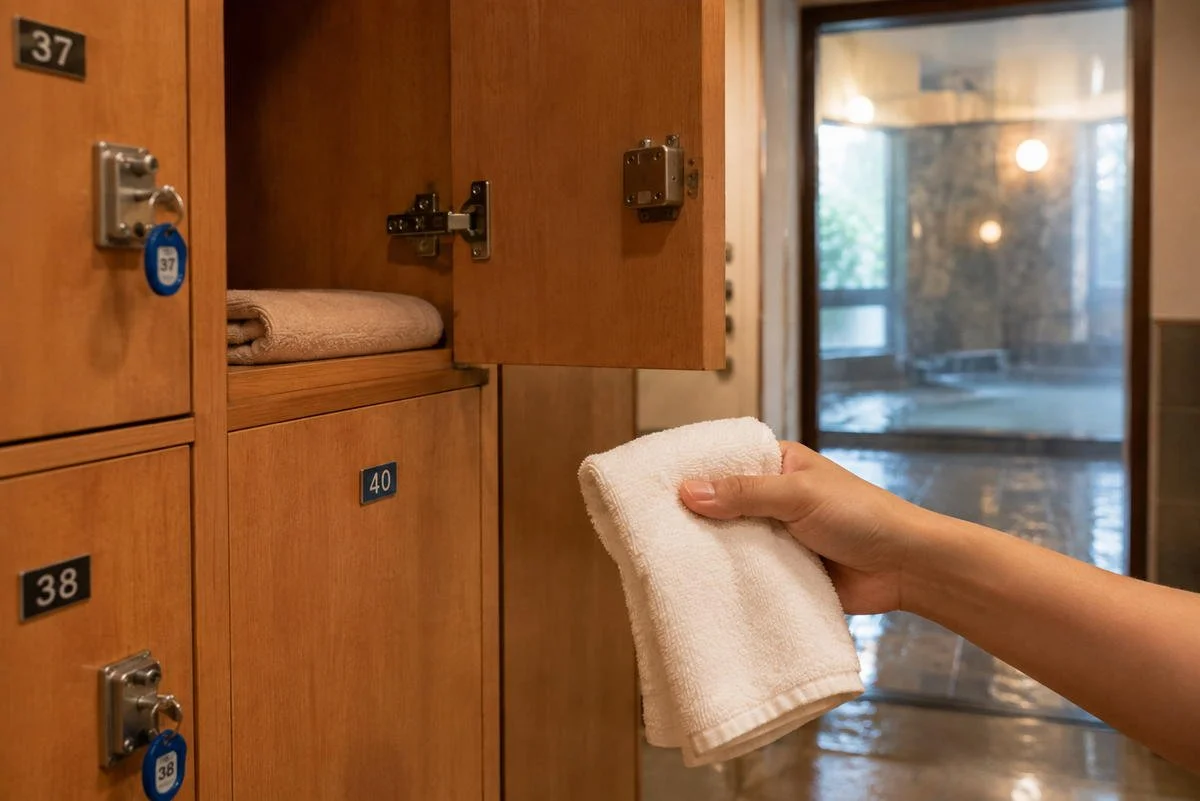
Most visitors carry a small hand towel into the bathing area.
This towel is not for wearing or wrapping around your body in the bath.
Instead, it's commonly used to:
Cover yourself while walking between baths
Dry your face
Wipe away sweat
Rest on top of your head while soaking
Your larger bath towel should remain in the changing room until you're finished.
Step 3: Wash Thoroughly Before Entering the Bath
This is one of the most important rules of Japanese bathing culture.
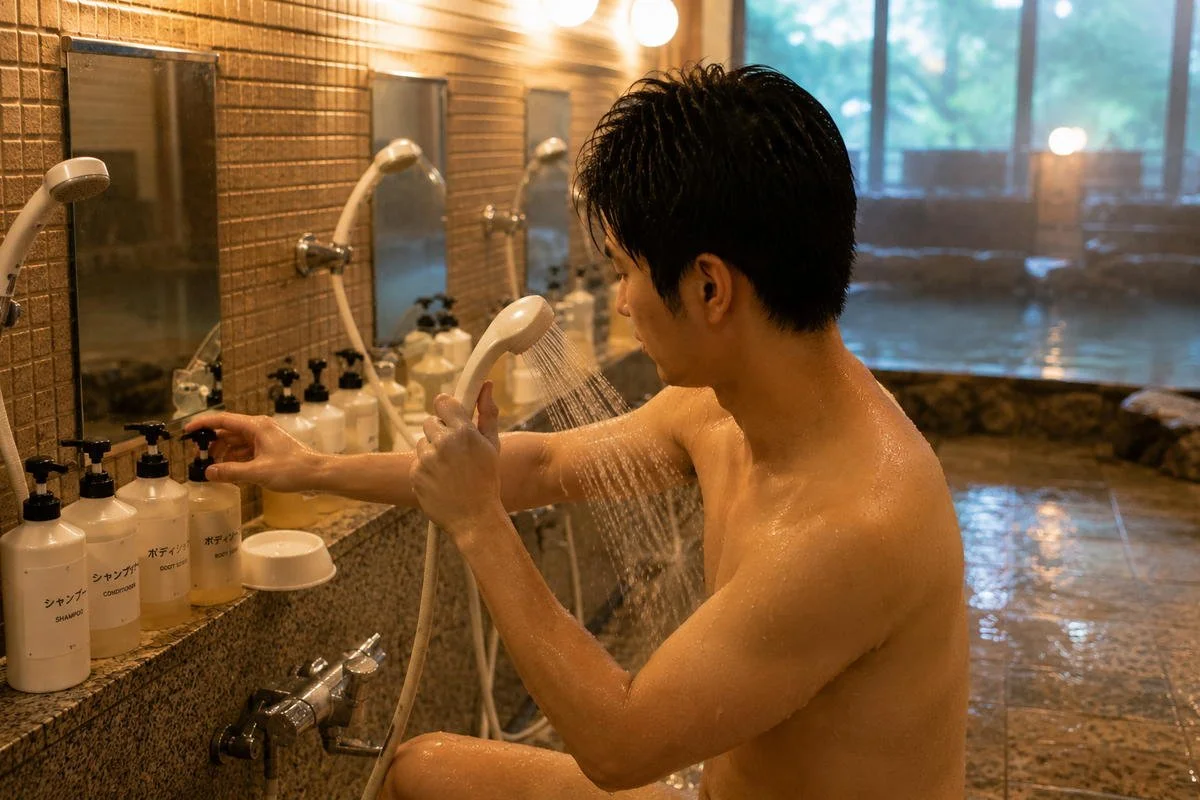
Before entering any bath, wash your entire body at one of the shower stations.
Each station typically includes:
A stool
A handheld shower
Shampoo
Body soap
A wash basin
Sit on the stool while washing to avoid splashing nearby guests.
Take your time, and rinse away all soap before entering the bath.
Remember, the bath is for soaking—not for washing.
Because everyone shares the same water, entering the bath clean helps keep it enjoyable for everyone.
Step 4: Enter the Water Slowly
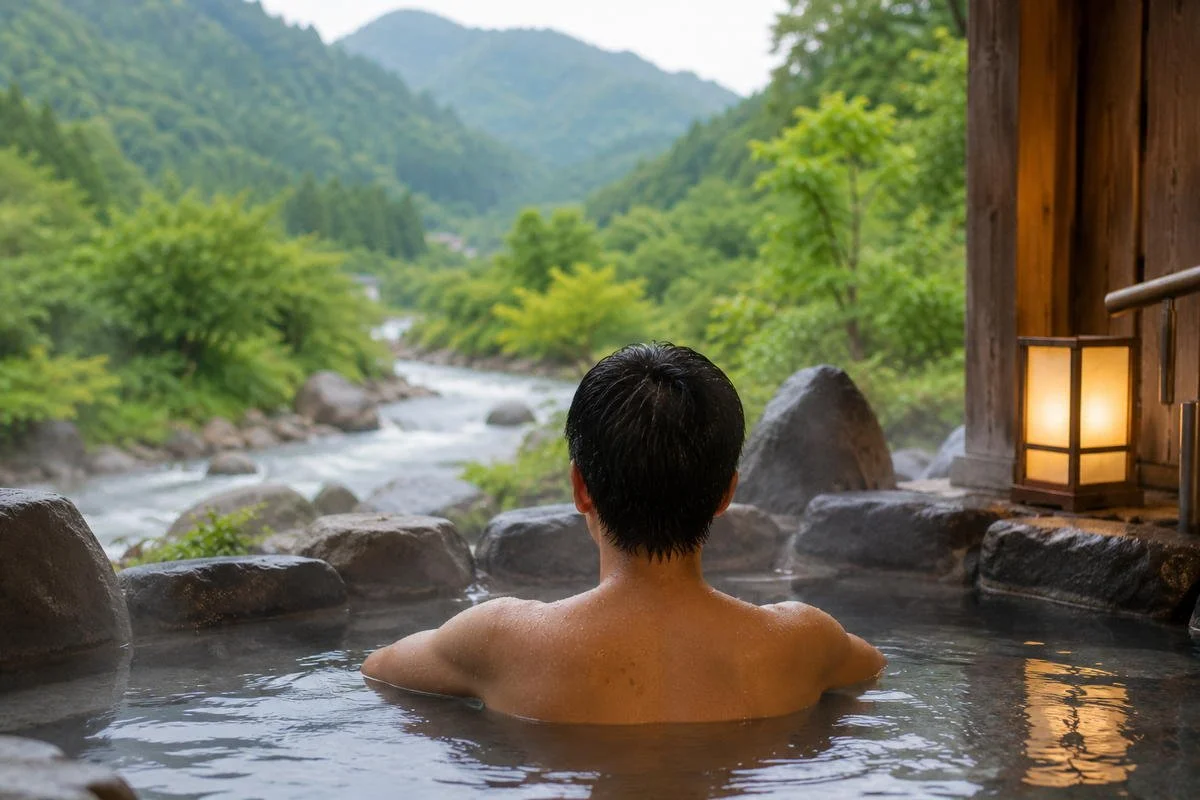
Once you're clean, it's time to enjoy the bath.
Ease yourself into the water gradually.
Most onsen are hotter than many visitors expect, usually around 40–42°C (104–108°F).
After a minute or two, your body will begin to adjust, and you'll likely find the warmth deeply relaxing.
Step 5: Keep Your Towel Out of the Water
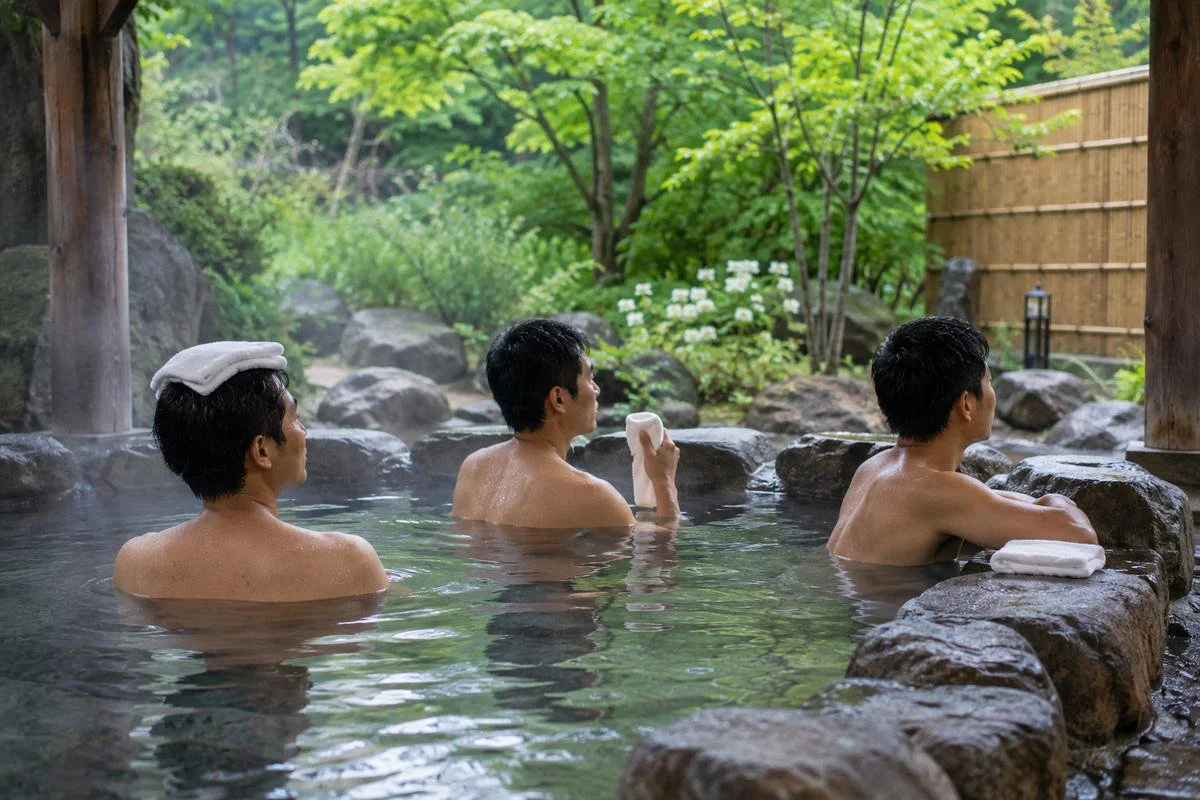
Your small towel should never touch the bathwater.
Most people either:
Fold it and place it on their head
Leave it on the edge of the bath
Hold it above the water
Although this may seem unusual at first, it's simply another way of keeping the shared bath clean.
Step 6: Relax and Enjoy the Experience
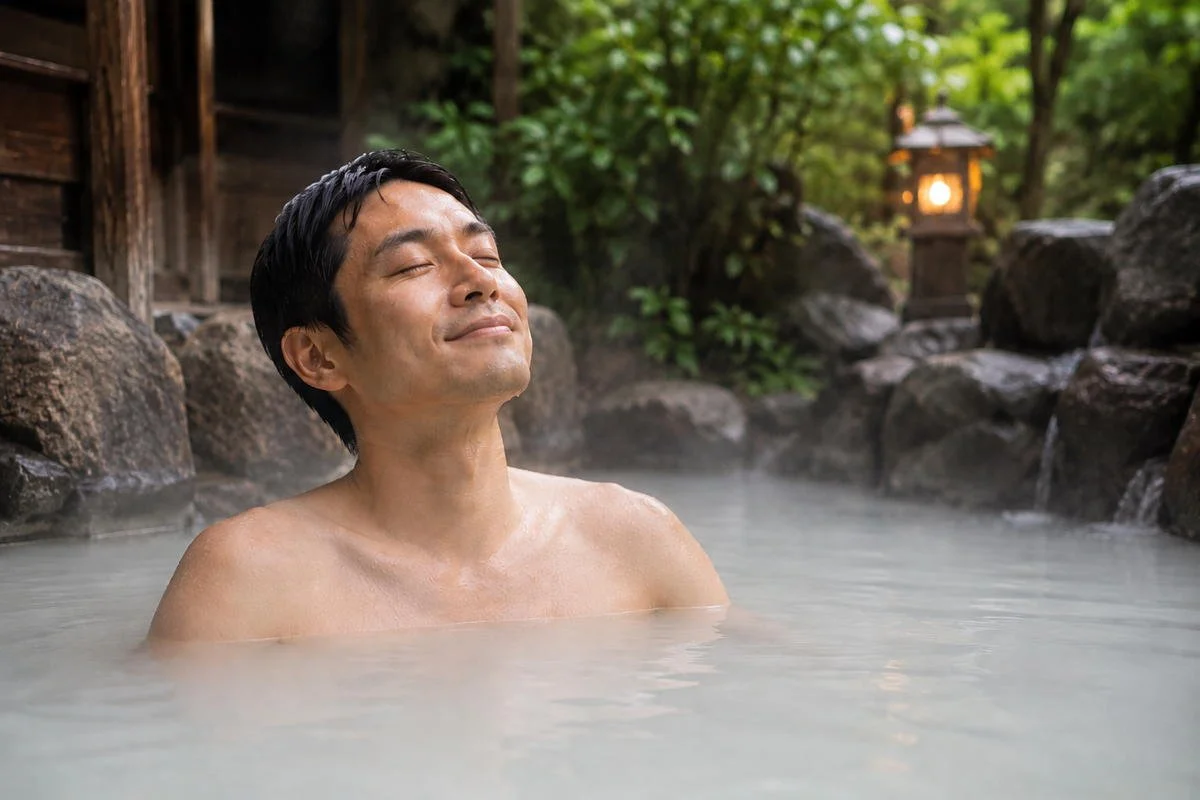
Once you're in the bath, there's very little you need to do.
Simply relax.
Many people close their eyes, enjoy the scenery, or chat quietly with friends or family.
Avoid:
Swimming
Splashing
Diving
Loud conversations
Running around the bathing area
An onsen is intended to be a peaceful place where everyone can unwind.
Step 7: Leaving the Bath
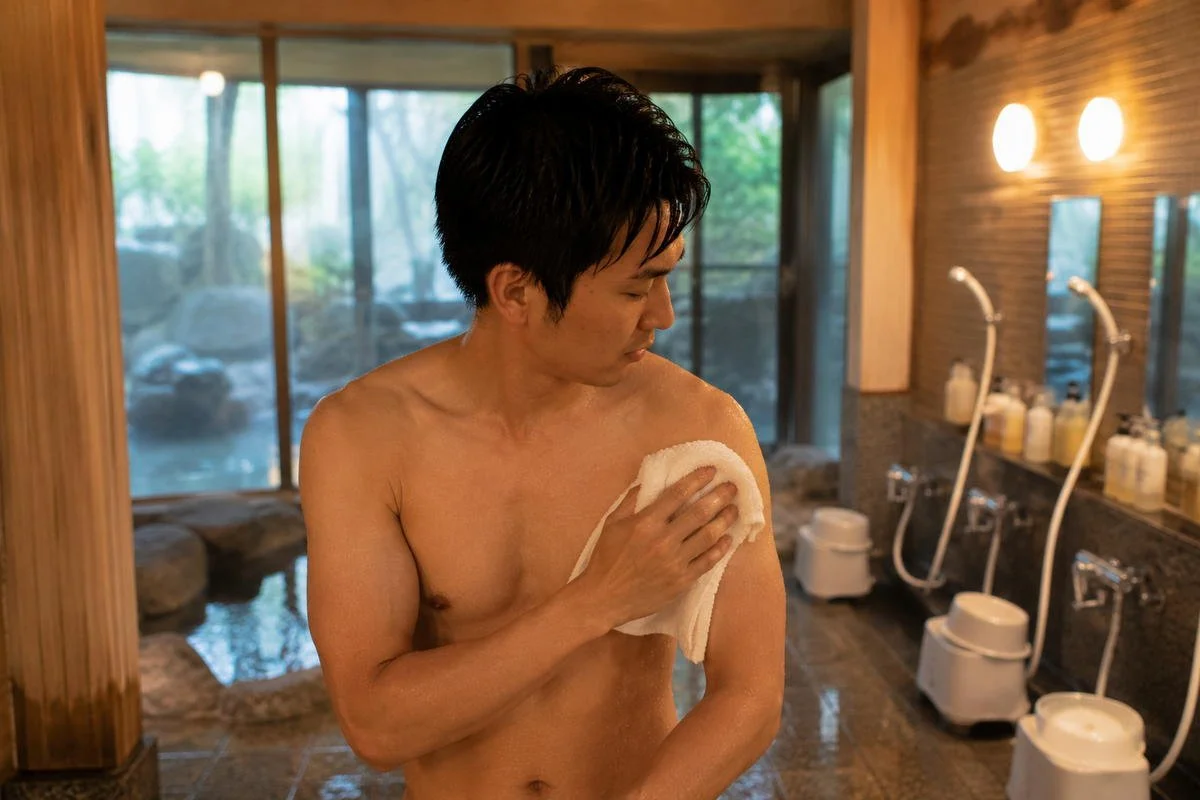
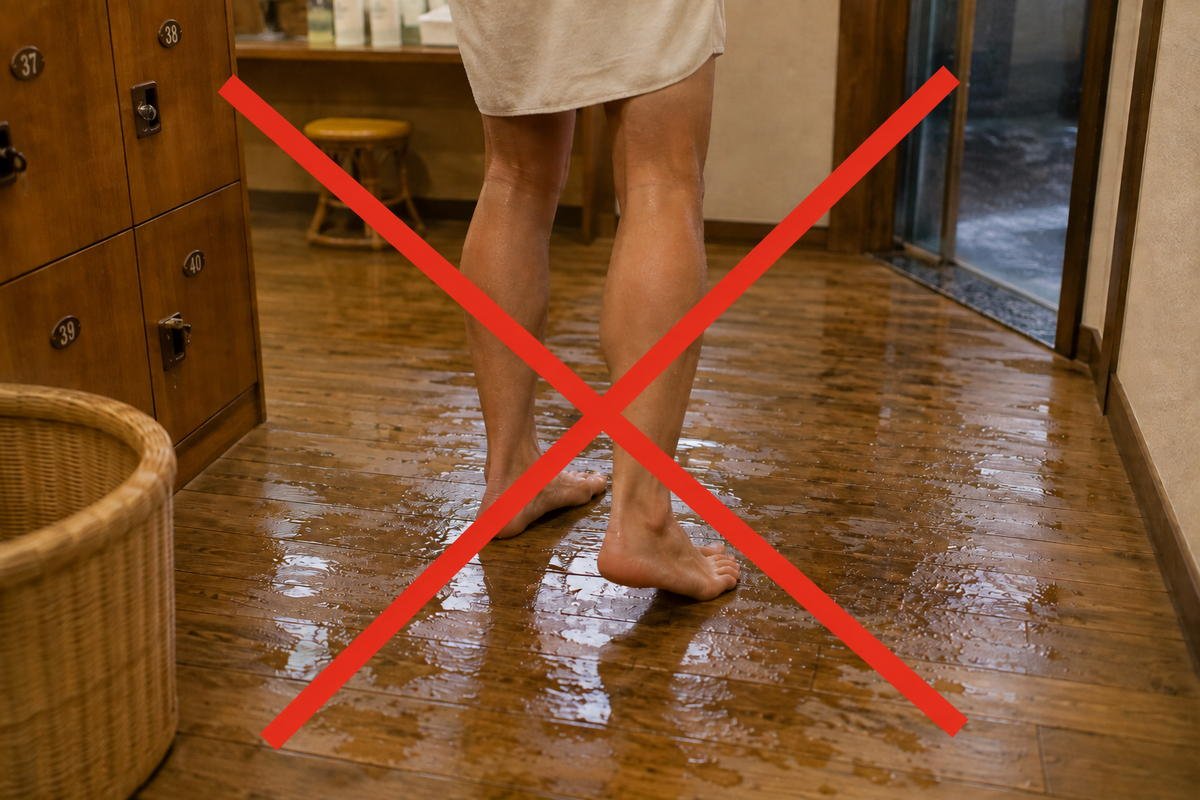
When you're ready to leave, you may notice that many Japanese people don't shower again.
The mineral-rich water is believed to continue benefiting the skin after bathing.
Instead, most people simply:
Wipe away excess water with their small towel before returning to the changing room
Dry themselves as much as possible before stepping onto the changing room floor
This small courtesy helps keep the floor dry and comfortable for everyone.
Once you're back in the changing room, use your large towel to dry off completely before getting dressed.
Stay Hydrated
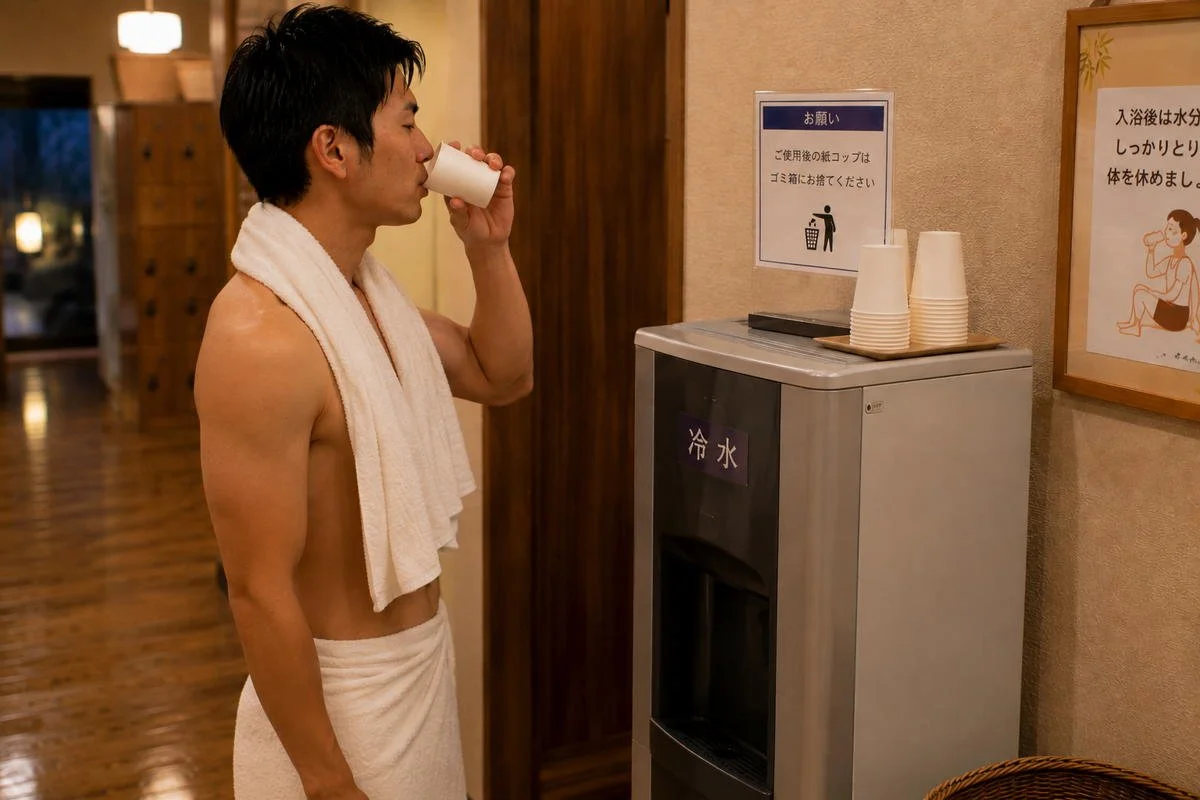
Hot springs can make you sweat more than you realize.
Many experienced onsen visitors drink water before and after bathing to stay hydrated.
If you begin to feel dizzy or overheated, simply leave the bath, cool off for a few minutes, and drink some water.
There's no need to stay in the bath for a long time.
Even 10 to 15 minutes can be wonderfully relaxing.
A Few Things to Avoid
To help everyone enjoy the experience, remember these simple guidelines:
Don't bring your phone into the bathing area.
Don't wash clothes or towels in the bath.
Don't bring food or drinks into the bath.
Don't leave children unattended.
These are mostly common-sense rules that help maintain a clean, safe, and relaxing environment.
Did You Know?
Some traditional onsen contain naturally occurring minerals such as sulfur, iron, or sodium bicarbonate.
These minerals give the water its unique color, scent, and texture, making every hot spring a little different.
In that sense, visiting onsen around Japan is much like exploring the country's regional cuisine—each one offers its own distinctive character.
Local Tip
Many experienced bathers alternate between soaking in the hot water and taking short breaks outside the bath.
This allows the body to cool down slightly before returning to the water, making the experience even more comfortable.
There's no need to rush.
Relax, take your time, and enjoy the bath at your own pace.