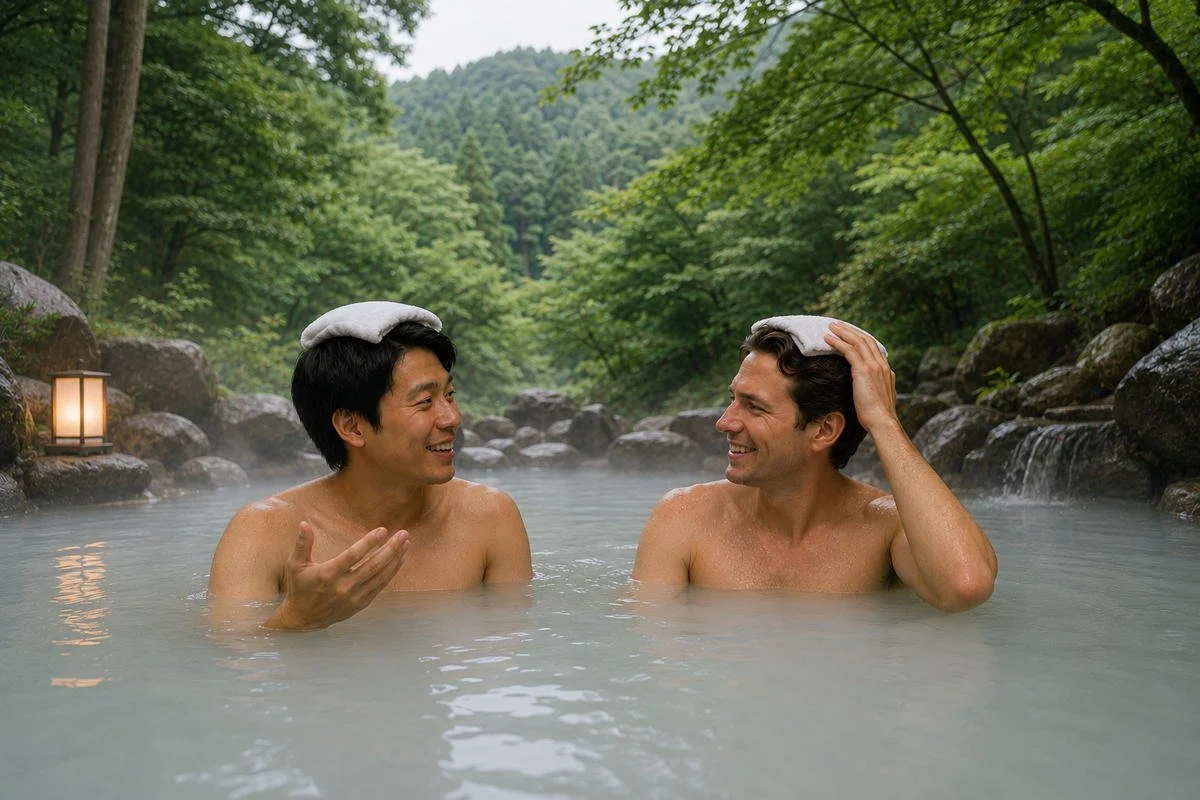
Chapter 5: Onsen 3
Tattoos, Common Questions & Tips for First-Time Visitors
By now, you know the basic etiquette and bathing procedure.
Before visiting your first onsen, however, there are a few more questions that many international travelers ask.
Understanding these topics will help you feel more prepared—and help you avoid some of the most common misunderstandings.
Can You Visit an Onsen If You Have Tattoos?
This is probably the question visitors ask most often.
The answer is:
It depends on the facility.
Historically, tattoos in Japan became associated with organized crime during the twentieth century. As a result, many onsen introduced policies restricting visible tattoos to help other guests feel comfortable.
Today, however, attitudes are gradually changing.
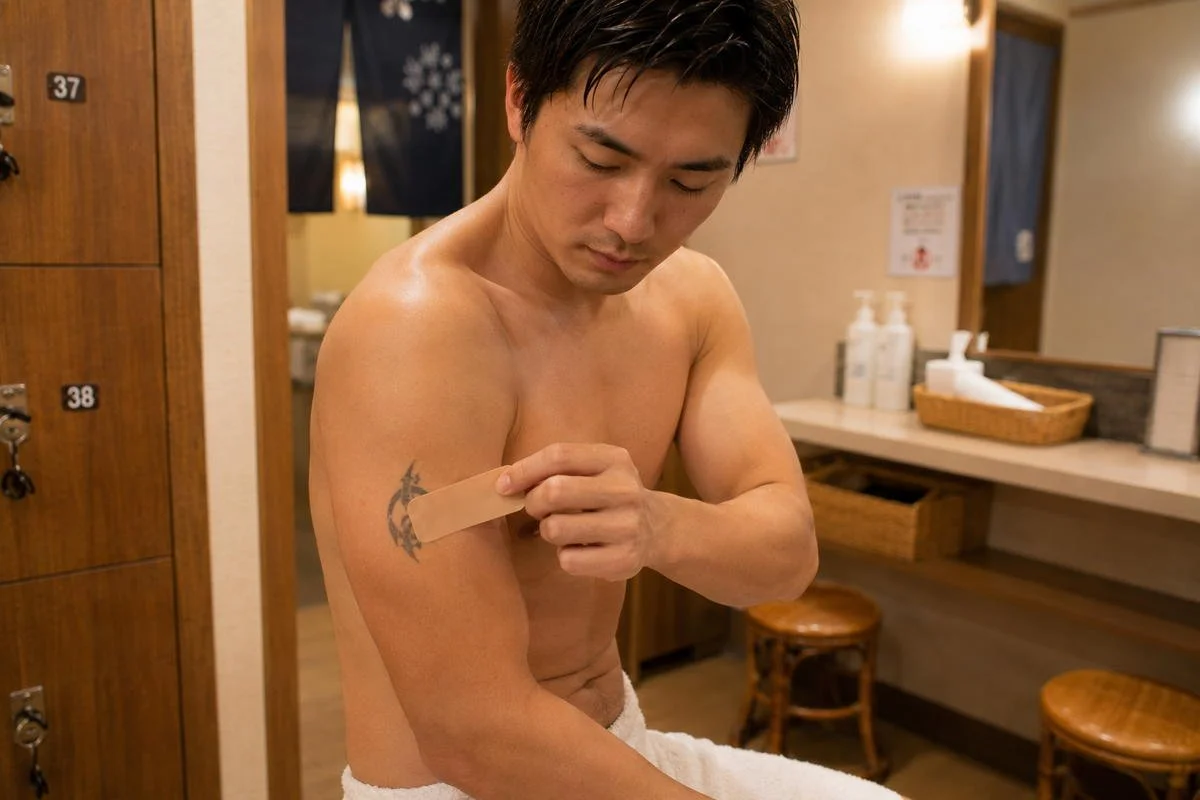
As international tourism has grown, many onsen now welcome guests with tattoos, while others allow them if they're covered with special tattoo-cover stickers.
Some facilities still prohibit tattoos of any size.
For that reason, it's always best to check the rules before your visit.
If you're staying at a ryokan, the staff can often recommend tattoo-friendly baths nearby or arrange a private bath if one is available.
What About Small Tattoos?
Policies vary from one facility to another.
Some onsen allow small tattoos without restriction.
Others ask guests to cover tattoos smaller than the palm of a hand.
Some still do not allow visible tattoos at all.
Rather than making assumptions, check the facility's website or ask the staff in advance.
Many onsen now provide this information in English for international visitors.
Can Couples Bathe Together?
At most public onsen, the answer is no.
Men and women normally use separate bathing areas.
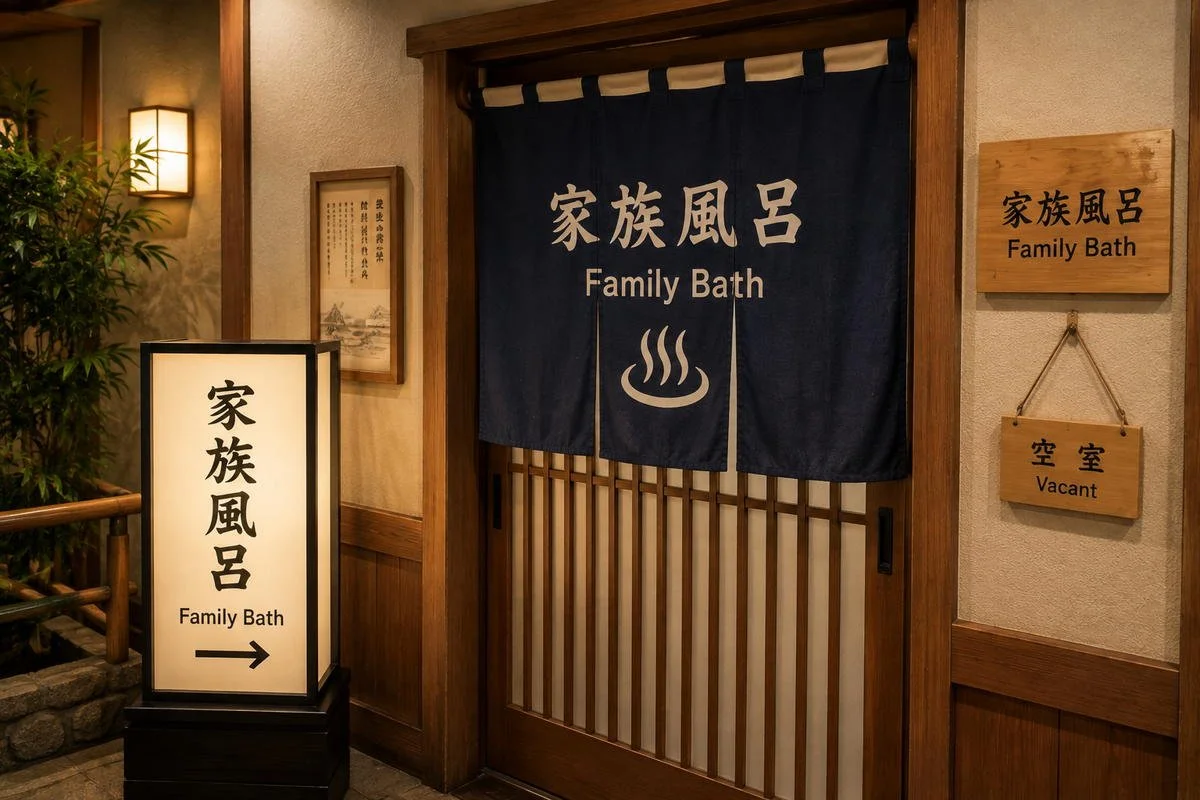
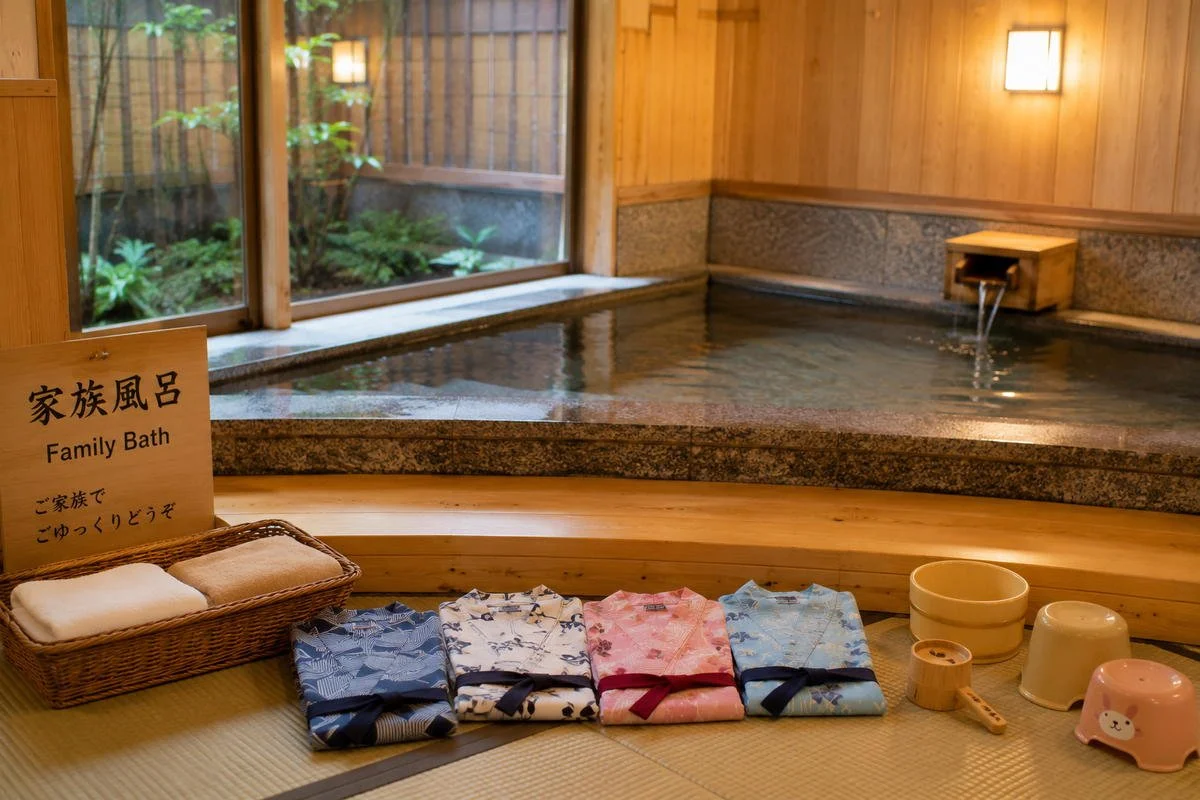
Many ryokan and hot spring resorts, however, offer reservable private baths, often called family baths or private onsen.
Despite the name, these baths aren't limited to families.
Couples, friends, and solo travelers can often reserve them as well.
If sharing the experience is important to you, look for accommodations that advertise private bathing facilities.
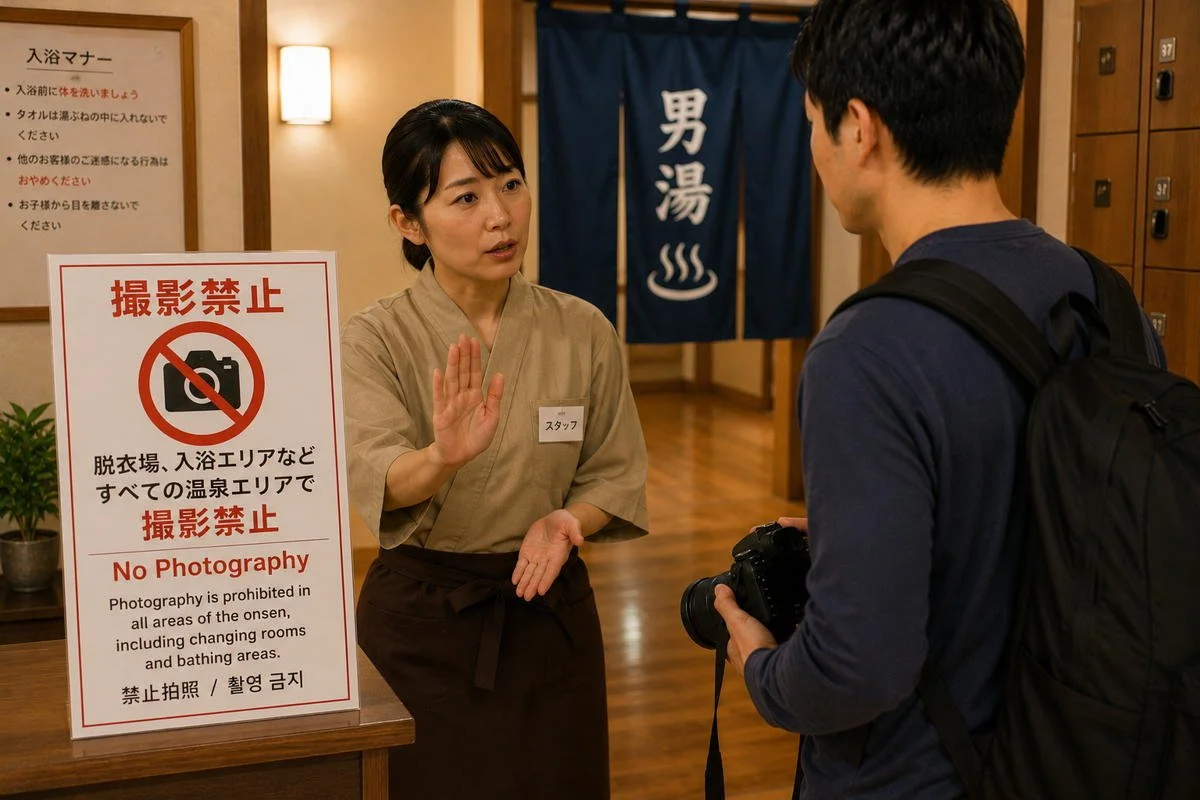
Is Photography Allowed?
Photography is almost always prohibited inside public bathing areas.
This protects everyone's privacy and helps maintain the peaceful atmosphere.
Even if the bath appears empty, don't assume that taking photos is acceptable.
If you'd like to remember your visit, take pictures only in areas where photography is clearly permitted, such as the entrance, gardens, lounge, or outdoor surroundings.
Always follow posted signs and respect the privacy of other guests.
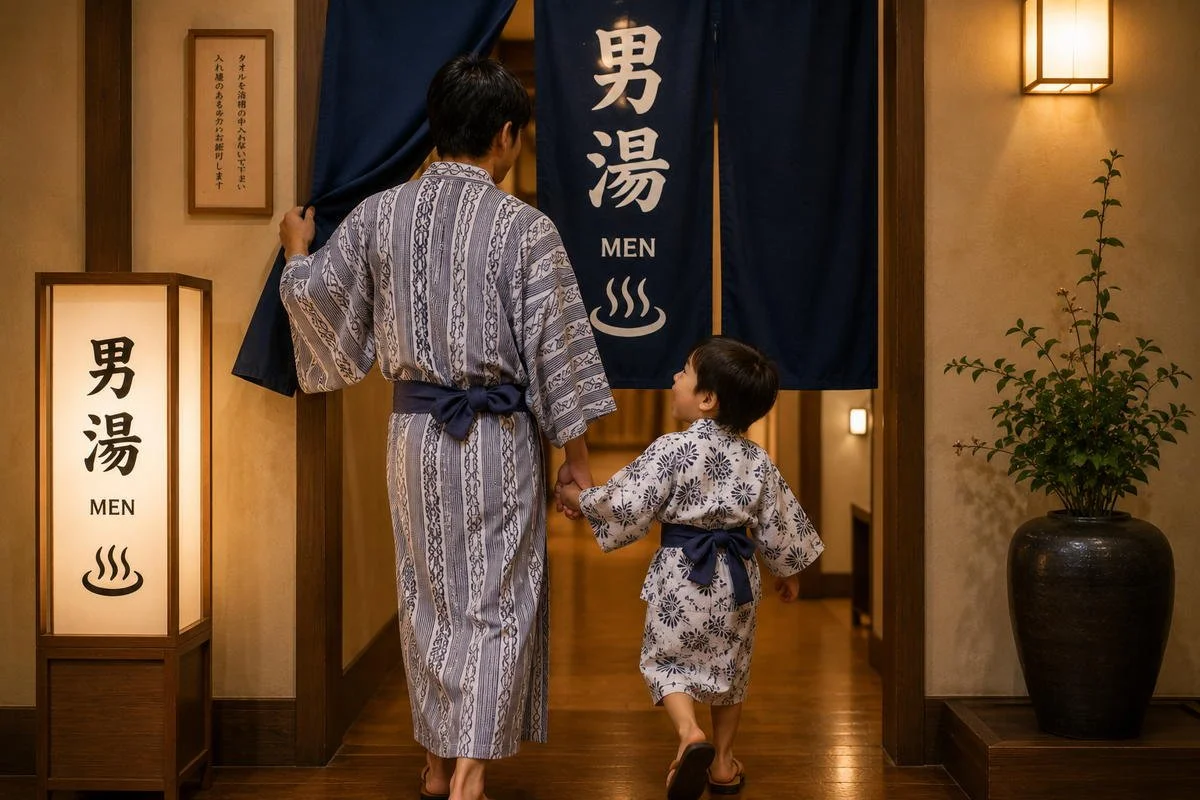
Can Children Visit an Onsen?
Absolutely.
Many Japanese families enjoy visiting onsen together.
Young children typically bathe with a parent of the same gender, while private family baths are another excellent option for visitors traveling with small children.
As with adults, children should wash before entering the bath and avoid splashing or running around the bathing area.
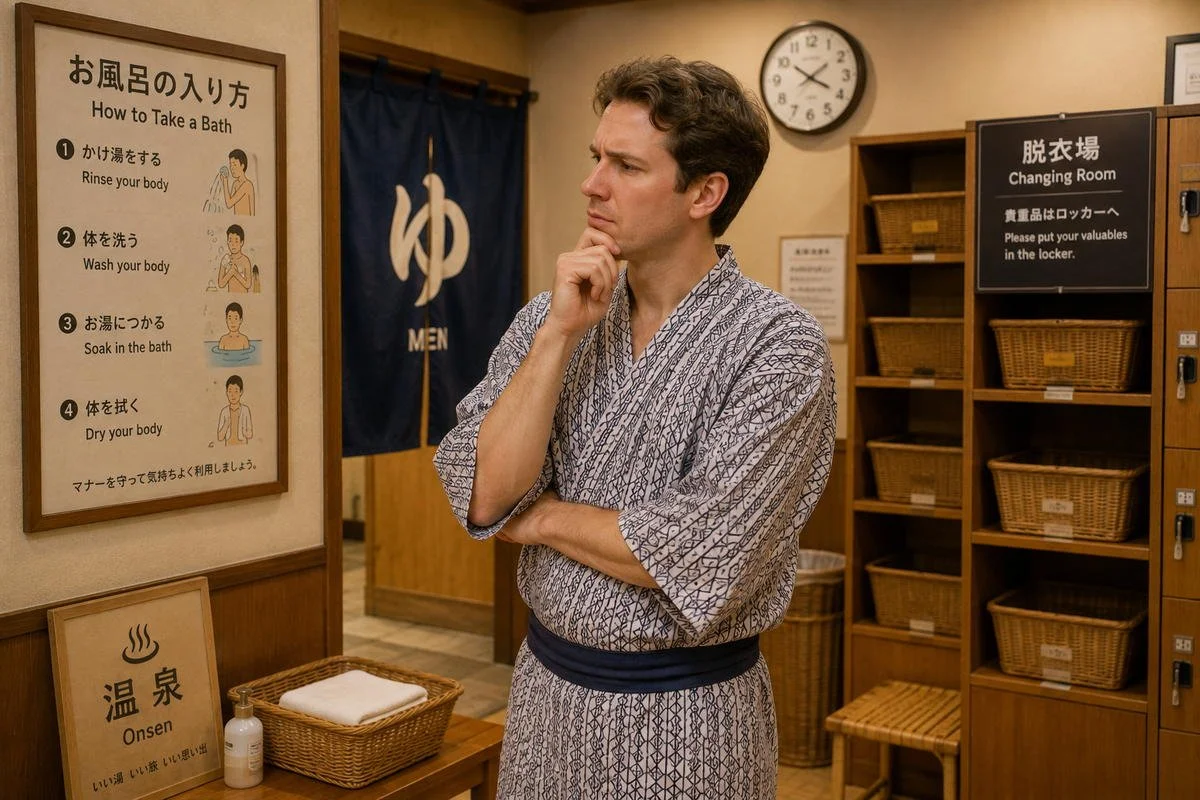
Common Mistakes First-Time Visitors Make
Even well-prepared travelers occasionally make small mistakes.
Fortunately, they're all easy to avoid once you understand the basic etiquette.
Entering the bath before washing
Letting the small towel touch the bathwater
Wearing a swimsuit in a traditional onsen
Speaking loudly with friends
Forgetting to tie up long hair
Bringing a phone into the bathing area
Staying in the hot water for too long without taking a break
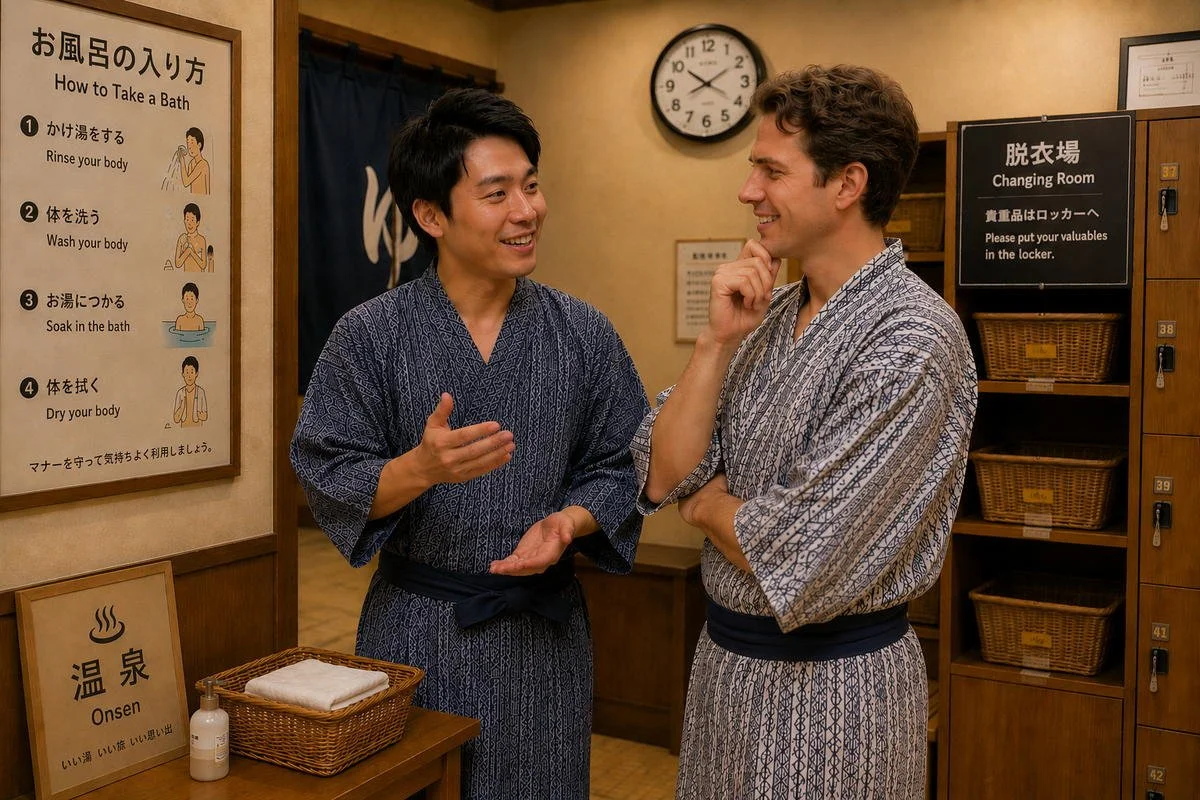
If You're Unsure, Just Observe
One of the easiest ways to feel comfortable in an unfamiliar setting is simply to observe the people around you.
Notice where they place their towels.
Watch how they rinse before entering the bath.
Pay attention to how quietly everyone moves through the bathing area.
In Japan, careful observation is often considered a sign of courtesy.
There's no need to rush.
Take a moment to understand your surroundings, and you'll quickly feel at ease.
More Than Just a Bath
For many Japanese people, an onsen is far more than a place to get clean.
It's a place to slow down.
To disconnect from work and daily routines.
To enjoy nature.
To spend quiet time with family or friends.
Or simply to relax in warm mineral water after a long day.
Once you understand that spirit of relaxation and consideration for others, the etiquette begins to feel completely natural.
Instead of worrying about every rule, focus on being respectful, aware of the people around you, and open to the experience.
That's what matters most.
Did You Know?
The Japanese phrase hadaka no tsukiai (裸の付き合い) literally means "relationships in the nude."
It refers to the idea that sharing a bath allows people to relax, communicate honestly, and connect without the social roles and formalities of everyday life.
While the phrase isn't something people consciously think about today, it reflects a long-standing belief that bathing together can foster openness, trust, and mutual understanding.
Local Tip
If you're traveling through several regions of Japan, try visiting more than one type of onsen.
Mountain hot springs, seaside baths, riverside rotenburo (open-air baths), and historic town bathhouses each offer a unique atmosphere.
You'll quickly discover that every onsen has its own personality.
The Meaning Behind Japanese Bathing Culture
At first glance, the customs surrounding an onsen may seem like a long list of rules.
Wash before entering the bath.
Keep your towel out of the water.
Speak quietly.
Respect other guests' privacy.
But together, these customs reflect a much deeper idea.
Japanese bathing culture is built on shared consideration.
Because everyone uses the same bath, each person takes responsibility for keeping it clean, peaceful, and enjoyable for everyone else.
An onsen is one of the few places where people set aside the roles and routines of everyday life.
For a little while, everyone is simply another person enjoying the warmth of the water.
You don't need to remember every custom perfectly.
Approach the experience with respect, patience, and an open mind, and you'll already understand the spirit behind Japan's bathing culture.
For generations, onsen have offered more than relaxation.
They've provided a place to slow down, reconnect with nature, and appreciate the quiet moments that are so easily overlooked in everyday life.
We hope your first onsen experience becomes one of the most memorable parts of your journey through Japan.