
Chapter 5: Onsen 1
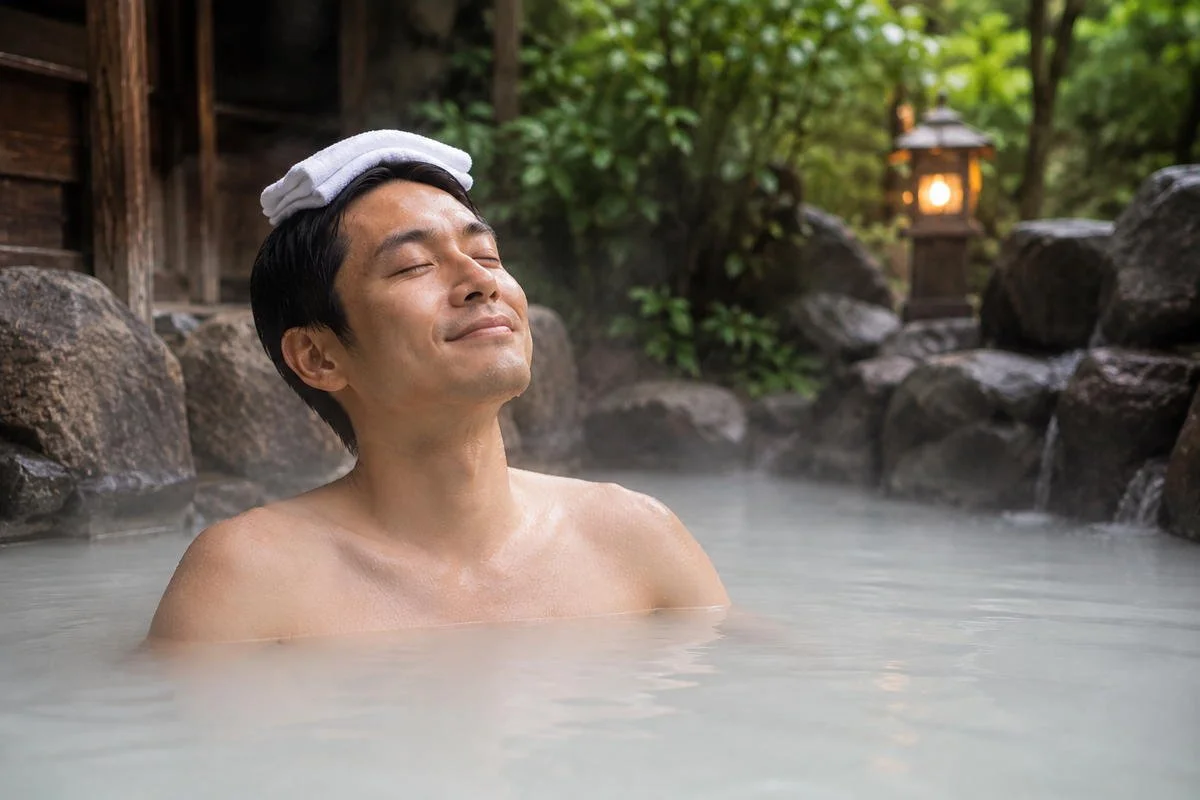
Understanding Japan's Bathing Culture
For many travelers, visiting an onsen (hot spring) is one of the highlights of a trip to Japan.
Imagine soaking in naturally heated mineral water while surrounded by mountains, forests, or peaceful gardens. It's relaxing, restorative, and unlike almost any other travel experience.
For first-time visitors, however, an onsen can also feel a little intimidating.
Do you wear a swimsuit?
What do you do with your towel?
Can you have tattoos?
Is everyone really naked?
These are some of the questions travelers ask most often before their first visit.
The good news is that once you understand a few simple customs, Japanese bathing etiquette is surprisingly straightforward.
In this chapter, we'll explain not only what to do, but also why these traditions exist.
Understanding the reasons behind the etiquette makes the experience even more enjoyable.
What Is an Onsen?
An onsen is a bath filled with naturally heated mineral water that rises from deep underground.
Because Japan lies on a volcanically active archipelago, the country is home to thousands of natural hot springs.
People have enjoyed these waters for more than a thousand years, believing they promote relaxation and help soothe tired muscles after a long day.
Today, visiting an onsen remains an important part of Japanese culture.
For many Japanese people, it's not a special occasion or luxury—it's simply a peaceful way to relax, recharge, and enjoy nature.
Onsen vs. Sento
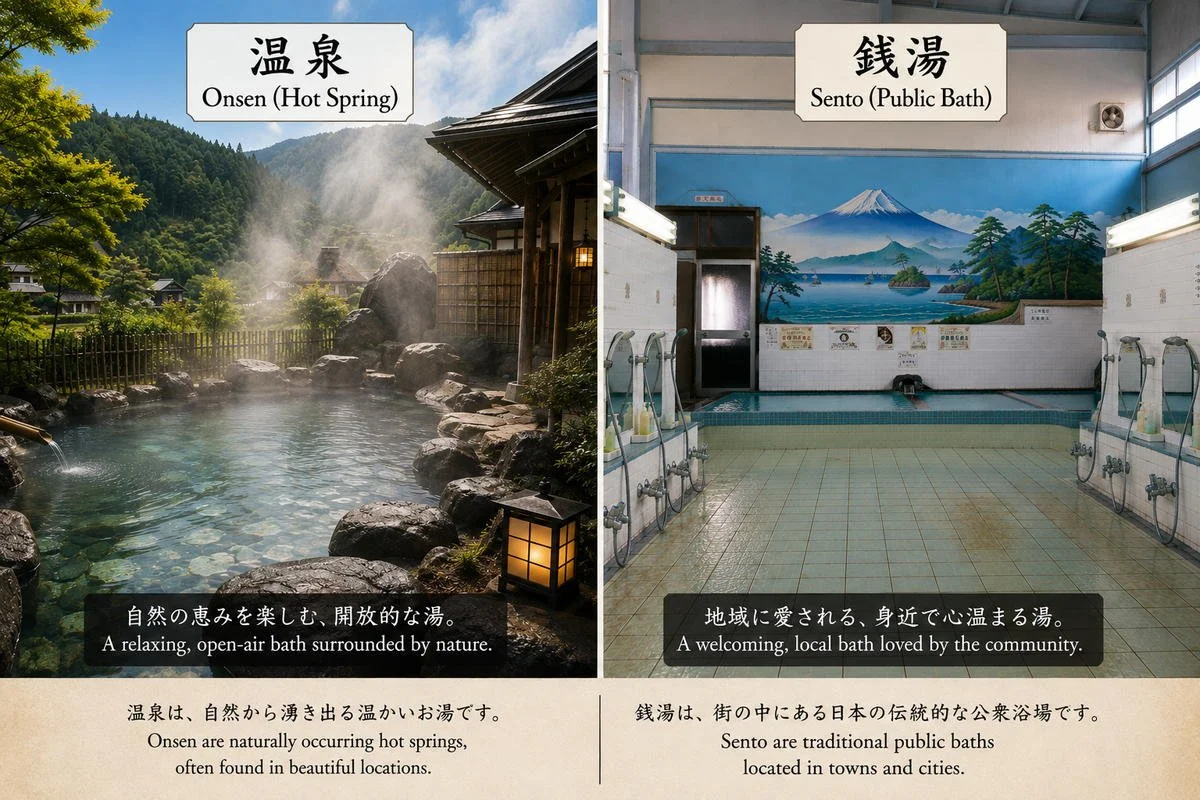
Visitors often hear the words onsen and sento, but they aren't the same thing.
An onsen uses naturally occurring hot spring water that meets legal standards for mineral content and temperature.
A sento, by contrast, is a public bath that typically uses heated tap water.
From a visitor's perspective, however, the etiquette is almost identical.
Whether you're soaking in a mountain hot spring or visiting a neighborhood sento in Tokyo, you'll generally follow the same customs.
Bathing Is About Relaxation—Not Swimming
One of the biggest cultural differences is understanding the purpose of the bath.
In many countries, public pools are places for exercise, conversation, or recreation.
Japanese baths serve a different purpose.
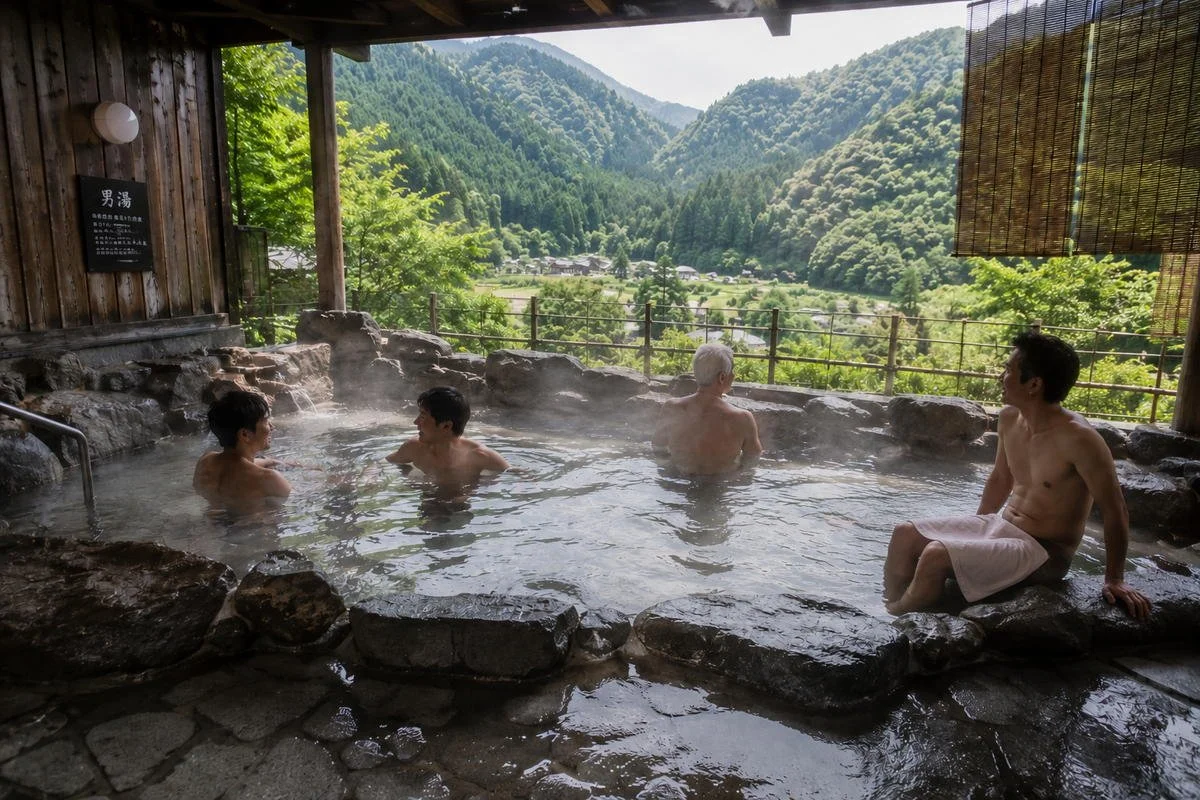
They're designed for quiet relaxation.
People come to unwind, enjoy the warm water, and spend time peacefully.
For that reason, you'll notice that guests usually speak softly.
Splashing, swimming, or making loud noises would disturb the calm atmosphere.
Think of an onsen as something closer to a spa or meditation space than a swimming pool.
Why Everyone Bathes Naked
Perhaps the biggest surprise for first-time visitors is that people bathe without swimsuits.
Although this may feel unusual at first, it's completely normal in Japan.
The reason is largely practical.
Swimsuits can carry dirt, detergent, sunscreen, and other substances into the bathwater.
Since everyone shares the same bath, entering the water with clean skin helps keep it pleasant for everyone.
Because everyone follows the same custom, most people quickly stop feeling self-conscious.
Within a few minutes, you'll probably notice that nobody is paying attention to anyone else.
Everyone is simply there to relax.
Men and Women Bathe Separately
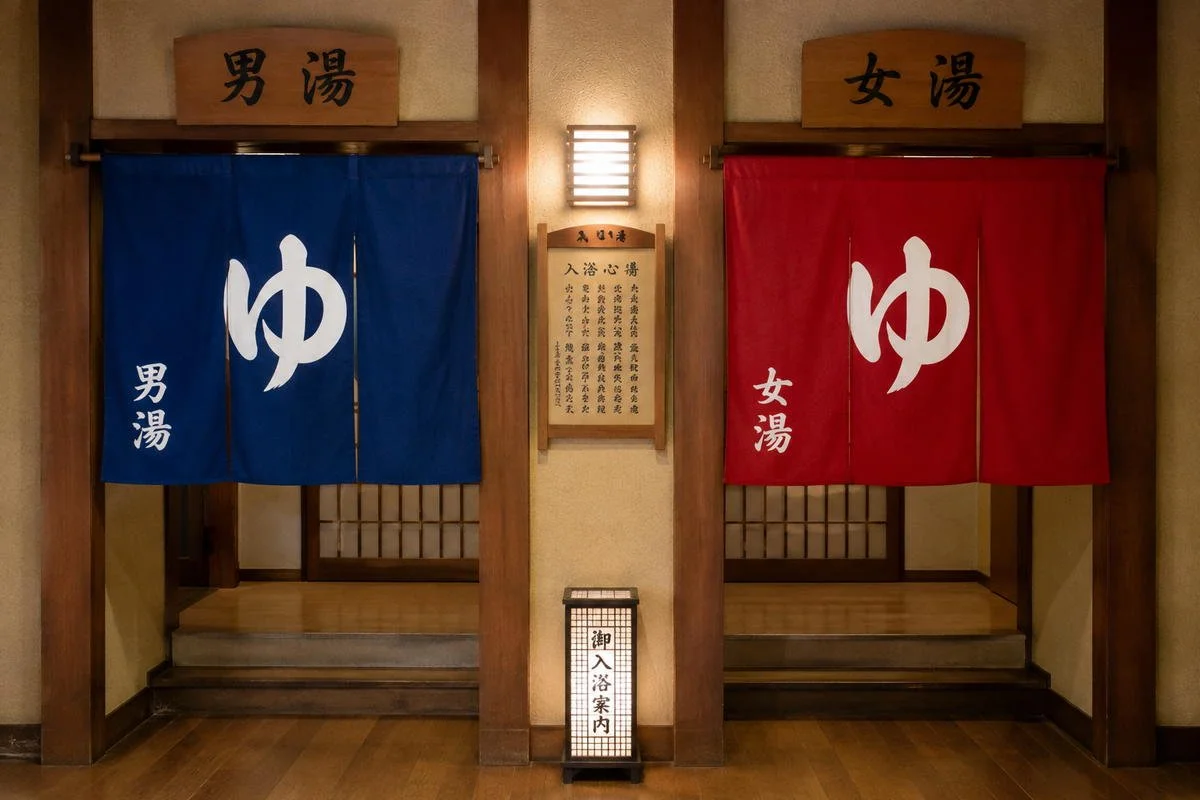
At almost all public onsen and sento, men and women bathe in separate areas.
The entrances are usually marked by fabric curtains called noren.
Traditionally:
Blue indicates the men's bath.
Red indicates the women's bath.
Some facilities use different colors or additional signs, so it's always worth checking the symbols or English labels before entering.
Many ryokan and hot spring resorts also offer private family baths.
These are an excellent option for couples, families with young children, or anyone who prefers a little more privacy.
Don't Be Nervous
If you're feeling a little anxious before your first onsen visit, you're certainly not alone.
Even many Japanese children feel shy the first time they visit a public bath.
Fortunately, the atmosphere is welcoming rather than intimidating.
Nobody expects visitors to know every custom right away.
Simply observe the people around you, follow the basic etiquette, and relax.
By the time you leave, you may find yourself wondering why you were nervous in the first place.
Did You Know?
Japan has more than 20,000 natural hot spring locations and tens of thousands of individual hot spring sources, making it one of the world's great hot spring destinations.
From snowy mountain resorts to open-air baths overlooking the sea, every region has its own unique onsen culture and mineral-rich waters.
Local Tip
If you're feeling nervous about visiting a large public bath, consider staying at a ryokan that offers a private onsen or family bath.
It's a wonderful way to experience Japanese bathing culture at your own pace before trying a larger communal bath.