
Chapter 3: Restaurants & Dining 3
Paying the Bill
Paying for a meal in Japan is often a little different from what many visitors are used to.
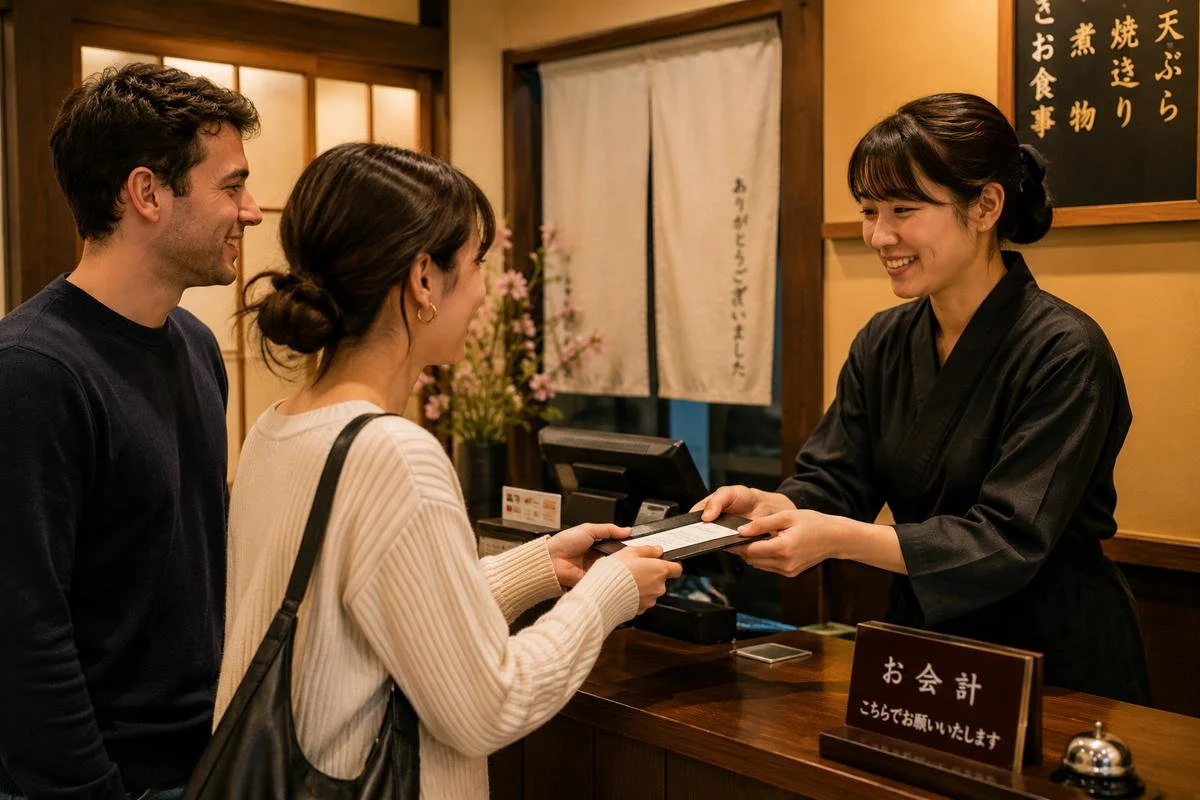
At many casual restaurants, the bill is not brought to your table after you finish eating. Instead, you'll receive a receipt or small bill holder during the meal. When you're ready to leave, simply take it to the cashier, who is usually located near the entrance.
Some smaller restaurants handle payment at the table instead. If you're unsure, don't worry—the staff will let you know.
Major credit cards are widely accepted in cities, but some smaller restaurants, especially in rural areas, still accept cash only.
If you're exploring places like Asuka or the countryside of Nara, it's wise to carry some Japanese yen with you.
Splitting the Bill
If you're dining with friends, don't assume the restaurant can split the bill for each person.
While some restaurants offer separate payments, many prefer a single transaction, particularly during busy periods.
Among Japanese friends, it's common for one person to pay first and then settle the balance later using cash or a mobile payment app.
If you're traveling with others, deciding how you'll divide the cost before paying makes the process easier for everyone.
Tipping Isn't Part of Japanese Dining Culture
One of the biggest surprises for many visitors is that tipping is generally not practiced in Japan.
Excellent service is considered part of the experience rather than something that requires an additional reward.
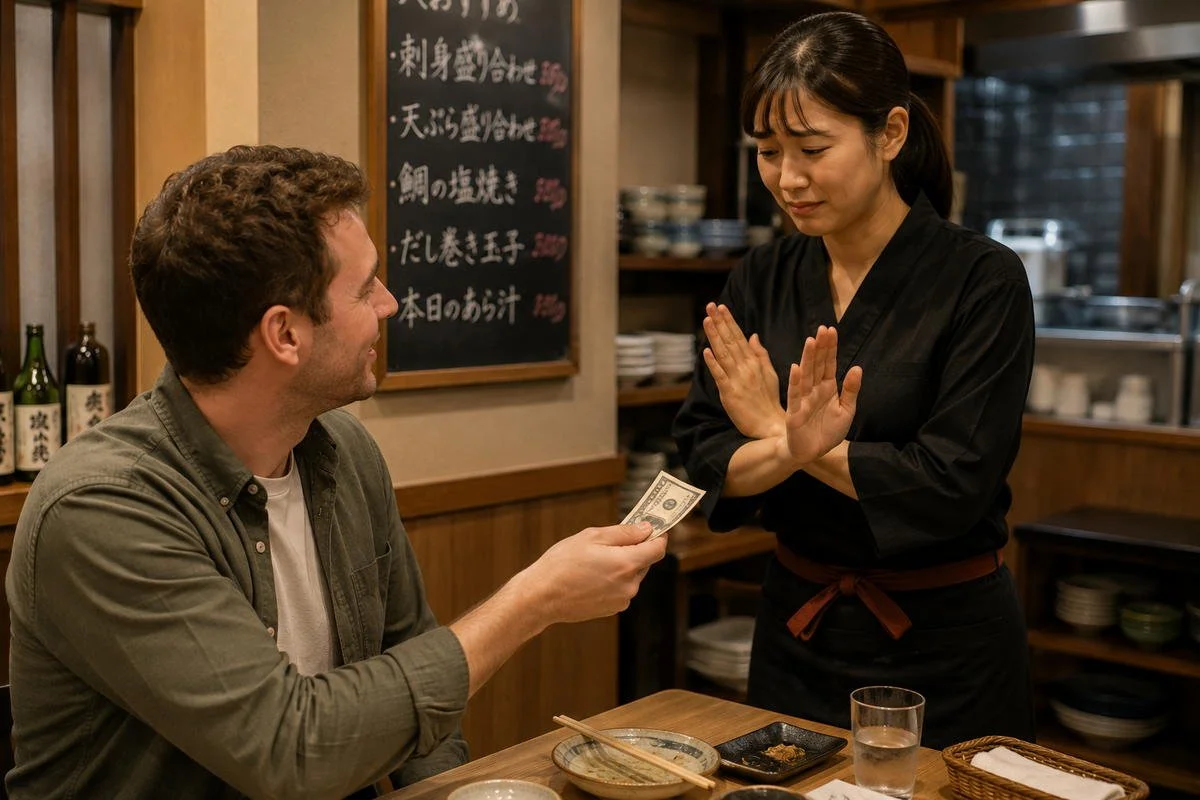
If you leave money on the table, staff may think you've accidentally forgotten your change and politely return it.
The best way to show appreciation is much simpler.
A smile, eye contact, and a sincere "Arigatō gozaimasu" are often the most meaningful thanks you can give.
Dining with Children
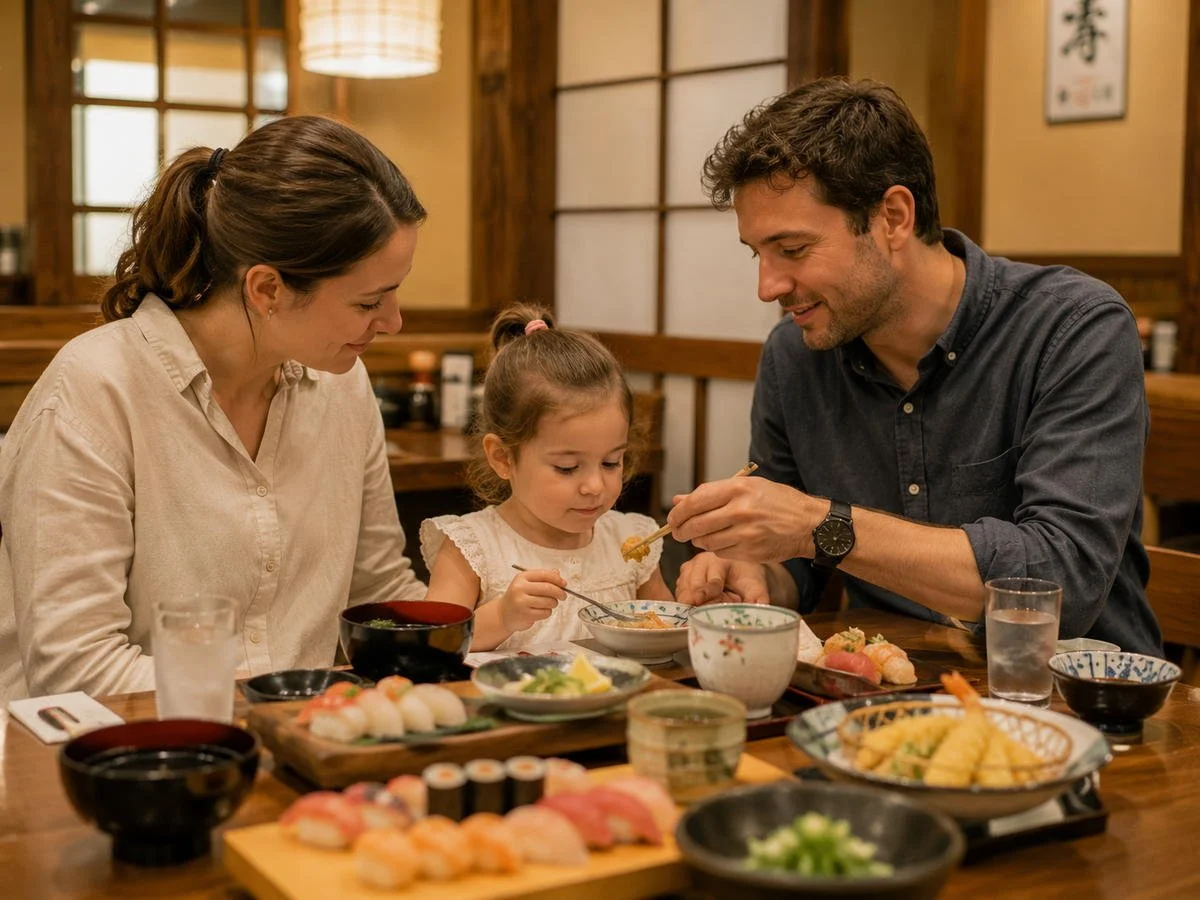
Japan is generally very welcoming to families, and many restaurants are happy to accommodate children.
At the same time, children are usually encouraged to remain seated during the meal and avoid running around the restaurant.
In smaller restaurants, where aisles are narrow and staff move quickly between tables, this is also an important safety consideration.
Many family restaurants provide children's menus, high chairs, and child-friendly tableware, making them a convenient choice for travelers with young children.
Photography in Restaurants
Japan offers countless beautiful dining experiences, so it's natural to want to photograph your meal.
Taking pictures of your own food is generally acceptable, but try to do so quickly and without disturbing others.
Avoid using flash, blocking walkways, or photographing other diners without their permission.
Some restaurants—particularly high-end sushi restaurants, traditional kaiseki establishments, and chef's counter restaurants—may prohibit photography altogether.
If you aren't sure, simply ask:
"May I take a photo?"
Most staff members appreciate being asked first.
Likewise, avoid photographing chefs or restaurant staff while they're working unless they've given permission.
A little consideration helps preserve a pleasant atmosphere for everyone.
Dining at a Ryokan or Kaiseki Restaurant
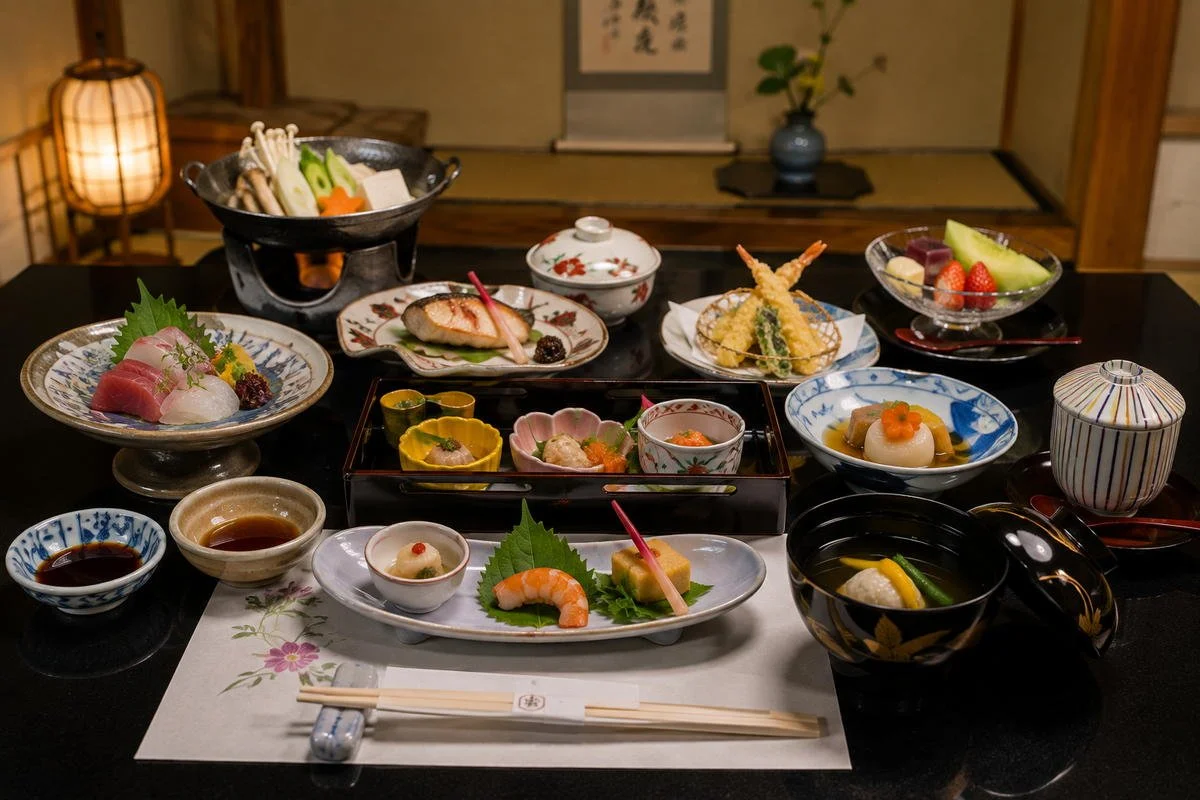
If you stay at a traditional ryokan or enjoy a formal kaiseki meal, you'll experience a slower, more deliberate style of dining.
Each course is carefully prepared to showcase seasonal ingredients, local flavors, and artistic presentation.
Rather than rushing through the meal, guests are encouraged to appreciate each course as it is served.
Your server may explain the ingredients or recommend the order in which dishes should be enjoyed.
Listening with interest and taking your time are considered part of the experience.
These meals celebrate not only exceptional food, but also Japan's changing seasons and deep appreciation for nature.
Making Mistakes Is Perfectly Okay
Many first-time visitors worry about accidentally breaking an etiquette rule.
Fortunately, Japanese people understand that international visitors come from different cultural backgrounds.
If you make an honest mistake, it's unlikely anyone will be offended.
A smile, a brief apology if necessary, and a willingness to learn are usually more important than getting every custom exactly right.
Respectful curiosity is always appreciated.
Common Mistakes Visitors Make
A few misunderstandings appear again and again among first-time visitors.
Fortunately, they're all easy to avoid once you understand the customs behind them.
Seating yourself before being shown to a table
Speaking loudly in small restaurants
Leaving chopsticks standing upright in rice
Passing food directly from chopsticks to chopsticks
Pouring excessive soy sauce over sushi
Trying to leave a tip
Taking phone calls at the table
Photographing other diners without permission
Blocking narrow aisles while taking photos
Assuming every restaurant accepts credit cards
Rushing through a multi-course meal instead of enjoying its pace
Did You Know?
Japan has more Michelin-starred restaurants than any other country in the world.
Yet some of the country's most memorable meals are served in tiny neighborhood restaurants with only a handful of counter seats and no English menu.
In Japan, an excellent reputation often spreads through loyal local customers rather than flashy advertising.
Keeping an open mind can lead to unforgettable dining experiences.
Local Tip
When exploring Nara—especially the countryside around Asuka and Kashihara—don't overlook small family-run restaurants.
Many have served the same recipes for generations using seasonal ingredients grown nearby.
English menus may not always be available, but you'll often be welcomed with genuine warmth and hospitality.
Some of the most authentic flavors of rural Japan can be found in places that rarely appear in guidebooks.
The Meaning Behind Japanese Dining Culture
At first glance, Japanese dining etiquette may seem like a collection of small customs.
Wait to be seated.
Handle your chopsticks carefully.
Speak quietly.
Don't leave a tip.
But together, these customs reflect something much deeper.
Japanese dining culture is built on consideration.
Consideration for the ingredients.
For the chef's craftsmanship.
For the people sharing the restaurant.
And for the time, care, and effort that made the meal possible.
You don't need to remember every rule perfectly.
Approach each meal with curiosity, gratitude, and respect for the people around you, and you'll already understand the spirit behind Japanese dining etiquette.
In Japan, a meal is never just about the food.
It's also an opportunity to experience one of the country's most enduring cultural values—creating harmony through everyday acts of thoughtfulness.