
Chapter 4: Shoes & Indoor Spaces 3
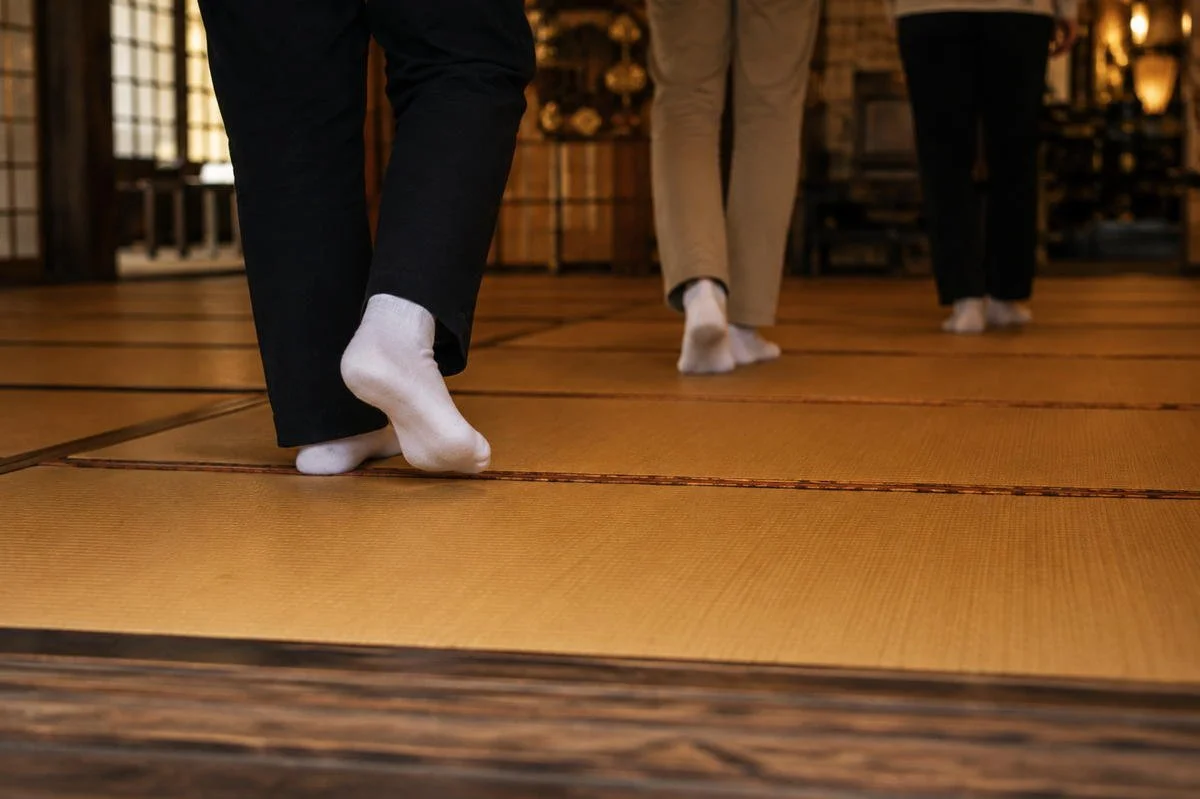
Common Mistakes Visitors Make
Most visitors quickly become comfortable removing their shoes in Japan.
Even so, a few small mistakes are especially common during a first trip.
Fortunately, they're all easy to avoid once you understand the customs behind them.
Stepping onto the raised floor before removing your shoes
Walking onto tatami mats while wearing slippers
Forgetting to change out of toilet slippers
Leaving shoes untidy at the entrance
Wearing outdoor shoes into fitting rooms or other shoe-free areas
Assuming every building follows the same rules
If you make one of these mistakes, don't worry.
Japanese people understand that visitors are learning unfamiliar customs.
A smile, a brief apology if appropriate, and correcting the mistake are usually all that's needed.
Visiting Historic Buildings and Temples
Many of Japan's most beautiful historic buildings require visitors to remove their shoes.
Wooden temples, traditional residences, castles, and cultural properties have often been carefully preserved for hundreds of years. Removing your shoes helps protect these historic floors from unnecessary wear while keeping them clean for future visitors.
You'll often receive a plastic bag or shoe locker to store your shoes while you explore.
Take a moment to remember where you left them—especially at larger temples and museums where many visitors are removing their shoes at the same time.
Choosing Shoes for Sightseeing
If your itinerary includes temples, shrines, traditional houses, or ryokan, you'll probably be taking your shoes on and off several times throughout the day.
Comfortable shoes that are easy to remove can make sightseeing much more enjoyable.
Many experienced travelers also choose socks without holes and avoid footwear with complicated laces or buckles when visiting traditional attractions.
It may seem like a small detail, but after removing your shoes several times in one day, you'll quickly appreciate the convenience.
Did You Know?
The Japanese custom of removing shoes extends well beyond homes.
Many schools, hospitals, traditional workplaces, martial arts studios, and even some offices have separate indoor footwear.
Children in Japanese schools often change into indoor shoes every morning before classes begin.
For many Japanese people, changing footwear is simply part of moving from one environment to another.
It's such a natural habit that most people rarely think about it.
Interestingly, many visitors discover the same thing happens to them after spending a few weeks in Japan.
Without realizing it, they begin pausing at entrances and instinctively reaching for their shoes before stepping inside.
Local Tip
If your travel plans include places like Asuka, Nara, Kyoto, or other historic towns, expect to remove your shoes frequently throughout the day.
Choosing comfortable slip-on shoes—or at least footwear that's easy to take off and put back on—can make your visit much smoother.
It's one of those small travel decisions that you'll appreciate far more than you expect.
The Meaning Behind Taking Off Your Shoes
At first glance, removing your shoes may seem like nothing more than a practical rule.
In reality, it reflects something much deeper.
Taking off your shoes is a quiet way of recognizing that you've entered a space shared with other people—a place that deserves care, cleanliness, and respect.
Throughout Japan, this simple habit marks the transition from the outside world to a more personal and peaceful environment.
Whether you're entering a family home, a temple, a ryokan, or a traditional restaurant, removing your shoes is one of the first ways you show consideration for the people around you.
Like many aspects of Japanese etiquette, it isn't about following rules perfectly.
It's about being aware of your surroundings and showing respect through small everyday actions.
Once you understand that idea, taking off your shoes no longer feels like a rule.
It simply becomes another way to experience Japan as local people do.