
Chapter 9: Cash, Cards & Payments 2
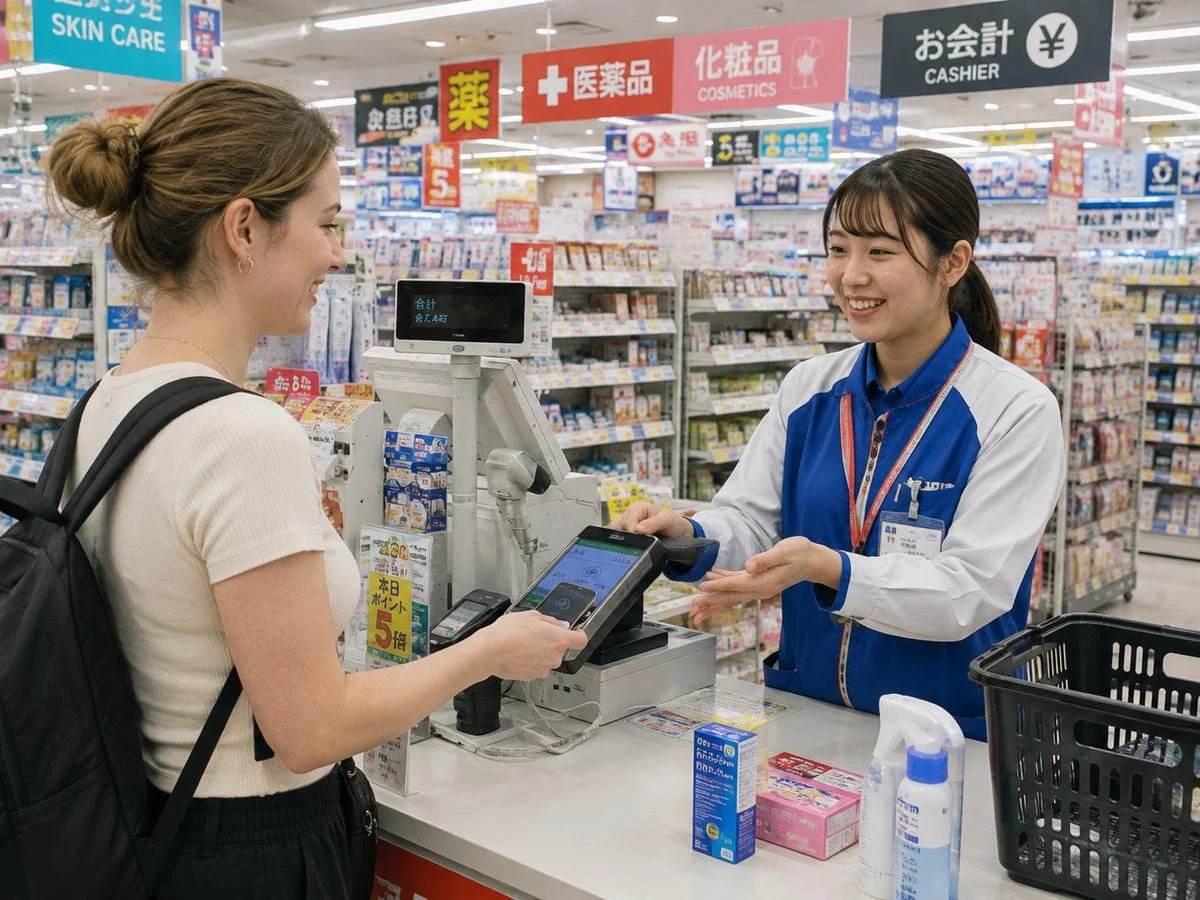
Paying at Shops, Restaurants, and Everyday Businesses
Once you understand which payment methods are commonly accepted in Japan, the next step is knowing what to expect at the checkout.
Fortunately, paying in Japan is usually quick, efficient, and straightforward.
While you may notice a few customs that differ from those in your home country, they're easy to learn and soon become second nature.
Paying at the Register
In most shops, cafés, and convenience stores, payment is made at the register near the exit.
Unlike in some countries, you generally won't hand your money directly to the cashier.
Instead, you'll often see a small tray on the counter.
Place your cash in the tray rather than into the cashier's hand.
The cashier will count the money, place your change in the tray, and then return your receipt.
This simple system keeps transactions organized and helps prevent confusion when handling coins and banknotes.
If there isn't a tray, simply follow the cashier's lead.
Receiving Your Change
Japanese cashiers are well known for their careful attention to detail.
Many will:
Count your change aloud.
Separate banknotes from coins.
Arrange the bills neatly.
Place the receipt on top of the banknotes.
This isn't meant to slow the process.
It's simply a way of ensuring accuracy while making it easier for customers to check their change.
Taking a moment to receive it politely is always appreciated.
Do You Need Exact Change?
No.
You're never expected to have the exact amount.
Cashiers are accustomed to giving change, even for relatively large banknotes.
If you happen to have smaller bills or coins, using them can sometimes be helpful, but there's no obligation to do so.
Don't feel embarrassed about paying for a small purchase with a ¥10,000 note if that's all you have.
It's a perfectly normal part of everyday life in Japan.
Self-Checkout Registers
Self-checkout machines have become increasingly common, especially in supermarkets, convenience stores, and large retail stores.
Some systems work a little differently from those in other countries.
For example, a cashier may scan your items while you insert your cash or card into a separate payment machine beside the register.
This arrangement helps transactions move efficiently while allowing customers to complete payment themselves.
Most machines offer English-language instructions, and staff are usually happy to help if you need assistance.
Paying at Restaurants
At many casual restaurants, you'll receive your bill at the table but pay at the register near the entrance when you're ready to leave.
In other restaurants, particularly larger establishments, staff may bring a portable payment terminal to your table.
If you're unsure which system is used, a quick glance at what other customers are doing will usually provide the answer.
Splitting the Bill
If you're dining with friends, don't assume that every restaurant can split the bill into individual payments.
Some restaurants are happy to do so.
Others may politely ask one person to pay the total amount.
Among Japanese friends, it's common for one person to pay first and settle up later using cash or a mobile payment app.
If you'd like to pay separately, it's best to ask politely before ordering or before requesting the bill.
IC Cards for Everyday Purchases
As mentioned in Part A, IC cards are useful for much more than trains and buses.
Many travelers quickly begin using them for everyday purchases because they're fast, simple, and convenient.
You'll often see the IC card symbol at:
Convenience stores
Vending machines
Bakeries
Drugstores
Fast-food restaurants
Some souvenir shops
Simply tap your card on the reader when prompted.
For small purchases, it's one of the easiest payment methods available.
Tipping Is Not Expected
One of the biggest surprises for many visitors is that Japan doesn't have a tipping culture.
In restaurants, cafés, taxis, hotels, and most other service industries, excellent service is considered part of the job rather than something that requires an additional reward.
Because of this, leaving cash on the table after a meal may confuse the staff.
They may even run after you to return what they believe you accidentally left behind.
If you receive exceptional service, the best way to show your appreciation is often through sincere words.
A warm smile and a simple "Thank you" are always welcome.
If you know a little Japanese, "Arigatō gozaimasu" (Thank you very much) is an especially thoughtful gesture.
Paying Efficiently
Checkout lines in Japan tend to move quickly.
You don't need to rush, but it's helpful to prepare your payment while waiting in line instead of searching through your wallet after reaching the register.
This small habit keeps the line moving smoothly and is appreciated by both staff and other customers.
It's another example of the quiet consideration that helps everyday life run efficiently in Japan.
Did You Know?
Many Japanese cash registers automatically calculate and display the exact amount of change before the cashier even opens the drawer.
Combined with careful counting procedures, this helps make payment errors surprisingly rare.
Local Tip
If you're carrying both cash and an IC card, try using your IC card for small purchases such as drinks, snacks, or convenience store items, while saving cash for temples, local markets, family-run restaurants, and rural destinations where electronic payments may be less common.
After a day or two, you'll naturally develop a rhythm that makes paying in Japan feel effortless.