
Chapter 10: Queuing & Personal Space 3
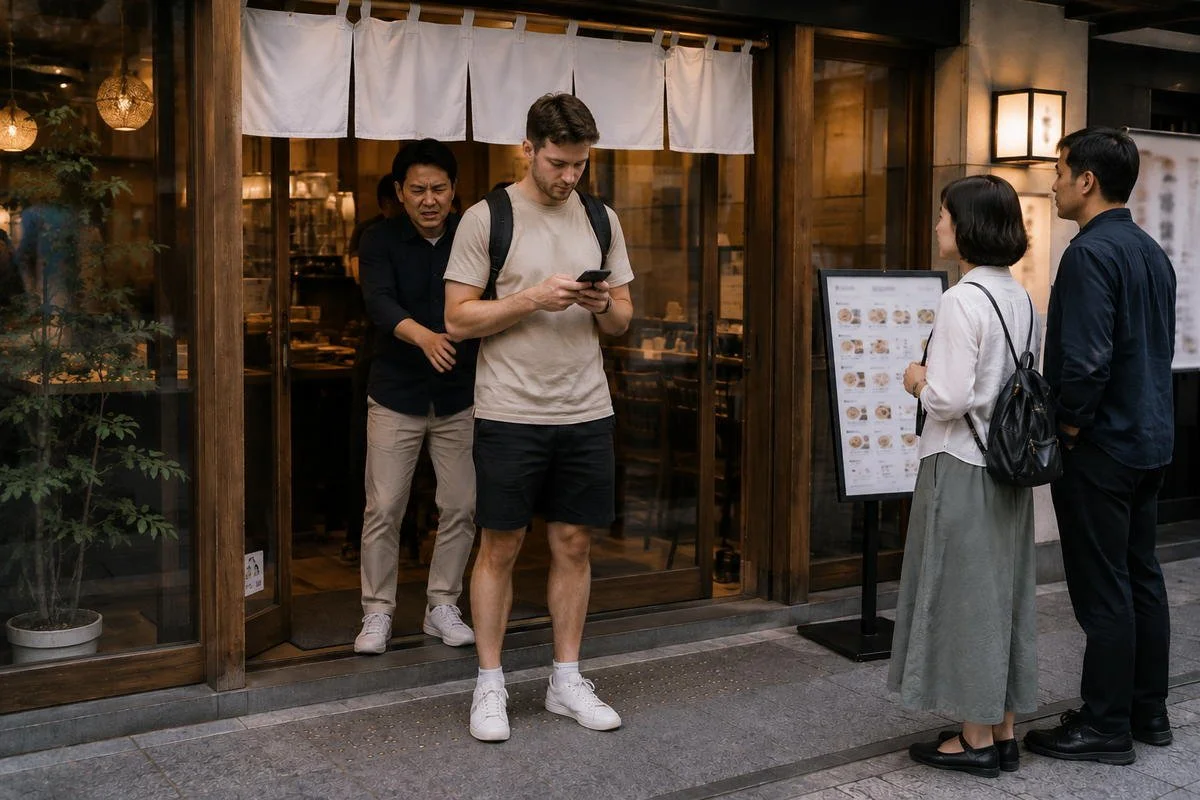
Thoughtfulness in Shared Spaces
As you've seen throughout this chapter, queuing in Japan is about much more than standing in a straight line.
It's one small expression of a broader way of thinking—sharing public spaces with awareness, patience, and consideration for others.
Once you begin to notice this mindset, you'll start to see it almost everywhere during your journey.
Personal Space in Everyday Life
Japan's cities can be incredibly busy, especially during rush hour.
Even so, people generally try to avoid inconveniencing those around them.
You may notice habits such as:
Stepping aside before checking a map or phone
Standing clear of doorways
Moving out of the way before stopping to take photos
Keeping bags close to the body in crowded places
Waiting for others to pass before changing direction
Individually, these actions may seem minor.
Together, they help millions of people move comfortably through shared spaces every day.
Quiet Courtesy
Another characteristic many visitors notice is how calm public spaces often feel.
On trains, buses, elevators, and in waiting areas, conversations are usually kept at a moderate volume.
This doesn't mean people aren't enjoying themselves.
Rather, it's a way of recognizing that everyone is sharing the same environment.
You don't need to whisper, but speaking thoughtfully helps preserve the peaceful atmosphere that so many people appreciate.
During Busy Times
Crowded places naturally require a little more patience.
Whether you're visiting during cherry blossom season, autumn foliage, New Year's holidays, or a local festival, remember that everyone has come to enjoy the experience.
Waiting your turn, avoiding unnecessary rushing, and staying aware of those around you all contribute to a more enjoyable visit—for everyone.
Sometimes, simply slowing down is the best way to experience Japan.
Courtesy Without Words
One of the most fascinating aspects of Japanese etiquette is that many acts of kindness happen quietly.
Someone steps aside to let another person pass.
A passenger waits patiently for others to leave the train.
People naturally form an orderly line without being instructed.
No one announces these actions.
No one expects recognition.
They're simply everyday ways of making life a little easier for those around them.
As a visitor, taking part in these quiet moments of consideration is one of the easiest ways to feel connected to everyday life in Japan.
When Mistakes Happen
No traveler gets everything right.
You may accidentally stand in the wrong place, walk the wrong way, or misunderstand how a line works.
That's perfectly normal.
If you realize you've made a mistake, simply smile, offer a brief apology if appropriate, and adjust what you're doing.
People generally appreciate sincerity far more than perfection.
Showing respect and making an honest effort leaves a much stronger impression than knowing every custom in advance.
Common Mistakes Visitors Make
Here are a few situations that are easy to avoid:
Standing directly in front of train doors while passengers are trying to exit
Blocking sidewalks while deciding where to go next
Leaving bags where they obstruct others
Joining the wrong line without checking first
Saving places for a large group
Speaking loudly in quiet waiting areas
Stopping suddenly in the middle of busy walkways
None of these are serious mistakes, but being aware of them helps everyone enjoy shared spaces more comfortably.
Small Actions, Lasting Impressions
One of the most rewarding parts of traveling is discovering that even ordinary habits can teach us something new.
Waiting patiently.
Giving someone a little extra space.
Taking a step to one side.
Allowing others to go first.
None of these actions require much effort.
Yet together, they create the calm, organized atmosphere that so many visitors associate with Japan.
Perhaps that's why these everyday customs leave such a lasting impression.
Did You Know?
The Japanese word omoiyari (思いやり) is often translated as "thoughtfulness" or "consideration for others."
Rather than focusing on strict rules, omoiyari encourages people to imagine how their actions might affect those around them.
Many everyday customs in Japan—from patiently waiting in line to speaking quietly in public—are rooted in this simple but powerful idea.
Local Tip
If you ever find yourself unsure about what to do in a public place, remember one simple habit:
Pause, observe, and follow the flow.
Watching the people around you for just a few seconds will usually answer your question—and help you feel much more confident as you explore Japan.
The Meaning Behind Queuing & Personal Space
The orderly queues you see in Japan are not simply the result of rules or regulations.
They reflect a shared understanding that public spaces belong to everyone.
By waiting your turn, respecting personal space, and remaining aware of those around you, you become part of that shared experience.
You don't need to behave exactly like a local.
A little patience, careful observation, and a willingness to consider others are more than enough.
Those small actions won't just make your trip easier.
They'll also help you experience one of the qualities many people admire most about Japan—the quiet kindness that shapes everyday life.
And sometimes, it's these ordinary moments, rather than the famous landmarks, that become the memories you treasure most.