
Chapter 10: Queuing & Personal Space 2
Everyday Situations You'll Encounter
By now, you've probably noticed that queuing in Japan isn't limited to train stations.
The same quiet sense of order appears throughout everyday life.
Once you understand the basic idea—wait your turn, be aware of others, and follow the flow—you'll find that most situations feel surprisingly intuitive.
Here are some of the places where you'll encounter these customs most often.
Escalators
Escalator etiquette varies by region.
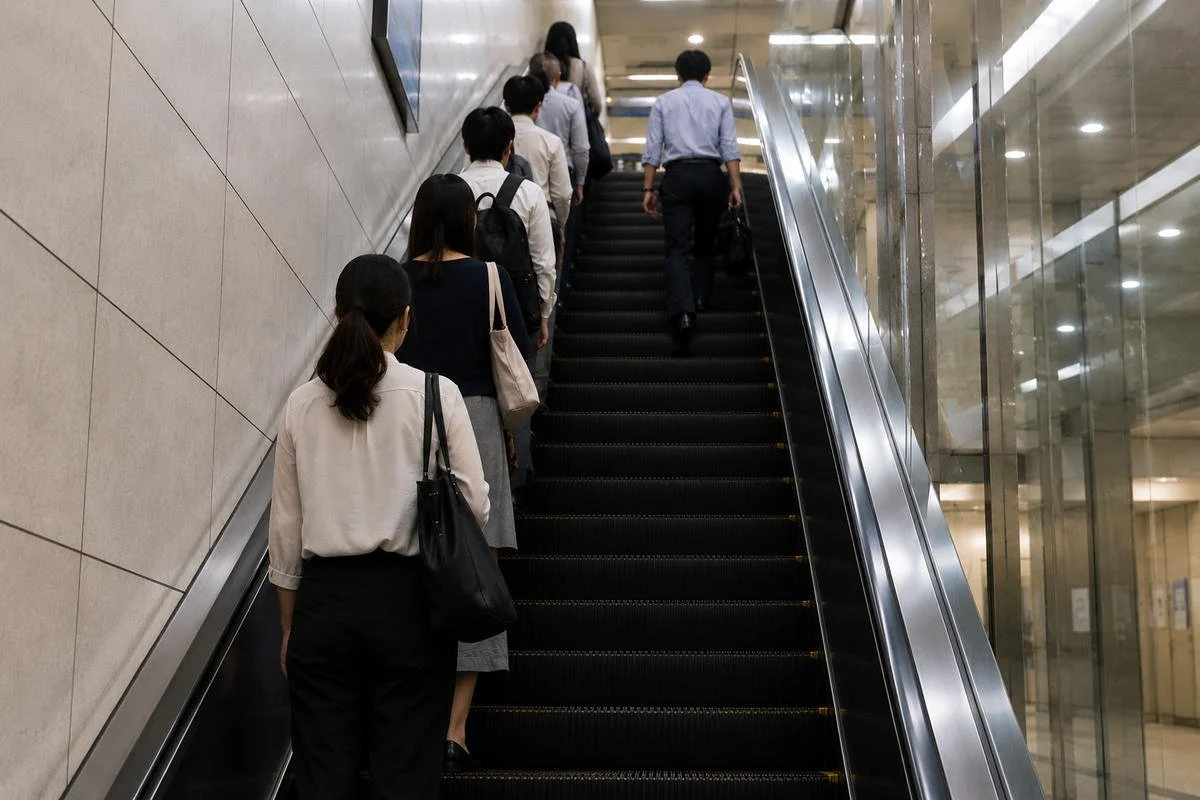
In many parts of Japan, people stand on one side of the escalator and leave the other side open for those who wish to walk.
Which side people stand on depends on where you are.
For example:
In much of eastern Japan, including Tokyo, people typically stand on the left.
In much of western Japan, including Osaka, Kyoto, and Nara, people typically stand on the right.
Rather than trying to memorize every regional difference, simply notice what the people around you are doing and follow their example.
In recent years, some railway companies have also begun encouraging passengers to stand on both sides of the escalator and avoid walking or running on it for safety reasons.
If you see signs requesting this, be sure to follow them.
Elevators
When waiting for an elevator, people usually stand to the sides of the doors rather than directly in front of them.
This allows passengers inside to exit smoothly before anyone enters.
Once everyone has stepped out, people typically board in the order they arrived.
Inside the elevator, conversations are often kept quiet, especially when strangers are present.
Boarding Buses
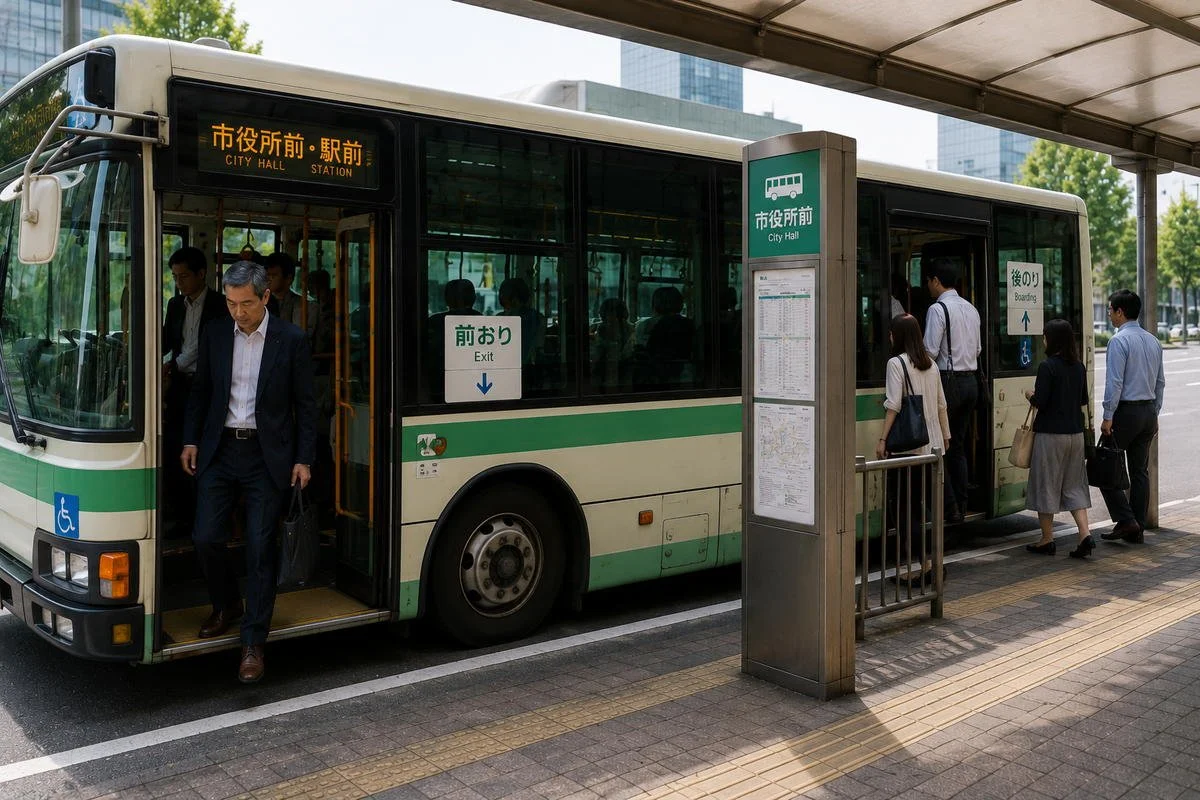
Bus boarding procedures differ depending on the city and the bus company.
Some buses are boarded through the front door, while others use the rear door for boarding and the front door for exiting.
Payment methods also vary.
Rather than worrying about remembering every system, simply watch what local passengers are doing or ask the driver if you're unsure.
Most travelers feel comfortable after just one or two rides.
Waiting for Restaurants
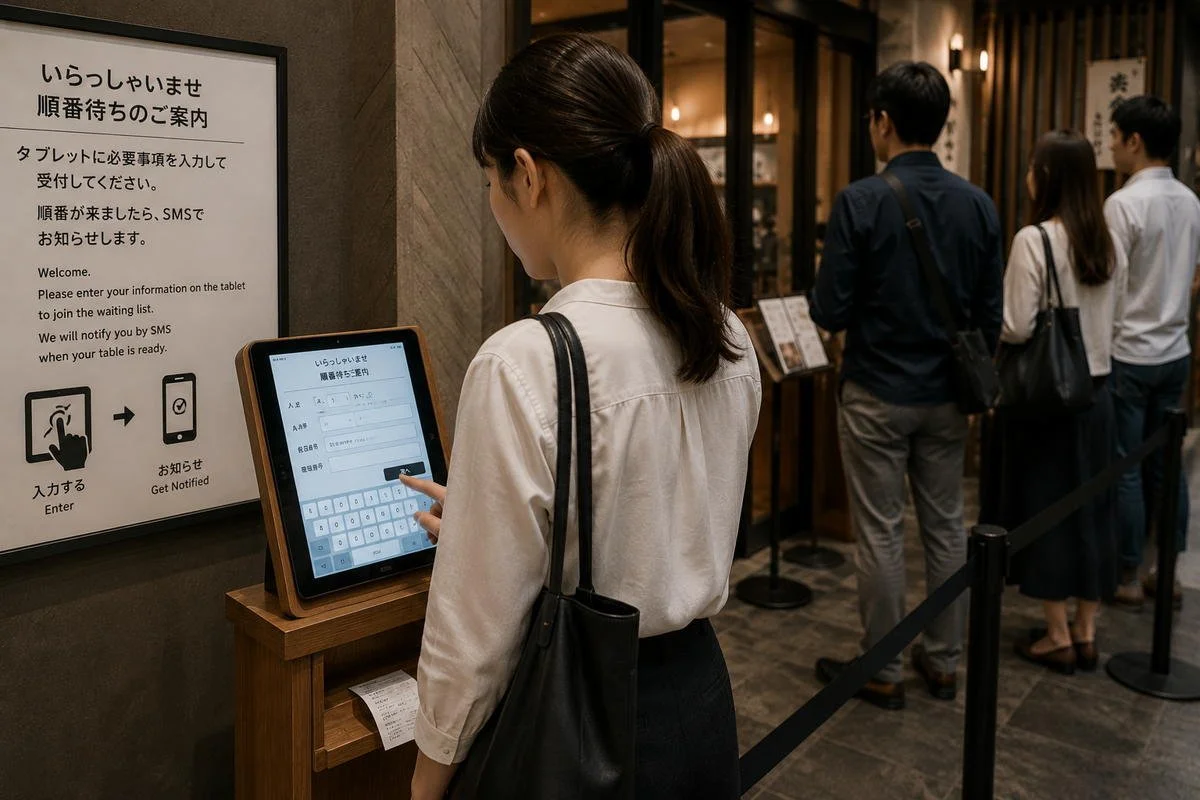
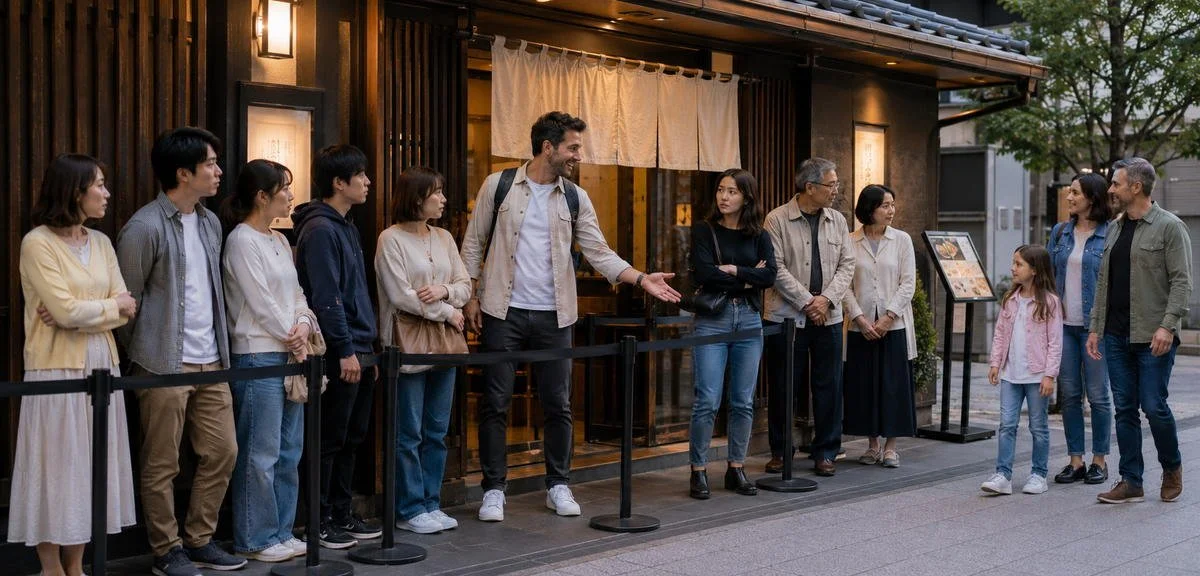
Popular restaurants often attract long lines, especially during lunch, dinner, weekends, and holidays.
If there's a queue, simply join the end of the line.
Some restaurants use a waiting list or ticket system instead.
If you're unsure how the restaurant organizes waiting customers, a staff member will usually be happy to explain.
While waiting, try not to block neighboring businesses or the sidewalk.
Tourist Attractions
Famous temples, shrines, castles, museums, and scenic viewpoints can become crowded during busy seasons.
Even when many visitors are present, you'll often notice people patiently waiting for their turn to take photographs or enjoy the view.
If someone is already standing at a popular photo spot, give them a few moments before stepping forward.
Likewise, once you've taken your own photos, it's thoughtful to move aside so others can enjoy the same opportunity.
Small gestures like these help everyone have a better experience.
Avoid Cutting in Line
Cutting in line is considered discourteous in Japan, even when it happens accidentally.
If you realize you've joined the wrong place, simply smile, apologize if necessary, and move to the correct position.
Most people will appreciate the gesture.
Fortunately, these misunderstandings are usually resolved quickly and politely.
Saving a Place in Line
Holding a place in line for one other person is sometimes accepted in informal situations.
However, saving places for an entire group is generally discouraged, especially when many people are waiting.
If several friends arrive separately, it's usually more considerate for everyone to join the line together rather than having one person wait for the rest.
Be Patient During Busy Times
During holidays, cherry blossom season, autumn foliage, or major festivals, waiting is simply part of the experience.
Rather than becoming frustrated, many people use the time to relax, chat quietly, or simply enjoy their surroundings.
A little patience often makes the experience more enjoyable.
If You're Not Sure, Just Look Around
One of the easiest ways to navigate unfamiliar situations in Japan is to pause for a few seconds and observe.
Where are people standing?
Which door are they using?
Is there a numbered ticket machine?
Is someone waiting to be called?
More often than not, the answer becomes clear simply by watching the people around you.
There's no need to feel embarrassed if you're unfamiliar with the system.
People understand that visitors are learning, and making an honest effort to follow local customs is always appreciated.
You'll quickly find that these small routines become second nature.
Did You Know?
Many popular restaurants in Japan have such well-organized queuing systems that customers can wait for long periods without confusion or disagreement.
Some even use numbered tickets or digital waiting systems, making the process even smoother.
Local Tip
If you're waiting in line with friends, avoid spreading out across the walkway.
Standing together in a compact group leaves more space for other pedestrians and helps keep busy public areas comfortable for everyone.
Sometimes, the smallest acts of consideration make the biggest difference.