
Chapter 11: Walking Etiquette 1
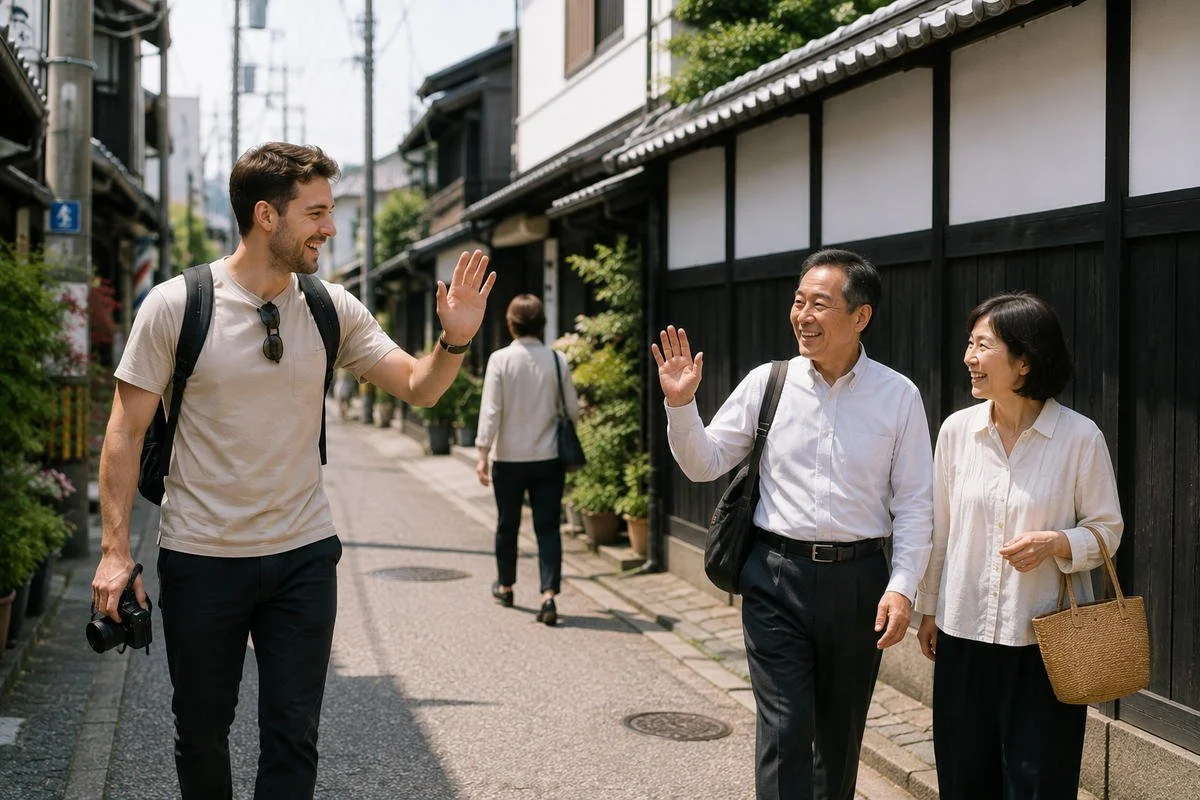
Sharing Streets and Sidewalks Respectfully
Walking is one of the best ways to experience Japan.
Whether you're exploring the neon-lit streets of Tokyo, wandering through Kyoto's historic neighborhoods, or strolling along quiet country roads in Nara, you'll discover details that are easy to miss from a train or bus.
As you explore, you'll notice that people generally move through public spaces with a quiet awareness of those around them.
There are very few written rules telling people exactly how to walk.
Instead, everyday movement is guided by consideration, observation, and cooperation.
Understanding these simple habits will help you feel more comfortable wherever your journey takes you.
Sidewalks Are Shared Spaces
Japan's sidewalks are used by many different people throughout the day.
Commuters hurry to work.
Children walk to school.
Cyclists pass by.
Older adults enjoy leisurely strolls.
Visitors stop to admire the scenery.
Because everyone shares the same space, being aware of those around you helps everything move smoothly.
Rather than thinking only about where you're going, try to notice how your movements affect the people nearby.
Keep Moving When Possible
One habit many visitors quickly notice is that people generally avoid stopping suddenly in busy walkways.
If you need to check a map, answer a message, or decide where to go next, simply step to one side before stopping.
This small habit prevents unnecessary congestion and allows everyone to continue moving comfortably.
Before long, it becomes second nature.
Walking in Groups
Traveling with family or friends is one of life's great pleasures.
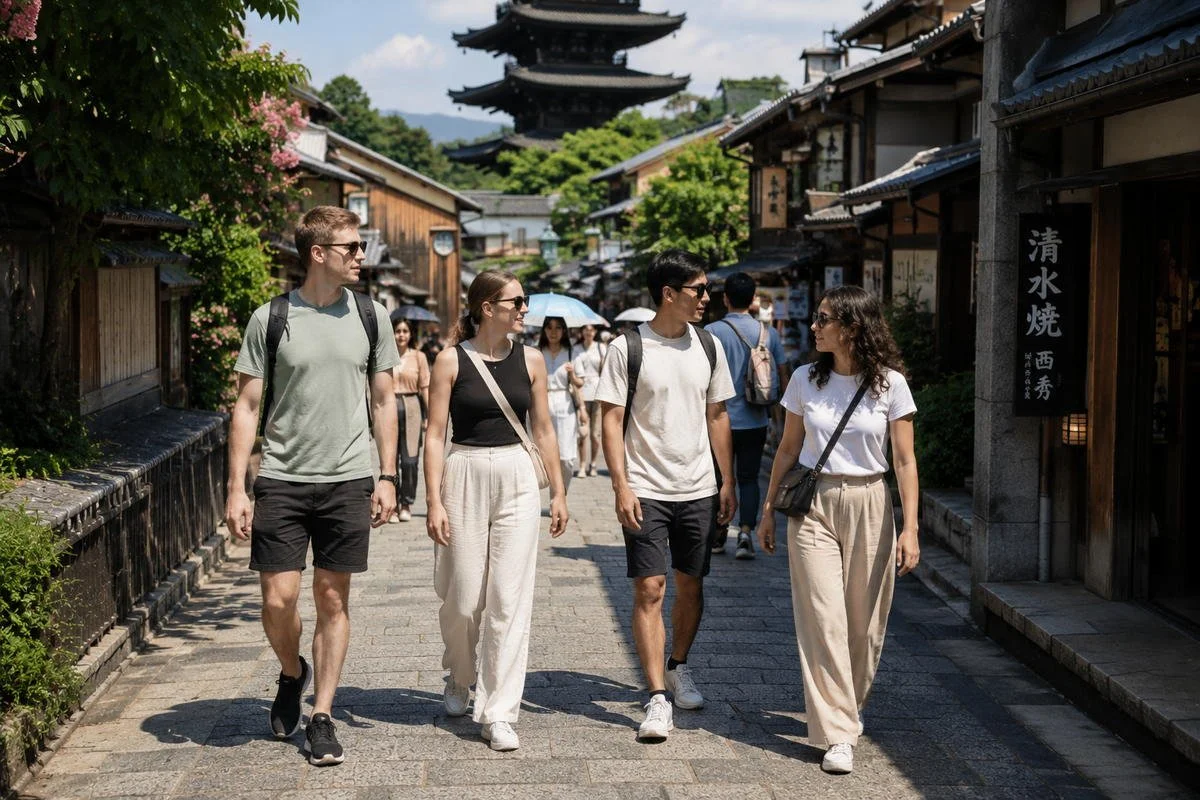
However, larger groups can unintentionally block sidewalks when everyone walks side by side.
When pedestrian traffic becomes heavier, consider walking in pairs or single file for a short distance.
Doing so allows others to pass more easily without anyone feeling inconvenienced.
Once the sidewalk becomes wider again, you can naturally return to walking together.
Watch for Cyclists
In many parts of Japan, bicycles share sidewalks with pedestrians, particularly where dedicated cycling lanes are limited.
Cyclists are expected to ride carefully, and pedestrians should also remain aware of their surroundings.
If you hear a bicycle approaching or notice one passing, simply continue walking predictably rather than making sudden changes in direction.
Everyone shares responsibility for moving safely.
Narrow Streets
One of Japan's greatest charms is its network of narrow streets and historic alleyways.
These areas often have little separation between pedestrians, bicycles, and local traffic.
When walking through residential neighborhoods or historic districts:
Stay aware of approaching vehicles.
Walk to one side when appropriate.
Avoid blocking entrances to homes or shops.
Be especially considerate when stopping for photographs.
These streets are not only tourist destinations—they're also part of people's everyday lives.
Crossing the Street
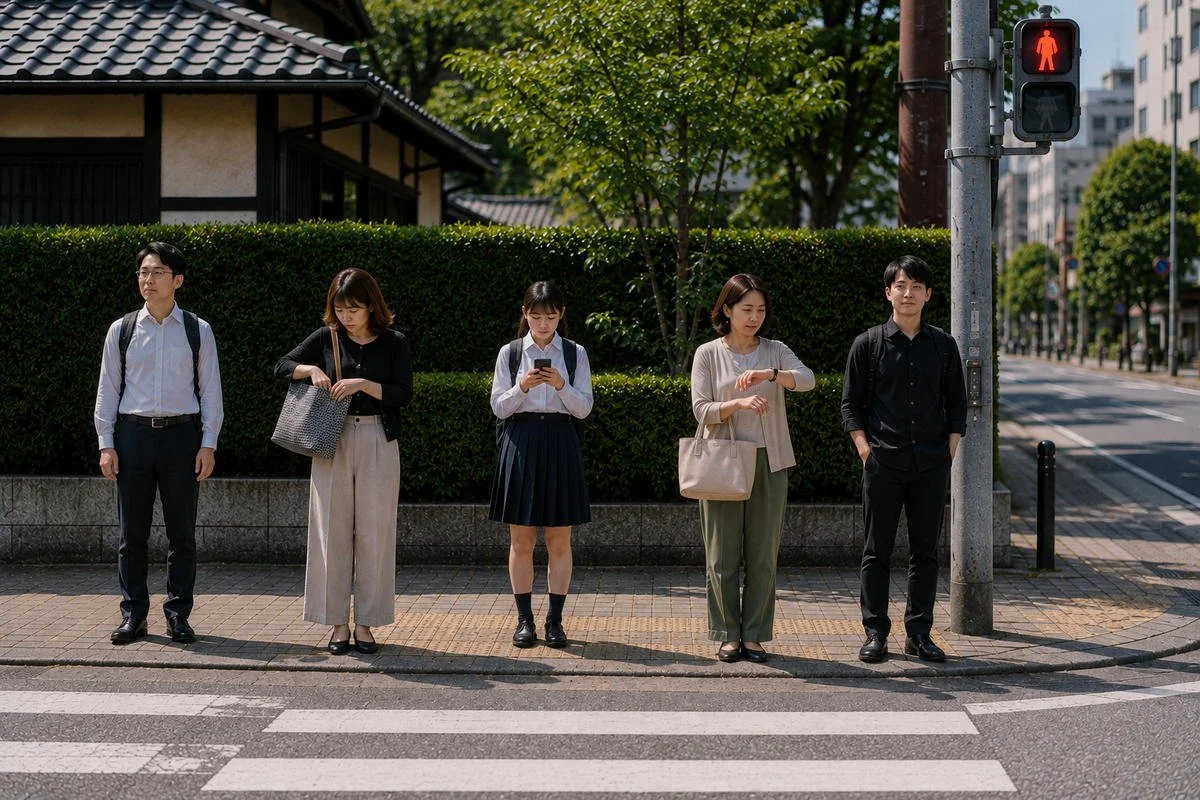
Pedestrians in Japan generally wait for the traffic signal, even when no cars appear to be coming.
While this may seem surprising to some visitors, it reflects a culture of following shared rules that help keep everyone safe.
Waiting for the green light also sets a good example for children, who learn traffic safety by watching the adults around them.
If everyone else is waiting patiently, it's best to wait as well.
Walking While Using Your Phone
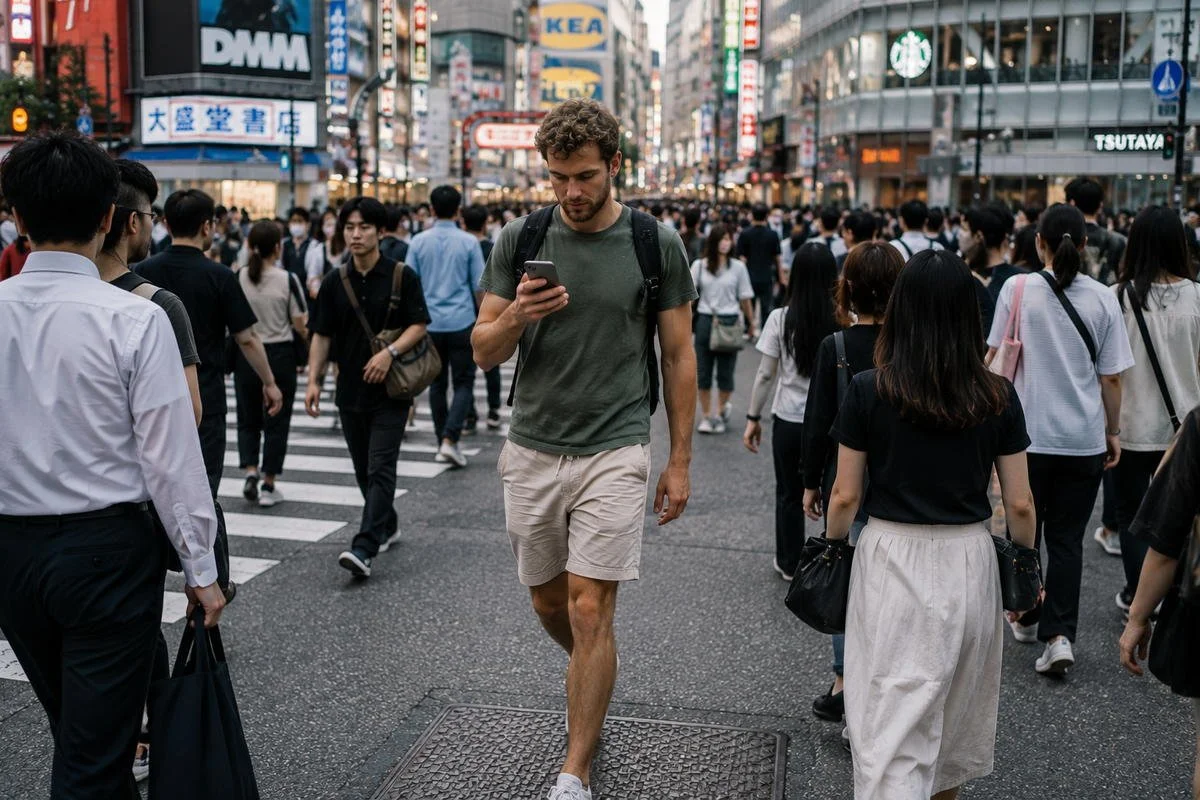
Using a smartphone while walking has become common around the world, but in Japan it's generally considered safer—and more courteous—to avoid looking at your screen while moving through crowded public spaces.
Walking while distracted increases the risk of collisions with other pedestrians, cyclists, or obstacles.
If you need to reply to a message or check directions, simply step aside before using your phone.
Following the Natural Rhythm
Perhaps the easiest way to feel comfortable is simply to follow the rhythm of the people around you.
Notice how others move.
Observe where they pause.
Watch how they naturally make room for one another.
You don't need to memorize every custom.
A little awareness and flexibility will help you adapt with confidence.
Did You Know?
Japan's busiest railway stations handle millions of passengers every day.
Although they can become extremely crowded, pedestrian traffic usually continues moving smoothly because people naturally cooperate, avoid blocking walkways, and remain aware of those around them.
Local Tip
If you're carrying luggage or wearing a backpack, take a quick glance behind you before turning or stopping.
A small movement with a large bag can easily bump into someone walking close behind.
This simple habit helps everyone move comfortably through busy streets and stations.