
Chapter 8: Photography Etiquette 1
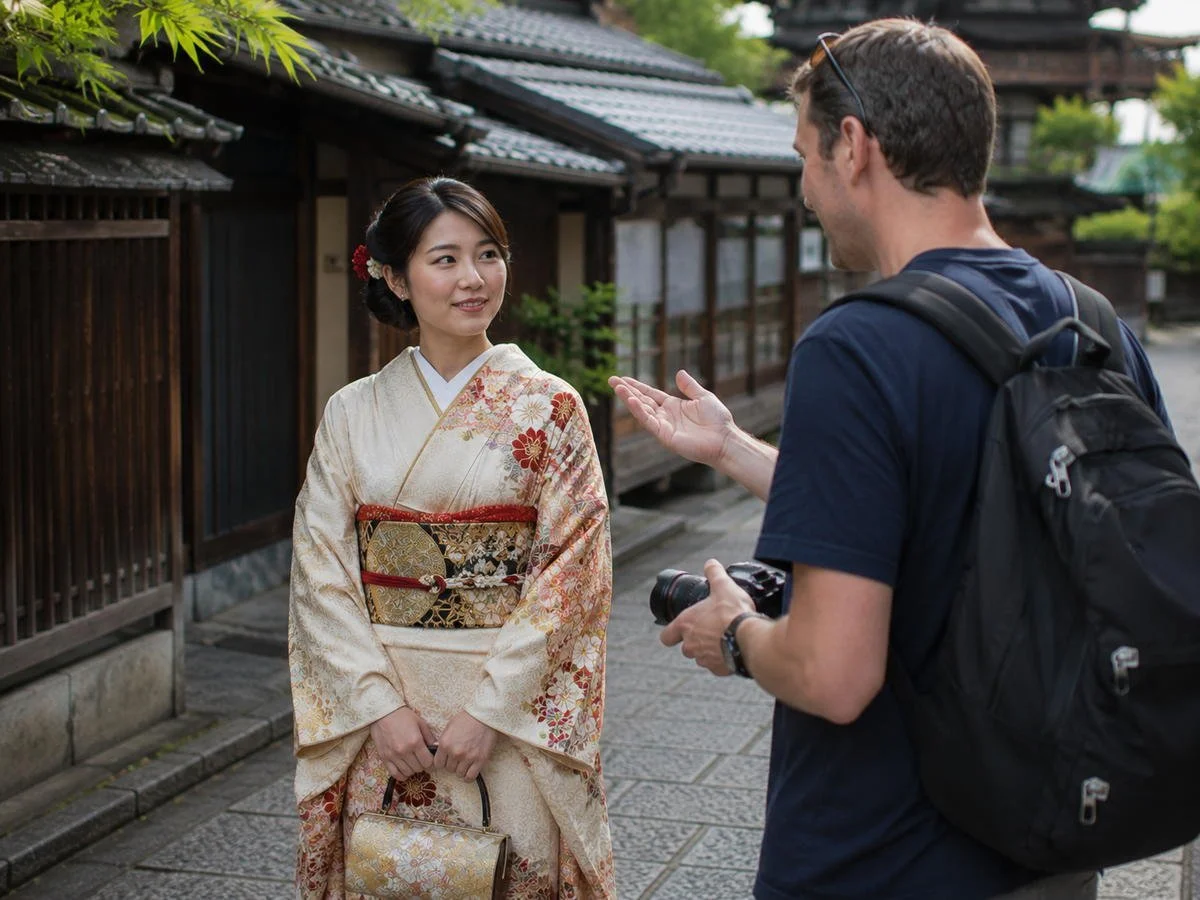
Taking Better Photos by Showing Respect
Japan is filled with unforgettable scenes.
A quiet shrine nestled beneath towering cedar trees.
A narrow alley glowing with lanterns after sunset.
Cherry blossoms drifting through the spring breeze.
A train arriving exactly on time.
It's only natural to want to capture moments like these.
Photography is one of the best ways to remember your journey and share your experiences with family and friends.
At the same time, Japan encourages visitors to think about something just as important as the photograph itself:
How does taking this photo affect the people and the place around you?
Once you begin asking yourself that question, you'll discover that photography etiquette in Japan is surprisingly simple.
Not Every Beautiful Place Is a Photo Spot
Many of Japan's most beautiful places are also spaces where people live, work, worship, or quietly reflect.
A centuries-old temple may still host daily religious ceremonies.
A peaceful neighborhood may simply be someone's route home from work.
A tranquil garden may be designed for contemplation rather than photography.
Before raising your camera, take a moment to understand where you are.
Ask yourself:
"Is this place inviting people to take photos, or inviting them to experience the moment?"
Sometimes the answer is both.
Sometimes it isn't.
Learning to recognize the difference is one of the most valuable travel skills you can develop.
Look for Photography Signs
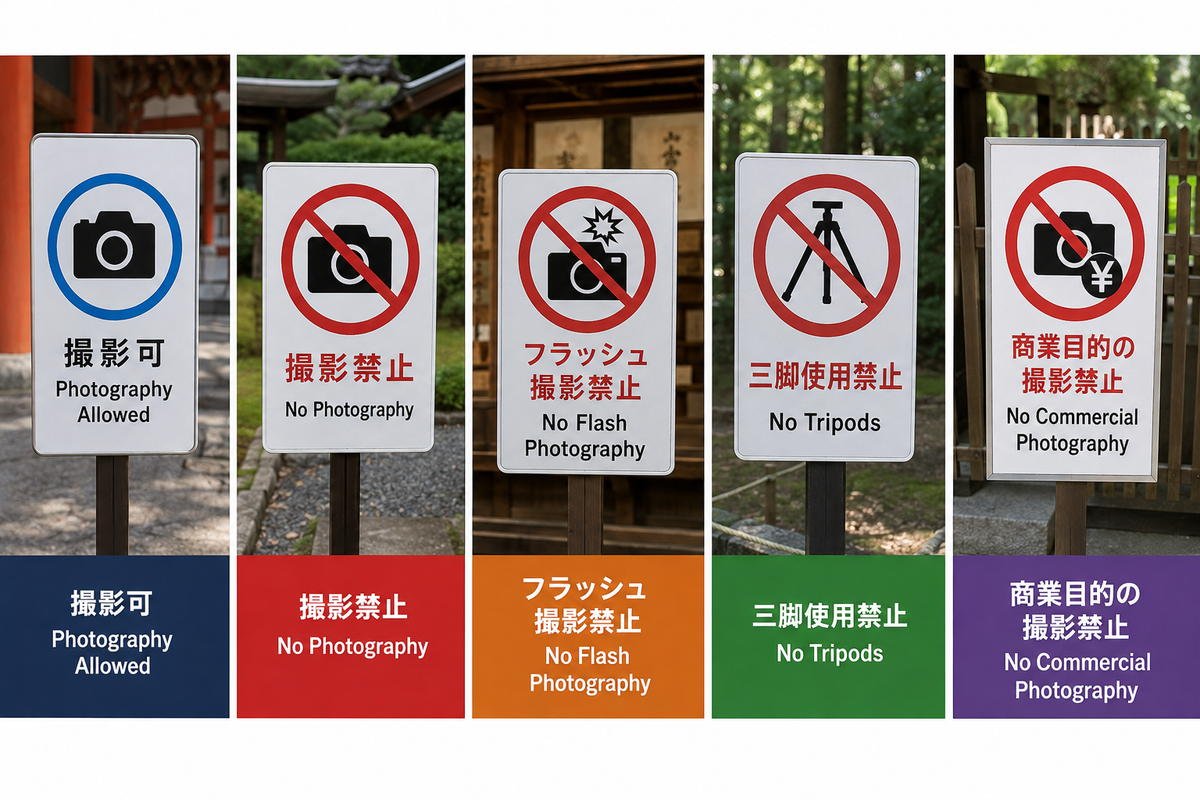
Many attractions clearly indicate whether photography is permitted.
You may see signs such as:
Photography OK
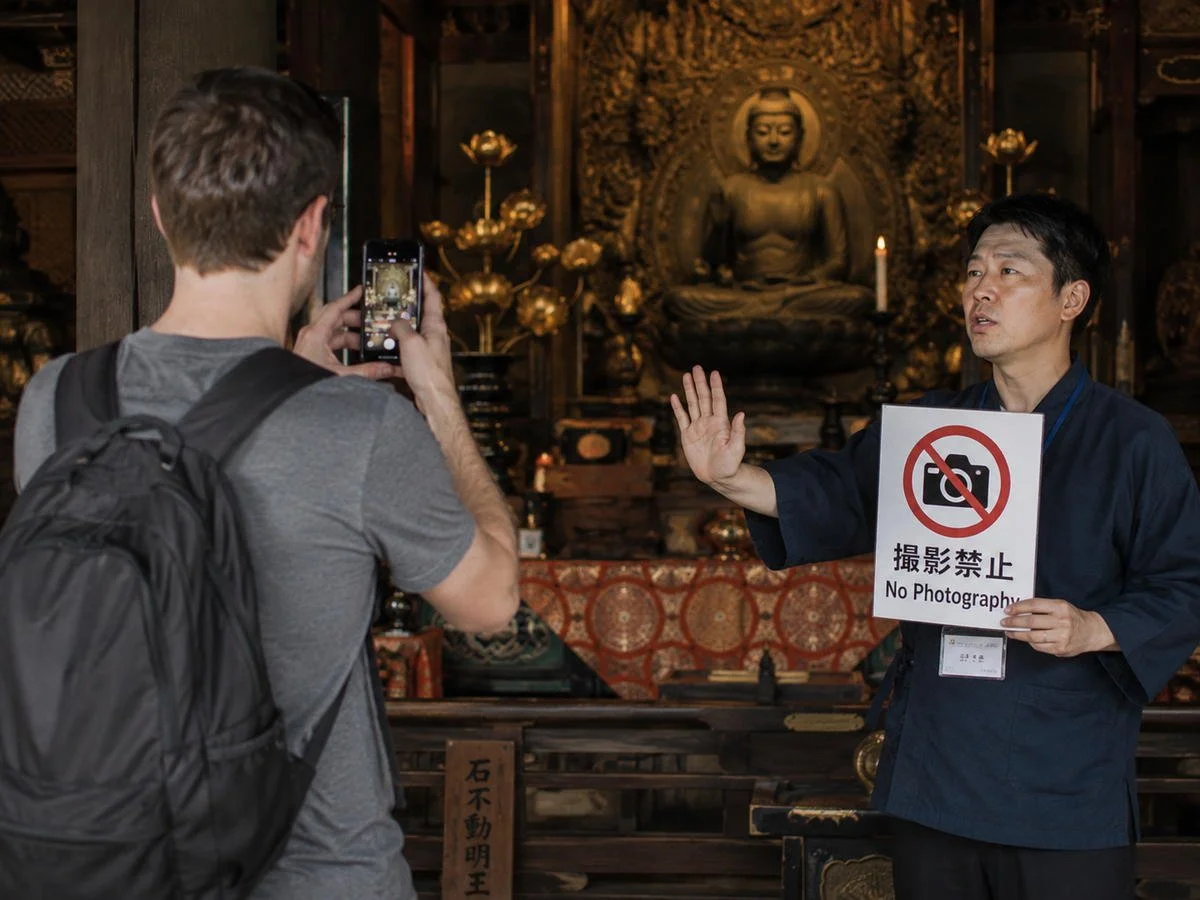
No Photography
No Flash Photography
No Tripods
No Commercial Photography
Always follow these instructions, even if other visitors appear to be ignoring them.
Some restrictions protect delicate artwork or historic buildings.
Others help preserve a peaceful atmosphere for worshippers or museum visitors.
Rules may also differ from one area to another within the same site.
For example, photography may be allowed in a garden but prohibited inside the main hall.
Be Aware of the People Around You
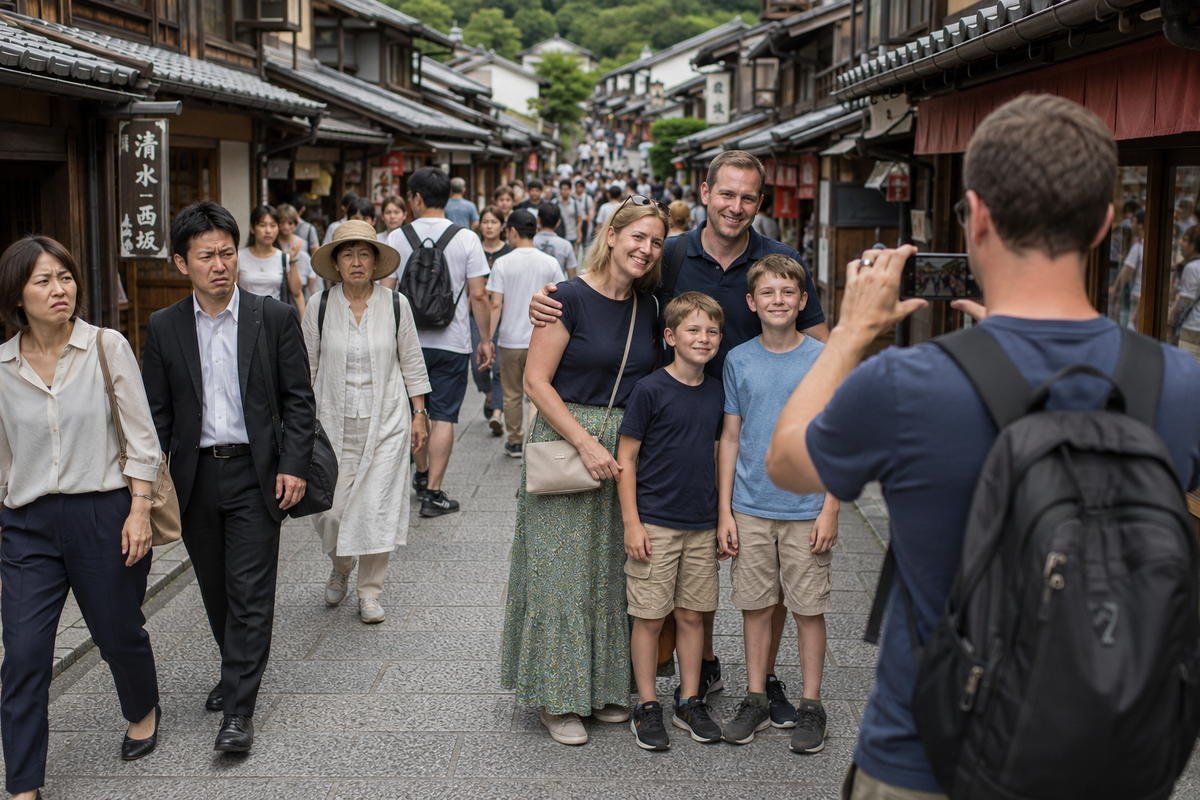
A memorable travel photograph shouldn't come at someone else's expense.
When taking pictures:
Avoid blocking walkways.
Don't stop suddenly in busy streets.
Step aside before reviewing your photos.
Keep your group together instead of spreading across the entire path.
Be especially mindful in crowded train stations and popular tourist attractions.
Many visitors become so focused on finding the perfect composition that they forget others are trying to enjoy the same place.
Sometimes, taking just a few steps to the side makes all the difference.
Give Sacred Moments Their Space
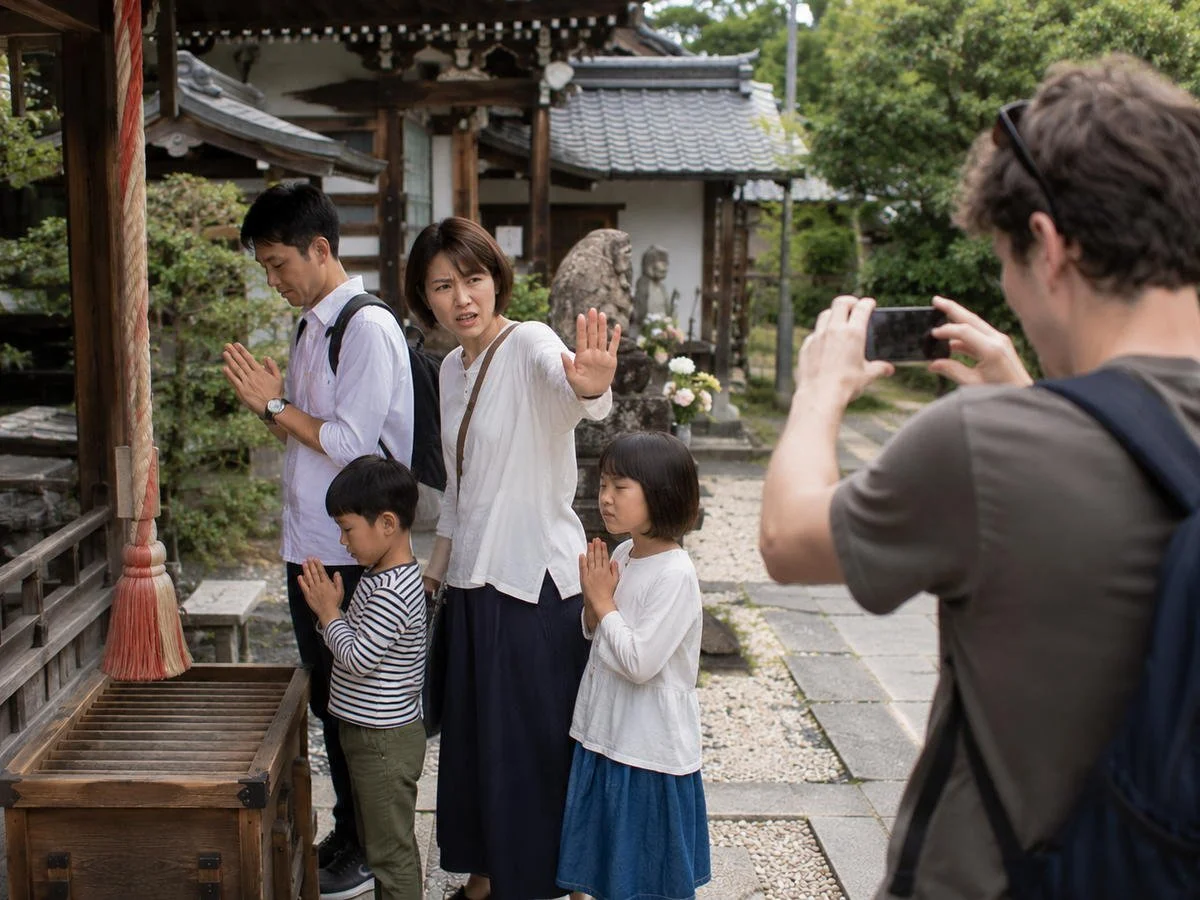
During your travels, you may unexpectedly witness something deeply personal.
Perhaps a family is praying at a shrine.
A wedding procession passes through temple grounds.
A monk begins chanting during a ceremony.
A local resident quietly places flowers at a family grave.
These moments can be beautiful.
They can also be deeply private.
Instead of reaching for your camera immediately, pause and simply observe.
Sometimes the most thoughtful choice is to appreciate the moment without photographing it.
Flash Isn't Always Your Friend
Flash photography can damage delicate artwork over time and disturb both visitors and religious ceremonies.
Even where flash is technically permitted, ask yourself whether it's truly necessary.
Natural light often creates photographs that feel warmer, softer, and more authentic.
Many of Japan's temples, gardens, and historic buildings are especially beautiful when photographed using only the available light.
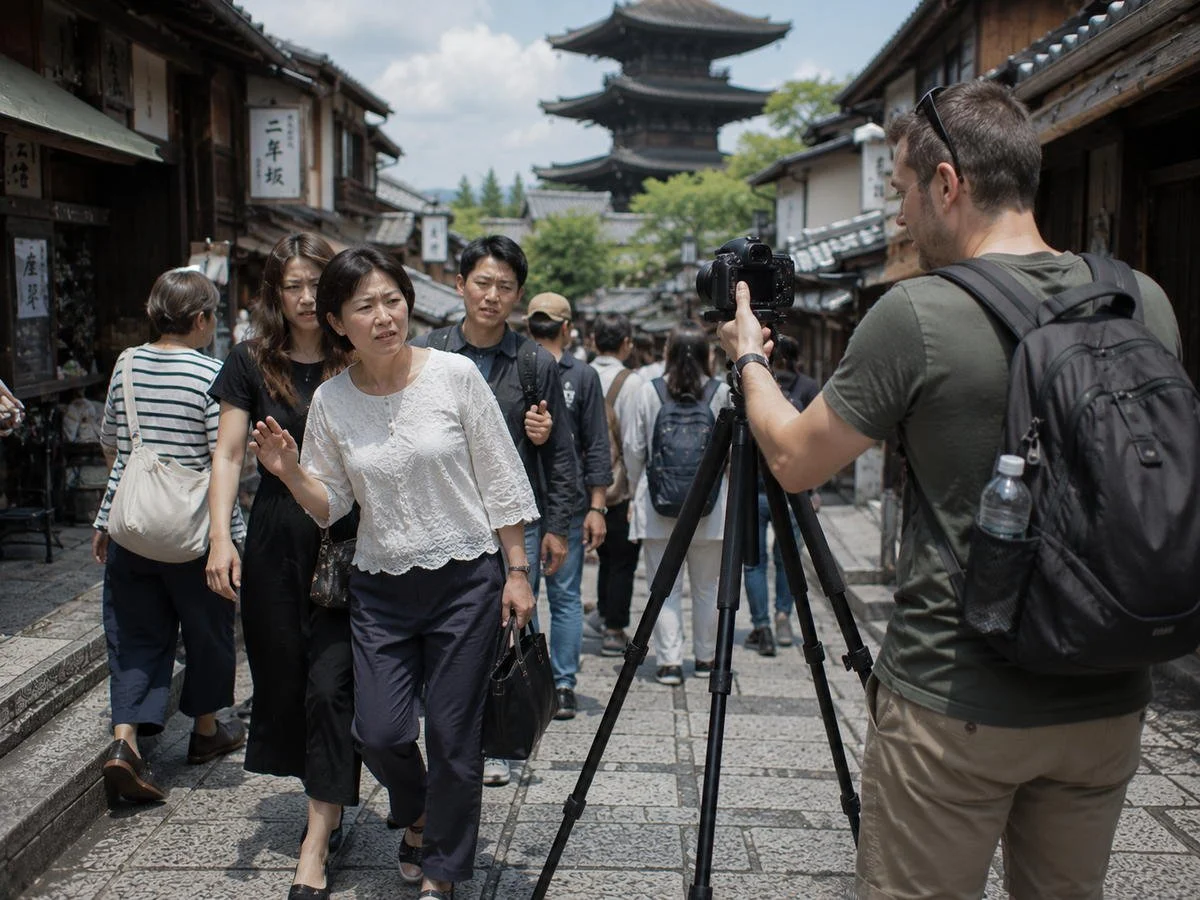
Tripods and Selfie Sticks
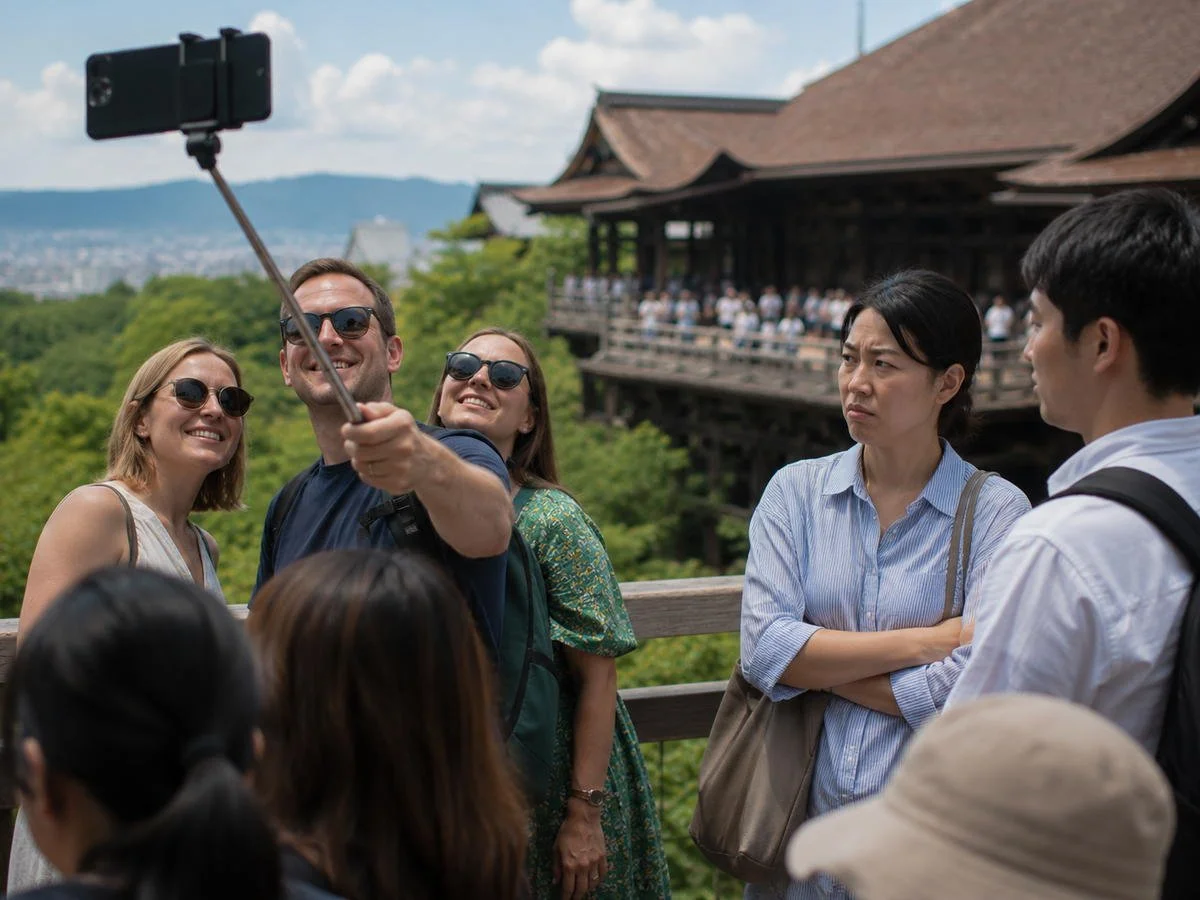
Large camera equipment isn't prohibited everywhere, but it can quickly become a problem in busy locations.
Tripods and selfie sticks may:
Block narrow pathways
Create safety hazards
Interrupt the view for other visitors
Slow the flow of pedestrian traffic
Many popular attractions prohibit them entirely.
If you plan to use one, always check the site's rules beforehand.
Observe Before You Photograph
One of the easiest ways to understand local expectations is simply to pause for a moment before taking out your camera.
Are other visitors taking photos?
Are people speaking quietly?
Is a ceremony taking place?
Have others put their cameras away?
The answers often become clear before you see a single sign.
In Japan, paying close attention to your surroundings is considered a simple act of courtesy.
Did You Know?
Some of Japan's most famous temples and museums prohibit photography inside their main buildings—not because they dislike photography, but because they want visitors to experience the artwork and sacred spaces directly rather than through a camera screen.
For many people, those memories become even more meaningful precisely because they weren't photographed.
Local Tip
Before taking your first photo at any new location, spend thirty seconds simply looking around.
Notice the light, the atmosphere, and the people around you before lifting your camera.
You'll often discover the best angle naturally—and sometimes you'll realize the moment is even more memorable when you experience it first and photograph it second.