
Chapter 8: Photography Etiquette 1
Sharing Japan Through Your Camera
Photography has the power to preserve memories long after a journey has ended.
A single image can bring back the sound of a temple bell, the fragrance of spring blossoms, or the warmth of a bowl of ramen on a rainy afternoon.
But every photograph also tells a story about how it was taken.
In Japan, creating beautiful photographs and showing respect for the people and places around you are not separate ideas—they go hand in hand.
Drones and Aerial Photography
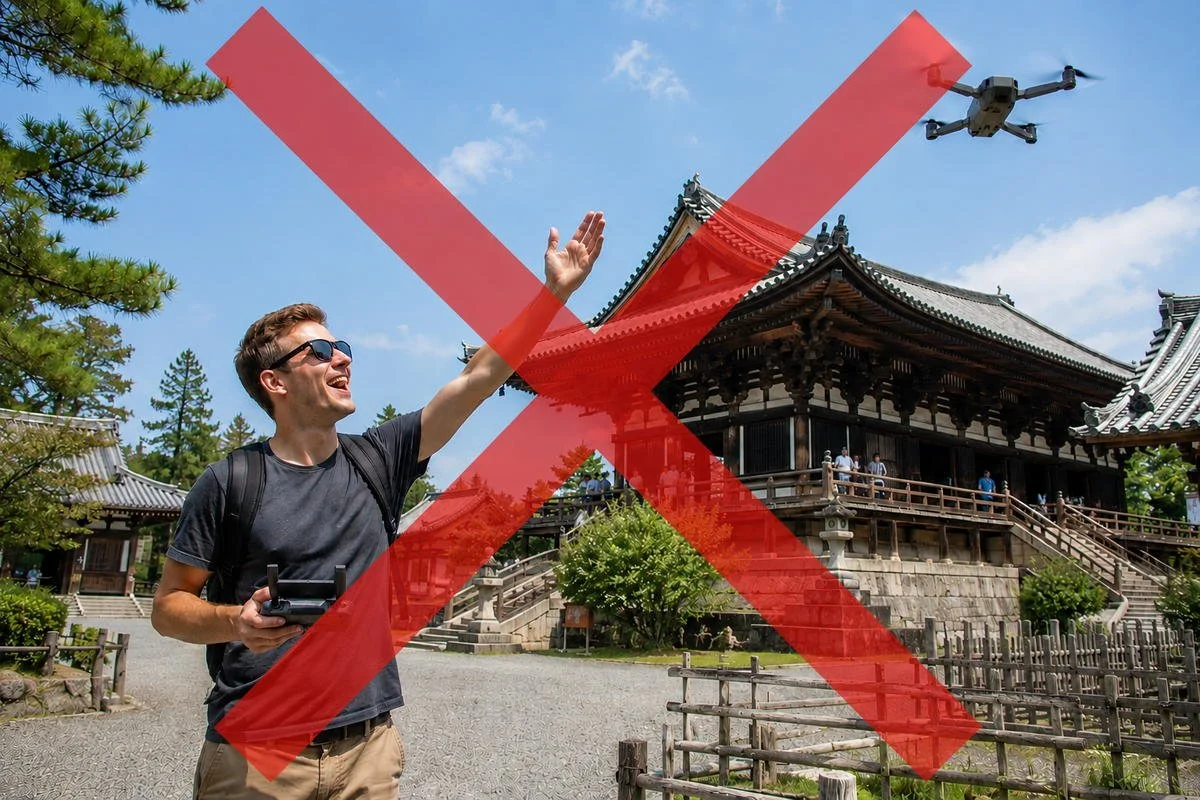
Japan's landscapes look spectacular from above, but flying a drone is subject to strict regulations.
Many temples, shrines, castles, parks, and historic districts prohibit drones entirely.
Additional restrictions may apply near airports, densely populated areas, government facilities, and locations protected by national or local regulations.
Even where drone flights may be legally permitted, always obtain any required permissions before flying.
If you're unsure, assume drones are not allowed until you've confirmed otherwise.
For most travelers, enjoying the scenery from the ground is the simpler—and often the more considerate—choice.
Commercial Photography
Most tourist attractions welcome personal photography.
Commercial photography, however, is often treated differently.
If you're taking photographs for:
Advertising
Product promotion
Fashion shoots
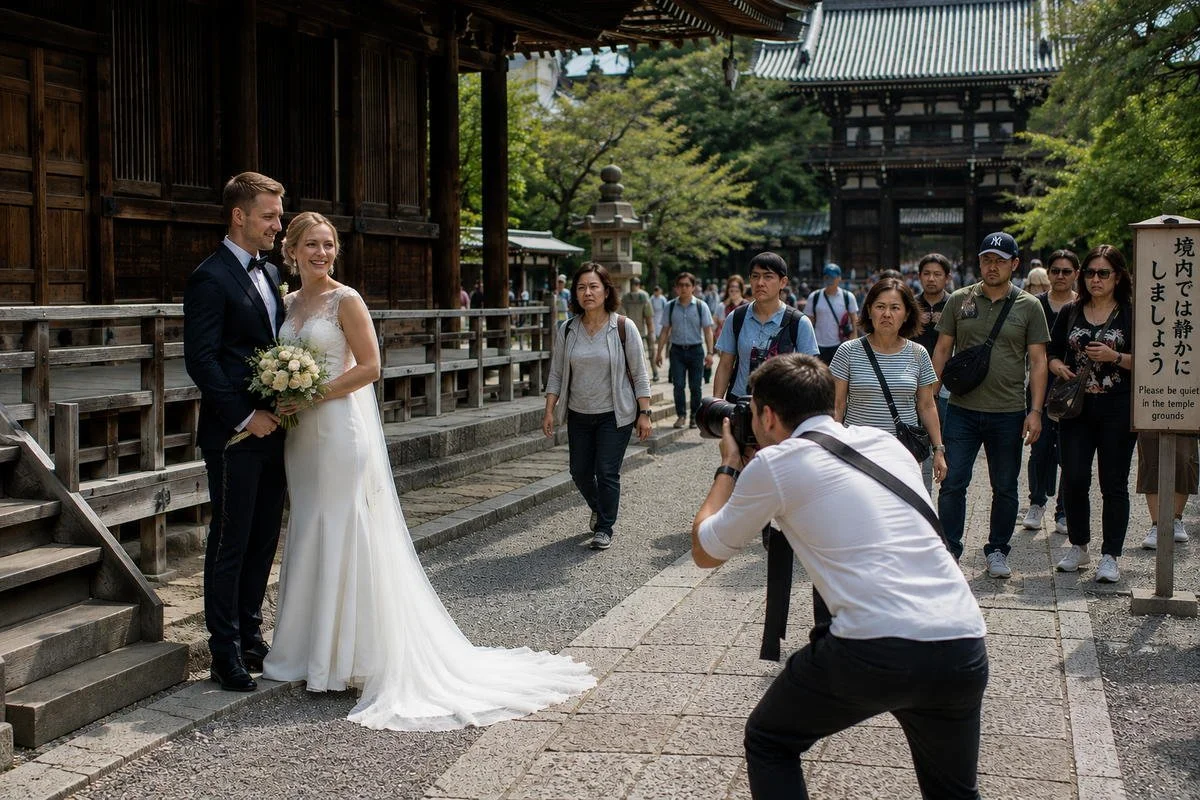
Wedding photography
Influencer campaigns
Professional video production
you may need advance permission or a photography permit.
This is especially common at historic buildings, temples, shrines, gardens, museums, and privately owned properties.
If photography is part of your work, always check the site's policies before your visit.
Sharing Photos on Social Media
Sharing your experiences online is one of the pleasures of modern travel.
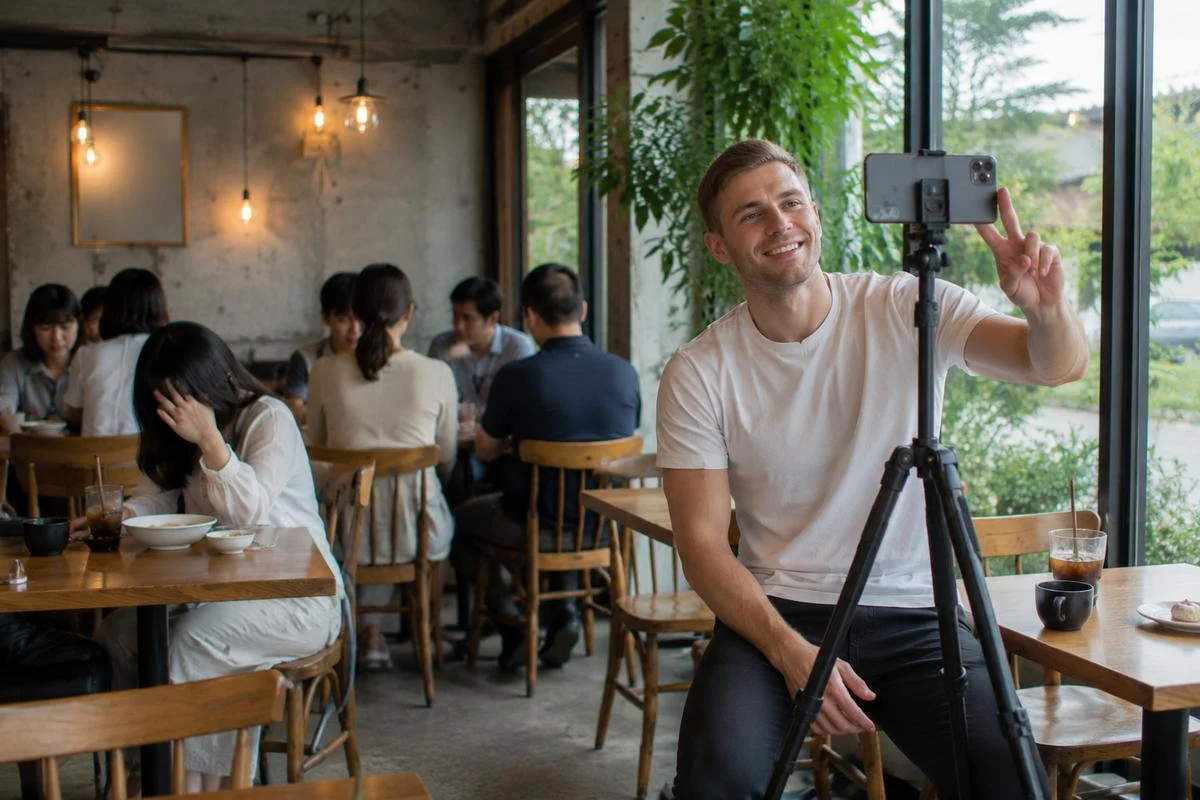
Before posting, however, take a moment to think about the people who appear in your images.
If someone is easily identifiable and is the main subject of your photograph, consider whether you have their permission to share it publicly.
The same thoughtfulness applies to photographs of:
Children
Religious ceremonies
Private homes
Small businesses
Traditional workshops
Sometimes the most respectful choice is simply to crop the image, blur identifying details, or select a different photograph altogether.
Editing with Respect
Editing photos is a normal part of photography.
Adjusting brightness, color, or contrast can help recreate the atmosphere you experienced.
At the same time, it's worth asking whether heavy editing changes the place itself.
For example, removing every visitor from a busy temple or dramatically altering the colors may create an image that no longer reflects reality.
Creative expression is part of photography, but authenticity also has value—especially when sharing your travels with others.
Sometimes the most meaningful photographs are the ones that capture a place just as it was.
Historic Sites Are Meant to Last
Many of Japan's cultural treasures have survived for hundreds of years.
Ancient wooden temples, delicate paintings, stone monuments, and traditional gardens require constant care and preservation.
Simple actions help protect these places for future generations:
Stay on marked paths.
Don't climb onto historic structures.
Avoid leaning camera equipment against fragile surfaces.
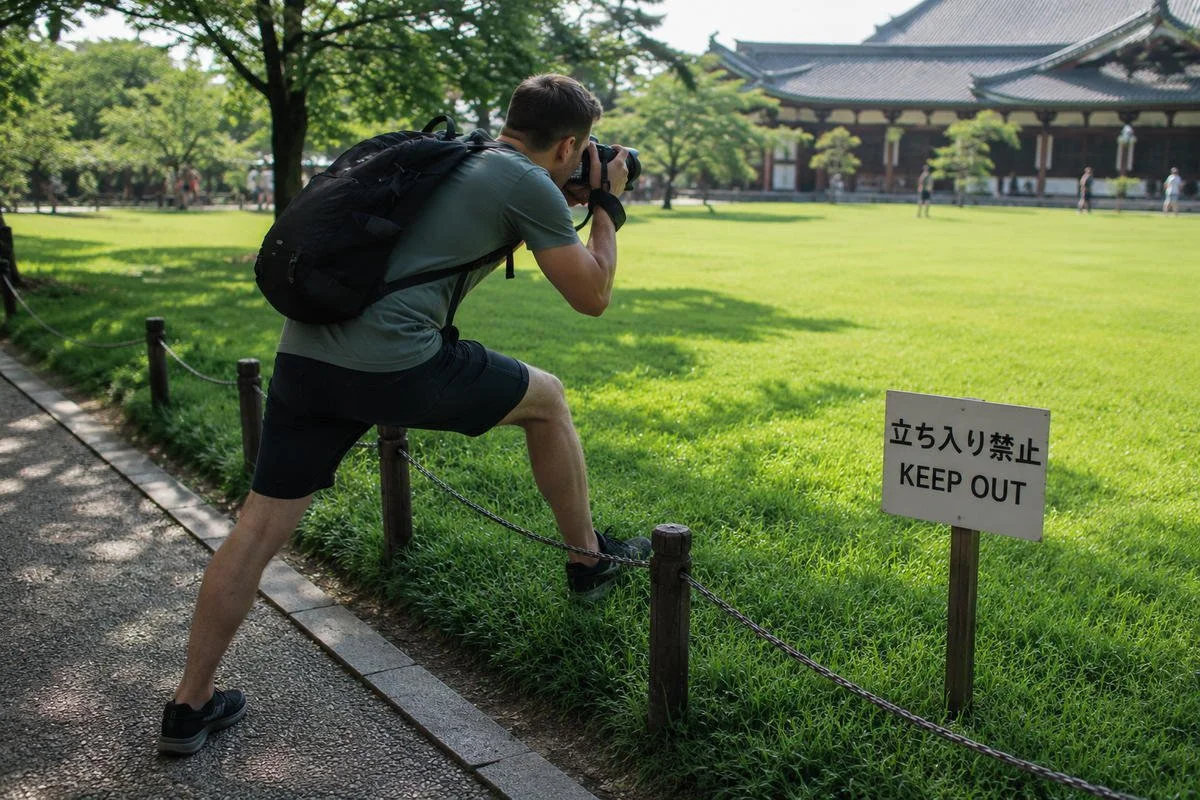
Respect barriers, even if they seem easy to step over.
Follow instructions from staff.
Helping preserve these places is one of the most meaningful ways visitors can show appreciation for Japan's cultural heritage.
The Best Photos Often Come to Those Who Wait
Many travelers feel pressured to take hundreds of photographs as quickly as possible.
Instead, try slowing down.
Watch how the light changes.
Wait for the crowds to pass.
Listen to the sounds around you.
Often, the most memorable photograph comes not from trying to capture everything, but from patiently waiting for a single beautiful moment.
That same patience often leads to a deeper appreciation of the place itself.
Common Mistakes Visitors Make
Most photography mistakes are easy to avoid.
Try not to:
Stand in the middle of a busy path while composing a shot.
Ignore "No Photography" signs.
Fly drones without permission.
Photograph strangers at close range without asking.
Use flash where it may disturb others or damage artwork.
Cross barriers for a better angle.
Treat religious ceremonies as photo opportunities.
Spend so much time behind the camera that you forget to enjoy the place itself.
A Photograph Is Also a Reflection of the Photographer
Every traveler sees Japan differently.
Some are drawn to famous landmarks.
Others prefer quiet neighborhoods, mountain villages, or hidden gardens.
No matter what you photograph, your images reflect not only the place you visited, but also the way you experienced it.
Photographs created with patience, curiosity, and consideration often carry a sense of warmth that no camera or lens can produce on its own.
It's something viewers can feel, even if they can't quite explain why.
Did You Know?
The Japanese expression ichi-go ichi-e (一期一会) is often translated as "one time, one meeting."
It reminds us that every encounter is unique and will never happen in exactly the same way again.
Many photographers embrace this idea by appreciating each moment as it unfolds rather than trying to control every detail.
Local Tip
Before leaving a beautiful location, put your camera away for just one minute.
Stand quietly.
Listen to the sounds around you.
Notice the breeze, the scent of the trees, or the rhythm of everyday life.
The photograph will help you remember what you saw.
That quiet moment will help you remember how you felt.
The Meaning Behind Thoughtful Photography
Photography is often described as capturing a moment.
But the best travel photographs do something more.
They reflect the relationship between the photographer and the place being photographed.
When you slow down, pay attention to the people around you, and photograph with kindness and consideration, your images become more than souvenirs.
They become memories shaped by genuine respect.
As you explore Japan, remember that the most meaningful photographs aren't always those with the perfect composition or the most dramatic light.
They're the ones created with curiosity, patience, and gratitude.
Travel thoughtfully.
Photograph with kindness.
And let your images tell not only the story of Japan, but also the story of the thoughtful traveler who experienced it.