
Chapter 10: Queuing & Personal Space 1
Why Orderly Queues Matter in Japan
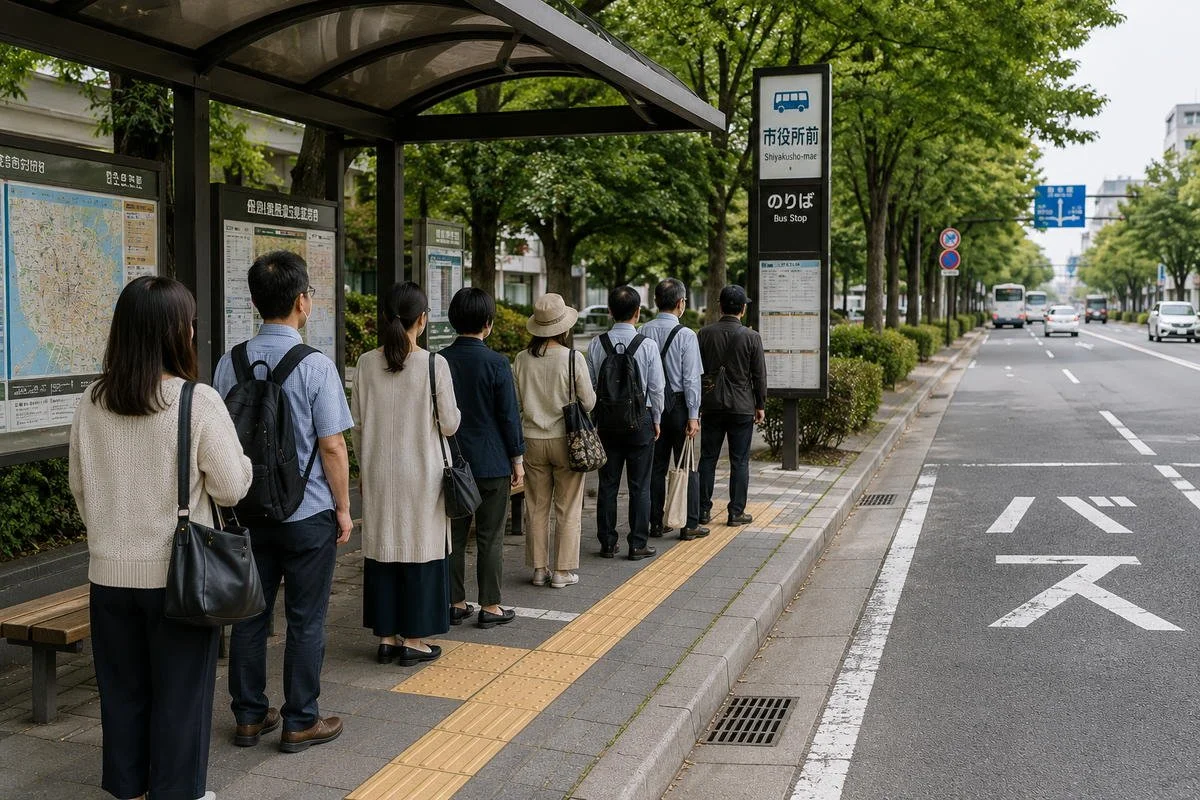
One of the first things many visitors notice in Japan is how naturally people form lines.
Whether waiting for a train, buying coffee, boarding an elevator, or entering a popular attraction, people quietly line up without being asked.
There are rarely barriers, ropes, or staff directing the queue.
Yet everyone seems to know exactly where to stand.
For many travelers, it's both surprising and impressive.
This isn't simply about following rules.
It's about making everyday life smoother for everyone.
Waiting Your Turn
In Japan, waiting patiently is considered a sign of respect for the people around you.
Rather than trying to get ahead, most people trust that everyone will have their turn.
Because of this shared expectation, lines usually move smoothly without much conversation or supervision.
Even during busy times, you'll often notice how calm and orderly the atmosphere remains.
The goal isn't to reach the front as quickly as possible.
It's to make sure everyone is treated fairly.
Lines Are Everywhere
You'll find queues in all kinds of places, including:
Train and subway platforms
Bus stops
Convenience stores
Supermarkets
Elevators
Escalators
Museums
Theme parks
Restaurants
Public restrooms
Sometimes the line is obvious.
Other times, it's simply a group of people standing quietly in the right place.
Before joining, take a quick look around to see where the line begins.
Platform Markings
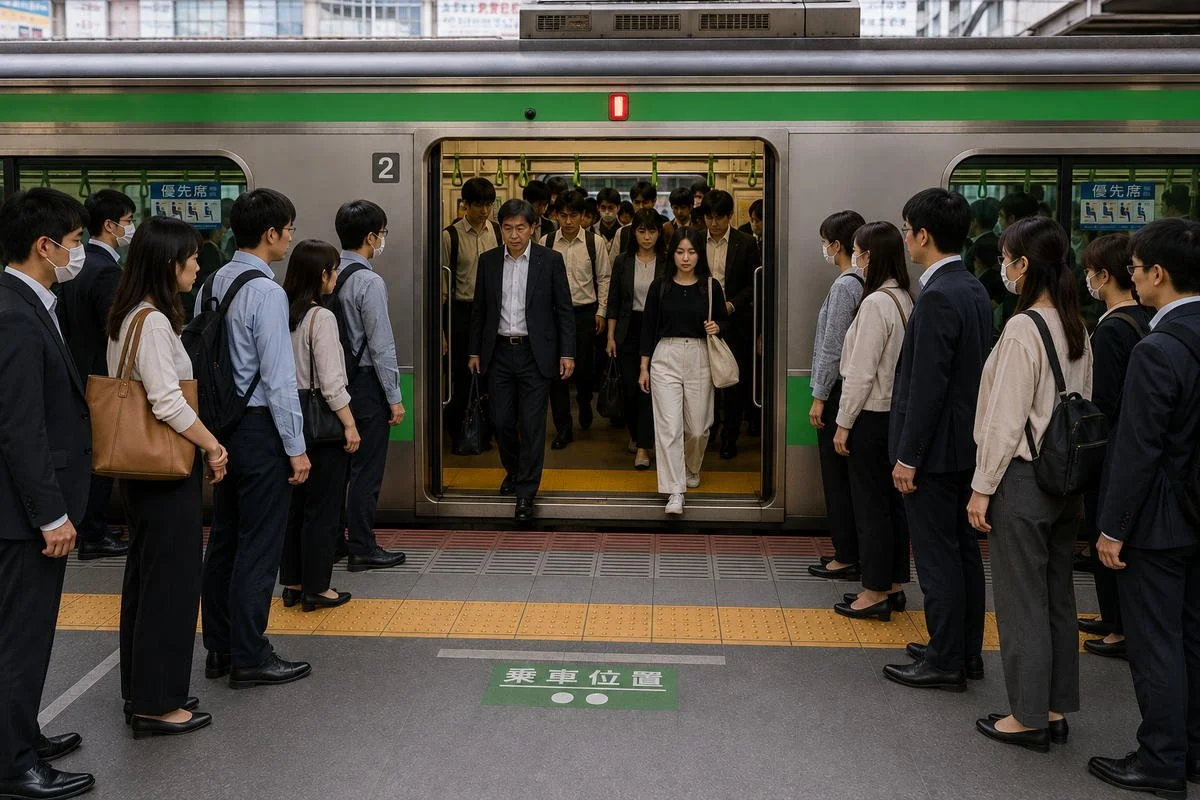
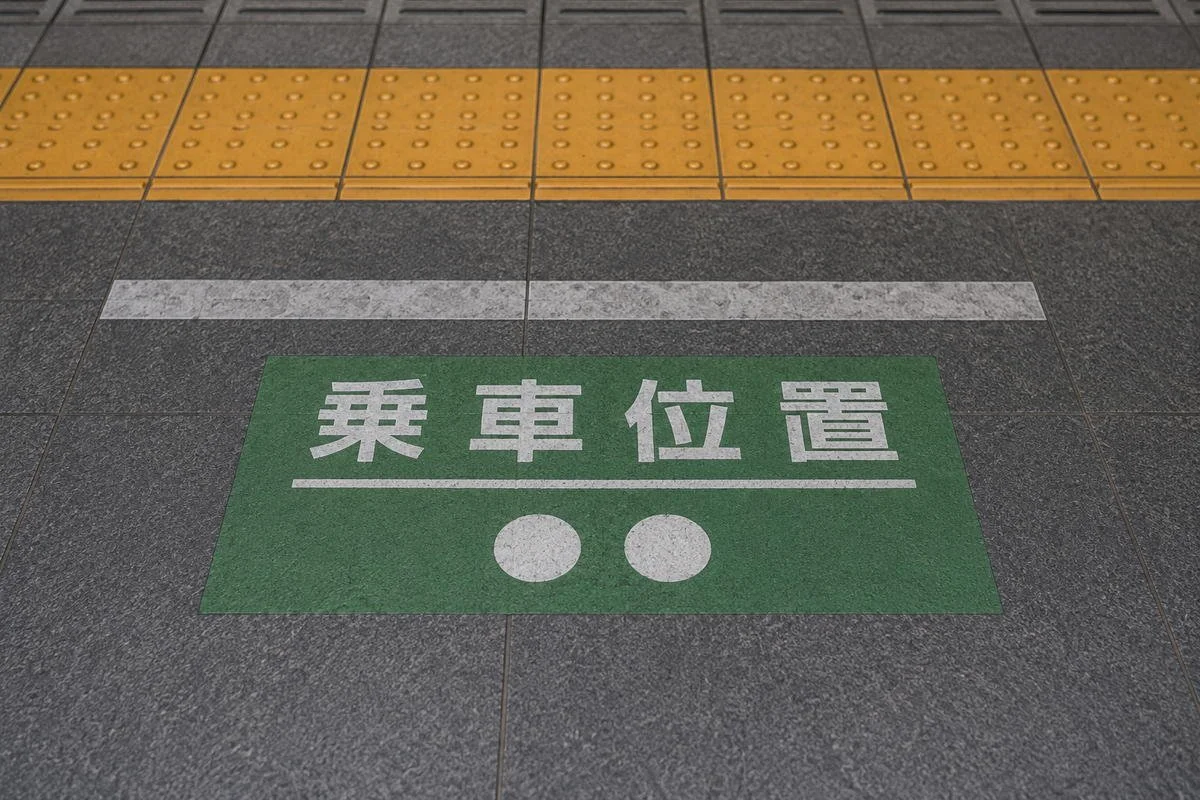
Railway platforms often have painted lines or symbols on the ground indicating where passengers should wait.
These markings help organize boarding and allow passengers to leave the train before others board.
When the train arrives, it's customary to stand to the side of the doors and allow everyone to exit first.
Only after the last passenger has stepped off do those waiting begin to board.
This simple habit keeps trains running efficiently while making boarding safer for everyone.
No Need to Rush
Many first-time visitors worry that they need to hurry to secure a seat or avoid missing their turn.
In most situations, there's no need.
Trains arrive frequently, and queues move steadily.
Pushing forward rarely helps and may inconvenience others.
A calm, patient approach almost always leads to a smoother experience—for everyone, including yourself.
Personal Space
Although Japan's cities can become extremely crowded, people generally try to respect one another's personal space whenever possible.
Even when space is limited, many people make small efforts to avoid inconveniencing those around them.
For example, it's common to:
Keep a comfortable distance while waiting in line.
Avoid unnecessary physical contact.
Speak quietly in public.
Wear backpacks on the front of the body when trains are crowded.
Step aside rather than block someone's path.
Individually, these habits may seem minor.
Together, they help create a sense of order and comfort, even in very busy places.
Quiet Waiting
Another characteristic of queues in Japan is how quiet they often are.
People may chat softly with friends or look at their phones, but loud conversations are uncommon.
This isn't because conversation is discouraged.
Rather, it's a way of sharing public spaces thoughtfully, especially where many people are waiting together.
Following the Flow
One of the easiest ways to feel comfortable in Japan is simply to observe what others are doing.
If everyone is standing in a particular place, there's usually a reason.
By following the natural flow of the people around you, you'll quickly begin adapting without even realizing it.
Before long, these small habits will start to feel surprisingly natural.
Did You Know?
Many train platforms in Japan have designated boarding positions marked on the ground for different train types—and even specific car numbers.
These markings help thousands of passengers board quickly, safely, and efficiently every day.
Local Tip
If you're ever unsure where to line up, don't worry.
Take a moment to look around before joining the queue.
Within a few seconds, you'll usually see exactly where everyone else is waiting—and you'll blend in naturally.