Chapter 4: Shoes & Indoor Spaces 1
Why Taking Off Your Shoes Matters in Japan
If you're visiting Japan for the first time, one custom you'll notice almost immediately is how often people remove their shoes.
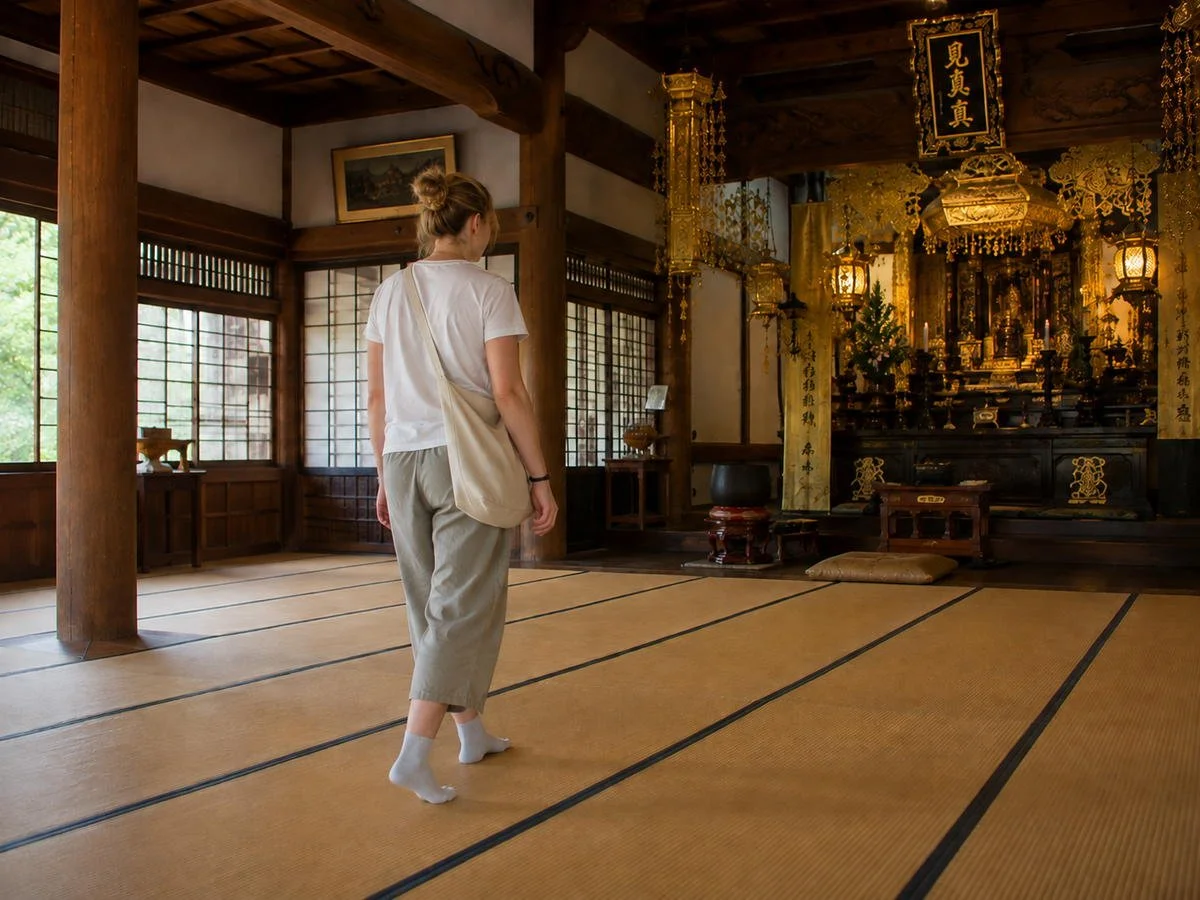
You'll be asked to take them off when entering many traditional homes, temples, ryokan (traditional Japanese inns), tatami rooms, certain restaurants, schools, dressing rooms, and even some museums or historic buildings.
For many visitors, this feels unfamiliar at first. In many countries, wearing shoes indoors is perfectly normal. In Japan, however, outdoor shoes are exactly that—for outdoors. They aren't meant to enter clean indoor spaces.
Understanding this simple custom will help you avoid awkward moments while showing respect for the people and places you visit.
Why Do Japanese People Remove Their Shoes?
This tradition dates back hundreds of years.
Historically, Japanese homes featured tatami mats woven from soft rush grass. Tatami are comfortable enough for sitting, relaxing, and even sleeping, but they're also delicate and difficult to clean. Walking on them with outdoor shoes would quickly damage the surface while bringing dirt inside.
Although many modern homes now have wooden or tiled floors, the underlying idea remains unchanged.
Japanese culture draws a clear distinction between the outside world and the private indoor space.
Removing your shoes isn't simply about cleanliness—it's also a gesture of consideration for everyone who shares that space.
Rather than thinking of it as a rule, think of it as a small sign of respect.
The Genkan: Japan's Entrance Area
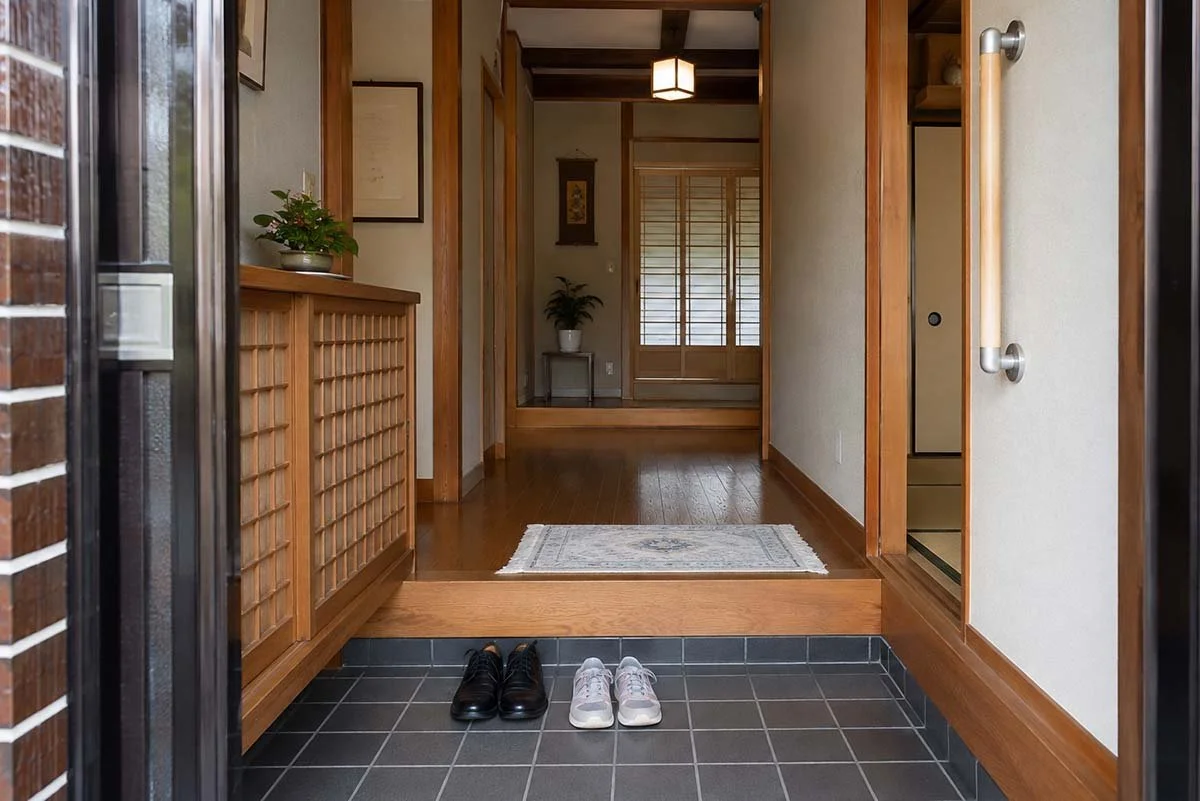
Almost every Japanese home has a genkan, a small entrance area where shoes are removed before stepping inside.
The genkan is typically lower than the main floor, making it easy to see where the outdoor area ends and the indoor living space begins.
When entering:
Step into the genkan while wearing your shoes.
Remove your shoes before stepping onto the raised floor.
Turn them so they face the door.
Place them neatly together.
It's a small gesture, but one that reflects consideration for the next person who enters.
Don't worry about arranging them perfectly. Simply placing them neatly is more than enough.
Don't Step onto the Raised Floor with Your Shoes
One of the most common mistakes visitors make is stepping onto the raised floor before realizing their shoes should come off.
If it happens, don't panic.
Simply smile, apologize if appropriate, step back, remove your shoes, and continue.
Most Japanese people understand that visitors are learning local customs, and a sincere effort is always appreciated.
A simple habit can help you avoid this mistake:
Whenever you see a raised floor beyond the entrance, pause for a moment before stepping forward.
That brief pause is often all you need.
Places Where You'll Usually Remove Your Shoes
Although every location is different, you should generally expect to remove your shoes in places such as:
Traditional homes
Ryokan (traditional inns)
Tatami rooms
Many temples
Some shrines
Traditional restaurants with floor seating
Historic buildings and cultural properties
Schools and kindergartens
Certain medical clinics
Some fitting rooms in clothing stores
On the other hand, you would normally keep your shoes on in hotels, shopping malls, train stations, department stores, most museums, and the majority of modern restaurants.
When in doubt, simply look around.
If everyone else is taking off their shoes, it's usually a good sign that you should do the same.
Look for Signs—or Simply Follow Others
Fortunately, this custom is usually easy for visitors to recognize.
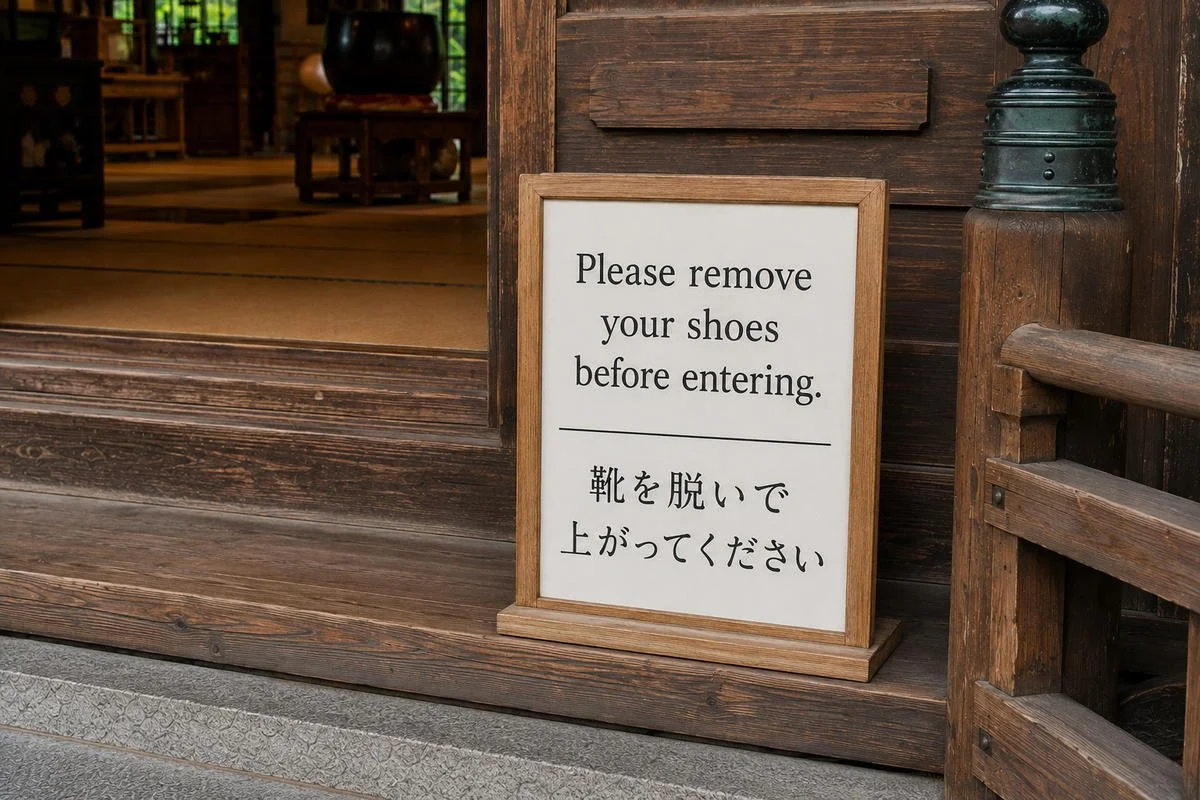
Many tourist attractions display English signs saying "Please remove your shoes."
You may also notice rows of shoes near the entrance, shelves filled with slippers, or a clearly visible genkan.
These are all good indications that outdoor shoes should come off.
If you're still unsure, don't hesitate to ask:
"Should I take my shoes off?"
It's a perfectly natural question, and staff will be happy to guide you.
No one expects visitors to know every custom.
Simply asking shows that you care about respecting local etiquette.
Local Tip
Whenever you enter an unfamiliar place in Japan, pause for just a few seconds before walking inside.
Look around.
Are slippers provided?
Are shoes lined up near the entrance?
Is there a raised floor?
Those few seconds of observation will usually tell you everything you need to know—without anyone needing to explain it.