
Chapter 4: Shoes & Indoor Spaces 2
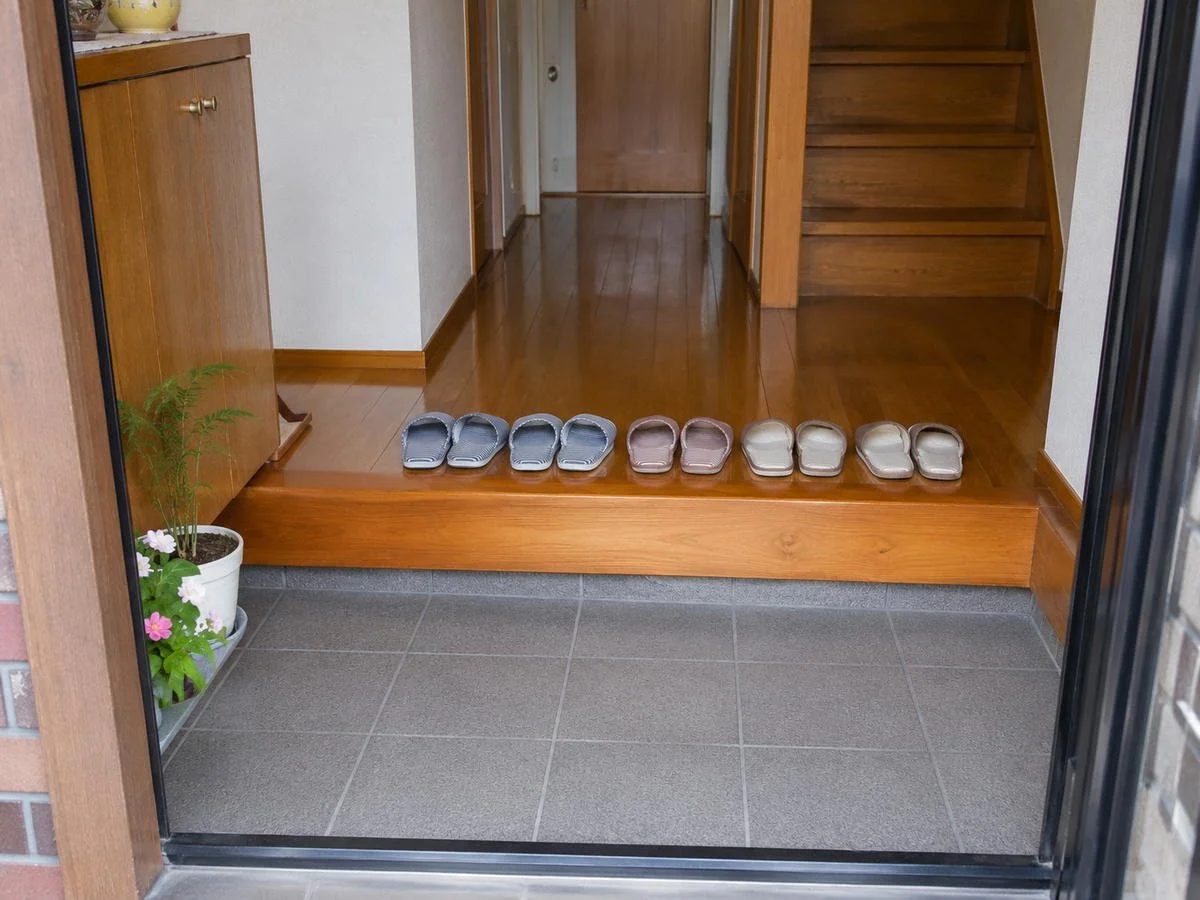
Slippers, Tatami, and Common Mistakes
By now, you've learned why Japanese people remove their shoes and how to recognize places where this custom is expected.
But taking off your shoes is only the beginning.
Japan also has a few unwritten customs about slippers and indoor flooring that often surprise first-time visitors. Fortunately, they're easy to understand once you know the basics.
Indoor Slippers: What Are They For?
After removing your shoes, you may be offered a pair of indoor slippers.
They're commonly provided in places such as:
Traditional homes
Ryokan (traditional inns)
Temples
Historic buildings
Some restaurants
Schools
Medical clinics
Their purpose is simple: to keep indoor floors clean while providing comfortable footwear.
In many places, slippers are already waiting near the entrance. In others, a staff member will hand you a pair.
If slippers are provided, it's generally polite to wear them.
If they aren't, simply walk around in your socks unless you're instructed otherwise.
The One Rule Almost Every Visitor Gets Wrong
Here's one of Japan's best-known etiquette rules:
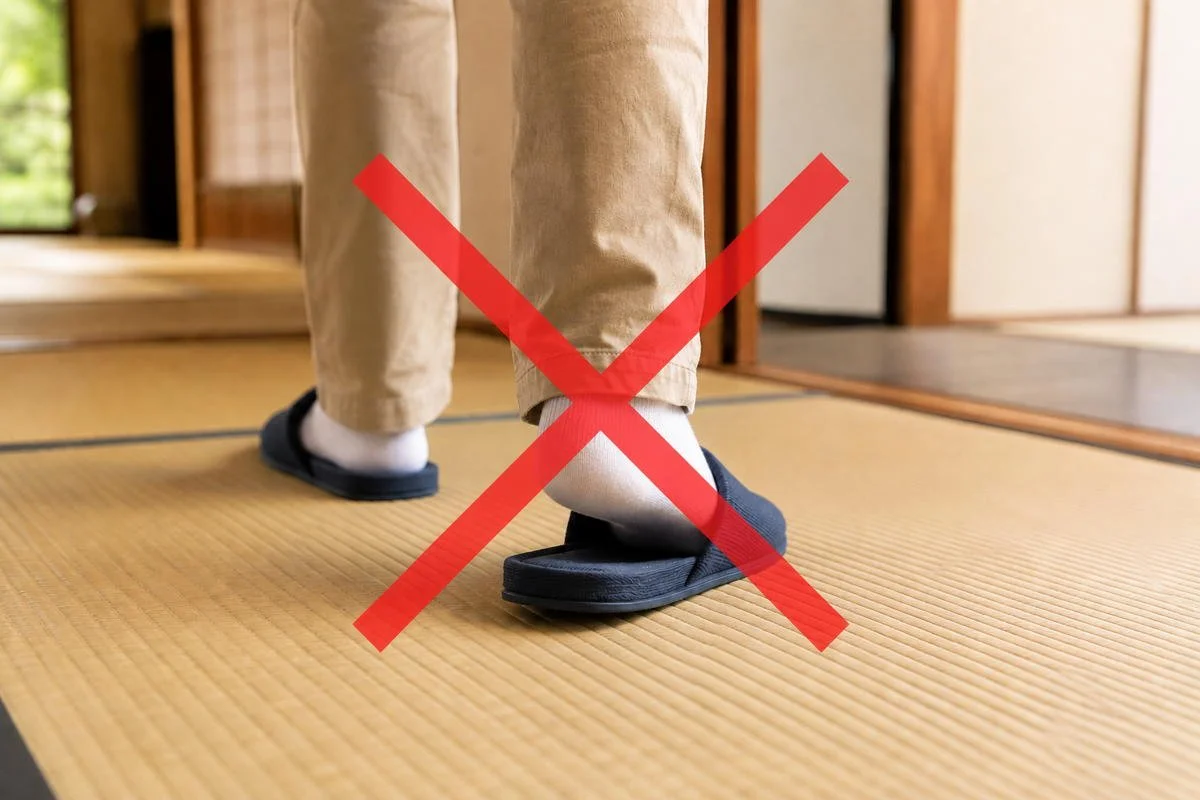
Never wear slippers onto tatami mats.
Tatami rooms are considered especially clean and are commonly used for relaxing, dining, sleeping, or traditional tea ceremonies.
When entering a tatami room:
Remove your indoor slippers.
Step directly onto the tatami in your socks or bare feet.
Leave your slippers neatly at the edge of the room.
Many visitors accidentally walk onto tatami while still wearing slippers because it feels natural to keep them on indoors.
In Japan, however, slippers are treated much like outdoor shoes—they stay off the tatami.
If you remember only one thing from this chapter, let it be this.
The Special Case: Toilet Slippers
One custom that surprises almost every visitor is the use of toilet slippers.
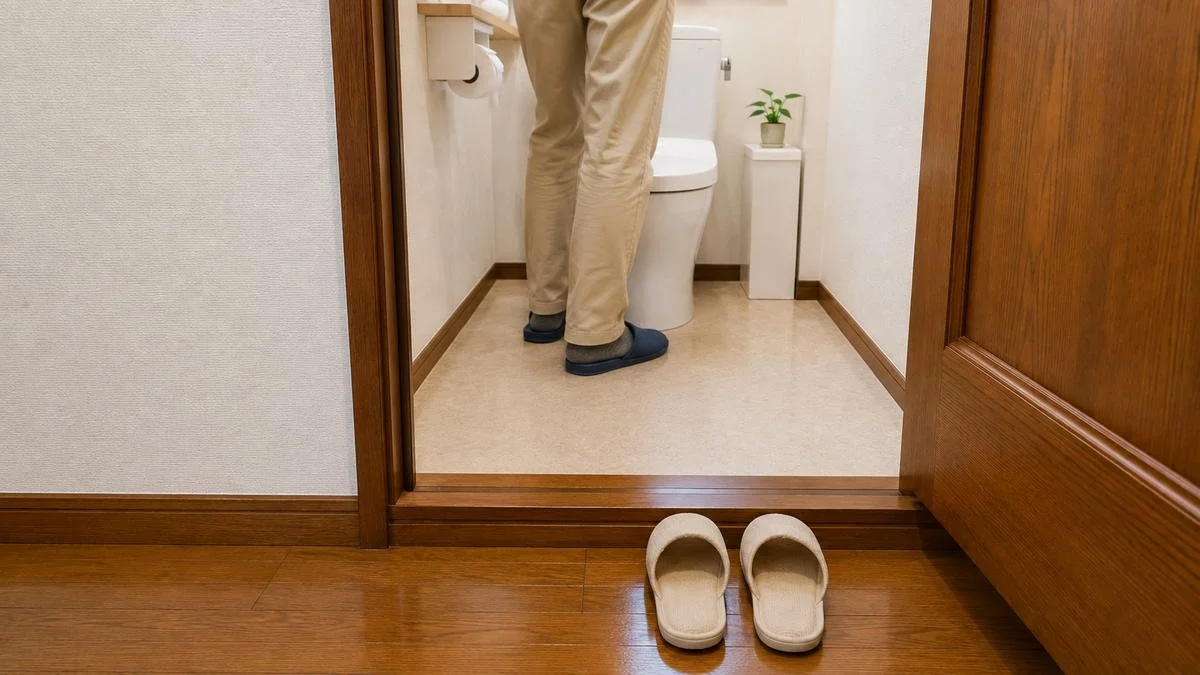
Many homes, ryokan, temples, and traditional restaurants keep a separate pair of slippers inside the restroom.
These slippers are used only within the toilet area.
When using the restroom:
Remove your regular indoor slippers.
Put on the toilet slippers.
Before leaving, switch back to your regular slippers.
It may seem unusual at first, but this simple practice helps keep the rest of the building clean.
One of the most common mistakes visitors make is forgetting to switch back and accidentally walking through the building in toilet slippers.
If that happens, don't be embarrassed.
Someone will usually point it out with a friendly smile.
Socks or Bare Feet?
Since you'll often spend part of your visit without shoes, it's a good idea to wear clean socks without holes.
It sounds obvious, but after a full day of sightseeing, many travelers suddenly realize that everyone can see their socks.
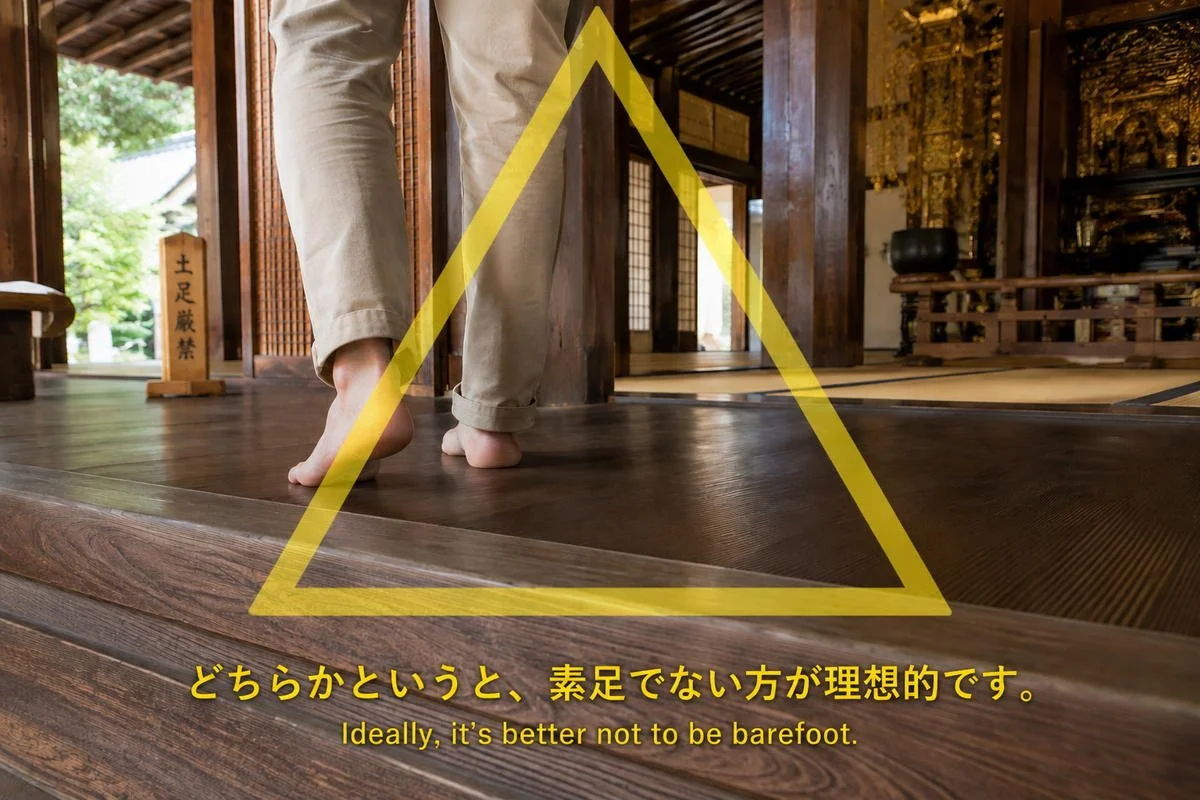
Some Japanese people prefer walking barefoot indoors, while others wear socks.
Unless a particular place has its own rules, either is generally acceptable. However, when visiting temples, shrines, traditional buildings, or someone’s home, it is best to wear socks rather than go barefoot. This is the safer and more respectful choice.
What About Children?
Children aren't expected to follow every custom perfectly.
Parents in Japan simply encourage them to remove their shoes and leave them neatly at the entrance.
If you're traveling with young children, don't worry about getting everything exactly right.
Making a sincere effort is what matters most.
If You Make a Mistake...
Even people who have lived in Japan for years occasionally forget to change slippers or step into the wrong area.
The important thing isn't perfection.
It's noticing the mistake, correcting it, and moving on.
A smile, a brief apology if appropriate, and a willingness to learn are more than enough.
Japanese people generally appreciate genuine effort far more than perfect etiquette.
Did You Know?
For many Japanese people, removing their shoes has become almost automatic.
Interestingly, some visitors who spend several weeks in Japan notice the same thing happening to them.
They find themselves instinctively reaching for their shoes before stepping into their own hotel room.
It doesn't take long before the habit feels completely natural.
Local Tip
If you're ever unsure whether to wear slippers, remove them, or switch to another pair, simply watch what the person ahead of you does.
In Japan, quietly observing others is often the easiest way to understand local etiquette.
No one expects you to know every custom from your first day—but people will always appreciate your willingness to learn.