
Chapter 11: Walking Etiquette 3
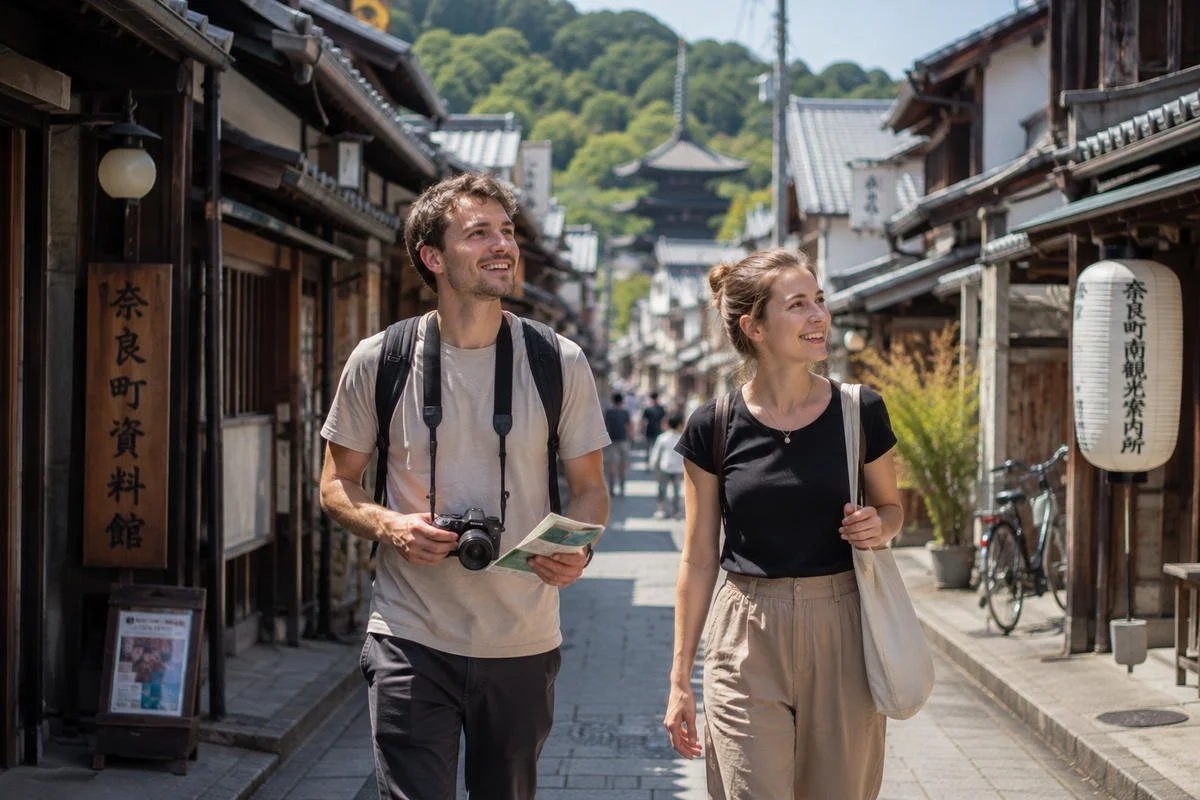
Moving Through Japan with Awareness
By now, you've probably realized that walking etiquette in Japan isn't really about walking.
It's about sharing space.
Whether you're crossing a busy intersection, strolling through a quiet neighborhood, or exploring a historic temple town, the same idea appears again and again:
Be aware of the people around you.
That simple habit shapes much of everyday life in Japan.
Reading the Atmosphere
You may occasionally hear the Japanese expression kuuki o yomu (空気を読む), which literally means "to read the air."
Rather than relying only on written or spoken rules, it describes the ability to notice what's happening around you and adjust your behavior accordingly.
For travelers, this doesn't mean you need to understand every subtle social cue.
Instead, it simply means paying attention.
Are people speaking quietly?
Is everyone standing in line?
Are others waiting before crossing?
Are visitors removing their shoes?
Observing first and acting second is often the easiest way to feel comfortable in unfamiliar situations.
A Little Consideration Goes a Long Way
Another expression you'll often hear is ki o tsukau (気を使う).
It can be translated in many ways, including "to be considerate," "to show thoughtfulness," or "to be mindful of others."
This idea appears throughout daily life.
People step aside before stopping.
They lower their voices on trains.
They wait patiently for others to leave before entering.
They avoid blocking sidewalks while taking photographs.
None of these actions are especially difficult.
Together, they create the comfortable atmosphere that so many visitors notice during their travels.
Walking Isn't a Competition
In some places, people naturally hurry from one destination to another.
In Japan, you'll certainly see busy commuters walking quickly, especially during the morning rush.
Even so, speed is rarely more important than cooperation.
People generally avoid pushing, weaving aggressively through crowds, or forcing their way ahead.
The goal isn't simply to arrive first.
It's to arrive while allowing everyone else to do the same.
When Crowds Become Part of the Experience
Some of Japan's most famous destinations attract enormous numbers of visitors.
Cherry blossom season
Autumn foliage
Summer festivals
New Year's shrine visits
At times like these, moving slowly is simply part of the experience.
Rather than becoming frustrated, many people accept the slower pace and enjoy the atmosphere around them.
Sometimes, the journey through the crowd becomes part of the memory itself.
Common Walking Mistakes Visitors Make
Most walking-related misunderstandings are easy to avoid.
Here are a few common examples:
Stopping suddenly in the middle of a busy sidewalk
Looking only at your phone while walking
Walking several people wide on narrow streets
Blocking entrances while deciding where to go next
Turning quickly with a large backpack
Standing in the middle of a scenic viewpoint after taking photos
Forgetting that residential neighborhoods are people's homes, not just tourist attractions
Fortunately, a little awareness solves nearly all of these situations.
Travel at the Pace of the Place
One of the greatest joys of visiting Japan is discovering that every place has its own rhythm.
A lively shopping street invites curiosity.
A quiet temple garden encourages reflection.
A mountain trail inspires a slower pace.
A bustling station rewards efficiency.
Instead of expecting every destination to feel the same, allow each place to guide how you move through it.
Doing so often leads to a richer and more memorable travel experience.
Did You Know?
The Japanese greeting ohayō gozaimasu ("Good morning"), or even a simple nod, is often exchanged between neighbors, hikers, and people passing one another in smaller communities.
Even these brief acknowledgements help create a sense of connection and shared respect in everyday life.
Local Tip
When you're unsure what to do, slow down rather than speed up.
Taking a few extra seconds to observe your surroundings almost always leads to the most comfortable and respectful choice.
In Japan, awareness is often more valuable than confidence.
The Meaning Behind Walking in Japan
Walking through Japan is about far more than getting from one place to another.
It's an opportunity to experience the country at street level—to notice seasonal flowers blooming beside the sidewalk, hear the distant ringing of a temple bell, or discover a family-run shop tucked away on a quiet street.
As you explore, remember that every sidewalk, station, neighborhood, and country road is a shared space.
Moving with patience, awareness, and consideration allows everyone to enjoy it together.
You don't need to know every custom before you arrive.
Simply observe, adapt, and be thoughtful.
Those small habits won't just help you navigate Japan with confidence.
They'll also help you experience the quiet rhythm of everyday life that so many visitors come to appreciate.
And sometimes, the best way to discover Japan is simply to slow down and walk.