
Chapter 11: Walking Etiquette 2
Navigating Busy Places with Confidence
As you travel through Japan, you'll quickly discover that every destination has its own rhythm.
A quiet country village feels very different from a busy railway station, and a peaceful temple path calls for a different pace than a lively shopping street.
Fortunately, the same basic principle applies almost everywhere:
Be aware of the people around you and move in a way that helps everyone share the space comfortably.
Here are some everyday situations where that awareness makes a difference.
Busy Train Stations
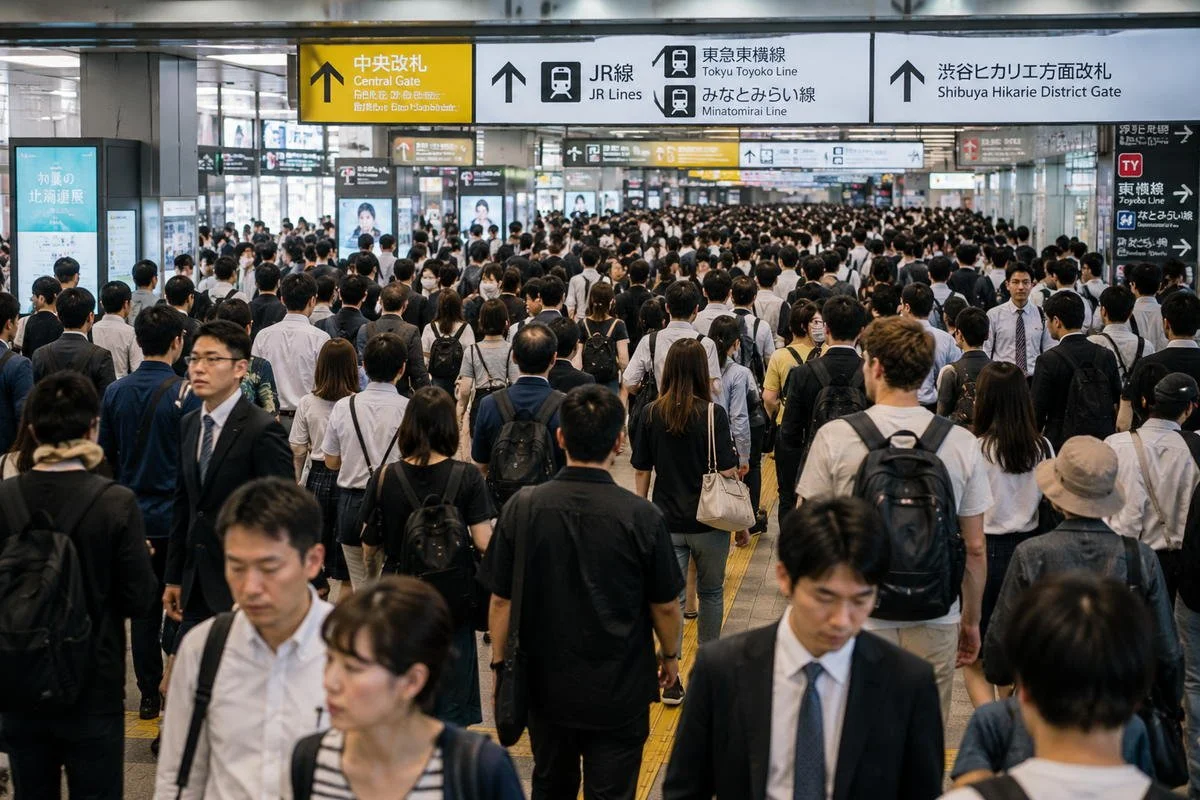
Japan's major railway stations are among the busiest in the world.
At first glance, they can seem overwhelming, with thousands of people moving in different directions at the same time.
Yet there's usually a surprising sense of order.
If you need to stop and check your route, avoid doing so in the middle of the pedestrian flow.
Instead, step to the side near a wall, pillar, or open space before looking at your map or phone.
This simple habit keeps walkways clear and allows everyone to continue moving smoothly.
Crosswalks and Intersections
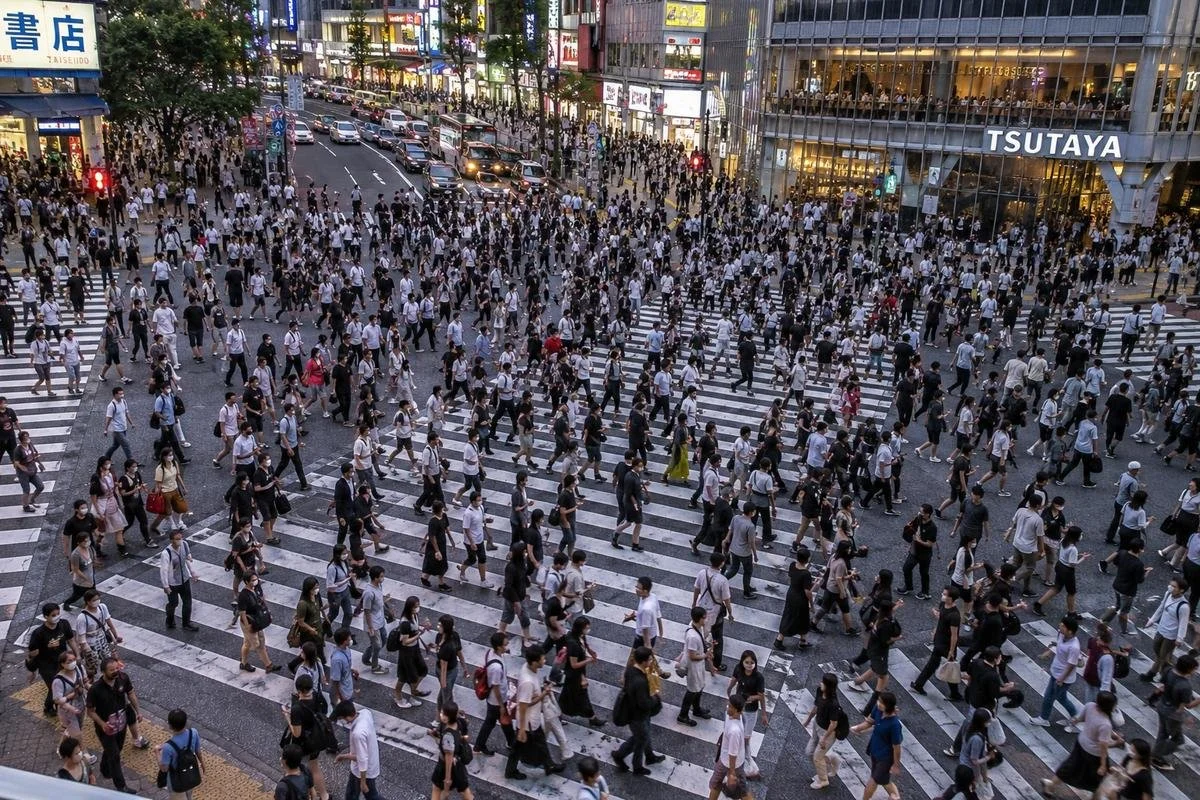
Crosswalks in Japan are generally well organized, especially in cities.
When the pedestrian signal turns green, people cross together in an orderly flow.
Try not to stop in the middle of the crossing to take photographs or check directions.
If you'd like to capture the scene, cross first and then step to one side once you've reached the sidewalk.
This helps keep the crossing safe and comfortable for everyone.
Using Maps and Navigation Apps
Navigation apps are incredibly helpful, particularly in large cities where stations may have multiple exits.
However, constantly looking down at your phone while walking can make you less aware of your surroundings.
If you're unsure which direction to go, pause for a moment somewhere you won't block others.
You'll often find that taking a few seconds to orient yourself saves time in the long run.
Traveling with Luggage
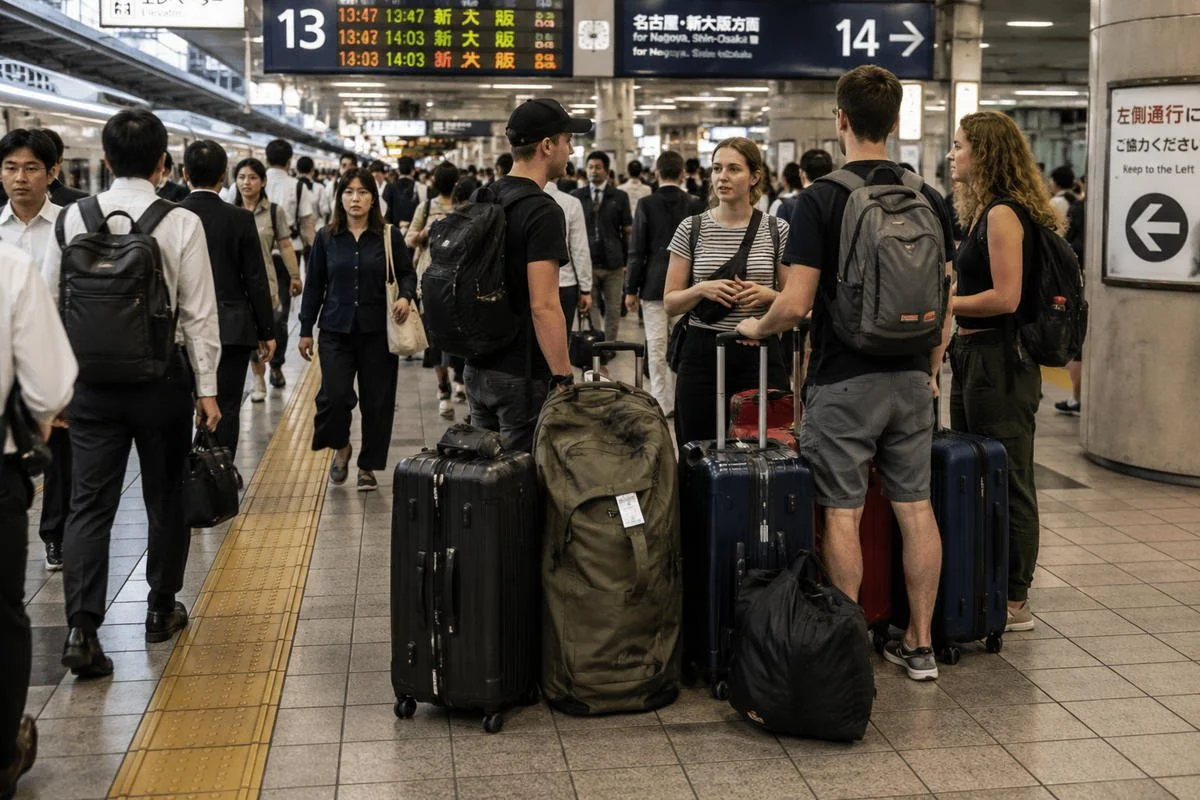
Many visitors explore Japan with suitcases, backpacks, or shopping bags.
In crowded stations, shopping districts, and narrow sidewalks, larger bags naturally require a little extra awareness.
Try to:
Keep your luggage close to you.
Avoid leaving bags where others might trip over them.
Make room for people to pass if you stop.
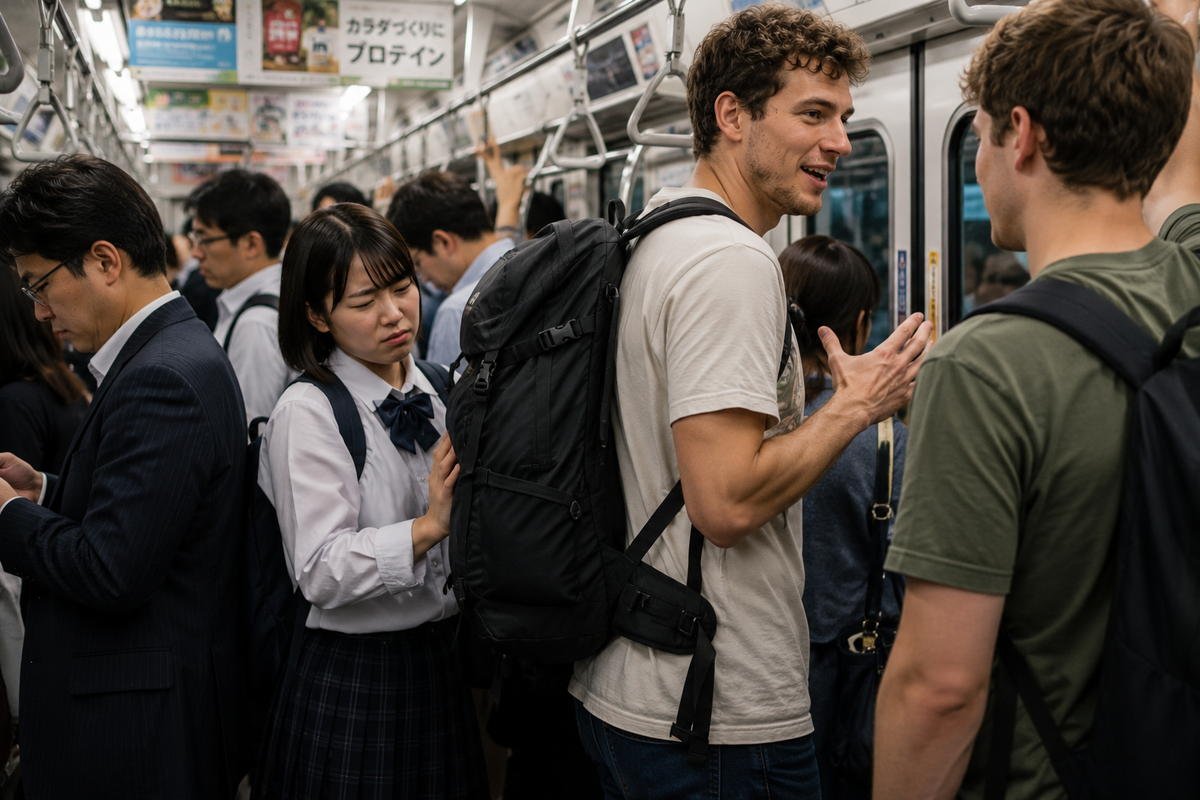
Be mindful when turning with a large backpack or suitcase.
These small adjustments help prevent accidental bumps in crowded places.
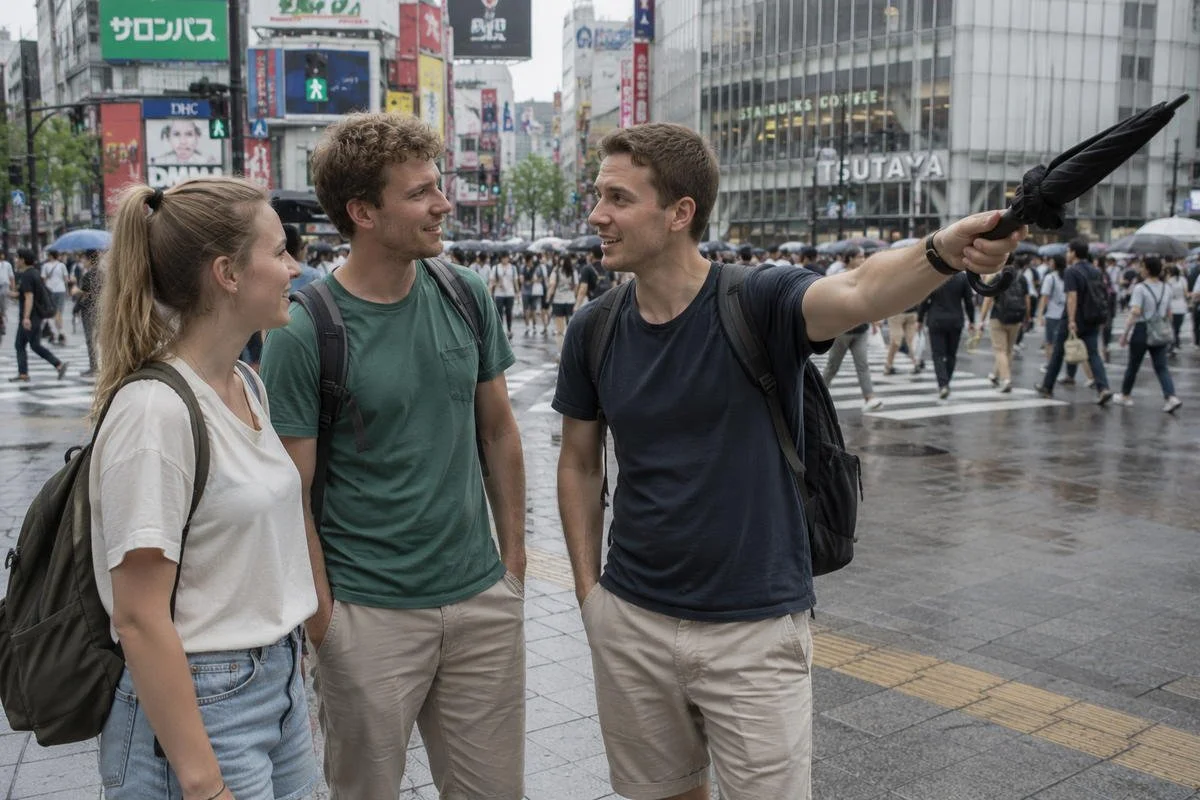
Rainy Days
Rain is a familiar part of life in Japan, especially during the rainy season.
On wet days, umbrellas become part of the natural rhythm of pedestrian traffic.
When entering shops, restaurants, museums, or train stations, you'll often find umbrella stands or plastic covers for wet umbrellas near the entrance.
Using them helps keep indoor floors dry and safe.
As you walk, be mindful of where your umbrella is pointing.
Holding it too low or swinging it carelessly can easily inconvenience those around you.
Shopping Streets and Tourist Areas
Popular destinations can become quite crowded, particularly on weekends and during holiday seasons.
If you'd like to stop and admire a storefront, read a sign, or take a photograph, consider stepping slightly out of the main flow of foot traffic.
Likewise, if you're walking more slowly than those around you, keeping to one side makes it easier for others to pass.
There's no need to hurry—simply staying aware of your surroundings is enough.
Historic Neighborhoods
Traditional districts often have narrow streets, small entrances, and limited walking space.
These areas are not outdoor museums—they're living communities where people go about their daily lives.
When exploring these neighborhoods:
Avoid blocking residential entrances.
Keep conversations at a moderate volume.
Respect private property.
Be considerate when taking photographs near homes or businesses.
Treating these places as someone's neighborhood, rather than simply a tourist attraction, helps preserve their unique atmosphere.
If You Accidentally Get in Someone's Way
Everyone makes small mistakes while traveling.
Perhaps you stop unexpectedly, turn the wrong direction, or momentarily block someone's path.
If that happens, don't worry.
A friendly smile, a small nod, or a simple "Sumimasen" ("Excuse me") is more than enough.
People understand that visitors are learning, and a courteous attitude is always appreciated.
Did You Know?
Many Japanese cities have surprisingly few signs telling people where to walk or how to behave.
Instead, everyday movement relies heavily on shared expectations and mutual consideration.
That's one reason public spaces often feel calm, even when they're busy.
Local Tip
When you're unsure whether you're standing in the right place, ask yourself one simple question:
"Am I making it easy for someone else to pass?"
If the answer is yes, you're probably exactly where you should be.
Small moments of awareness like this soon become second nature—and they're one of the easiest ways to feel comfortable while exploring Japan.