Gyōki Square outside Kintetsu Nara Station is a lively meeting place for locals and visitors. The statue stands above a distinctive fountain, surrounded by the bustle of everyday life in Nara.
Did you know that Nara has two main train stations with almost the same name?
Kintetsu Nara Station and JR Nara Station are about a 15-minute walk apart. If you're visiting Tōdai-ji, Kōfuku-ji, or Kasuga Taisha Shrine, Kintetsu Nara Station is generally the more convenient choice.
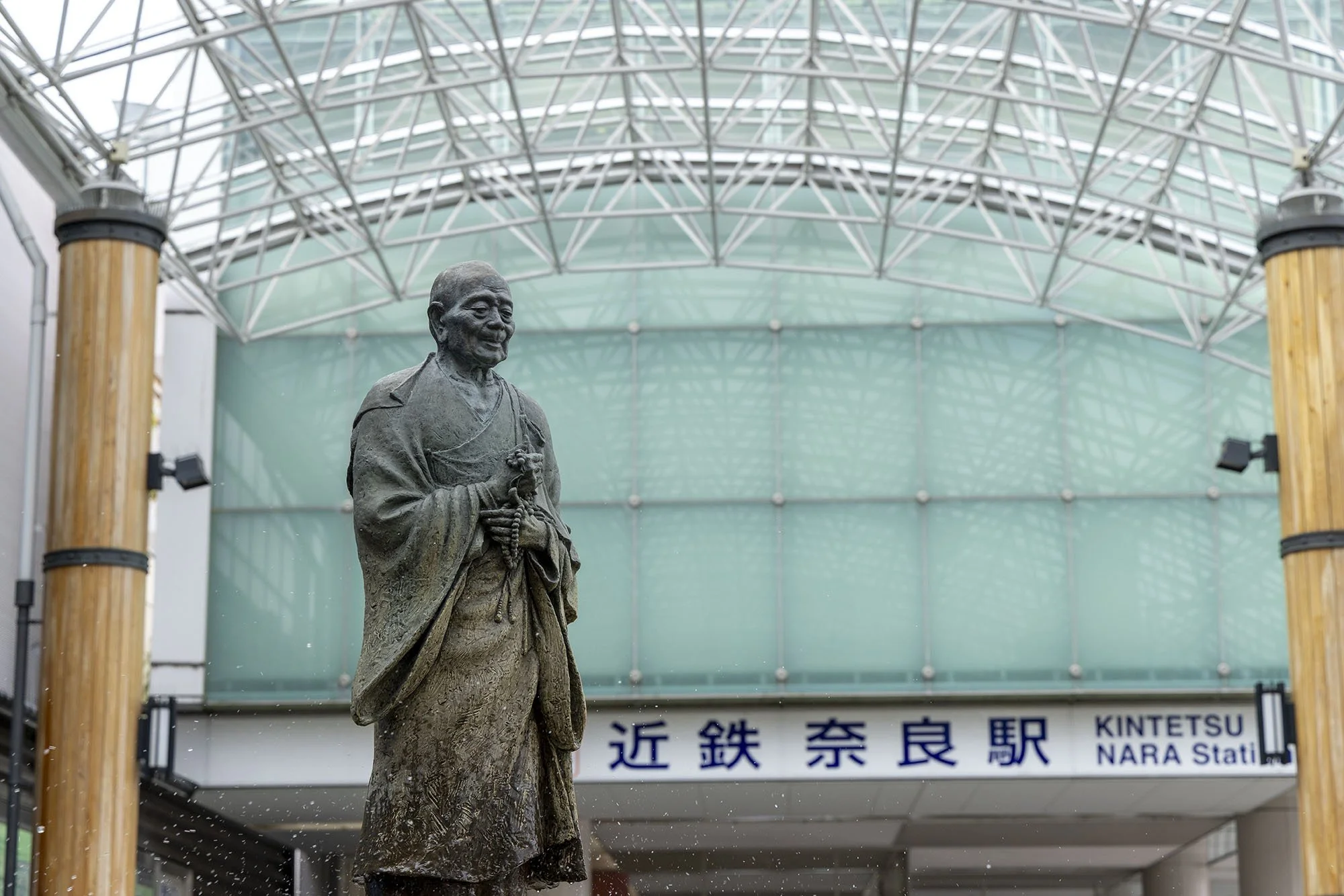
The Gyōki statue stands just outside Kintetsu Nara Station, one of the city's best-known meeting spots. Locals have long referred to this popular gathering place simply as “Gyōki.”
Just outside Kintetsu Nara Station stands a statue of a Buddhist monk named Gyōki. For generations, the square around this statue has been one of Nara's most popular meeting places.
Locals simply say, "Let's meet at Gyōki!"
But who was he, and why is his statue here?
Who Was Gyōki?
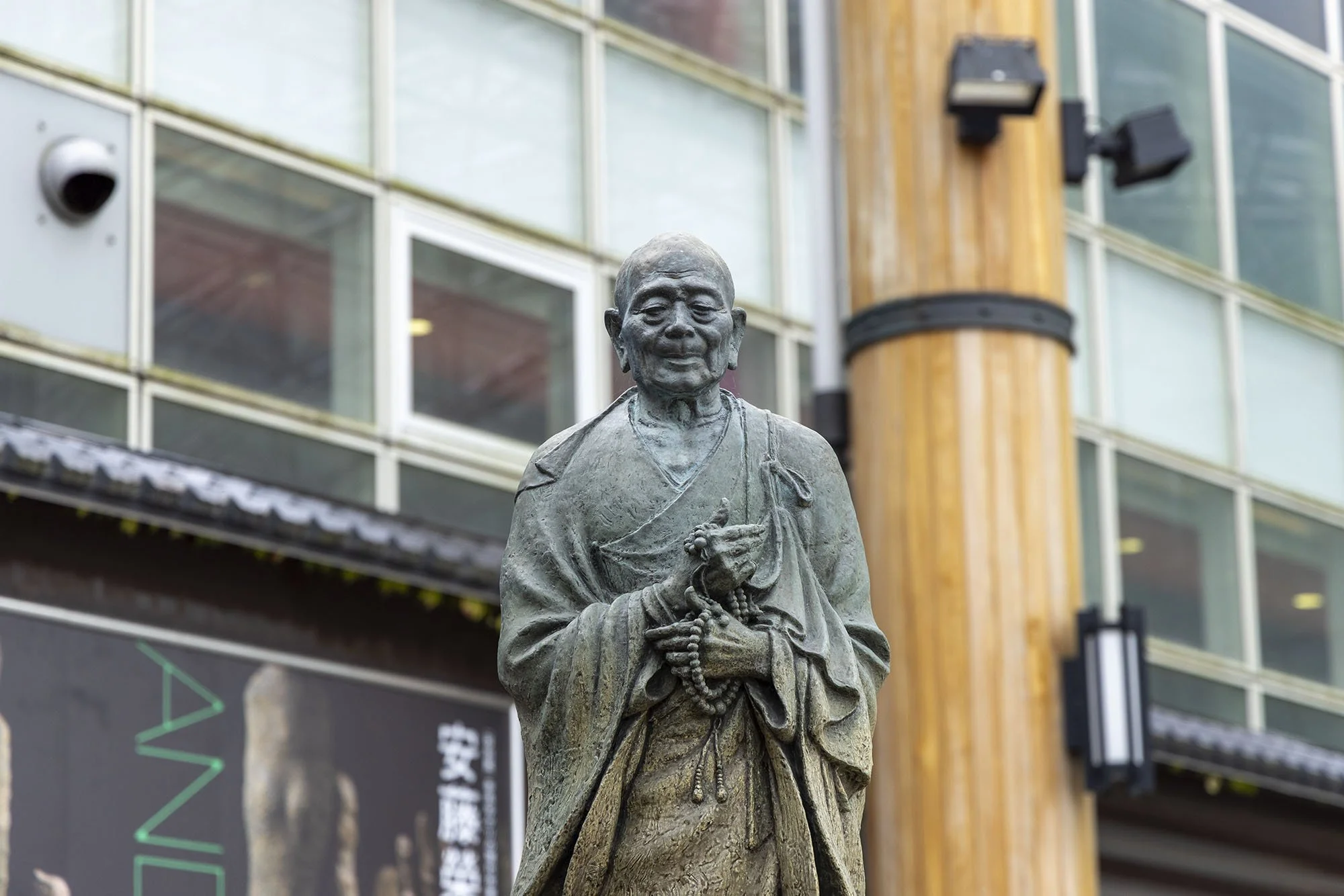
A closer look at Gyōki, the Buddhist monk who helped improve people's lives through public works and contributed to the construction of the Great Buddha at Tōdai-ji.
Gyōki (668–749) was a Buddhist monk who devoted much of his life to helping ordinary people.
He organized the construction of bridges, roads, reservoirs, and other public works. He also played an important role in gathering support for the construction of the Great Buddha at Tōdai-ji.
Today, he remains one of the most respected religious figures of Japan's Nara period.
One Statue? Actually, There Are Three!
Here's something many visitors don't know.
Three statues of Gyōki were originally created together, and they were placed at three different locations in Nara Prefecture.
One stands outside Kintetsu Nara Station. Another is at Ryōsen-ji Temple in Nara City, famous for its rose garden. The third is at Kuhon-ji Temple in Gose City.
All three were originally made using Akahada-yaki, a traditional style of pottery from Nara.
But there's a reason I said "originally."
The statue outside Kintetsu Nara Station was damaged by vandalism. The one you see today is a bronze replacement rather than the original ceramic statue.
Which Way Is Gyōki Looking?
Now for one last piece of trivia.
Have you ever noticed which direction the Gyōki statue faces?
Toward Tōdai-ji!
And according to the story associated with these statues, the other two also face in the direction of Tōdai-ji.
Considering Gyōki's important contribution to the Great Buddha project, it's a fitting connection.
Gyōki is also associated with Asuka-dera, one of Japan's earliest major Buddhist temples. Discover the temple's fascinating history in our article, Asuka-dera: Japan's First Full-Scale Buddhist Temple.
So, the next time you arrange to meet someone at "Gyōki" outside Kintetsu Nara Station, you can casually impress them with a little local knowledge:
"By the way, did you know he's looking toward Tōdai-ji?"
A small detail, perhaps—but discovering stories like this is part of what makes exploring Nara so enjoyable.
Discover the Stories Behind Nara
From famous temples to unexpected details hidden in everyday places, Nara is full of fascinating history. Explore its remarkable heritage with Discover Nara and a knowledgeable local guide.