How to Get to Asuka from Osaka and Kyoto
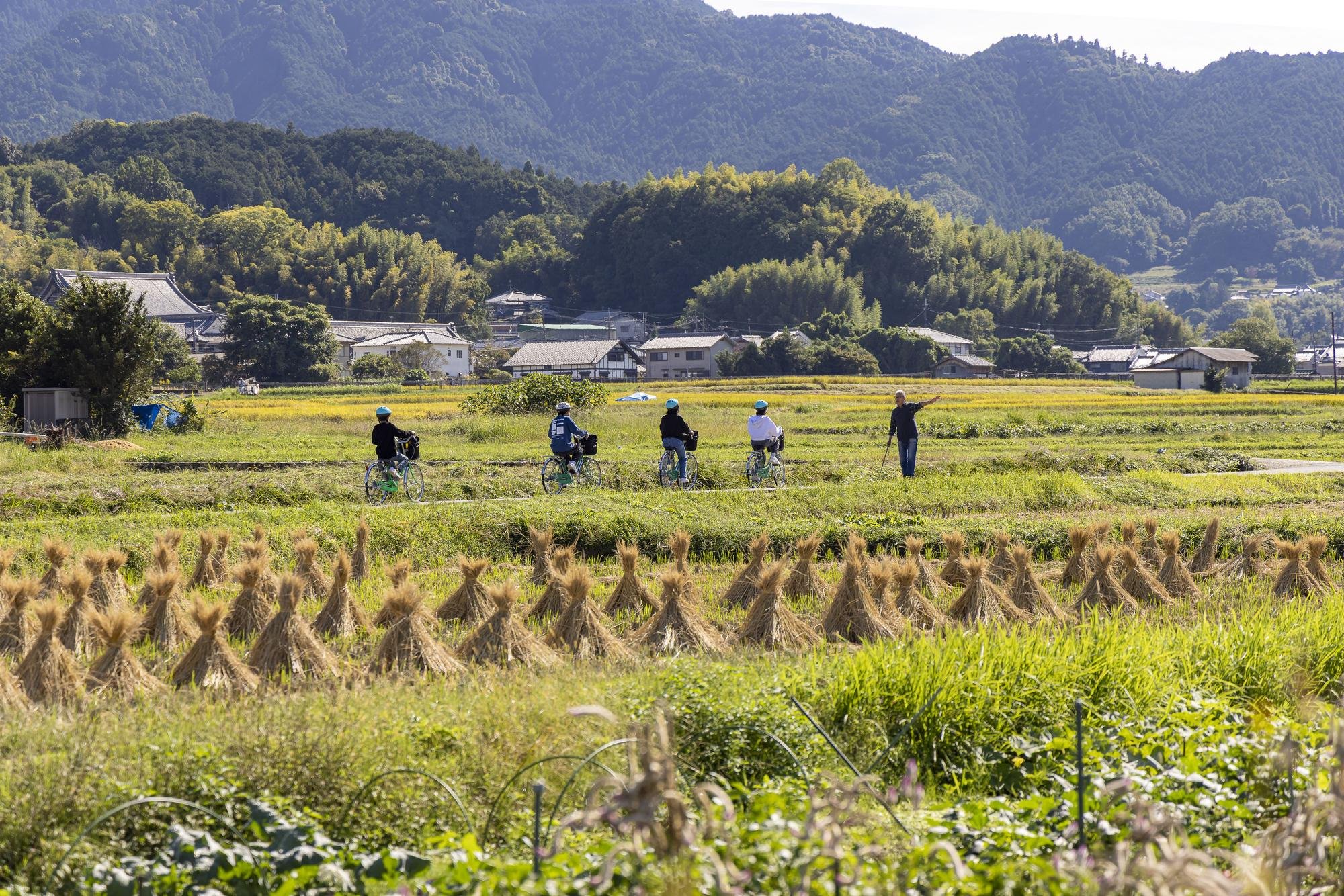
Exploring Asuka means traveling through the same peaceful countryside where some of the most important chapters of early Japanese history unfolded.
How to Get to Asuka from Osaka and Kyoto
Asuka feels far removed from the busy cities of Osaka and Kyoto.
Here, rice fields stretch between small villages. Ancient kofun burial mounds rise from the countryside, temple bells sound across quiet neighborhoods, and archaeological sites remain scattered beneath the mountains of southern Nara.
Yet Asuka is surprisingly easy to reach.
From central Osaka, the journey can take less than an hour. From Kyoto, it generally takes a little over an hour, depending on the train you choose and your connection.
The key is understanding one thing before you travel:
For most visitors, Kintetsu Railway is the simplest way to reach Asuka.
Two stations are especially useful—Kashiharajingu-mae Station and Asuka Station.
Which one should you use?
That depends on where you want to begin exploring.
This guide explains the easiest routes from Osaka and Kyoto, the difference between the two stations, how Limited Express trains work, and what to do once you arrive.
Where Is Asuka?
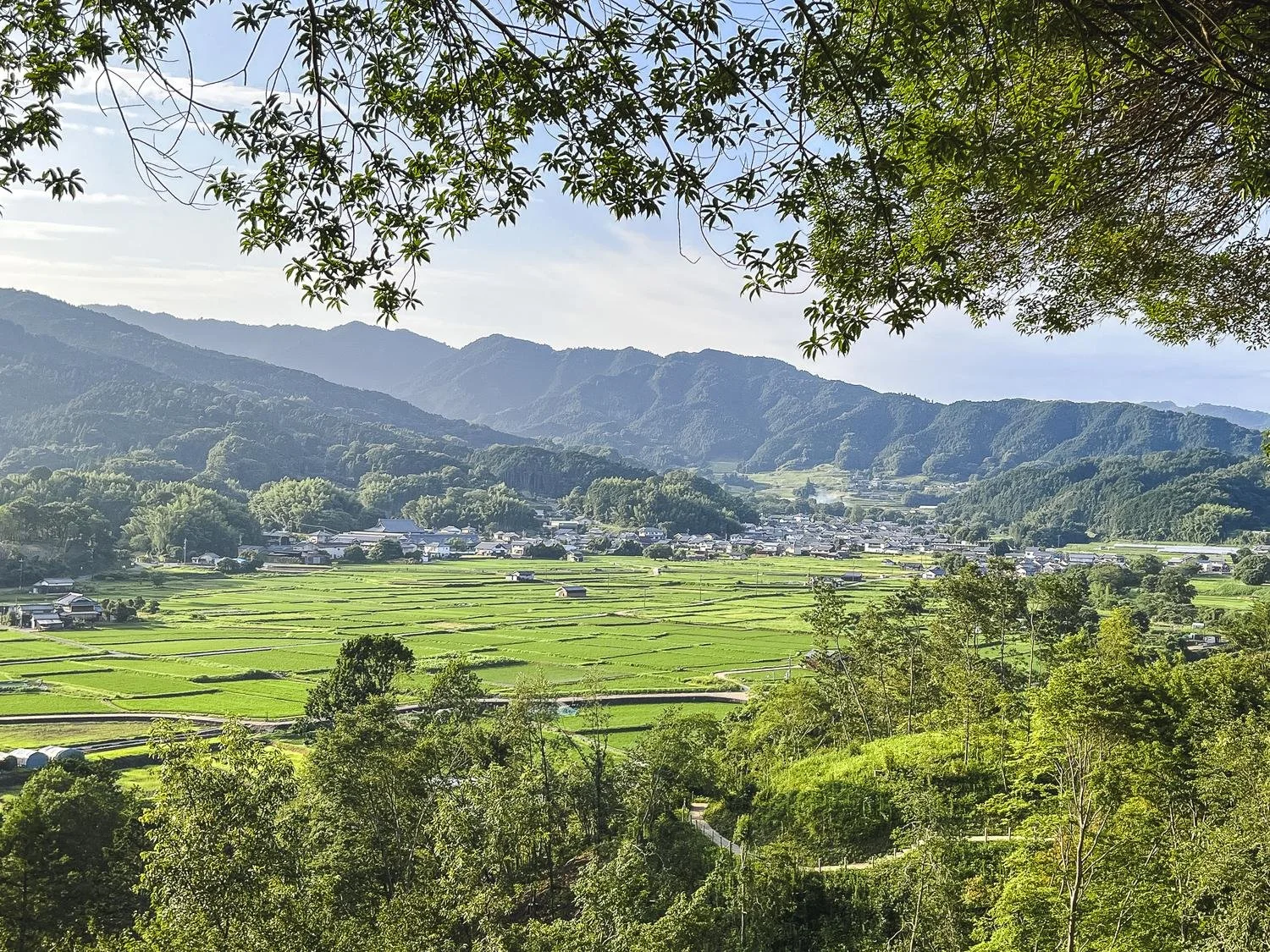
Asuka spreads across a rural landscape of rice fields, villages, hills, and ancient archaeological sites in southern Nara.
Asuka is located in southern Nara Prefecture, south of Nara City and southeast of Osaka.
Although Asuka is often associated with Nara, it is important for first-time visitors to understand that Asuka is not located next to Nara Park or Kintetsu-Nara Station.
Nara City and Asuka belong to the same prefecture, but they are separate destinations.
This distinction matters when planning your journey.
If your goal is to visit Tōdai-ji, Kasuga Taisha, Nara Park, and Naramachi, Kintetsu-Nara Station is convenient.
If your goal is to explore Asuka-dera, Ishibutai Kofun, the Asuka Palace Site, Kitora Kofun, or the countryside of ancient Asuka, you will travel farther south.
For most visitors, the two most useful gateways are:
Kashiharajingu-mae Station
and
Asuka Station
Both are on the Kintetsu network, and both can serve as starting points for exploring the region.
If this is your first time learning about the area, start with our guide to Asuka and discover why this quiet region played such an important role in the beginnings of ancient Japan.
How to Get to Asuka from Osaka
For many travelers staying in Osaka, the easiest route begins at Osaka-Abenobashi Station.
This station is directly beside the Tennoji area and should not be confused with Osaka-Namba Station.
From Osaka-Abenobashi, Kintetsu trains run south toward Kashiharajingu-mae and Yoshino.
The Simplest Route from Osaka
The basic route is:
Osaka-Abenobashi → Kashiharajingu-mae → Asuka
Some trains continue directly to Asuka, which means you may not need to change trains at Kashiharajingu-mae.
According to Asuka Village's official access information, the journey from Osaka-Abenobashi to Asuka takes approximately 40 minutes by Limited Express or 45 minutes by Express, although actual travel time depends on the train and schedule.
This makes Asuka surprisingly accessible from Osaka.
You can leave the dense cityscape around Tennoji and, less than an hour later, find yourself surrounded by the rural landscape of ancient Nara.
Limited Express or Express?
This is one of the most common points of confusion for international visitors.
Kintetsu operates several types of trains.
For a regular Express, you only need the normal basic fare.
A Limited Express is different. All seats are reserved, and you need a Limited Express ticket in addition to the basic fare.
The advantage is comfort.
You have an assigned seat and can relax during the journey. For travelers carrying luggage or those who simply prefer a more comfortable ride, this can be a good option.
However, you do not need to take a Limited Express to reach Asuka.
Regular Express trains are also practical, and the difference in total journey time may be relatively small depending on the service.
The best choice is therefore not always the fastest train.
Check the departure time, travel time, number of transfers, and whether you prefer a reserved seat.
What If You Are Staying in Namba?
Many international travelers stay around Namba rather than Tennoji.
In that case, do not assume that Osaka-Namba Station is automatically the easiest departure point simply because it is also a Kintetsu station.
Osaka-Namba belongs to a different Kintetsu route from the direct southern approach to Asuka.
One practical option is to travel from Namba to the Tennoji/Abenobashi area first and begin your Kintetsu journey at Osaka-Abenobashi.
Depending on where your hotel is located and the train connections at the time, other Kintetsu routes via Yamato-Yagi may also be possible.
The important point is simple:
If you are looking for the most straightforward Osaka route to Asuka, check Osaka-Abenobashi first.
How to Get to Asuka from Kyoto
The route from Kyoto is also straightforward.
Kintetsu Railway operates from Kyoto Station, making it possible to travel south through Nara Prefecture toward Kashiharajingu-mae.
The basic route is:
Kyoto → Kashiharajingu-mae → Asuka
From Kyoto, take a Kintetsu train toward Kashiharajingu-mae. At Kashiharajingu-mae, transfer to the Kintetsu Yoshino Line toward Yoshino and get off at Asuka Station.
Asuka Village's official access information gives an approximate journey time of 51 minutes by Limited Express or 1 hour 10 minutes by Express from Kyoto to Kashiharajingu-mae, followed by approximately 4 minutes from Kashiharajingu-mae to Asuka.
Kintetsu's current timetable also includes Limited Express services running directly between Kyoto and Kashiharajingu-mae.
Do You Need to Go Through Nara City?
No.
This is another point that can confuse first-time visitors.
Because Asuka is in Nara Prefecture, you might assume that the natural route from Kyoto is:
Kyoto → Nara City → Asuka
But you do not need to visit Kintetsu-Nara Station first.
Kintetsu trains from Kyoto travel south through Yamato-Saidaiji and toward the Kashihara area, allowing you to reach Kashiharajingu-mae without going into central Nara City.
If Asuka is your destination for the day, traveling directly toward Kashiharajingu-mae is generally much more logical.
Kashiharajingu-mae or Asuka Station: Which Is Better?
This is perhaps the most useful question to answer before your trip.
Both stations are good gateways, but they serve different parts of the area.
Kashiharajingu-mae Station
Kashiharajingu-mae Station is north of central Asuka and is an important railway junction.
The Kintetsu Kashihara Line connects it toward Kyoto, while the Minami Osaka and Yoshino lines connect it with Osaka-Abenobashi, Asuka, Yoshino, and other destinations.
It is especially useful if you want to begin with places in the northern part of the Asuka area or around Kashihara.
For example:
Kashihara Jingū
the northern approach to Asuka
Asuka-dera
Asuka Palace Site
Amakashi-no-oka
It is also one of the starting points for the local sightseeing bus.
For Discover Nara's Asuka tours, our usual meeting point is the East Exit of Kashiharajingu-mae Station.
There is an important reason for this.
Asuka is not simply a collection of attractions around Asuka Station. Much of its history spreads northward across the landscape toward Kashihara, and Kashiharajingu-mae provides a practical starting point for exploring that story in geographical and historical context.
Asuka Station
Asuka Station is farther south and is a small station on the Kintetsu Yoshino Line.
It can be particularly convenient for sites in the southern and western parts of Asuka, including areas around:
Takamatsuzuka Kofun
Kitora Kofun
the southern Asuka countryside
It is also a useful starting or finishing point for travelers exploring Asuka by bicycle or bus.
So which station is better?
There is no single correct answer.
If your itinerary begins in northern Asuka, Kashiharajingu-mae may make more sense.
If you plan to begin around Takamatsuzuka, Kitora, or southern Asuka, Asuka Station may be more convenient.
And for some itineraries, the best solution is to arrive at one station and leave from the other.
That allows you to move naturally through Asuka instead of returning to your starting point.
What Happens After You Arrive?
Getting to Asuka is relatively easy.
The more important question is often:
How do you move around once you are there?
Asuka is very different from a compact sightseeing district.
Its temples, kofun, palace ruins, museums, stone monuments, villages, and viewpoints are spread across a broad rural area.
Walking is possible between some locations, but trying to see the entire area on foot can consume much of your day.
There are several practical ways to explore.
By Bus
The Asuka Shuyu Bus, commonly known as the Kame Bus, connects Kashiharajingu-mae Station East Exit and Asuka Station with sightseeing areas including Ishibutai and other locations along the route.
It can be useful for travelers who prefer public transportation.
However, Asuka is a rural area, so buses do not operate with the frequency you might expect in central Osaka or Kyoto.
Always check the current timetable before traveling.
By Bicycle
Cycling is one of the most enjoyable ways to experience Asuka.
The distances are large enough that a bicycle can save considerable time, but small enough that you can still move slowly through the countryside and notice the landscape between the major sites.
That landscape matters.
Rice fields, villages, waterways, hills, and narrow roads are not simply empty spaces between attractions. They are part of the experience of Asuka itself.
There are hills in parts of the village, so consider your fitness level and the route you plan to take when choosing a bicycle.
On Foot
Walking works particularly well if you choose a limited area rather than trying to cover all of Asuka.
For example, several sites can be combined into a focused route, allowing you to experience the countryside at a slower pace.
The advantage of walking is obvious once you are here.
You hear the birds.
You notice small shrines and stone monuments beside the road.
You see how archaeological sites sit within fields and villages.
Asuka rewards travelers who are willing to slow down.
How Much Time Should You Allow for Asuka?
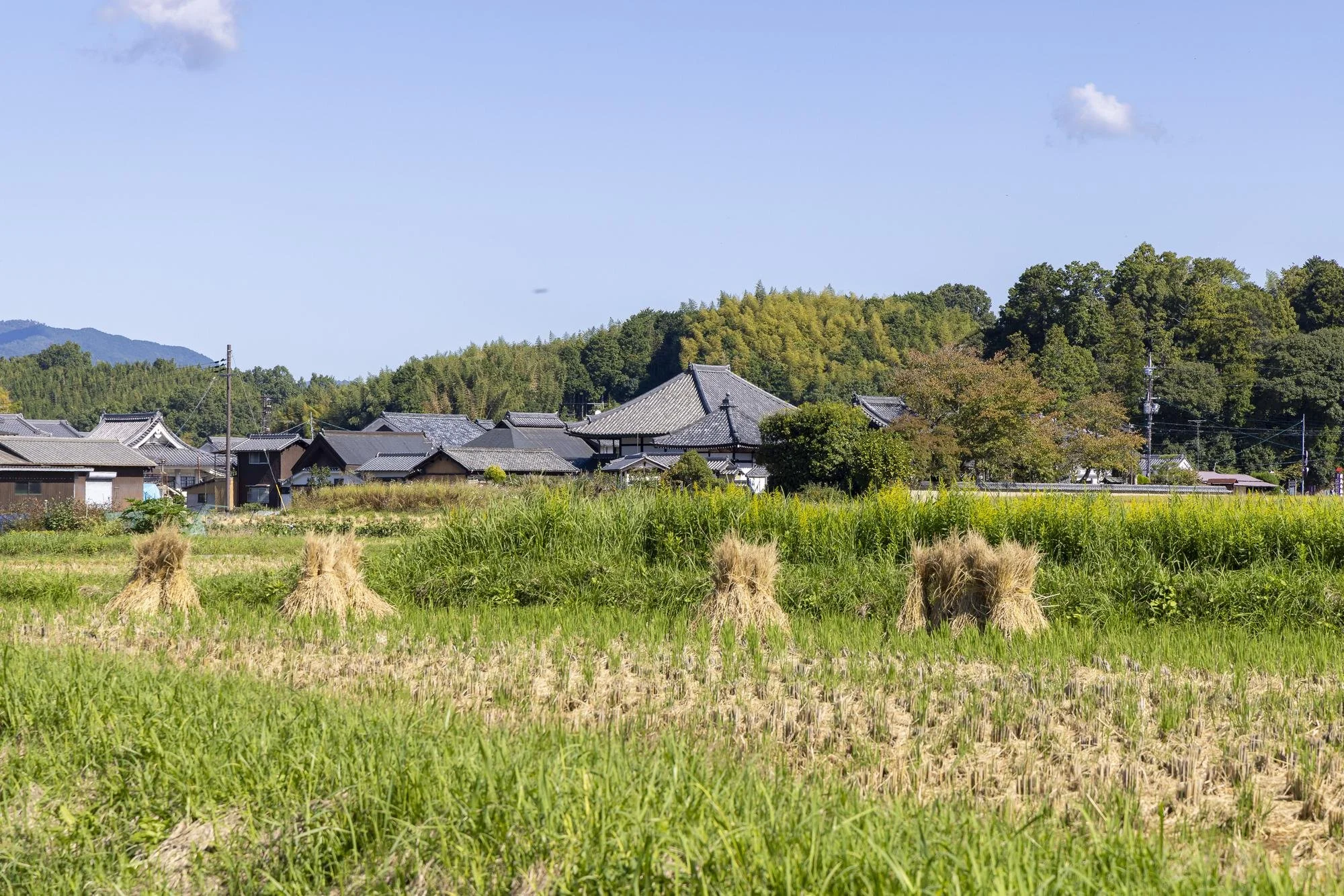
In Asuka, the journey between historic sites is part of the experience, with ancient heritage woven into the rural landscape.
It is possible to visit Asuka as a day trip from either Osaka or Kyoto.
But do not make the mistake of thinking that a short train journey means Asuka itself can be rushed.
The historical sites are spread out, and part of Asuka's appeal lies in the landscape between them.
For a first visit, at least half a day allows you to see several important places.
A full day gives you much more freedom to combine temples, kofun, archaeological sites, museums, viewpoints, and the countryside without constantly watching the clock.
If ancient Japanese history is one of the main reasons for your trip, Asuka can easily justify a full day.
The question is not how many places you can fit into the schedule.
It is how much of the story you want to understand.
To understand how Asuka's palaces, temples, and kofun fit into the larger story of early Japan, read our complete guide to the Ancient Capitals of Asuka and Fujiwara UNESCO World Heritage Site.
Ready to plan your day? Follow our suggested one-day Asuka itinerary for first-time visitor.
A Few Tips Before You Travel
Asuka is easy to reach, but a little preparation makes the day much smoother.
Check your train before leaving.
Train types, destinations, and transfer patterns vary. Use the current Kintetsu timetable or route search rather than relying entirely on an old screenshot or travel article.
Remember the difference between Express and Limited Express.
Regular Express trains require only the basic fare. Kintetsu Limited Express trains require an additional Limited Express ticket and have reserved seating.
Decide where you want to start before choosing your station.
Kashiharajingu-mae and Asuka Station are both useful, but they are not interchangeable for every itinerary.
Check local transportation in advance.
If you plan to use the Kame Bus, confirm the current schedule before arriving.
Wear comfortable walking shoes.
Even when using buses or bicycles, exploring Asuka usually involves walking.
Leave room in your schedule.
One of the pleasures of Asuka is discovering something you did not plan to see.
Train and bus schedules may change. Please check current timetables with Kintetsu Railway and Nara Kotsu before traveling.
Is Asuka Easier to Visit from Osaka or Kyoto?
Both cities work very well as bases.
From Osaka, Osaka-Abenobashi provides an especially simple approach toward Asuka, with direct services available depending on the timetable.
From Kyoto, the journey to Kashiharajingu-mae is straightforward on Kintetsu, followed by a short connection if you want to continue to Asuka Station.
So the better starting city is usually the one that fits the rest of your Japan itinerary.
You do not need to stay overnight in Nara to experience Asuka.
You do not need a car.
And you do not need to travel for several hours into a remote part of Japan.
That accessibility is one of Asuka's surprises.
The Journey from the City to Ancient Japan
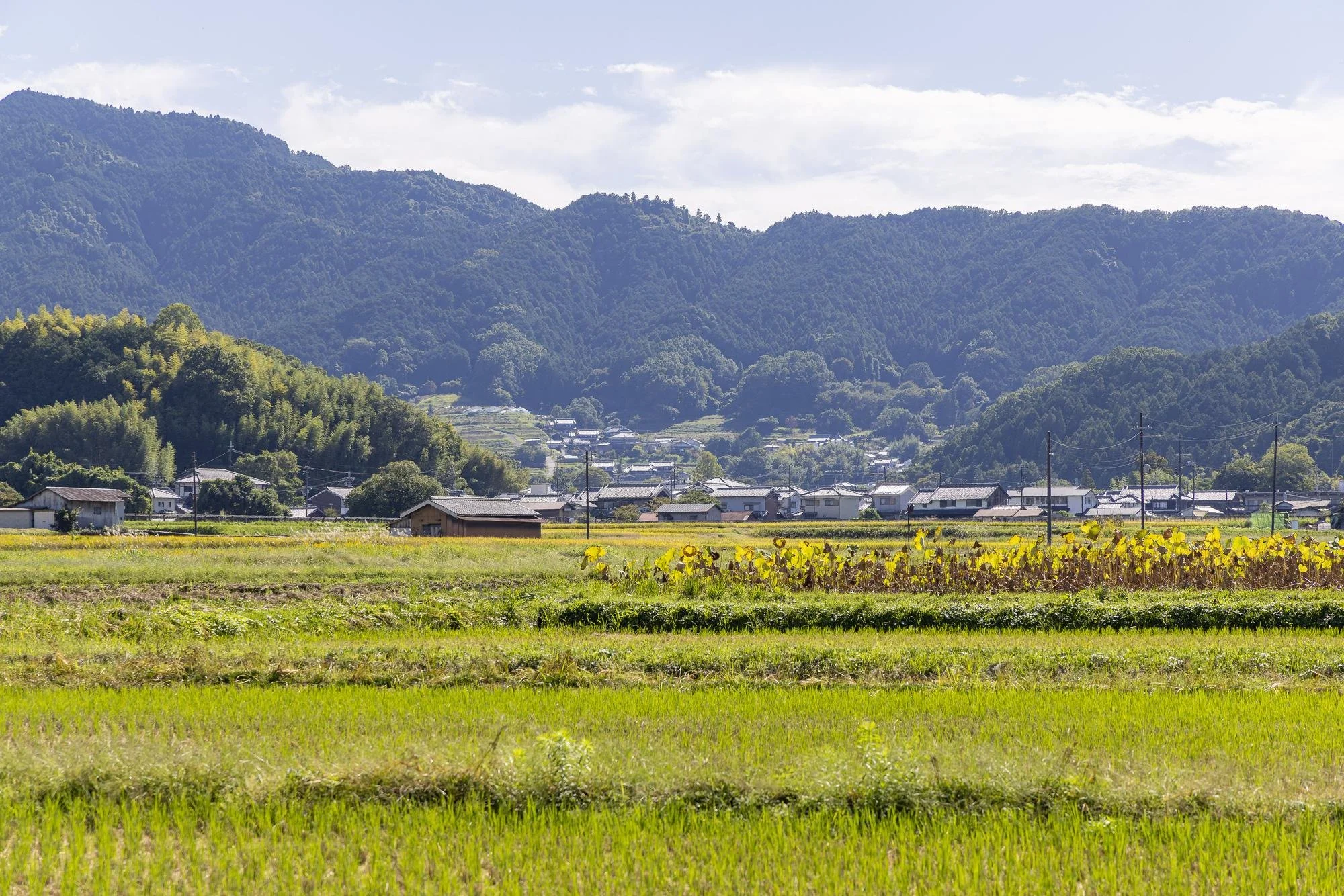
Asuka may feel far removed from the cities of modern Japan, but it is surprisingly easy to reach from both Osaka and Kyoto.
There is something fitting about the journey to Asuka.
You begin among the stations, buildings, traffic, and crowds of Osaka or Kyoto.
Then the scenery gradually changes.
The city becomes smaller.
Mountains appear.
Fields begin to open between the houses.
And before long, you arrive in a landscape where some of the most important chapters in early Japanese history unfolded.
Asuka may feel far removed from modern urban Japan.
In reality, it is remarkably close.
And once you know which train to take, getting there is one of the easiest parts of the journey.
Explore Asuka with a Local Guide
Getting to Asuka from Osaka or Kyoto is easier than many travelers expect. But once you arrive, the real journey begins.
Discover Nara offers guided historical and cultural tours of Asuka, connecting ancient temples, kofun burial mounds, palace ruins, and the rural landscape with the people and events that shaped early Japan.
Explore Asuka with a local guide from the region and discover not only where to go, but the stories that make each place meaningful.
Kintetsu Railway official English website
Asuka Village official access information
Nara Kotsu Asuka Kame Bus information